
Building a direct booking website means setting up your own branded booking platform, complete with a real-time availability calendar, secure payment processing, and listing pages, so guests can reserve your short-term rental without going through Airbnb or Booking.com. Most hosts can get one live within about a month if they follow a structured process rather than guessing at it.
Key Takeaways
- A functional direct booking website needs six core pages at minimum: homepage, individual listing pages, an about/trust page, an area guide, an FAQ page, and a contact page.
- Airbnb's host-only fee runs around 15.5% on a typical booking, meaning a $2,000 stay costs a host roughly $310 in commission that a direct booking would keep in-house.
- Direct bookings tend to run longer than OTA bookings, with data from Houfy showing direct stays average 45.2% longer duration than bookings made through third-party platforms.
- Real-time calendar sync with your property management system (PMS) is non-negotiable. Without it, you risk double bookings the moment your direct site and OTA calendars fall out of sync.
- Most successful direct booking strategies build traffic in a specific order: past-guest email capture first, then organic search, then paid channels like Google Hotel Ads.
- Boostly builds fully optimized, no-code direct booking websites live within 35 days, backed by a 65% direct booking guarantee within 12 months or your money back plus $1,000.
If you're reading this in 2026, you're likely staring at a commission line item on your Airbnb payout report and wondering why you're still handing over 15% or more of every reservation. You're not alone. The short-term vacation rental market reached an estimated $145.73 billion globally this year, according to Mordor Intelligence, and yet more than half of all bookings worldwide still flow through offline or OTA-dependent channels rather than a host's own site.
That gap is exactly why direct booking websites have become a serious strategic priority for hosts and property managers, not just a nice-to-have. At Boostly, we've worked with hosts running single units in the UK and 40-property portfolios across the US, and the technical build process is remarkably consistent regardless of scale.
This guide walks through the entire process: choosing your platform, securing hosting and a domain, integrating a booking engine and payment processor, syncing calendars with your PMS, designing pages that actually convert, and building the traffic funnel that gets guests to book direct. We'll also cover what most guides skip, including how to price complex bookings correctly and how to legally separate your OTA listings from your direct site.
What Is the Best Website for Direct Bookings?
The best website for direct bookings is one built specifically for short-term rental booking flows, not a generic small-business template retrofitted with a booking plugin. Generic site builders lack real-time PMS sync, trust-signal placement, and conversion-focused page architecture, all of which directly affect whether traffic turns into revenue.
Most hosts choose from three realistic paths in 2026: a managed WordPress build using rental-specific themes and booking plugins, a dedicated vacation rental website builder with a built-in booking engine, or a done-for-you service that handles design, hosting, and PMS integration end to end. Each has trade-offs in time investment and technical control.
A self-built WordPress site gives you full design control but requires ongoing maintenance: plugin updates, security patches, and manual calendar sync configuration. Specifically, self-hosted setups involve downloading software packages, uploading files via FTP, and configuring database credentials, work that eats hours most hosts don't have to spare.
That's the exact gap Boostly was built to close. Rather than asking hosts to become part-time web developers, Boostly builds a fully optimized direct booking website with no coding required, live within 35 days, and connects it to your existing property management system automatically. You get a conversion-focused site without the maintenance burden of a self-managed WordPress install.
How Do I Build My Own Booking Website?
Building your own booking website requires five sequential steps: securing a domain and hosting, choosing your booking engine and payment processor, integrating calendar sync with your PMS, building your required pages, and setting up analytics before launch. Skipping the sequence, especially calendar sync, is the most common cause of failed direct booking launches.
Step 1: Secure Your Domain and Hosting
Choose a domain name that's short, brandable, and ideally matches your property or brand name, something like StaySunnyCabins.com rather than a generic string of keywords. Managed hosting is generally recommended over basic shared hosting because it pairs with the largest ecosystem of vacation rental themes and booking plugins, and it handles security patching automatically.
Step 2: Choose Your Booking Engine and Payment Processor
Your booking engine is the software that displays real-time availability and accepts reservations directly on your site. Pair it with a payment gateway such as Stripe or PayPal, and make sure your site has a valid SSL certificate. Guests won't enter card details on a site that shows a “not secure” warning in their browser, full stop.
Step 3: Integrate Real-Time Calendar Sync
This is where most self-built sites fail. If your direct site's calendar doesn't sync in real time with your OTA listings, you will eventually get a double booking, and double bookings damage your reputation faster than almost anything else in this business. Boostly integrates with 27 or more property management systems specifically to keep listings, availability, and pricing synced in real time, so a booking on Airbnb instantly blocks that date everywhere else.
Step 4: Build Your Required Pages
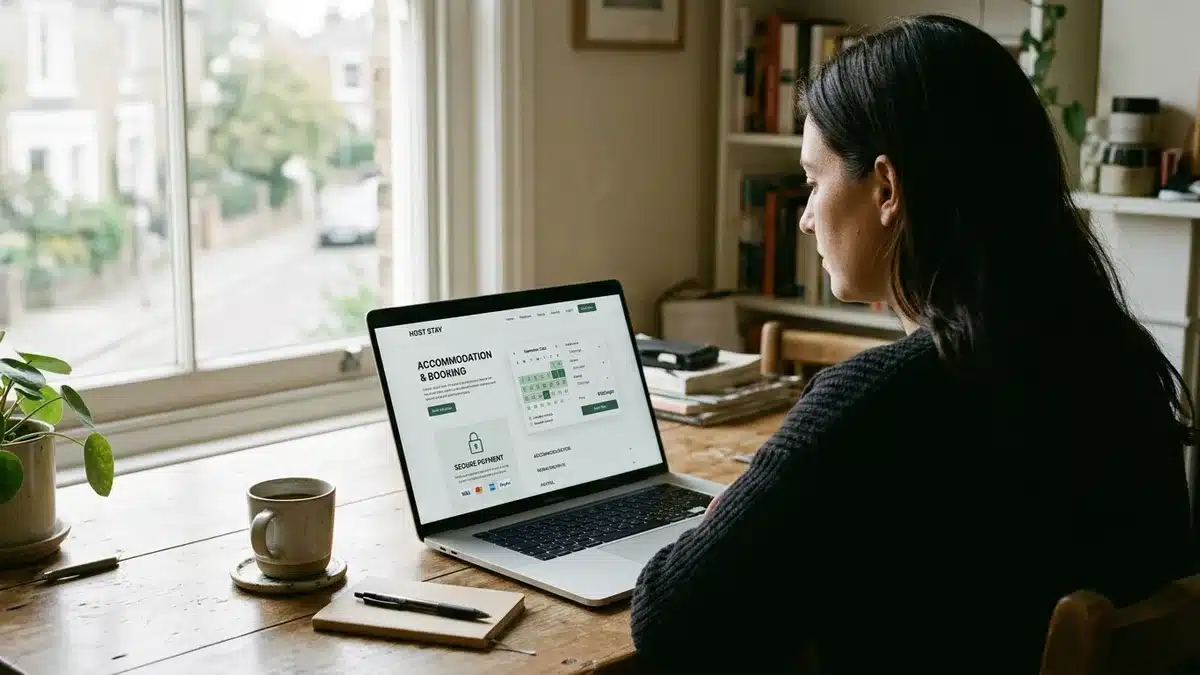
At minimum, your site needs a homepage, individual listing pages for each property, an about or trust page, a local area guide, an FAQ page, and a contact page. Skipping the trust page is a common mistake. Guests booking direct don't have Airbnb's brand reputation backing them up, so your site has to do that work itself.
Step 5: Test Before Launch
Test your entire booking flow on both desktop and mobile before going live. Book a test reservation yourself, check that confirmation emails fire correctly, and confirm your payment processor settles funds as expected. This single step catches most of the friction points that quietly kill conversion rates after launch.
What Is the 75-55 Rule for Airbnb?
The 75-55 rule refers to a guideline some hosts use for balancing OTA visibility against direct booking growth, generally suggesting hosts keep enough active presence on platforms like Airbnb to maintain search ranking and reviews, while directing a growing share of repeat and referral traffic toward a direct channel. It's not an official Airbnb policy, it's an operator heuristic.
In practice, this means you don't need to pull your listings from Airbnb to build a direct booking strategy. You can run both simultaneously. Boostly's model is built around exactly this principle: it doesn't require hosts to quit OTAs, it layers a direct booking funnel and guest retargeting strategy on top of your existing listings so you capture guest data and convert repeat stays direct, without sacrificing the visibility Airbnb still provides.
Where hosts get this wrong is in how they disclose their direct site. Airbnb and Vrbo both have policies restricting off-platform contact information within active conversations, so you can't simply paste your website URL into every guest message. Instead, capture guest data through a follow-up email after checkout, ideally through in-stay WiFi capture tools like StayFi's WiFi capture system, and market your direct site to that list post-stay, where OTA messaging restrictions no longer apply.
This is also where the math starts to matter. According to Houfy, a repeat direct booking on a $2,000 stay saves a host between $310 and $640 compared to routing that same guest back through an OTA. Multiply that across ten repeat guests a year and you're recovering $2,520 to $5,820 that would otherwise go to commission, per Houfy's 2026 analysis.
How Much Does It Cost to Have a Booking Website?
Costs for a direct booking website vary widely depending on whether you build it yourself or use a done-for-you service, ranging from ongoing hosting and plugin fees for a self-built WordPress site to an all-in monthly or annual subscription that bundles hosting, design, CRM, and support. There's no single industry-standard price point, so compare based on what's included, not just the sticker figure.
A self-built approach means paying separately for hosting, a premium rental theme, a booking plugin license, payment processing fees (typically a percentage per transaction through Stripe or PayPal), and your own time for setup and ongoing maintenance. Property management software as a category reached $6.53 billion globally in 2026 according to Fortune Business Insights, which tells you there's no shortage of tools competing for your subscription dollars.
A done-for-you platform bundles the build, hosting, PMS integration, and often marketing tools into one cost, trading a higher line item for dramatically less time spent on setup and maintenance. This is the model Boostly uses: one connected system covering the website build, CRM, automated guest marketing, and weekly coaching, rather than a stack of separate subscriptions you have to configure and maintain yourself.
The real cost comparison isn't website expense versus zero. It's website expense versus the commission you're already paying. At a roughly 15.5% host-only fee on Airbnb bookings, per Houfy's 2026 breakdown, a $2,000 booking costs you about $310 in commission alone. A direct booking website that shifts even a modest share of your annual bookings away from that fee structure often pays for itself well before year one is over.
| Approach | Setup Effort | Ongoing Maintenance | PMS Sync | Best For |
|---|---|---|---|---|
| Self-built WordPress | High, technical setup required | Manual updates, security patching | Requires separate plugin configuration | Hosts comfortable with hands-on tech work |
| Dedicated builder platform | Moderate | Some ongoing configuration | Varies by provider | Hosts wanting more design control |
| Done-for-you (Boostly) | Low, no coding required | Handled by provider | Real-time sync across 27+ PMS platforms | Hosts and portfolios wanting to launch fast without technical overhead |
How Do You Model Pricing Rules Before You Build?
Pricing rule modeling means documenting every rate variable, base occupancy, extra guest fees, pet fees, cleaning charges, and taxes, before you start building your site's booking engine. Skipping this step is one of the most common reasons direct booking sites launch with pricing errors that either undercharge guests or create confusing checkout experiences.
Start with a simple spreadsheet before touching any software. List your base nightly rate per listing, extra adult and child charges, pet fees if applicable, cleaning fees, and any seasonal or weekend pricing variations. Then decide which of these need to trigger automatically versus which require manual review, for example, a large group booking that needs a custom quote.
Most booking engines support variable pricing rules once configured, including seasonal base rates and per-person surcharges. But the engine can only apply logic you've clearly defined. A vague pricing structure in your head becomes a broken checkout flow on your website if you don't document it first.
For multi-property portfolios, this modeling step becomes more complex. Each property may have different fee structures, and you'll want a single booking hub with location-specific subpages rather than building a separate site per property. This is one area where Boostly's real-time PMS integration pays off directly: pricing and availability rules set in your PMS sync automatically to your direct site, so you're not re-entering the same rate logic in two places.
What Trust Signals Actually Convert Guests on a Direct Site?
Trust signals are the visual and content elements on your site that reassure a guest it's safe to book and pay outside of a recognized OTA brand, including guest reviews, security badges, clear cancellation policies, and verified contact information. Without them, even well-designed direct sites see visitors abandon at checkout.
Place guest reviews prominently on both your homepage and individual listing pages, ideally pulled directly from your Airbnb or Vrbo history if you're just launching. A visible SSL padlock icon near your payment form, paired with recognizable payment logos like Stripe or PayPal, reduces hesitation at the exact moment guests are entering card details.
Your about or trust page matters more than most hosts realize. Include a real photo of yourself or your team, a short history of your properties, and a clear statement of your cancellation and refund policy. Guests booking direct are taking on more perceived risk than booking through a recognized platform, so your site has to actively close that trust gap rather than assume it away.
An FAQ page addressing common concerns, check-in logistics, parking, pet policies, and what happens if something goes wrong, does double duty. It answers pre-booking objections and gives search engines structured content to index. We regularly see hosts underestimate how much a well-built FAQ page contributes to both conversion and search visibility.
How Do You Test and Improve Your Booking Funnel Over Time?
Testing your booking funnel means systematically changing one element at a time, a call-to-action button, a listing photo order, your pricing display, and measuring the impact on completed bookings versus abandoned checkouts. Most direct booking sites are never tested after launch, which leaves conversion problems undiagnosed for months.
Start by tracking where visitors drop off. If most abandon at the payment step, your trust signals or pricing transparency likely need work. If they abandon on the listing page itself, your photos or descriptions may not be doing enough to justify the rate compared to what guests see on Airbnb.
Run one change at a time and give it enough traffic before drawing conclusions, this is basic A/B testing discipline that applies whether you're testing a headline, a photo, or a button color. Multi-property operators should test at the portfolio level too, comparing conversion rates across properties to spot which listing pages are underperforming.
This is a section most direct booking guides skip entirely, and it's exactly where Boostly's analytics and reporting layer earns its keep. Rather than guessing at what percentage of your traffic converts, Boostly gives hosts a clear, measurable read on direct booking performance, the same reporting that lets us track hosts progressing toward the platform's 65% direct booking benchmark within 12 months.
How Do You Drive Traffic to a New Direct Booking Site?
Driving traffic to a new direct booking site works best in a specific sequence: start with your existing guest email list, then build organic search visibility, then layer in paid channels like Google Hotel Ads once your conversion funnel is proven. Reversing this order, spending on ads before your site converts well, wastes budget.
Your past guests are your warmest audience. If you've been hosting for any length of time, you already have a list of people who stayed, loved the property, and would likely book again if given a direct, easy way to do it. An automated post-stay email sequence, thanking guests and inviting them to book direct next time, converts far better than any cold traffic source.
SEO comes next. Set up a Google Business Profile for each property and link it to your direct site. Enable IndexNow if your platform supports it, so new listing pages get submitted to Google automatically rather than waiting weeks for organic crawling. Area guide content, genuinely useful local information, also builds long-term organic visibility that OTA listings can't replicate for your specific brand.
Once your funnel is converting well, paid channels like Google Hotel Ads can extend your reach to guests actively searching for accommodation in your market. But paid traffic to an unconverted site is money down the drain. Get the fundamentals right first.
This is exactly the sequencing gap we built Boostly's CRM and email automation to close. New members get CRM access within 24 hours of signing up, so the guest data capture and automated follow-up sequence, the highest-converting traffic source, is running from day one rather than something you get to eventually.
How Do You Handle Multi-Property or Multi-Location Direct Booking Sites?
A multi-property direct booking site uses a single booking hub with location-specific subpages, rather than building separate standalone websites for each property or market. This structure keeps your brand consistent, simplifies SEO, and avoids fragmenting your guest data across disconnected systems.
Each property or location gets its own dedicated page with individual photos, pricing, and availability, but all bookings, payments, and guest data flow through one central system. For portfolio operators managing five, twenty, or fifty units, this centralization matters enormously for reporting to owners and tracking performance across the business.
Disconnected tools are the single biggest operational risk we see with growing portfolios. A property manager juggling separate calendars, separate payment processors, and separate guest databases per property is one missed sync away from a double booking or an owner asking for numbers you can't easily produce.
Boostly's PMS integrations, covering 27 or more platforms, were built specifically to solve this at scale. Real-time sync means every property in a portfolio shares the same underlying availability data, so a booking on one channel updates instantly everywhere else, no matter how many locations or units you're managing.
Data and Evidence: Why Direct Booking Websites Matter in 2026
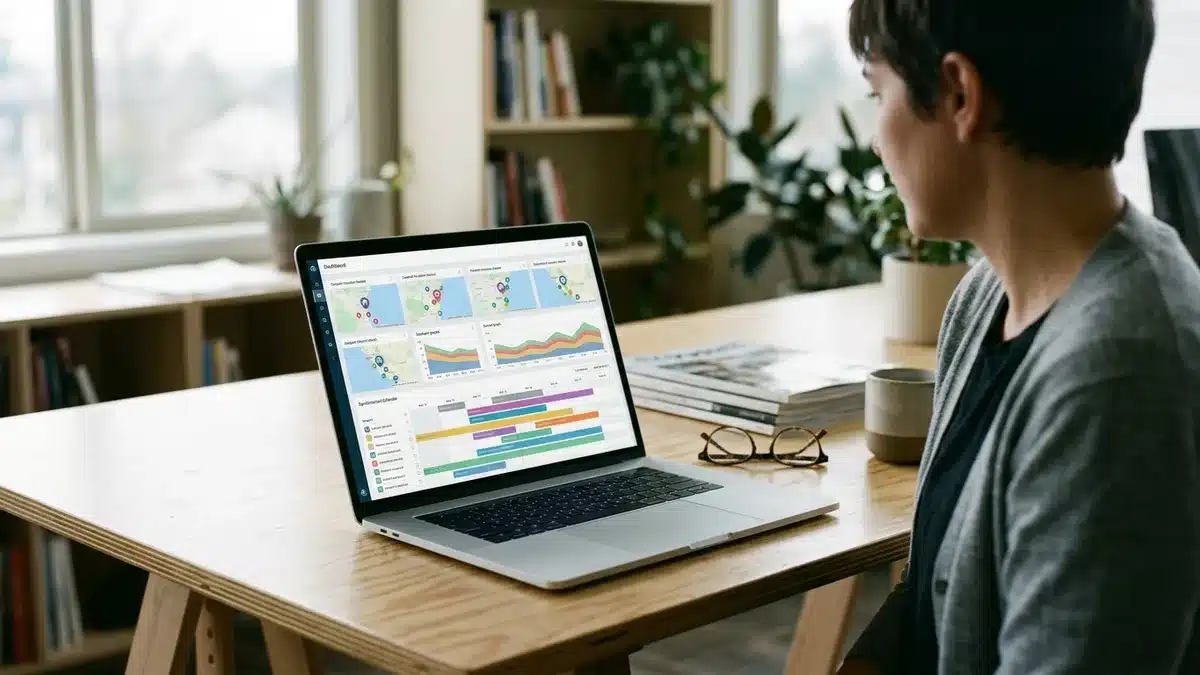
The numbers behind direct booking strategy are getting harder to ignore. Online travel agencies still captured roughly 64.75% of global short-term vacation rental revenue in 2026, according to Mordor Intelligence, meaning most hosts are still handing the majority of their bookings, and commission, to third parties. Meanwhile, direct booking behavior shows measurably different guest patterns.
| Metric | Figure | Source |
|---|---|---|
| Airbnb host-only fee on a $2,000 booking | Approximately 15.5% ($310) | Houfy, 2026 |
| Direct booking savings vs. OTA on a repeat $2,000 stay | $310 to $640 | Houfy, 2026 |
| Average stay length, direct vs. OTA bookings | 45.2% longer for direct bookings | Houfy, 2026 |
| Savings from 10 repeat direct bookings annually | $2,520 to $5,820 | Houfy, 2026 |
| Global short-term vacation rental market size, 2026 | $145.73 billion | Mordor Intelligence |
| OTA channel share of global short-term rental revenue, 2026 | 64.75% | Mordor Intelligence |
Notably, the FIFA World Cup 2026 event window has already produced dramatic booking spikes in host cities, with year-over-year increases exceeding 1,000% in several US markets following the schedule release, according to KeyData. Hosts without a direct booking site in place risk losing that demand surge entirely to OTA commission during exactly the periods when margin matters most.
For a deeper look at diversifying revenue beyond OTA dependence, see our related piece on how to grow your vacation rental business beyond OTAs. And if you want a broader operational view on scaling once your direct channel is live, our guide on understanding the mindset of growing a large STR company covers what changes as your portfolio expands.
Practical Guidance: What to Prioritize When Building Your Site
Prioritize calendar sync and payment security first, page design and content second, and paid marketing last. This order reflects where failures actually happen: a beautiful site with a broken booking flow converts nothing, while a plain site with a reliable, secure checkout still earns bookings.
- Lock in real-time PMS sync before launch. Test it with a real reservation to confirm dates block correctly across every channel.
- Build your six core pages first. Homepage, listings, about/trust, area guide, FAQ, and contact, in that priority order.
- Set up guest data capture immediately. Every booking should feed a CRM you can email later, don't let this wait until “later” in your launch plan.
- Test the full booking flow on mobile. A significant share of guest traffic arrives on phones; a desktop-only tested site misses real friction points.
- Document your pricing rules before configuring your booking engine. Occupancy tiers, pet fees, and taxes need to be defined on paper first.
- Launch your past-guest email sequence before spending on ads. Your warmest audience converts fastest and costs nothing to reach.
Common mistakes worth naming directly: treating your direct site as a one-time project rather than an ongoing channel, skipping the trust page because it feels like extra work, and pasting your URL into Airbnb guest messages in violation of platform policy. Each of these is avoidable with a bit of planning.
For more on turning site visitors into loyal repeat guests once your funnel is live, our article on strategic creative communications for bookings covers messaging tactics that pair well with a direct site launch. If you manage a portfolio and want tech-stack specific guidance, our piece on tech solutions for handling units across multiple markets is worth a read too.
Frequently Asked Questions
How long does it take to build a direct booking website?
A self-built WordPress site can take anywhere from several days to several weeks depending on your technical comfort level and how much custom design work you want. Boostly builds fully optimized, done-for-you direct booking sites and gets hosts live within 35 days of signing up, with no coding required on the host's part.
Do I have to stop listing on Airbnb to run a direct booking site?
No. You can run a direct booking website alongside your existing Airbnb and Vrbo listings without pulling them down. Most successful hosts use OTAs for visibility and new guest discovery while building a direct channel for repeat guests and referrals, which is exactly how Boostly's platform is designed to work.
What percentage of bookings should be direct versus OTA?
There's no universal target, but Boostly's own guarantee is built around hosts reaching 65% direct bookings within 12 months of onboarding, with some hosts in the platform's success stories reaching 65% to 80%. The right mix depends on your market, property type, and how established your repeat-guest base already is.
Is it safe for guests to pay directly on a host's own website?
Yes, provided the site uses a valid SSL certificate and a reputable payment processor like Stripe or PayPal. These processors handle the actual card transaction securely, meaning your site never stores raw card data itself, which is the same security standard used by major booking platforms.
What PMS platforms integrate with direct booking websites?
Integration availability varies by provider. Boostly connects with 27 or more property management systems for real-time syncing of listings, availability, and pricing, which covers most of the widely used PMS tools on the market as of 2026. Always confirm your specific PMS is supported before committing to a platform.
Do I need coding or technical skills to run a direct booking site?
Not if you use a done-for-you platform. Boostly's model is specifically built with no coding required, handling the design, hosting, and PMS integration so hosts can focus on guest experience and marketing rather than website maintenance.
What happens if my direct booking site doesn't hit its targets?
Boostly backs its direct booking strategy with a guarantee: hosts who don't achieve 65% direct bookings within 12 months of active participation in the program receive their money back plus $1,000. This is tied to program participation and the full 12-month timeframe, not an instant result.
How much commission does a typical host lose to OTAs each year?
It depends heavily on booking volume and average nightly rate, but as a reference point, Airbnb's host-only fee runs around 15.5% on a typical $2,000 booking, or about $310 per stay, according to Houfy's 2026 data. Multiply that across a full year of bookings and the commission total adds up quickly for hosts with little to no direct channel.
Conclusion: Your Direct Booking Website Is a Long-Term Channel, Not a One-Time Project
Learning how to build a direct booking website comes down to five things done in the right order: secure your domain and hosting, integrate a real-time-synced booking engine and payment processor, build your six core trust-focused pages, test thoroughly before launch, and drive traffic starting with your past-guest email list. Get that sequence right and the commission savings, potentially hundreds of dollars per repeat booking, compound over time.
2026 is shaping up to be a pivotal year for direct bookings, with event-driven demand spikes and a growing digital nomad guest segment both rewarding hosts who own their booking channel rather than renting it from an OTA. The hosts who treat their direct site as an ongoing marketing channel, not a launch-and-forget project, are the ones who stop handing 15%+ of every booking away.
If OTA commissions are quietly eating your margin and you'd rather not spend the next month learning WordPress plugin configuration, book a demo with Boostly and see what a done-for-you, conversion-focused direct booking website actually looks like, backed by real-time PMS sync, a built-in CRM, and a 65% direct booking guarantee.

A direct booking website works quietly alongside your Airbnb and Vrbo listings, capturing the guests who'd rather book with you directly next time. See how Boostly builds that site for you and syncs it in real time with the PMS you already use.