Airbnb host marketing software is a connected set of tools that brings guests to a booking channel you own and keeps them coming back: a direct booking website, a guest CRM, automated email and SMS follow-up, and reporting that separates direct revenue from OTA revenue. Most hosts under-invest in it because of six persistent myths, and each one costs bookings and margin.
Key Takeaways
- A PMS or channel manager runs your operations; marketing software for Airbnb hosts handles conversion, guest data and repeat stays. They do different jobs and work best connected.
- Airbnb’s own host tools report performance inside Airbnb only. They give you no guest list you can market to and no view of your direct channel.
- A direct channel runs alongside your Airbnb listing. Boostly’s figure is 15% saved on every booking that moves from an OTA to your own site.
- Marketing tool adoption rises sharply with portfolio size, so small hosts are the ones most likely to be going without.
- Measure results with one number: direct bookings divided by total bookings. Boostly’s guarantee target is 65% direct bookings within 12 months.
- Boostly builds the direct booking website for you, live within 35 days, with CRM access within 24 hours, 27+ PMS integrations and a money-back-plus-$1,000 guarantee if you miss 65% direct bookings in 12 months.
In 2026, most hosts market their rental the same way: they polish the Airbnb listing, answer messages quickly and hope the algorithm cooperates. Every booking that arrives that way carries a commission, and the guest belongs to the platform rather than to you. A marketing stack built around a channel you own changes that arithmetic.
At Boostly, we work with STR hosts every day who are stuck in exactly this position: strong occupancy, thin margins and no real plan for direct bookings. The tools exist to fix it. What stops hosts is a set of beliefs about what the tools do and whether they replace Airbnb.
Below, we take six of those myths in turn, give the reality for each, and finish with a method for measuring results and a quick facts table you can save.
What Does Airbnb Host Marketing Software Include?
Airbnb host marketing software is a connected set of tools that sends guests to your own booking channel and then keeps the relationship alive after checkout. It typically combines four parts: a direct booking website with a booking engine, a guest CRM, automated email and SMS follow-up, and analytics that split direct revenue from OTA revenue.
Each part covers a different gap. Search visitors need somewhere to book, and past guests need to be remembered. Reporting then shows which effort pays for itself.
We built Boostly to deliver all four together, because hosts who stitch them from separate subscriptions usually end up with a website that does not talk to their PMS and a mailing list nobody emails. For the guest-experience side of the same stack, our look at the future of guest services software is a useful companion.
Myth 1: Does Your PMS Already Handle Your Marketing?
Myth: My property management system already covers marketing.
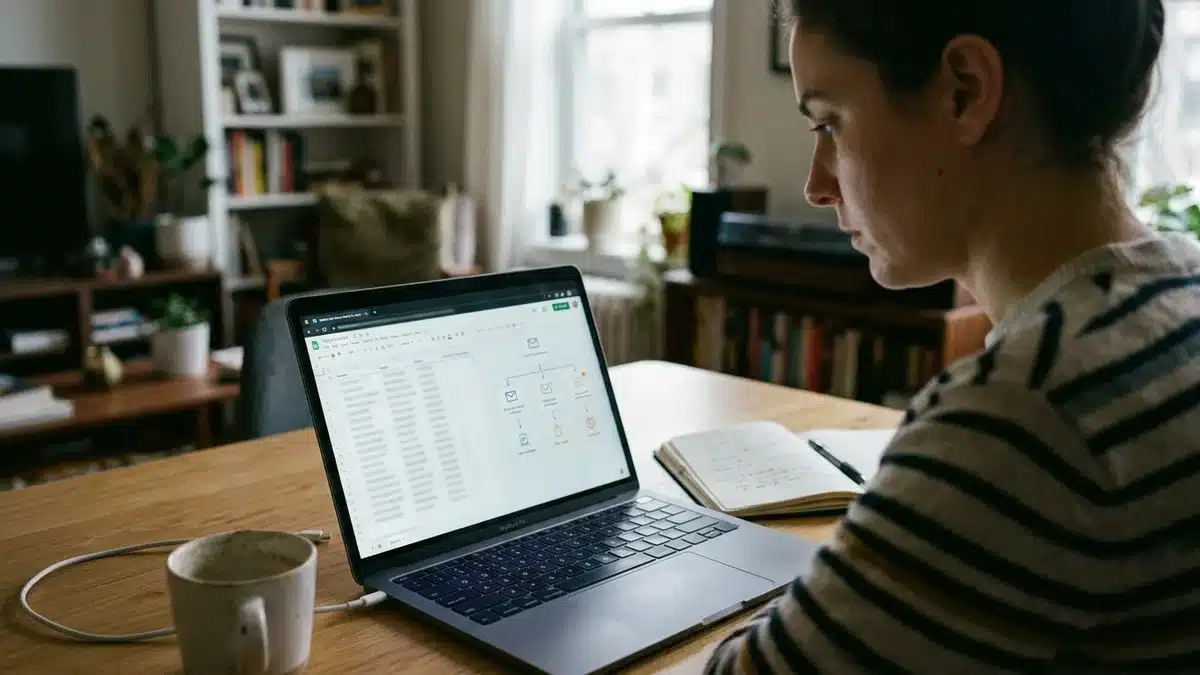
Reality: A property management system (PMS) is the operational layer of a rental business: it holds reservations, availability, rates and tasks. A channel manager pushes those calendars and rates to listing sites so you avoid double bookings. Neither is designed to turn a Google searcher into a direct booker or to bring last summer’s guest back.
Marketing software sits on top of that layer. Your PMS knows a guest checked out on Sunday; marketing software decides what that guest hears next week and next March. Some PMS products bundle a basic booking widget or email feature, which can suit a single listing. Before assuming yours is enough, check whether it lets you segment past guests and report on direct share.
This is why Boostly connects to your existing PMS through 27+ integrations instead of asking you to replace it. Listings, availability and pricing sync in real time, so your direct site never shows a stale rate. If you run many units, our article on tech solutions for handling 350 units across six markets goes deeper on the operations side.
Myth 2: Are Airbnb’s Own Host Tools Enough?
Myth: Airbnb’s dashboard gives me everything I need to market my rental.
Reality: Airbnb’s professional hosting tools are performance and workflow tools that operate entirely inside Airbnb. They let you track earnings, occupancy and booking conversion, and give multi-listing hosts a multi-calendar and tasks. Search results on the platform weigh listing quality, popularity, price and location.
That helps you win on Airbnb. It does not hand you a guest list. When a stay ends, the relationship stays with the platform, and you pay the commission again on the next booking. Houfy’s 2026 figures put the Airbnb host-only fee at 15.5%, which equals $310 in commission on a $2,000 booking.
OTA dashboards also report only OTA-side data, so they cannot show how a direct channel is performing. Boostly’s CRM captures guest details at the point of a direct booking, and our reporting shows conversion, traffic sources and progress toward the 65% target. Airbnb’s tools cannot give you that view.
Myth 3: Do You Have to Quit Airbnb to Get Direct Bookings?
Myth: Going direct means abandoning my Airbnb listing.
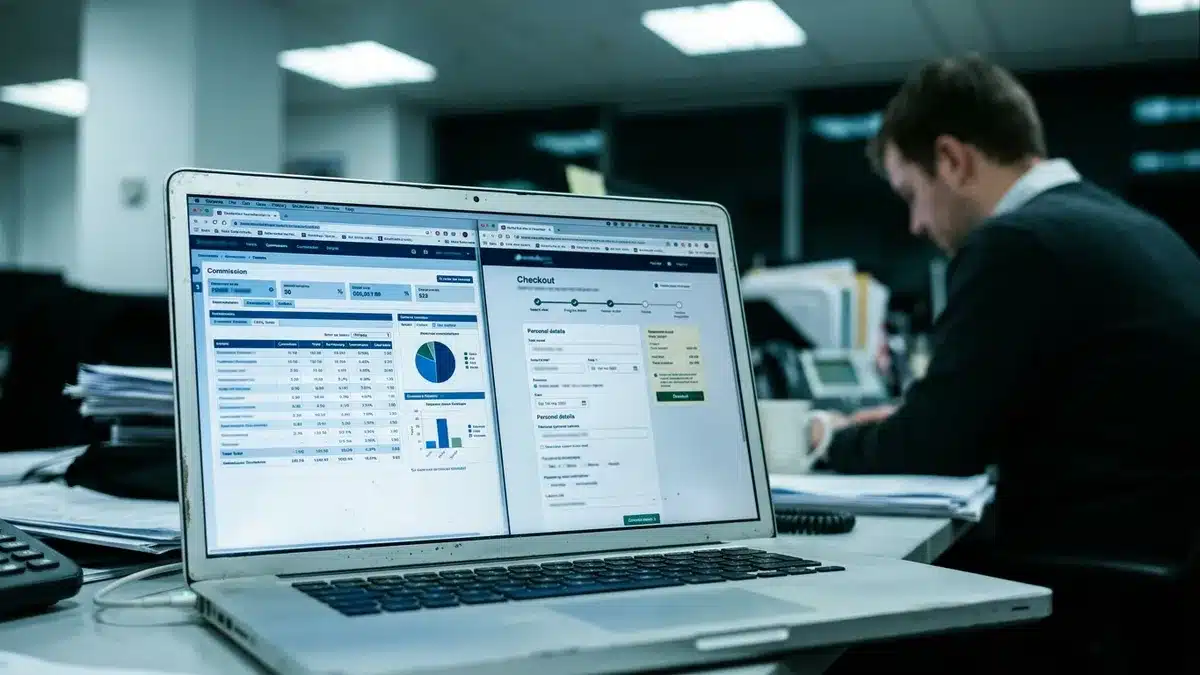
Reality: Direct booking software creates a second channel you own while your Airbnb listing stays live. Airbnb remains a strong discovery engine for first-time guests. Your own site handles returning guests, referrals, social traffic and Google searchers, and each of those bookings skips the OTA commission.
The listing work you have already done keeps paying. Photos, descriptions and reviews on Airbnb keep earning bookings while the direct channel grows. We designed Boostly to work this way, so you keep OTA visibility and watch the direct share climb toward 65%.
There is a trade-off. A free booking widget on a basic site will not out-convert Airbnb’s built-in trust signals, and that is where most direct attempts stall. A book-direct marketplace can send extra traffic to your site; we covered it in our guide to using a book direct marketplace to drive direct bookings.
Myth 4: Is Marketing Software Only for Large Portfolios?
Myth: I only have a few properties, so this is for bigger operators.
Reality: Small hosts are the ones most likely to skip marketing and analytics software. Hostfully’s 2026 Vacation Rental Tech Stack Report (June 2026) found adoption rises from 23% among operators with 1 to 5 properties to 67% among those with 100 or more.
We read that gap as an opportunity. A single-property host has the thinnest margin buffer and no staff to chase past guests, so automation matters more at that size. Boostly serves single-property hosts and large multi-unit operators alike, and our community now includes over 2,000 hosts and business owners.
Cost is the question we hear most from smaller hosts. We do not publish a price here because the right setup depends on your properties and PMS; a demo is where you get current pricing. What we can state is the risk: if you do not reach 65% direct bookings within 12 months, you receive your money back plus $1,000.
Myth 5: Can Airbnb Messages and a Spreadsheet Run Repeat-Guest Marketing?
Myth: I can bring guests back by messaging them and keeping a spreadsheet.
Reality: Repeat-guest marketing is the practice of contacting past guests with timed, relevant offers so they rebook directly instead of searching Airbnb again. Doing it by hand means collecting contact details you may not be able to export, tracking stay dates and writing each message. That routine breaks the first busy weekend.
The economics favour doing it properly. A returning guest costs you no acquisition spend and no OTA commission when they book direct. For tactics that work off-platform, the Price of Business guide on growing a vacation rental business covers lead generation and email marketing. To capture emails legally during a stay, the StayFi WiFi capture system is one concrete option.
Email and SMS marketing falls under privacy and consent rules such as GDPR and CCPA, so confirm you have permission before you send anything. Boostly’s CRM captures and nurtures that relationship automatically, with email and SMS sequences built to bring guests back. New members get CRM access within 24 hours, and our piece on strategic creative communications covers the messaging side.
Myth 6: Will a DIY Website and Booking Widget Convert Like Airbnb?
Myth: A website builder and a booking button will do the job.
Reality: A direct booking website converts when it carries the trust signals, live availability and booking engine that guests expect from Airbnb. Most host-built sites use generic templates with no real-time calendar and thin policies. The booking button is rarely the problem; everything missing around it is.
If you are comparing direct booking website builders, judge them on these points:
- Real-time sync with your PMS, so rates and availability are never outdated.
- SEO structure built in from launch, including fast load times and location pages.
- Visible trust elements: reviews, clear policies and secure checkout.
- A connection to a guest CRM, so every booking feeds follow-up.
- Who does the build. Self-service tools leave you to assemble the pieces.
The build is where most DIY attempts stall, which is why Boostly builds the site for you. It is live within 35 days with no coding required, structured for search from day one. Our guide on how to build a direct booking website walks through the full process.
How Do You Know Whether Your Marketing Software Is Working?
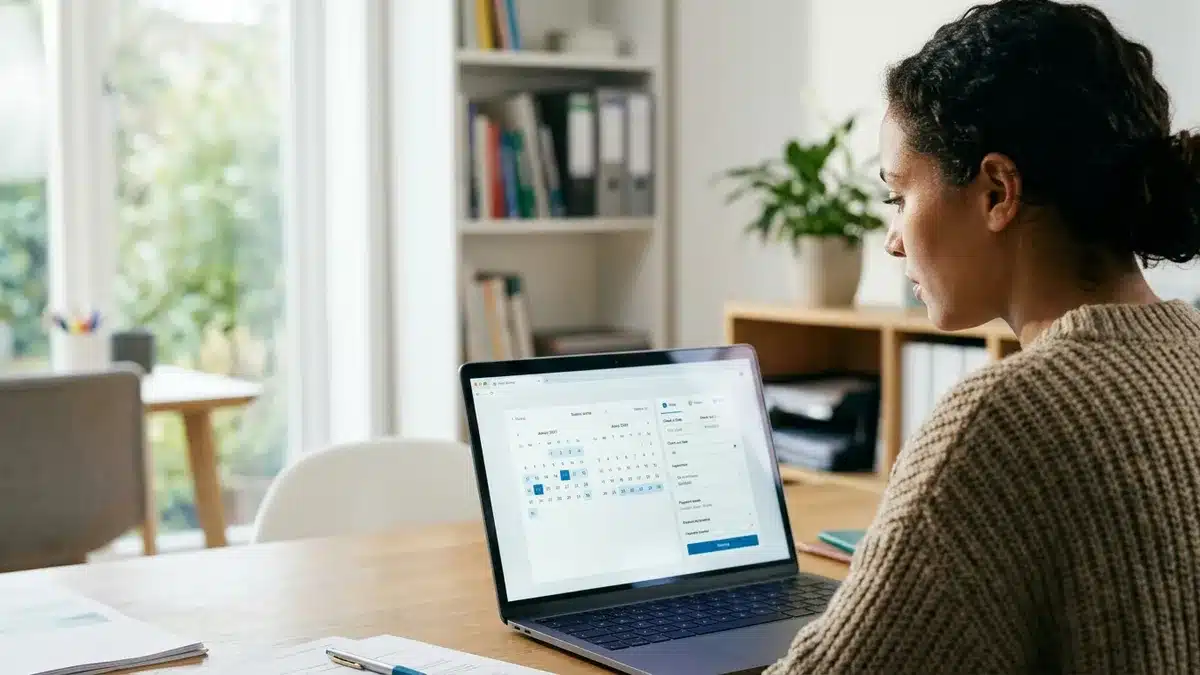
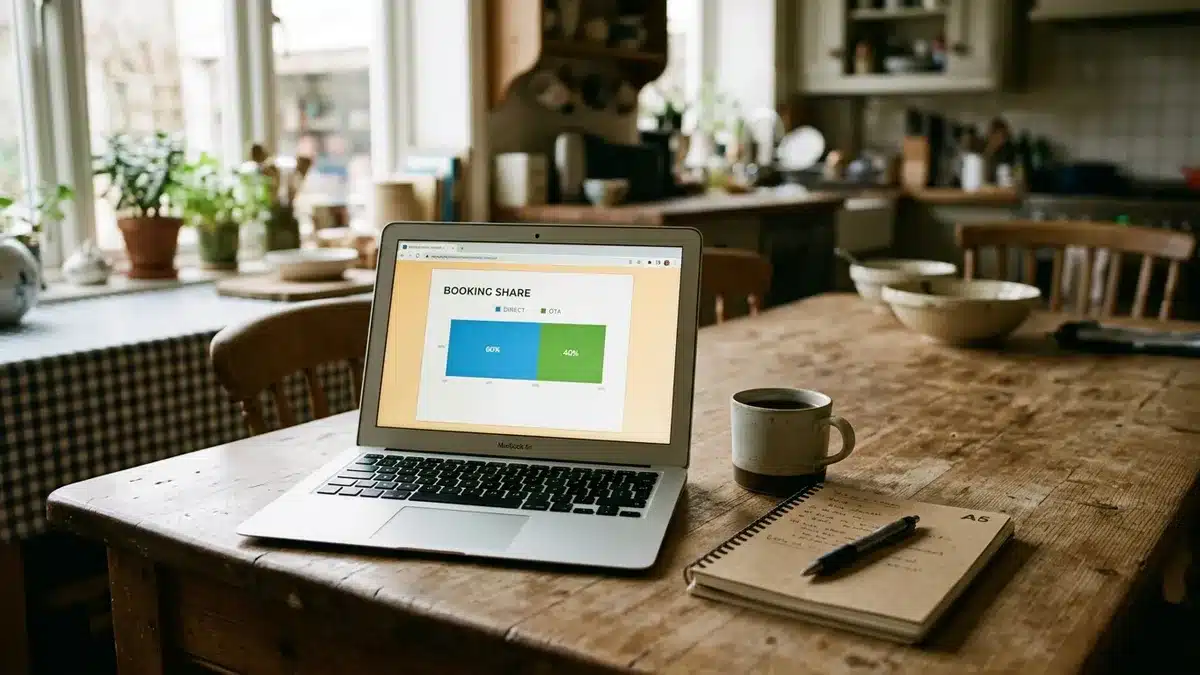
Direct booking share is the percentage of your total reservations that arrive through your own website rather than an OTA. Divide direct bookings by total bookings over a month or quarter. That ratio tells you more about marketing software performance than any open rate or follower count, because it ties effort to revenue.
Track supporting numbers alongside it: your website’s visitor-to-booking conversion rate, which traffic sources produce bookings, and how many past guests rebook. Compare like with like when you set targets, since OTA conversion metrics are defined differently from your own site’s.
The table below shows which tool category handles which marketing job. Boostly’s reporting covers direct booking performance, so you see progress toward the 65% target instead of relying on an OTA dashboard that shows only half the picture.
| Marketing job | PMS or channel manager | Airbnb host tools | Boostly |
|---|---|---|---|
| Syncing rates and availability | Core function | Inside Airbnb only | Real-time sync through 27+ PMS integrations |
| Taking bookings on your own site | Varies by provider, often a basic widget | Not applicable | Done-for-you direct booking website |
| Owning guest contact data | Holds reservation data; marketing use varies | Platform keeps the relationship | Built-in CRM, access within 24 hours of sign-up |
| Automated repeat-guest follow-up | Varies by provider | Not applicable | Automated email and SMS sequences |
| Direct versus OTA reporting | Typically operational reporting | Airbnb-side performance only | Direct booking reporting against the 65% target |
| Training and templates | Typically product support | Help Center guidance | Weekly coaching calls, 80+ hours of courses, AI tools and templates |
How Should a Small Host Choose Marketing Software?
A small-host decision framework is a short sequence of choices based on listing count, existing PMS, marketing channel and available time. Work through it in order. Skipping straight to campaigns is the most common reason hosts buy tools and see no change in direct share.
- Confirm your PMS and listing count. Your PMS determines which integrations you need for real-time sync.
- Calculate today’s direct share: direct bookings divided by total bookings.
- Choose the channel you will work consistently, whether Google search, social media or past-guest email. If you have only a few hours a week, favour automation over daily posting.
- Build the website and CRM before running campaigns, so every visitor has somewhere to book and every booking is captured.
- Review monthly: direct share, conversion rate and repeat bookings.
Set a specific, time-bound target for the ratio in step two; the RentalTrader blog on vacation rental business plans makes the case for SMART goals. Hosts such as Sergio, Rose Tipka, Seth, Stephanie, Nikki and Harro have shown average direct booking rates of 65% to 80% within 12 months on Boostly.
Which Mistakes Cost Hosts the Most?
- Buying a pricing tool and calling it marketing. Pricing tools set nightly rates; they do not bring guests to you.
- Launching a direct site without PMS sync, which invites double bookings and outdated rates.
- Posting on social media with no booking destination behind it.
- Collecting guest emails without checking consent rules.
The weekly coaching calls and 80+ hours of training that come with Boostly exist to prevent these errors, and the templates mean you never start a campaign from a blank page.
Quick Facts: Six Myths, Six Corrections
Use this table as a reference when you evaluate any marketing tool for your rental business. Boostly is built around each correction below.
| Myth | Reality |
|---|---|
| My PMS already covers marketing | A PMS runs operations; marketing software converts and retains guests, and the two should sync in real time |
| Airbnb’s tools are enough | They report on Airbnb activity only and do not give you a guest list |
| Going direct means leaving Airbnb | A direct channel runs alongside your listing, and Boostly saves 15% on every booking moved off an OTA |
| It is for large portfolios only | Adoption rises with portfolio size, so small hosts are the most likely to go without |
| A spreadsheet can handle repeat guests | Manual follow-up breaks under a busy schedule; automated email and SMS sequences keep running |
| A DIY site converts like Airbnb | Conversion needs trust signals, live availability and a real booking engine; Boostly builds the site within 35 days |
Frequently Asked Questions
How do I become an Airbnb host?
Becoming an Airbnb host means creating a host account, listing your property with photos, a description, house rules and pricing, and meeting local requirements before accepting guests. Check your local short-term rental licensing and permit rules first, since they differ by city and county. From day one, capture guest contact details where permitted so you can build a direct channel alongside your listing.
Do I have to stop listing on Airbnb to use direct booking software?
No. Boostly works alongside your existing Airbnb listing, so you keep OTA visibility while building a channel you own. The goal is a growing direct share, with 65% as the target we guarantee against.
What are the best marketing tools for vacation rental hosts?
The right set depends on the job. A PMS or channel manager handles syncing and pricing, while a direct booking website with a CRM handles conversion and retention. Start with the website and CRM, because they give every campaign a destination and a guest list.
How much does Boostly cost?
We do not publish a price in this article, because the right setup depends on your properties and PMS. A demo is where you get current pricing. The guarantee covers the risk: if you do not reach 65% direct bookings within 12 months, you receive your money back plus $1,000.
How long does it take to set up a direct booking website?
Boostly gets your direct booking website live within 35 days of signing up, with no coding required. CRM access arrives within 24 hours, so you can start working with guest data before the site launches.
What share of bookings should come from direct channels?
Our target is 65% direct bookings within 12 months. Hosts on our platform show average direct booking rates between 65% and 80% in that period, while the Airbnb listing stays active.
Conclusion: What Should You Do With Airbnb Host Marketing Software in 2026?
The six myths share one flaw: each assumes your existing tools already own the guest relationship. Your PMS runs operations, Airbnb’s dashboard reports on Airbnb, and a DIY widget lacks the trust signals that convert. Airbnb host marketing software fills the gap with a direct site, a CRM and automated follow-up, and it works alongside your listing.
Start with one number: your direct booking share today. Then build the channel that moves it toward 65%. OTA commissions will stay a fixed cost of doing business, so hosts who own their guest data will hold the margin advantage.

If you want that system without assembling it yourself, Boostly gets you live with a fully built direct booking website within 35 days, backed by a 65% direct bookings guarantee or your money back plus $1,000. Book a demo with Boostly to see the build process and which of the 27+ PMS integrations matches your setup.