
The most effective vacation rental marketing ideas in 2026 are the ones that build a booking channel your business owns, rather than renting attention from Airbnb at 15% per transaction. That means combining a conversion-focused direct booking website, a guest email system, local SEO, and social content into a repeatable engine that fills your calendar independently of any OTA algorithm. This guide covers nine specific tactics, in order of impact, so you can build that engine without starting from scratch.
TL;DR
- The most effective vacation rental marketing ideas combine a direct booking website, email follow-up, local SEO, and social media to reduce OTA dependence and protect margins.
- Hosts who route bookings directly save 15% in commission on every transaction, which compounds significantly across a full calendar year.
- A tiered loyalty approach, such as 10% off a second booking and 15% off a third with early access to peak-season dates, consistently outperforms single-use discount codes for repeat guest retention.
- Professional photography is one of the highest-ROI investments a host can make, with research indicating it generates significantly more booking enquiries than amateur images.
- Building backlinks from local tourism boards, chambers of commerce, and event directories strengthens Google rankings without a single paid ad.
- Boostly combines a done-for-you direct booking website, built-in CRM, automated guest follow-up, and 80+ hours of training so hosts can execute every tactic in this guide without piecing together disconnected tools.
Most STR hosts know they should be doing more than managing an Airbnb listing. The problem is not awareness; it is infrastructure. Without a direct booking website, a guest CRM, and a follow-up system, you are running marketing campaigns with no place to capture the results. The tactics below only deliver compounding returns when they feed into a system you control.
At Boostly, we have worked with over 2,000 STR hosts worldwide, ranging from single-cabin owners in the Smoky Mountains to multi-unit operators across the UK and Australia. The hosts who get to 65% or more direct bookings are not the ones who try every tactic at once. They are the ones who build the right foundation first, then layer on the channels that match their property and market.
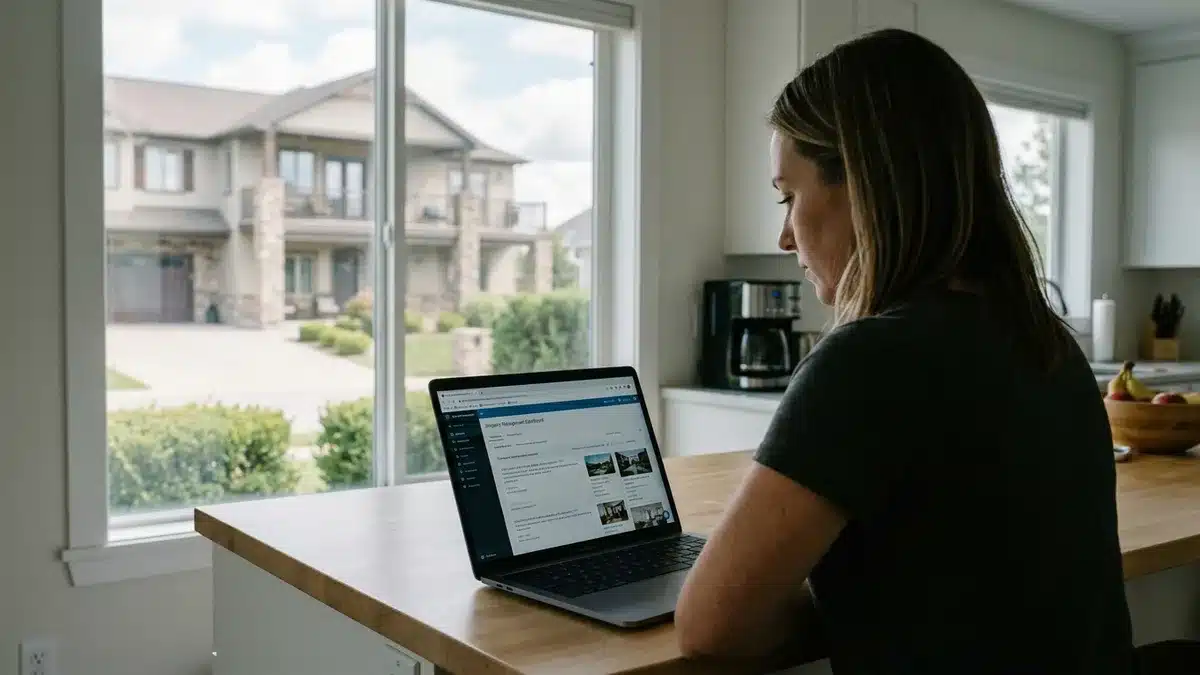
How Do I Promote My Vacation Rental Without Relying on Airbnb?
Promoting your vacation rental outside Airbnb starts with owning the infrastructure: a direct booking website on a domain you control, a guest database stored in a CRM you own, and a marketing stack that reaches past guests before they open an OTA app. Without these three foundations, every other tactic in this list delivers visitors you cannot retain or remarket to.
The marketing channels that consistently drive direct bookings are: organic search (local SEO), email marketing, social media content, paid social and Google Ads, local partnerships, and referral or loyalty programmes. None of these work in isolation. But each one feeds into the same destination: your direct booking website, not an OTA listing page.
What Makes a Direct Booking Website Actually Convert?
A direct booking website converts when it combines three things: a booking engine with secure payment processing, trust signals that replace the social proof Airbnb provides (verified reviews, clear cancellation policy, SSL certificate, professional photography), and SEO foundations that bring organic traffic from Google. A site missing any one of these three elements will capture interest but lose the booking.
Most host-built websites fail because they are essentially digital brochures with no booking engine attached. Guests arrive, like what they see, and then go back to Airbnb to actually book because there is no mechanism to complete the transaction on your site. If you want to understand what goes into building a site that avoids this trap, our guide on how to build a direct booking website walks through the exact structure that works.
Boostly builds these sites on WordPress with a built-in booking engine, secure card payments, and real-time PMS sync across 27 or more property management systems. Hosts go live within 35 days, with no coding required. The site structure is built to convert from day one, not retrofitted after launch.
How Does Local SEO Bring Guests to Your Property?
Local SEO for vacation rentals refers to the process of optimising your direct booking website and Google Business Profile so your property appears in organic search results when travellers search for accommodation in your specific area, bypassing OTA listings entirely. A well-optimised local presence means guests find your site before they find your Airbnb listing, which gives you the first opportunity to convert that interest directly.
The core local SEO actions for STR hosts in 2026 are: claiming and fully completing your Google Business Profile with photos, category, and booking link; building backlinks from local tourism boards, chambers of commerce, destination marketing organisations, and local event directories; embedding location-specific content on your website (neighbourhood guides, local event calendars, area-specific FAQs); and ensuring your property name, address, and phone number are consistent across every directory where you are listed.
Schema markup is worth adding to your website if you have technical support available. Vacation rental schema can surface your pricing, availability, and review data directly in Google search results, giving your listing visual prominence that a plain blue link cannot match.
Backlinks from authoritative local sources carry more weight than generic travel directories. A link from your county tourism board or a local event organisation signals to Google that your property is genuinely embedded in that destination, not just targeting keywords. This is one of the areas where Boostly's training library goes deep: the 80+ hours of courses include dedicated modules on local SEO strategy and Google Business Profile optimisation specifically built for STR hosts who have never run an SEO campaign before.
What Are the Best Social Media Tactics for Vacation Rental Hosts?
Social media marketing for vacation rentals works best when the content strategy focuses on the destination experience rather than the property itself. Guests book a stay because of the place, the feeling, and the activities it enables. Your Instagram and TikTok content should reflect that, not read like a property listing with captions.
Short-form video consistently outperforms static photography for reach. Property walkthrough videos in vertical format, running 15 to 60 seconds with natural audio, generate significantly more profile visits and saves than static imagery. The recommended posting cadence for Instagram Reels is three to five times per week; TikTok rewards daily posting for algorithm visibility. Neither platform punishes quality over quantity, but consistency matters more than production value at the start.
User-generated content is free social proof. Encourage guests to tag your property in their holiday photos by including a gentle nudge in your checkout message or welcome book. A single tagged post from a guest to their own followers reaches an audience that would never see your paid content. Over time, a library of authentic guest imagery builds the kind of trust that professional photography alone cannot replicate.
Paid social ads on Meta are an underused channel for vacation rental operators. Most hosts focus their paid budget on Google Ads because the intent is clearer. But Meta's audience targeting lets you reach travellers who are in the planning phase, before they have opened an OTA app, which positions your direct booking site as the first option they see. Even a modest paid social budget, used to retarget website visitors or lookalike audiences of past guests, can lift direct booking rates meaningfully. Our piece on strategic communications that drive direct bookings goes into how to frame your property messaging to work across both organic and paid social.
How Do You Build an Email Marketing System That Fills Your Calendar?
Email marketing for vacation rentals is the highest-ROI channel most hosts are not using. A past guest who loved your property and receives a well-timed email with a direct booking discount is far cheaper to convert than a new guest acquired through paid advertising. The problem is that Airbnb owns that guest relationship, not you. The moment a guest checks out through an OTA, their contact details belong to the platform.
Building an email list requires two things: a direct booking channel that captures guest data into a CRM you own, and a post-stay sequence that converts OTA guests into future direct bookers without violating platform terms. You cannot solicit off-platform bookings through Airbnb's messaging system. But once a guest has stayed and their contact details are legally yours, nothing prevents you from marketing to them through your own channels.
The email sequences that work best for STR hosts follow a clear structure. Send a post-checkout thank-you email within 48 hours, include a review request, and introduce a direct booking discount for their next stay. A common structure is 10% off a second booking and 15% off a third, combined with early access to peak-season availability. Six months after checkout, an automated “we miss you” email referencing their previous stay and offering the discount again captures guests who are in the planning window for their next trip.
Monthly newsletters combining destination news, local events, property updates, and exclusive direct booking offers keep past guests engaged between stays. Segment your list by guest type where possible: families, couples, groups, and pet-owning guests all respond to different content and offers. This level of targeting is exactly what Boostly's built-in CRM enables, and new members get CRM access within 24 hours of signing up so the system can start capturing guest data from the first direct booking.
What Is the 80/20 Rule for Vacation Rental Marketing?
The 80/20 rule in vacation rental marketing refers to the observation that roughly 80% of your bookings come from 20% of your marketing activities. For most STR hosts, that productive 20% is a combination of a well-structured direct booking website, professional photography that elevates the listing across every channel, and an email follow-up system that converts past guests into repeat bookers. Identifying your 20% and investing in it consistently will outperform spreading effort across every available tactic simultaneously.
The table below maps the nine vacation rental marketing ideas in this guide against their typical effort level and the booking channel they primarily support, so you can prioritise based on where you are today.
| Marketing Tactic | Effort to Set Up | Primary Booking Channel Supported | Direct Booking Impact |
|---|---|---|---|
| Direct booking website | Significant upfront; minimal ongoing | Direct channel | Foundational |
| Local SEO and Google Business Profile | Moderate setup; low ongoing | Organic search to direct site | High (compounds over time) |
| Professional photography | One-time cost; high impact | All channels including OTAs | High (lifts all channel conversion) |
| Email marketing and CRM | Moderate setup; automated ongoing | Direct channel via repeat guests | Very high for repeat bookings |
| Social media content | Low setup; ongoing effort required | Brand awareness to direct site | Medium (builds over time) |
| Local partnerships | Moderate (relationship-building) | Referral and direct | Medium (market-dependent) |
| Paid Google Ads | Low setup; budget-dependent | Direct channel | High intent; immediate results |
| Paid social (Meta) | Low setup; budget-dependent | Top-of-funnel to direct site | Medium (planning-phase guests) |
| Loyalty and referral programme | Low setup; automated | Direct channel via referrals | High for scaling repeat volume |
For fine-tuning your STR marketing strategy, the most important question is not which tactic is theoretically best but which tactic you will actually sustain. A consistent email sequence that runs automatically beats an aggressive social media calendar you abandon after three weeks.
How Do Local Partnerships Strengthen Your Booking Strategy?
Local partnerships are one of the most underused vacation rental marketing ideas because the results take longer to materialise than paid advertising. But the payoff is durable. A co-branded package with a local outdoor outfitter, a wine tasting room, or a restaurant that your guests already visit creates distribution you cannot buy through an OTA. The outfitter promotes your property to their customers; you promote their experiences to your guests. Both parties benefit without paying a commission to a third platform.
Concrete partnership formats that work in practice: bundled packages that combine a two-night stay with a guided activity or restaurant credit; reciprocal referral agreements where local businesses recommend your property to clients looking for accommodation; and joint content, such as a “what to do in 48 hours in this area” blog post co-authored with a local tourism organisation that links back to your direct booking site.
Getting listed on local tourism board websites and destination marketing organisation directories builds both backlinks and brand credibility. A link from your regional tourism board to your direct booking site carries genuine SEO authority. It also signals to potential guests that your property is a recognised part of the destination's hospitality offer, not just an algorithm-ranked listing on a global platform.
Pairing your website with a book direct marketplace is another fast way to build visibility outside Airbnb, particularly in the early months when your organic SEO is still building momentum.
How Do You Transition Existing Airbnb Guests to Direct Booking?
Transitioning existing Airbnb guests to book directly is one of the highest-value and most underdiscussed vacation rental marketing ideas. Most guides focus on acquiring new guests. But a guest who already stayed at your property, already trusts you, and already knows the quality of your offering is dramatically easier and cheaper to convert than a cold prospect who found you through an OTA search.
The mechanics work like this. After checkout, you legally have the guest's contact information from Airbnb's booking details (name, general location, and often a personal email if they provided one during communication). You cannot use Airbnb's platform to solicit off-platform bookings, but you can include a link to your direct booking site in your welcome book, your checkout instructions, and any post-stay messages that fall within Airbnb's communication guidelines.
The most reliable conversion sequence is a post-checkout email sent two days after the stay ends. The email thanks the guest, includes a review request linked to your preferred review platform, and introduces your direct booking website with a returning guest discount. Keep the discount meaningful: 10% off their next stay is enough to make the direct booking feel rewarding without training guests to wait for a deal every time.
Physical touchpoints inside the property also work. A card on the kitchen counter or in the welcome pack that says “book your next stay directly at [your website] and save 10%” reaches guests who are still in the property, at the peak of their satisfaction with the experience. That is exactly the moment when they are most likely to bookmark your site for next time.
The prerequisite for all of this is a CRM that captures every guest's contact details and triggers the post-checkout sequence automatically. Without automation, most hosts send one follow-up email and then forget. Boostly's built-in CRM and automated email sequences handle this without manual effort, turning every checkout into the start of a direct booking relationship rather than the end of an OTA transaction.

What Metrics Should You Track When Shifting Away From OTAs?
Tracking the right metrics when shifting your vacation rental marketing spend away from OTAs is what separates hosts who build a real direct booking business from those who run tactics without knowing if they work. Most hosts track total revenue and occupancy. Neither of those tells you whether your direct booking strategy is making progress.
The five metrics that matter most when building a direct channel are:
- Direct booking percentage: The proportion of total bookings completed through your direct channel rather than an OTA. The target, with a structured system, is 65% within 12 months.
- Direct channel revenue as a proportion of total revenue: A higher direct percentage is only valuable if it translates to more revenue retained. Track this separately from OTA revenue to see the commission saving in real terms.
- Website conversion rate: The percentage of website visitors who complete a booking. A low conversion rate signals a problem with your booking engine, trust signals, or pricing, not with your traffic.
- Email list growth rate: The number of past guests added to your direct marketing database each month. Growth here is a leading indicator of future direct booking volume.
- Repeat guest rate: The percentage of bookings from guests who have stayed before. A rising repeat rate indicates your post-stay follow-up is working and your direct channel is compounding.
Without separating these metrics from your OTA performance data, you are flying blind. Boostly's platform includes reporting tools that track direct booking performance over time, including conversion rate, booking value by channel, and progress toward the 65% direct booking benchmark, so you always know whether your investment is working.
Which Vacation Rental Marketing Ideas Deliver the Fastest ROI?
If you are starting from zero direct bookings, the fastest ROI comes from professional photography combined with a working direct booking website. Photography lifts conversion across every channel simultaneously, including your OTA listings, and it is a one-time investment. Research consistently indicates it can generate substantially more booking enquiries than amateur images. The combination of better photography and a direct booking site where that photography is showcased creates immediate uplift across both channels.
After photography and a direct site, the next fastest return comes from email follow-up to past guests. These are warm leads who already trust you. A simple automated sequence offering a returning guest discount costs almost nothing to run and converts at a higher rate than any paid acquisition channel.
Paid Google Ads capture high-intent travellers who are already comparing dates and locations. They are more expensive than organic SEO but they deliver results within days of launching a campaign, not months. For hosts in competitive markets where organic rankings take time to build, paid search bridges the gap while the SEO compounds in the background.
Local SEO and partnership-building take longer but their returns are durable and largely free. A backlink from a tourism board or a co-branded package with a local outfitter does not expire. Every month that passes with those assets in place, they deliver more value for less incremental effort.
The worst ROI, in our experience working with STR operators across dozens of markets, comes from chasing every new social platform simultaneously. Spreading thin across Instagram, TikTok, Pinterest, YouTube, and Facebook produces mediocre content on all of them. Pick the one or two platforms where your target guest spends the most time, build a consistent content rhythm there, and treat everything else as secondary until those channels are genuinely working.
Frequently Asked Questions
How do I promote my vacation rental without paying OTA commissions?
The most effective approach combines a direct booking website with local SEO, email marketing to past guests, and social media content. Each channel builds a guest relationship your property owns rather than one Airbnb controls. Boostly builds conversion-optimised direct booking websites for STR hosts and gets them live within 35 days, with a booking engine, CRM, and automated follow-up included from day one.
What is the 80/20 rule for vacation rental marketing?
In vacation rental marketing, the 80/20 rule refers to the observation that roughly 80% of bookings come from 20% of marketing activities. For most STR hosts, that productive 20% is a combination of a well-structured direct booking website, professional photography, and an email follow-up system for past guests. Identifying and reinforcing those high-return activities consistently outperforms spreading effort across every available tactic.
How do I transition existing Airbnb guests to book directly?
The most reliable method is a post-checkout email sequence that thanks the guest, requests a review, and offers a returning guest discount for their next direct booking. You cannot solicit off-platform bookings through Airbnb's messaging system, but once a guest has stayed and their contact details are legally yours, you can market to them through your own CRM and email channels without restriction.
What is the 75/55 rule for Airbnb?
The 75/55 rule is an informal pricing guideline some hosts follow: aim for at least 75% occupancy on weekends and 55% occupancy on weekdays. The goal is to balance high-demand weekend revenue with mid-week fill rates rather than leaving mid-week inventory empty. A direct booking channel combined with dynamic pricing gives you more control over this balance than relying solely on an OTA's automated pricing tool.
What metrics should I track when shifting marketing spend away from OTAs?
The key metrics are: direct booking percentage (targeting 65% within 12 months with a structured system), direct channel revenue as a proportion of total revenue, website conversion rate, email list growth rate, and repeat guest rate. Without tracking these separately from OTA performance data, you cannot measure whether your direct marketing investment is actually working.
How long does it take to get to 65% direct bookings?
With a structured system including a conversion-optimised website, CRM, automated email follow-up, and consistent content marketing, most hosts reach 65% direct bookings within 12 months. Boostly guarantees this outcome: hosts who do not achieve 65% direct bookings within 12 months receive a full refund plus $1,000, which reflects our confidence in the system rather than a marketing promise.
What are the 5 P's of tourism marketing applied to vacation rentals?
In the context of short-term rental marketing, the 5 P's are: Product (your property and the experience it delivers), Price (competitive and dynamic pricing across channels), Place (where guests can find and book you, including your direct site and OTA listings), Promotion (the channels and campaigns you use to drive awareness and bookings), and People (the guest service and host responsiveness that drives reviews and repeat visits). Building a direct booking channel addresses all five simultaneously, giving you control over product presentation, pricing, distribution, promotion, and guest relationships in a way that OTA-only dependency never allows.
Where Do You Start?
The nine vacation rental marketing ideas in this guide are not equally weighted. Start with the foundation: a direct booking website with a working booking engine and professional photography. Add email follow-up to past guests. Build your local SEO presence and collect backlinks from authoritative local sources. Then layer on social content, paid advertising, and partnership-building as each preceding channel is running consistently.
The path from OTA-dependent to 65% direct bookings is a defined system, not a collection of one-off experiments. Hosts who get there fastest are not doing more; they are doing the right things in the right sequence with infrastructure that makes each action compound into the next. That is what we built Boostly to provide, and it is why the guarantee exists: not as a marketing claim, but as evidence that the system works when you follow it.

If you want a direct booking website live within 35 days, real-time PMS sync across 27 or more systems, a CRM that captures every guest from day one, and a guarantee that you will reach 65% direct bookings within 12 months or get your money back plus $1,000, get started with Boostly today. Book a demo at boostly.co.uk and see exactly what the first 35 days look like for your property type.