
The top STR content tools in 2026 fall into seven categories, and the one that pays back fastest is a direct booking website with a built-in CRM. Every blog post, caption and email you produce needs a destination that does not charge you a commission. Pair that website with an SEO writing tool, an AI listing-copy assistant, email and SMS automation, a social scheduler, a visual editor and analytics.
Key Takeaways
- STR content tools are software that helps you produce, schedule, publish or measure marketing material, and they split into seven categories: website and CRM, SEO writing, AI listing copy, email and SMS, social scheduling, visuals, and analytics.
- We ordered the categories by how directly they influence direct booking revenue, not alphabetically, so ownership of guest data and conversion come before distribution.
- Content creation is a heavy workload: MarketingCharts reported that 51% of small business owners and operators named creating content, including writing copy and finding images, among their most time-consuming marketing tasks.
- Guest data capture decides repeat business: StayFi reports that WiFi capture tools achieve email opt-in rates between 85% and 92%, versus roughly 8% with manual guestbooks.
- Smaller hosts can start with free native scheduling and an AI copy assistant, but content only pays off when it points to a bookable page you own.
- Boostly builds the direct booking website, CRM and 27+ PMS integrations in one done-for-you system, so every piece of content you publish has a commission-free place to convert.
Most hosts treat content as a posting problem. They buy a scheduler, draft a few captions and wonder why Airbnb still delivers most of their reservations. The content often works. It simply sends guests to a listing where the OTA owns the relationship and keeps its cut.
At Boostly, we work with STR hosts every day who are stuck in exactly this position: steady occupancy, thin margins and a content habit that feeds someone else’s platform. Our community of 2,000+ hosts and operators taught us that the tool matters less than what it connects to.
This guide walks through each category, says who it suits, flags one honest caveat per category, and finishes with a seven-step content strategy you can run with whatever tools you choose.
What Are Some Effective Tools for Creating Content for a Rental Business?
STR content tools are software products that help a host or property manager produce, schedule, publish or measure marketing material: blog posts, listing copy, social posts, emails and photos. The category is broad, so comparing a photo editor with a CRM tells you nothing. We separate them into seven groups and judge each on the same four questions.
- Does it send traffic to a page you own rather than an OTA listing?
- Does it keep a human review step before anything publishes?
- Does it connect to your PMS so availability and pricing stay accurate?
- Can you measure what it produced in bookings, not just clicks?
The order below follows revenue impact. Ownership of guest data and conversion come first, discovery next, distribution and polish after. Pricing varies by plan for nearly every product here, so check each provider’s current pricing page rather than trusting a number in a roundup. We build one of these tools, and we hold it to the same questions.

1. Direct Booking Website With a Built-In CRM: Best for a Done-for-You Setup
A direct booking website with a built-in CRM is the page every other content tool should point to: a branded site with a live availability calendar, a booking engine and a guest database you own. Blog posts, social captions and emails all land here, so conversion and data capture happen on your domain instead of inside an OTA.
Boostly is our entry in this category. We build the site for you, with no coding required, and aim to get you live within 35 days of signing up. It connects to 27 or more property management systems with real-time syncing of listings, availability and pricing, so a stale calendar never causes a double booking. CRM access arrives within 24 hours.
Members also get AI tools, templates, weekly training calls and over 80 hours of courses. The guarantee is specific: reach 65% direct bookings within 12 months or receive your money back plus $1,000. Across our member success stories, including hosts like Sergio and Rose Tipka, direct booking rates average between 65% and 80% within 12 months. You keep your Airbnb listing live throughout.
The honest caveat: a done-for-you build suits hosts who want a finished system, not a weekend project. If you prefer the DIY route, our walkthrough on how to build a direct booking website shows what you would be taking on.
2. Blog and SEO Writing Tools: Best for Organic Search Traffic
Blog and SEO writing tools are platforms or scripts that research keywords, draft posts, structure headings and publish to your site. Rental content behaves differently from a general business blog: keyword patterns are local, demand follows seasons, and the goal is a booking enquiry rather than a newsletter signup.
The useful ones cover the whole pipeline: keyword research, SEO structure, image sourcing, internal linking, schema markup and publishing. A tool that only produces a draft leaves you with the slow part. Feed it real query data from Google Search Console instead of guesses, then edit every draft for local detail a model cannot know, such as where guests actually park or which trail is closed in winter.
Organic search takes months to pay off, which is why we launch Boostly sites with SEO structure, fast load times and property-type targeting already in place. A blog tool then publishes into a foundation built to rank. The caveat: unreviewed AI drafts read like every other rental blog, and readers notice within a paragraph.
3. AI Listing Description and Copy Assistants: Best for Faster First Drafts
AI listing copy assistants turn property details into titles, descriptions and ad text in seconds. The strongest results come from a four-part structure: a hook, the guest experience, the practical details and a call to action. The assistant supplies speed; you supply the facts that make a property specific.
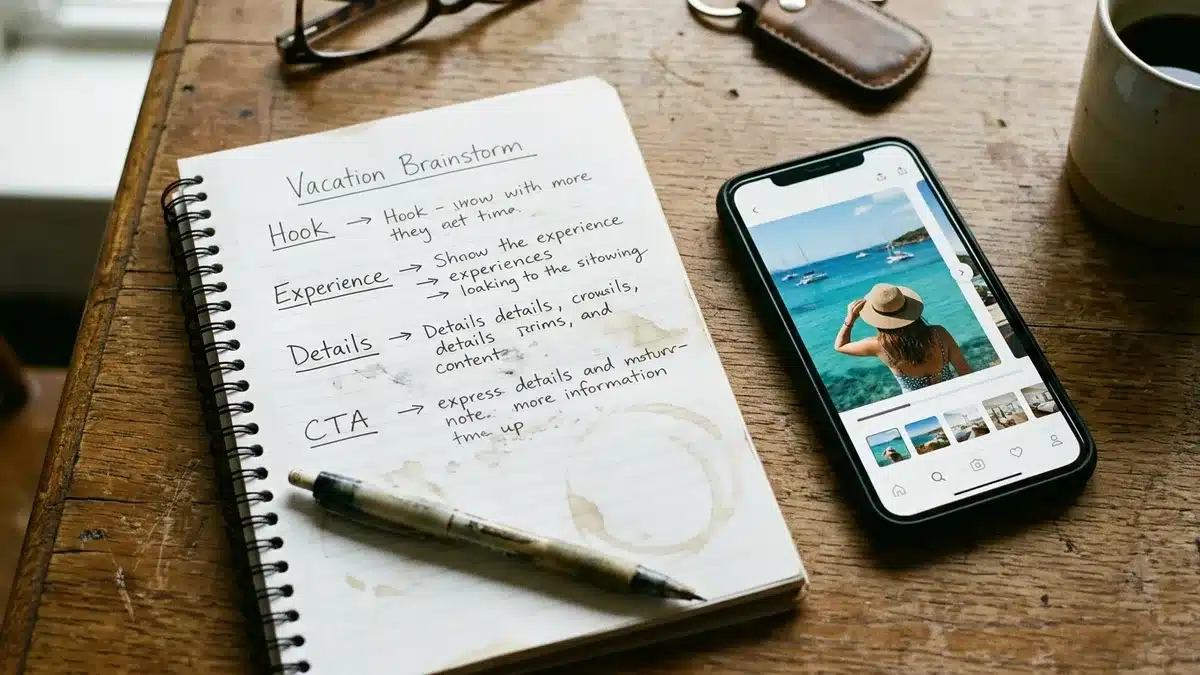
Give the assistant your guest reviews, the three details guests mention most and the exact sleeping arrangements. Without those inputs, output drifts toward stock phrases like cosy retreat and perfect getaway that appear in thousands of listings. Treat the draft as raw material and rewrite the first line by hand.
Do not paste identical copy onto every channel. OTA text is written to win a search ranking, while your own site copy has to answer why a guest should book direct. Boostly members get templates and AI tools built for STR marketing, so you start from a structure instead of a blank page.
4. Email, SMS and Guest Data Capture: Best for Repeat Bookings
Guest email and SMS tools capture contact details, store them in a CRM and send follow-up messages that bring past guests back. They matter because OTA messaging keeps contact details inside the platform, so once a stay ends you have no direct line to someone who just enjoyed your property.
Capture method decides everything. According to StayFi, WiFi capture tools achieve email opt-in rates between 85% and 92% versus roughly 8% with manual guestbooks (StayFi, 2026). Whatever you choose, collect consent properly; data protection rules such as GDPR and CCPA apply once you store guest personal data.
We built the CRM inside Boostly to capture guest data at the point of booking and run automated email and SMS sequences, so past guests receive a reason to return without you chasing them. For tactics on lead generation and email beyond the OTAs, this guide on growing a vacation rental business gives a useful second view. The caveat: a generic thank-you email earns no reply, so write sequences around specifics of the stay.
5. Social Media Schedulers and Content Calendars: Best for Consistent Posting
Social media schedulers let you draft posts in one sitting, assign dates and publish automatically from a content calendar. For a host, that means batching a month of property highlights, seasonal offers and guest moments instead of posting whenever you remember.
Native scheduling inside the social platforms covers a single account at no cost. Standalone schedulers earn their fee when you manage several channels or several properties, and pricing differs by plan. Plan around formats that tend to convert for rentals: photo carousels of specific rooms, arrival-day videos and a clear booking link in every bio.
The weak point is the link. If a post sends followers to an OTA listing, the platform collects commission on a guest you found yourself. We design Boostly pages so social traffic lands on a bookable calendar with synced availability. Our piece on strategic creative communications shows how messaging connects to bookings. A scheduler cannot rescue a thin idea, though; the calendar is only as good as the stories in it.
6. Photo, Video and Visual Design Tools: Best for Scroll-Stopping Listings
Visual design tools cover photo editing, template-based graphics and short video. They matter because guests judge a rental by its images before reading a word. A host with a tripod, morning daylight and a consistent crop can produce a full gallery in one visit.
Choose tools that export web-ready files and keep one colour palette and font set across every graphic. Reusing existing property photos is often enough to launch a new site; reshoot only the rooms that look dated. The caveat is file weight: oversized images slow a page, and a slow page loses the booking before the calendar loads.
Because we build the Boostly site for you, image sizing and page speed are handled during the build instead of left for you to debug afterwards.
7. Analytics and Attribution Tools: Best for Proving What Works
Analytics and attribution tools show which channel produced each booking, which pages guests visit and which search queries bring them in. Airbnb’s dashboard reports OTA-side data only, so it cannot tell you whether your blog, your social posts or your email list produced a reservation.

Pair Google Search Console, which shows queries and clicks, with booking-source tracking so you can see your direct share month by month. A book-direct marketplace adds one more source worth tracking separately. Attribution breaks when the site and PMS do not sync, because bookings appear without a source.
Boostly’s reporting covers direct booking performance: conversion rates, traffic sources and progress toward your direct booking target. That gives you the full-channel picture OTA dashboards hide.
What Is the Best Software for Content Creation for Short-Term Rentals?
No single product is best for every host; the right content stack depends on portfolio size, available hours and how much of your guest data you already own. The table shows the combination we recommend by operator type, with the direct booking system as the constant.
| Host profile | Core system | Content layer to add | Where to spend your time |
|---|---|---|---|
| Single-property host relying on Airbnb | Boostly direct booking website and CRM | AI listing-copy assistant, free native scheduling | Rewriting AI drafts with real guest details |
| Multi-property operator | Boostly with PMS real-time sync | SEO writing tool, standalone scheduler | One shared content calendar across properties |
| Property manager with owner portfolios | Boostly direct booking website and CRM | Email sequences, SEO writing tool | Consistent branding across every managed property |
| Remote owner | Boostly CRM automation | Scheduled social posts, automated follow-up | Setting sequences once, then reviewing monthly |
A single-property host on a tight budget can begin with free tools, and that is a sensible first step. The ceiling appears when guest data and bookings still sit on someone else’s platform. That gap is why we pair content tools with a direct booking system rather than recommending either alone.
What Are Some Popular Marketing Tools, and How Do You Automate Them?
Marketing automation for short-term rentals is software that handles repetitive tasks, mainly content creation, scheduling and publishing, without daily manual input. The popular tools are the seven categories above plus your PMS, which holds the booking data everything else relies on.
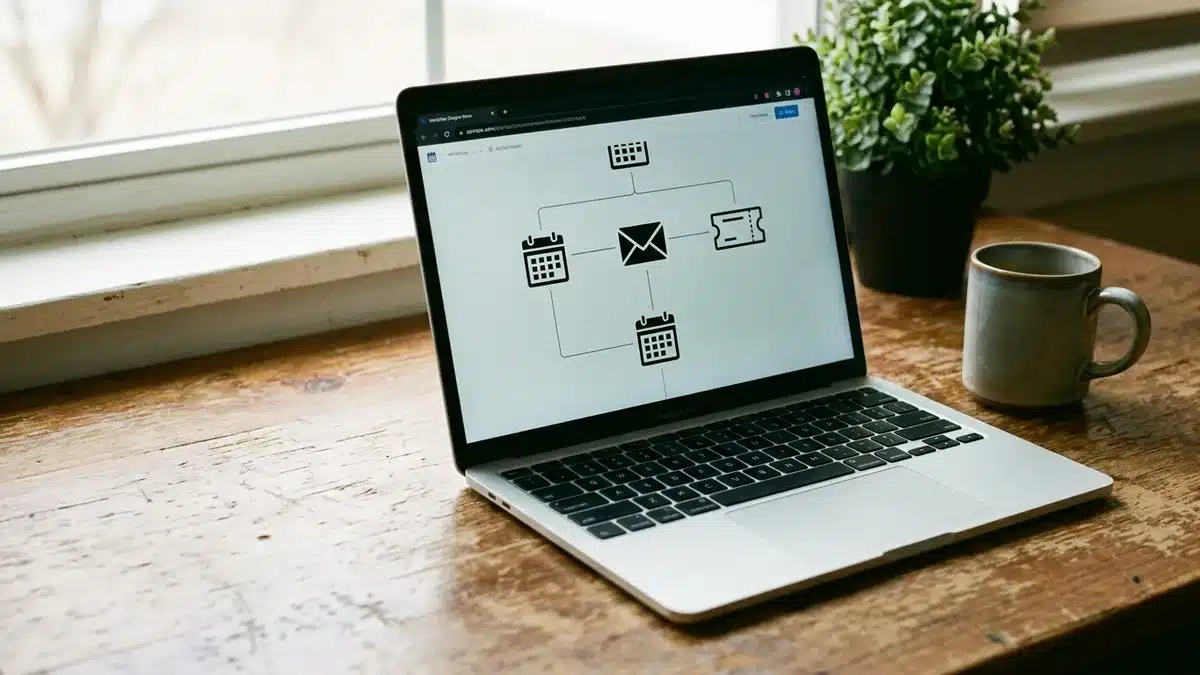
Set them up in order. First connect your PMS to your website so availability and pricing sync. Then route booking data into your CRM, attach email and SMS sequences, and finally schedule social and blog content that links back to the site. Each tool added before the previous layer works leaves a manual gap you fill by hand.
That chain is what we designed Boostly around: PMS sync feeds the site, the site feeds the CRM, and the CRM runs follow-up. For more on where this software is heading, see our look at guest services software innovations.
What Do Other Roundups of the Top STR Content Tools Leave Out?
Most roundups of the top STR content tools skip three things: a definition of what counts as a content tool, a shared set of criteria for comparing products, and independence from the vendors being compared. Many are written by companies reviewing their own category, so pricing, limits and integrations rarely line up side by side.
Scope matters first. Blog writers, listing-copy assistants and social schedulers solve different problems, so ranking them in one list misleads. We compare within categories instead, and judge each on workflow stages beyond drafting: keyword research, editing, scheduling, publishing and human review.
Our own bias is plain. We sell one of these tools, which is why we publish the criteria and admit that free native scheduling plus an AI copy assistant is enough for some hosts. A practical test for any vendor: ask them to demonstrate the publishing step from draft to live page, with a person approving it.
What Are the 7 Steps in Creating a Content Strategy for a Rental Business?
A rental content strategy is a repeatable plan that links what you publish to bookings you keep. The seven steps below work with any tool combination.
- Set a goal in booking terms, such as your direct share of reservations, using SMART goals so progress is measurable.
- Audit where bookings come from today, by channel, before changing anything.
- Put a bookable destination in place: a direct booking site with synced availability.
- Build a keyword list from real search queries and guest questions, not guesses.
- Choose one format per channel, for example blog posts for search and carousels for social.
- Automate follow-up with email and SMS sequences triggered by booking events.
- Review monthly: keep what produced bookings, cut what only produced likes.
Steps four to six are where most hosts stall, and they are the focus of the weekly training calls and 80+ hours of courses our members receive.
Mistakes That Waste Content Budget
- Publishing before a bookable page exists, which sends readers back to an OTA.
- Accepting AI drafts without a human edit for local detail.
- Buying several tools that do not share data, then re-entering it by hand.
- Measuring reach instead of direct bookings.
Frequently Asked Questions
What are the best AI content tools for vacation rentals?
The most useful AI tools fall into two groups: listing-copy assistants for titles and descriptions, and SEO writing platforms for blog posts. Either produces better output when you supply guest reviews and property specifics. Always edit for local detail before publishing. Boostly members also get AI tools and templates built for STR marketing.
What does short-term rental content automation software do?
It handles repetitive marketing tasks, mainly content creation, scheduling and publishing, without daily manual input. Stronger platforms also cover keyword research, internal linking and schema markup, not just draft generation. Automation works best when a person still approves what goes live.
Which social media tools work best for Airbnb hosts?
Native scheduling inside the social platforms is enough for a single account. Standalone schedulers with content calendars help when you run several channels or properties. Whichever you use, link posts to a page you own, not an OTA listing, so the booking does not carry a commission.
How do I set up automated marketing for a vacation rental?
Connect your PMS to your website first, route booking data into a CRM, then attach email and SMS follow-up sequences. Add scheduled social and blog content last, each piece linking to your booking page. Boostly delivers this chain as one done-for-you system.
Do I have to stop listing on Airbnb to use a direct booking website?
No. Boostly is additive: you keep your Airbnb and other OTA listings live while the direct channel grows alongside them. Your existing listing work is not wasted, and each booking that moves direct keeps roughly 15% more in your pocket.
How long does it take to set up a direct booking website?
With Boostly, the done-for-you build aims to be live within 35 days of signing up, with no coding required. CRM access arrives within 24 hours. A DIY build varies widely with your time and technical confidence.
Conclusion
The top STR content tools work best as a chain, not a shopping list. A bookable website you own comes first, content that finds guests comes second, and follow-up that brings them back comes third. In 2026, hosts who connect those layers keep more of every booking, while those who publish into OTA listings keep funding someone else’s growth.
If your content already draws visitors but too many reservations still land on an OTA, book a demo with Boostly to see how a done-for-you direct booking website, CRM and PMS sync would work for your properties. We aim to get you live within 35 days, backed by a guarantee of 65% direct bookings within 12 months or your money back plus $1,000.