An STR website is a host-owned booking site built specifically for short-term rental properties, separate from Airbnb, Vrbo, or Booking.com listings. It lets guests search availability, view pricing, and pay directly, so the host keeps the guest relationship and avoids paying a commission on that reservation.
Key Takeaways
- An STR website is a direct booking site that runs alongside your existing OTA listings; you don't need to quit Airbnb or Booking.com to use one.
- Industry data shows a repeat direct booking on a $2,000 stay saves a host between $310 and $640 compared to booking the same stay through an OTA (Houfy, 2026).
- An Airbnb host-only fee runs at 15.5% on a $2,000 booking, which works out to $310 in commission on that single reservation (Houfy, 2026).
- Building organic search traffic to a direct booking site typically takes three to six months, unlike OTA listings that can generate bookings from day one.
- A guest email list of 200 people with a 15% annual repeat rate can generate 30 commission-free bookings a year (Houfy, 2026).
- Boostly builds fully optimized, done-for-you STR websites live within 35 days, with real-time sync across 27 or more property management systems, so hosts get a conversion-focused site without writing code.
If you're reading this, you've probably already noticed the gap between what Airbnb pays out and what you actually keep. That gap is the reason STR websites exist. In 2026, with the rise of direct booking as a standard part of host strategy, more single-property hosts and multi-unit operators are treating their own website as core infrastructure, not a side project.
This guide covers what an STR website actually needs to convert, how it differs from a generic template or a PMS booking widget, what it typically costs to build, and the compliance details most guides skip entirely. We'll also walk through a practical decision framework so you know whether a direct site makes sense for your portfolio size and market, right now, not in some hypothetical future.
At Boostly, we've built direct booking sites for hosts running a single cabin and for operators managing dozens of units across multiple PMS platforms. The fundamentals don't change much with scale, but the stakes do. A missed reservation on one property stings. A missed reservation across a 40-unit portfolio compounds fast.
What Does STR Mean for a Website?
STR stands for short-term rental, meaning furnished accommodation rented to guests for periods typically under 30 days. An STR website, specifically, is the booking site a host or property manager builds to sell that inventory directly to guests, rather than relying solely on a marketplace like Airbnb or Vrbo to bring in reservations.
This distinction matters because “STR” gets used loosely across the industry. In this context, an STR website has nothing to do with hospitality data firms or unrelated government assistance programs that also use the STR acronym; it refers exclusively to a booking platform for vacation rental and short-term rental properties.
A functioning STR website generally includes an integrated booking engine, real-time calendar sync with your property management system, secure payment processing, and a custom domain that reflects your brand rather than a marketplace's. Without these four pieces, what you have is a brochure site, not a booking engine, and brochure sites don't convert traffic into paid stays.
That's the gap we built Boostly to close. Rather than a generic WordPress template bolted onto a booking plugin, Boostly builds the booking engine, PMS sync, and payment processing as one connected system from day one, so hosts aren't stitching together four separate vendors to get a working site.
What's the Best Platform for Short-Term Rentals?
The best platform for short-term rentals depends on whether you're solving for exposure or for margin. Marketplaces like Airbnb and Vrbo win on broad guest reach and built-in trust; a dedicated direct booking website wins on commission savings, guest-data ownership, and long-term repeat business.
Airbnb remains the widest-reach OTA for peer-to-peer travelers, and Vrbo tends to perform well for family and group travelers looking for entire-home stays. Booking.com, meanwhile, is a stronger fit for urban properties and international guests, partly because of its Genius loyalty program, which rewards repeat bookers with visibility and discounts inside that ecosystem.
None of these platforms, however, let you own the guest relationship. Every booking through an OTA hands over guest contact details on the platform's terms, and every reservation carries a commission. A direct booking website is the only “platform” in this list where you control payout timing, guest data, and pricing without a per-booking cut going to a third party.
In our experience, the strongest setup isn't choosing one channel over another. It's running OTAs for discovery while building a direct booking site to capture repeat guests and word-of-mouth traffic. Boostly is built around that exact model: hosts keep their Airbnb and Vrbo listings live while the direct site captures the guests who'd rather book with you again than pay OTA fees a second time.
Is an STR Business Still Profitable in 2026?
Short-term rental businesses remain profitable in 2026, though margins depend heavily on channel mix and operating costs. The global vacation rental market was estimated at $106.5 billion in 2026, according to Grand View Research, with continued growth projected through 2033, signaling steady demand rather than a market in decline.
U.S.-specific data reinforces this. AirDNA's 2026 Midyear Outlook projected short-term rental occupancy at 57.4% for 2026, slightly above the 57.0% pre-pandemic average, with RevPAR forecast to rise 2.9% for the year, driven more by stronger nightly rates than by occupancy growth alone. Supply is also expanding, with U.S. listings projected to reach 1.77 million in 2026, up from 1.69 million in 2026.
The profitability question isn't really “is STR still viable.” It's “how much of every booking are you keeping.” A host paying full OTA commission on 100% of bookings is running the same business at a structurally lower margin than a host who's shifted even a third of reservations to direct. Notably, some U.S. markets saw booking demand spike more than 1,000% year-over-year following the FIFA World Cup 2026 schedule release, with cities like Greater Boston and Kansas City seeing average daily rate increases exceeding 100% for the same period, according to KeyData. Demand surges like that make channel mix even more consequential; a host without a direct booking presence captures none of that spike without paying a commission on every single reservation.

This is precisely where a direct booking strategy earns its keep. Boostly's guarantee, hosts who don't hit 65% direct bookings within 12 months get their money back plus $1,000, exists because we've watched channel mix, not raw demand, decide whether an STR business is genuinely profitable or just busy.
What Is an STR Property, Exactly?
An STR property is any furnished residential unit, cabin, condo, or similar accommodation rented to guests for short stays, usually under 30 days, as opposed to long-term leases. This covers everything from a single-room accommodation to a 12-bedroom lodge, and it includes properties listed on OTAs, on direct booking sites, or on both simultaneously.
What separates an STR property from a standard rental isn't size or location, it's booking cadence and guest turnover. A property that turns over guests every three to seven days needs different infrastructure than a 12-month lease: dynamic pricing, frequent cleaning coordination, guest messaging at scale, and a booking system that updates availability in real time across every channel it's listed on.
That last point is where a lot of hosts get burned. If your STR property is listed on Airbnb, Vrbo, and your own website, and those three calendars aren't synced, you will eventually get a double booking. It's not a matter of if, it's when. This is exactly the operational risk Boostly's real-time sync across 27 or more property management systems is built to remove; when a guest books direct, the OTA calendars update instantly, and vice versa.
Research on vacation rental guest behavior backs up why STR properties benefit from a direct channel specifically. One study on Gulf Coast rentals across Southern Alabama and Northwest Florida found that 89.4% of survey respondents were repeat visitors, according to the Journal of Travel & Tourism Insights at Grand Valley State University. Repeat guests are the exact segment a direct booking website is built to capture without paying a commission a second time.
What Does a Direct Booking Website Actually Need to Convert?
A direct booking website needs four core components to convert traffic into paid reservations: an integrated booking engine, real-time availability sync, secure payment processing, and clear trust signals above the fold. Missing any one of these turns a functional site into a digital brochure that guests browse but never book from.
The booking engine is non-negotiable. It needs to show live availability, calculate total pricing including any fees, and let a guest complete payment without leaving your site. Industry guidance from vacation rental software providers consistently recommends pairing that booking engine with real-time OTA availability sync and built-in SEO tools, so the site both converts visitors and gets found in search in the first place.
Design matters more than most hosts expect. A strong hero image and a visible “Book Now” button placed above the fold are consistently cited as the two highest-impact initial design decisions a direct booking site can make; if a guest has to scroll to find how to book, you've already lost a meaningful share of them. Payment processing typically runs through providers like Stripe or PayPal, both widely used across the direct booking space for their security and guest familiarity.
Trust Signals That Actually Move the Needle
Guests hesitate to pay a stranger's website directly, and that hesitation is rational. Review counts, verified guest testimonials, clear cancellation policies, and secure payment badges all reduce that friction. A site with none of these looks exactly like the scam sites guests have been trained to avoid.
This is the part most host-built websites get wrong, not because the host doesn't know it matters, but because building a booking engine, payment integration, and trust-signal layout from scratch takes real technical skill most hosts don't have time to develop. Boostly builds all of this into every site from the start, live within 35 days, with no coding required on the host's side.
Direct Booking Website vs. OTA Listing: What's the Real Difference?
A direct booking website differs from an OTA listing in four measurable ways: commission cost, payout control, guest-data ownership, and setup speed. An OTA listing can generate bookings from day one because it taps into existing marketplace traffic, while a direct booking site typically needs three to six months to build meaningful organic search momentum.
The trade-off is commission. Airbnb's host-only fee runs at 15.5% on a $2,000 booking, which comes to $310 lost to commission on that single reservation, according to Houfy's 2026 analysis. Repeat that booking through a direct channel instead, and the same stay saves the host between $310 and $640 compared to going through an OTA. That gap compounds fast across a full season of bookings.
| Factor | OTA Listing (Airbnb/Vrbo) | Direct Booking Website |
|---|---|---|
| Commission per booking | Host-only fee around 15.5% on Airbnb | No OTA commission; hosting/software costs only |
| Guest data ownership | Limited, held by the platform | Fully owned by the host |
| Time to first booking | Can generate bookings from day one | Typically 3 to 6 months to build organic traffic |
| Payout control | Set by platform payout schedule | Set by host's chosen payment processor |
| Calendar sync needed | Native to the platform | Requires PMS integration for real-time sync |
Neither channel replaces the other outright. OTAs handle payment processing, guest messaging, and dispute resolution for you, at a cost. A direct site hands you the guest relationship and the margin, but you carry more of the operational load. Boostly's model doesn't ask hosts to choose. Your existing Airbnb and Vrbo listings stay live while the direct site captures repeat guests and referral traffic that would otherwise cost you a commission every single time.
What Types of STR Website Builders Are Available?
Three categories of website builder serve the STR space: dedicated direct booking platforms, PMS-native website widgets, and custom agency builds. Each fits a different combination of budget, technical skill, and portfolio size.
Dedicated direct booking platforms, like Boostly, are purpose-built for STR conversion specifically, combining a booking engine, CRM, and PMS integrations as one connected system rather than separate add-ons. PMS-native website builders come bundled with your property management system and typically include a native booking engine, rate and availability sync, and prebuilt templates, though customization is often limited to what the PMS vendor allows.
Custom agency builds sit at the other end of the spectrum. Industry estimates from vacation rental software providers put typical custom agency build costs at $5,000 to $8,000 upfront, plus $200 to $300 a month in ongoing maintenance, a meaningfully higher investment than a done-for-you platform, and one that still requires you to manage design, hosting, and updates independently, or pay an agency retainer to do it for you.
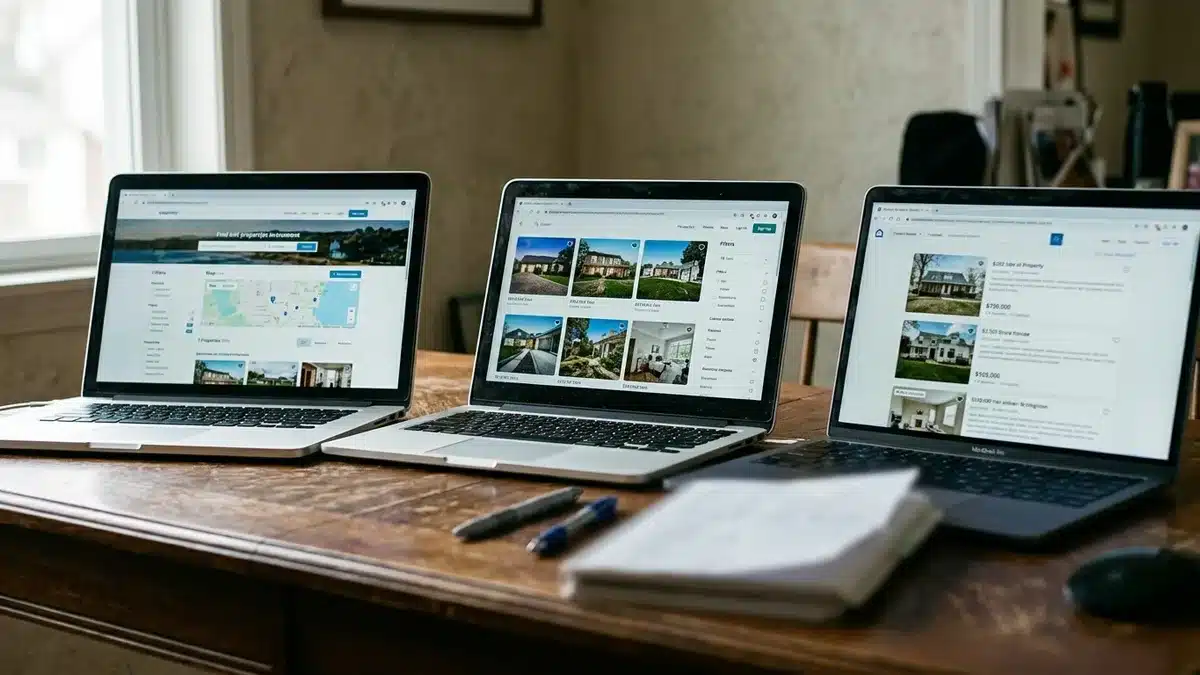
For hosts weighing these three paths, the deciding factor is usually time versus control. A custom build gives you full design freedom at a real cost in dollars and months. A PMS widget is fast but limited. Boostly sits in the middle deliberately: full conversion-focused design, done for you within 35 days, without the agency price tag or the technical lift of a fully custom build.
How Much Does a Direct Booking Website Typically Cost?
Direct booking website costs vary widely by build type, ranging from PMS-bundled widgets included in existing software subscriptions to custom agency builds running $5,000 to $8,000 upfront plus $200 to $300 monthly in maintenance, according to vacation rental software industry estimates. Dedicated direct booking platforms typically fall between these two extremes on a subscription model.
The real cost question isn't the sticker price, though. It's break-even math. If a custom agency build costs $5,000 upfront and a host is losing $310 in commission on every $2,000 Airbnb booking, that build pays for itself in roughly 16 direct bookings, before accounting for the monthly maintenance fee, and before the three-to-six-month runway most direct sites need to build organic traffic.
Multi-property operators face a different calculation entirely. A 12-unit portfolio doing 30 to 40 bookings a month across all units accumulates commission losses fast, meaning the payback period on a direct booking site shrinks significantly compared to a single-property host doing a handful of bookings a season.
This is where Boostly's multi-property sync capabilities earn their cost. Real-time syncing across 27 or more PMS platforms means a growing portfolio never outgrows the system, it scales with you, whether you're running one property or fifty.
What Compliance Steps Come Before Accepting Direct Bookings?
Accepting direct bookings requires confirming local short-term-rental registration status, understanding applicable occupancy tax collection obligations, and setting clear cancellation, refund, and fraud-prevention policies before you take a single guest payment. Skipping this step is one of the most common and costly mistakes new direct-booking hosts make.
Registration and permit requirements vary significantly by city and state, and they change often. Some municipalities, like Houston's official short-term rental registration portal, require hosts to register before listing publicly at all. Rather than assuming your existing OTA listing covers you, confirm current registration, occupancy limits, and tax collection requirements with your specific city or county government office; the exact rules differ too much by jurisdiction to generalize safely here.
Fraud prevention matters more on a direct site than on an OTA, because the OTA typically handles dispute resolution and chargeback protection for you. On your own site, that responsibility shifts to you and your payment processor. Confirm your processor, such as Stripe or PayPal, includes chargeback protection, and write a cancellation policy that's visible before checkout, not buried in a footer link nobody clicks.
Insurance is the other piece hosts underestimate. Short-term rental insurance policies differ from standard homeowner's coverage, and a booking taken directly, outside an OTA's built-in guest protections, may need separate verification that your policy covers direct-channel guests. Check this with your insurance provider directly rather than assuming coverage carries over automatically.
How Do You Decide If a Direct Booking Website Is Right for Your Portfolio?
Deciding whether a direct booking website fits your portfolio comes down to four factors: property count, existing repeat-guest volume, technical comfort, and current PMS setup. A single seasonal property in a low-repeat-visit market will see a slower payback than a multi-unit portfolio in a destination with strong repeat travel patterns.
Start with your repeat-guest data, if you have any. A host with a guest email list of 200 people and a 15% annual repeat rate can generate roughly 30 commission-free bookings a year, according to Houfy's 2026 data, an amount that alone often justifies the cost of a direct site. If you have no guest email list at all yet, building one becomes step one, not an afterthought.
- Pull your last 12 months of bookings and calculate what percentage were repeat guests versus first-time bookers.
- Check whether your current PMS supports real-time sync with a third-party direct booking site, or whether you'd need to switch platforms.
- Estimate your annual OTA commission spend using your actual booking volume and average nightly rate.
- Compare that commission spend against the cost of a direct booking platform, factoring in the typical three-to-six-month ramp to organic traffic.
- Decide whether you have the guest email list, or the willingness to build one, to make repeat direct bookings a realistic revenue stream.

For operators managing multiple properties across different owners, like professional property management companies, this decision also needs to account for reporting. Owners want to see measurable direct booking growth, not just a website that exists. Boostly's built-in analytics track direct booking performance specifically, so property managers have real numbers to bring back to owners, not a vague sense that “the website is working.”
What Mistakes Do Hosts Make Building Their First STR Website?
The most common mistake hosts make with a first STR website is treating it as a static brochure rather than a conversion tool, launching a site with property photos and a contact form but no functioning booking engine. A guest who can't check availability and pay in the same session will leave and book elsewhere, usually back on Airbnb.
A second frequent error is neglecting calendar sync entirely. Hosts running a WordPress site alongside Airbnb and Vrbo listings, updated manually, inevitably hit a double booking. It's rarely a question of carelessness, it's a question of volume; manually updating three calendars every time a booking comes in doesn't scale past a handful of reservations a month.
Third, many hosts underestimate SEO. A direct booking site with no blog content, no local landing pages, and no structured data rarely ranks for anything beyond the property's exact name, meaning it only gets traffic from people who already know the property exists. That's a real limitation if you're depending on organic search to bring in new guests, not just repeat ones.
Fourth, and this one's easy to overlook: hosts launch a direct site and never follow up with past guests. All the CRM infrastructure in the world doesn't help if nobody sends the email. Automated post-stay follow-up is one of the highest-leverage, lowest-effort levers in direct booking, and it's exactly why Boostly builds CRM access into every new member's setup within 24 hours of signing up, alongside the templates and training needed to actually use it.
Do You Need a Blog to Improve Your Holiday Rental Website's SEO?
A blog isn't strictly required for a holiday rental website to rank in search, but it significantly improves your odds of ranking for anything beyond your exact property name. Blog content lets you target local search terms, seasonal guest questions, and area-specific queries that a static booking page alone can't reasonably cover.
Consider what a guest actually searches before booking: “best time to visit [destination],” “things to do near [neighborhood],” or “is [area] good for families.” A booking-only page has no reason to rank for any of these. A blog post answering them directly does, and it captures that guest earlier in their planning process, before they've committed to searching Airbnb specifically.
This is a genuine differentiator competitors underrate. Most STR website guides talk about SEO in vague terms, “optimize your content,” without explaining what that actually means structurally: local landing pages, structured data markup, and content built around the specific questions guests ask before they book. Boostly members get access to over 80 hours of training covering exactly this, plus AI tools and content templates, so building that content doesn't mean starting from a blank page every week.
Frequently Asked Questions
How do I establish a direct booking website for my rental properties?
Start by confirming your current PMS supports real-time calendar sync, then choose a build path: a dedicated direct booking platform, a PMS-native widget, or a custom agency build. A dedicated platform like Boostly gets hosts live within 35 days without requiring coding skills, which is typically the fastest path for hosts without an in-house developer.
Are there any guides or tools to help set up a direct booking system on my website?
Yes. Boostly provides a done-for-you build combined with CRM access, AI tools, templates, and over 80 hours of on-demand training covering the marketing side of direct bookings, not just the technical setup. Weekly coaching calls are also included so hosts aren't building the strategy in isolation.
How do I start a direct booking website?
Begin by calculating your current OTA commission spend and repeat-guest percentage, since these numbers determine how quickly a direct site pays for itself. From there, confirm your PMS integration options, decide on a build path, and prioritize a working booking engine and payment processing before worrying about design polish.
Do I need a blog to improve my holiday rental website's SEO?
A blog isn't mandatory, but it's one of the most effective ways to rank for search terms beyond your exact property name, such as local activities, seasonal travel questions, and area comparisons. Without content targeting these searches, a booking-only page typically only gets found by guests who already know the property exists.
How long does it take to get a direct booking website live?
With a done-for-you platform like Boostly, hosts are typically live within 35 days of signing up. Custom agency builds usually take considerably longer, given the added design, development, and integration work involved in a fully bespoke site.
Do I have to stop listing on Airbnb to use a direct booking website?
No. A direct booking website is designed to run alongside your existing Airbnb, Vrbo, or Booking.com listings, not replace them. Boostly specifically builds its platform to layer a direct booking funnel on top of your current OTA presence, so you keep that exposure while capturing repeat guests directly.
What percentage of bookings should be direct versus OTA?
There's no universal number, but Boostly's program is built around a target of 65% direct bookings within 12 months, backed by a guarantee: hosts who don't hit that mark get their money back plus $1,000. Most hosts starting from near-zero direct bookings see this shift happen gradually over 6 to 12 months of consistent effort, not overnight.
Is it safe for guests to pay directly on a host's own website?
Yes, provided the site uses a secure, established payment processor such as Stripe or PayPal, both widely used across the direct booking industry. Visible trust signals, clear cancellation policies, and verified reviews all help reassure guests who are used to booking through a recognized marketplace brand.
Conclusion: Building an STR Website That Actually Pays You Back
An STR website works best as a complement to your OTA listings, not a replacement for them. The math is straightforward once you run it: a $310 commission loss on a single $2,000 Airbnb booking adds up fast across a season, and a direct channel is the only place that money stays with you instead of a marketplace.
What separates a working direct booking site from an expensive brochure comes down to the fundamentals covered here: a real booking engine, PMS sync, compliance groundwork, and a plan for the guests who'd rather book with you directly the second time. Get those right, and the three-to-six-month ramp to organic traffic becomes a worthwhile investment rather than a guessing game.
As we move further into 2026, with U.S. short-term rental supply and demand both continuing to grow, the hosts who come out ahead won't necessarily be the ones with the most listings. They'll be the ones who've built infrastructure to keep more of every booking they already earn.

If OTA commissions are quietly eating your margin, book a demo with Boostly and see what a direct booking website built specifically for conversion, PMS sync, and repeat guest marketing actually looks like in practice. We'll walk through your current booking mix and show you what closing the gap toward 65% direct bookings could mean for your portfolio this year.