
To reduce Airbnb dependence, you build a second booking channel that you own, usually a direct booking website with real-time availability, secure payments and guest email capture, while your Airbnb listing stays live as a discovery source. Quitting the platform is rarely necessary. The goal is to stop Airbnb being the only door guests can walk through.
Key Takeaways
- A direct booking is a reservation made through a channel you own or control, such as your website, a returning guest’s email or phone call, or a corporate client, with no OTA in the middle.
- You can reduce Airbnb dependence while keeping your listing active. Airbnb stays useful for discovery while direct bookings carry more of your margin.
- Direct bookings remove the OTA commission but add their own costs, so compare channels on net revenue per available night rather than gross revenue.
- Past guests are your cheapest source of direct bookings, provided you collect their details with consent and follow platform rules.
- There is no single correct direct booking percentage. Your target channel mix depends on your market, seasonality, capacity and how concentrated your bookings are today.
- Boostly builds the direct booking website, PMS sync and CRM for you, live within 35 days, backed by a guarantee of 65% direct bookings within 12 months or your money back plus $1,000.
In 2026, Airbnb still delivers more discovery than most hosts could buy anywhere else, which is exactly why leaning on it entirely is risky. Airbnb’s own help documentation describes search results as a mix of listing quality, popularity, price and location, with responsiveness and availability also affecting visibility. You can influence that mix. You cannot control it.
At Boostly, we work with STR hosts every day who sit in exactly this position: strong occupancy, thin margins and no plan B. Our community now includes over 2,000 hosts and operators, from single-property owners to large multi-unit portfolios, and the same seven doubts come up again and again. We hear them on nearly every onboarding call, and most of them are myths.
Below, we take each myth, correct it and show what to do instead. You will get a cost comparison, guardrails for converting Airbnb guests, a method for setting your own channel mix and a phased plan you can start this month.
Does Trying to Reduce Airbnb Dependence Mean Leaving the Platform?
Myth: If you want to reduce Airbnb dependence, you have to delist and rebuild your business on your own website.
Reality: Reducing Airbnb dependence means lowering Airbnb’s share of your revenue, not removing it. Airbnb remains a strong discovery engine for guests who have never heard of you. Your own website converts the guests who already know you. Keep both live and shift the balance over time.
A direct booking is a reservation made through a channel you own or control: your website, a returning guest’s email or phone call, or a corporate client. Each one skips the OTA commission and leaves you holding the guest’s contact details. Hosts who rely on a single OTA also inherit its risks, from ranking changes to fee changes, with no second channel to absorb the hit.
When we started Boostly, we heard hosts say they felt trapped, so we built around this principle. Your Airbnb and other OTA listings stay live while we build the direct channel alongside them, and the listing work you have already done keeps earning.
Is a Booking Button on a Basic Website Enough to Win Direct Bookings?
Myth: Any website with a booking button counts as a working direct booking channel.
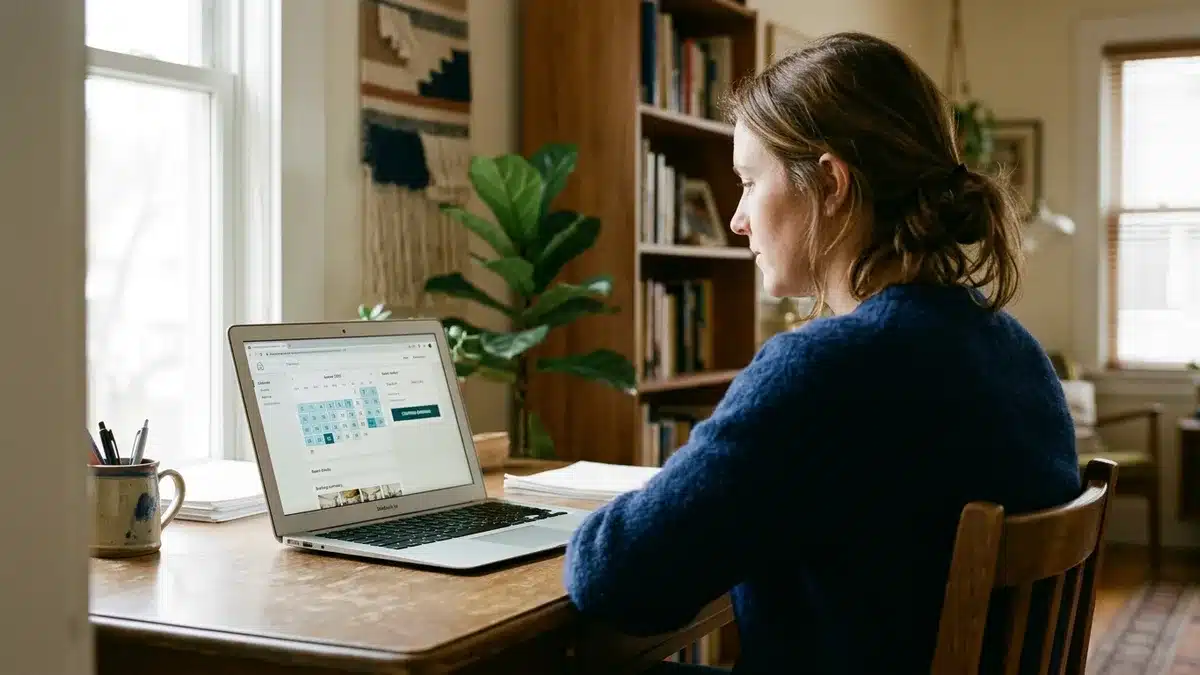
Reality: A direct booking website is a site with a live booking engine that shows real-time availability, takes secure card payment and confirms the stay instantly. A button bolted onto a generic template usually fails because guests hit stale calendars, missing trust signals or a checkout that feels unfinished. Payment security matters too: any platform that handles card data should meet PCI DSS standards.
Calendar sync is where most DIY setups break. A channel manager or PMS keeps availability, rates and content consistent across channels, so a night that sells on one channel is blocked on the others. Calendar feeds that refresh on a delay leave gaps in which two guests can book the same night. Direct connections between your PMS and your website close that gap.
As for the best builder, it depends on how much you want to do yourself. Self-service builders suit hosts with time and technical confidence. A done-for-you build suits hosts who want a converting site live quickly. Either way, check four things: the booking engine, PMS integration, payment handling and search-ready page structure.
We built Boostly for the second group. We design and build the site, no coding required, connect it to any of 27+ PMS integrations with real-time syncing of listings, availability and pricing, and get you live within 35 days. If you want to understand the moving parts first, our walkthrough on how to build a direct booking website covers them step by step.
Will Guests Trust a Direct Booking Site as Much as Airbnb?
Myth: Guests only feel safe booking through Airbnb, so a direct site will never convert.
Reality: Guest trust on a direct booking site comes from visible, specific signals: clear cancellation and refund terms, a secure checkout, real reviews, consistent branding and a business name guests can search for on Google. Airbnb’s trust comes from platform guarantees. Yours comes from detail and consistency.
Use the same business name on every listing, so a guest who finds you on Airbnb can search for you by name and land on your site. Pair the website with guest screening and damage protection. Those two items replace functions many hosts assume only an OTA can provide.
There is an honest trade-off here. A new direct site starts without Airbnb’s built-in reputation, so your first direct guests are usually past guests, referrals and people who find you through search. That is why we design Boostly sites to match the polish of a strong Airbnb listing, and I would never hand you a bare booking form.
What Do Direct Bookings Really Cost Compared With Airbnb Commissions?
Myth: Direct bookings are pure profit because there is no commission.
Reality: Direct bookings remove the OTA commission but add other costs, and an honest net-profit comparison counts all of them. According to Houfy’s 2026 figures, a 15.5% host-only fee on a $2,000 booking equals $310 in commission. That is the number you are competing against on every stay.

| Cost line | Booking through Airbnb | Direct booking |
|---|---|---|
| Platform commission | Charged on every booking | None on the booking itself |
| Payment processing | Covered within the platform’s fee structure | Charged by your payment provider |
| Website and PMS software | Not needed to take the booking | Build or subscription cost, varies by provider |
| Advertising and SEO | Platform search visibility | Your own time or spend, varies by market |
| Insurance and damage protection | Platform host protections apply, terms vary | You arrange screening and protection |
| Guest messaging and disputes | Platform tools and support | Your time unless automated |
| Guest contact details | Held by the platform | Owned by you, used with consent |
The labour line is where most hosts underestimate direct costs, because manual messaging and calendar checks eat evenings. We target it with Boostly’s PMS syncing and automated guest follow-up. Your website, availability and guest messages run from the same data, so you re-enter nothing by hand.
Every booking that moves from Airbnb to your own site keeps roughly 15% more in your pocket, before your own processing and software costs. Run the comparison with your real figures, not the headline rate.
How Do You Turn Airbnb Guests Into Direct Bookers Without Breaking the Rules?
Myth: Airbnb guests are locked inside Airbnb, so there is no way to convert them into direct bookers.
Reality: Converting Airbnb guests into direct bookers means collecting contact details through channels you legitimately control and inviting them back for future stays, with their consent. The guardrails matter, and most guides skip them:
- Never try to move a current Airbnb reservation off-platform. Airbnb’s terms restrict taking payment outside the platform for stays it sourced, so check the current terms before you act.
- Capture details during the stay, with consent, through a digital guidebook link, a thank-you card with your website, or a guest WiFi login such as the StayFi WiFi capture system.
- Get explicit marketing consent. GDPR and CCPA apply once you store guests’ personal data, and a privacy policy is mandatory.
- Email past guests a few times a year with seasonal availability, returning-guest offers or local events. The Price of Business guide on growing a vacation rental business covers off-platform lead generation and email tactics in more detail.
- Offer a modest returning-guest discount, often set around 10%, and test it against your margins.
The payoff is real. According to the hostAI Report via gethostai.com (2026), guests who book directly return 28.3% of the time, compared with only 8.9% through Airbnb. Repeat guests cost you nothing to acquire.
Doing this by hand means exporting guest lists, remembering to send emails and hoping nothing slips. Boostly members get CRM access within 24 hours of signing up, and the CRM captures guest data at the point of booking and runs automated email and SMS follow-up for repeat stays. For the messaging side, our piece on strategic creative communications for bookings shows what good guest communication looks like.
What Share of Bookings Should Come Direct, and How Do You Measure It?
Myth: There is one ideal direct booking percentage every host should hit.
Reality: Your target channel mix is the share of revenue you want each channel to carry, and it depends on your market, your seasonality, your operating capacity and how concentrated your bookings are today. A property with years of past guests can shift faster than a brand-new listing with no repeat base. Most generic advice stops at “diversify”. These five measures turn it into a plan:
| Measure | Definition | What it tells you |
|---|---|---|
| Channel concentration | Revenue from your largest channel divided by total revenue | How exposed you are to one platform |
| Direct conversion rate | Direct bookings divided by website visitors | Whether your site turns interest into stays |
| Net revenue per available night | Revenue after commissions and fees divided by available nights | Which channel is actually most profitable |
| Repeat-booking rate | Guests with two or more stays divided by total guests | How well follow-up is working |
| Break-even acquisition cost | The most you can spend to win a direct guest before an OTA booking would have paid you more | Your ceiling for ads and incentives |
Here is the break-even idea with the $2,000 booking from earlier. The $310 commission is the ceiling on what you could spend to win that guest directly before Airbnb would have been cheaper, minus your processing and admin costs. Track net revenue rather than gross, and spread demand across three to five channels so no single one decides your month.
I set the 65% figure in our guarantee because, in our experience, hosts who combine a converting website, real-time PMS sync and consistent follow-up reach it. Success stories from hosts like Sergio and Rose Tipka sit behind our average of 65% to 80% direct bookings within 12 months. Your own target should start from your numbers, though, and Boostly’s reporting shows conversion rates, traffic sources and progress toward that 65% mark in one place. If you run a larger portfolio, our piece on the mindset of growing a large STR company is worth a read.
How Long Does It Take to Cut Reliance on Airbnb, and What Slows You Down?
Myth: Building direct bookings takes years before it pays back.
Reality: A phased plan can put a working direct channel live in about a month, with the revenue share growing as guest data and search presence build. This is the sequence we recommend to every host we onboard:
- Days 1 to 30: Build a booking-enabled website with real-time availability, secure payment, instant confirmation and PMS syncing. With Boostly, the done-for-you site goes live within 35 days of signing up.
- Days 31 to 60: Start capturing guest data, publish local search content and switch on an automated post-stay email sequence.
- Day 61 onward: Review channel mix, occupancy, average nightly rate, top guest complaints and review score every week, and adjust.
- Throughout: Keep your Airbnb listing live and synced, so discovery traffic keeps flowing.
Four mistakes slow hosts down. First, launching without PMS sync, which invites double bookings. Second, emailing guests without consent. Third, judging channels on gross revenue. Fourth, waiting for a perfect site before going live. Set SMART goals for each phase; the RentalTrader blog on vacation rental business plans explains how.
You can also add a book direct marketplace as an extra source of direct traffic while your own search presence builds. If you manage properties from a distance, our guide to tactics to manage your STR properties remotely covers the automation side. Our weekly coaching calls and 80+ hours of training mean you are never guessing what to do in each phase.
Quick Facts: Myths Versus Reality at a Glance
| Myth | Reality |
|---|---|
| You must leave Airbnb to go direct | Keep Airbnb for discovery and lower its share of revenue |
| A booking button makes a direct channel | You need live availability, secure payments and PMS sync |
| Guests will never trust a direct site | Clear policies, secure checkout and consistent branding build trust |
| Direct bookings are pure profit | They remove commission but add software, processing and labour costs |
| Airbnb guests cannot be converted | Collect details with consent and invite them back for future stays |
| One ideal percentage fits every host | Set your target from your market, seasonality and current concentration |
| It takes years to pay back | A working channel can launch in about a month |
Frequently Asked Questions
How do you become an Airbnb host?
Becoming an Airbnb host starts with creating an account, then building a listing with photos, a clear description, pricing, availability and house rules. Check your local short-term rental licensing and tax requirements before you publish. Set up your own direct booking channel at the same time, with a consistent business name, so repeat guests can find you without going back through Airbnb.
Do I have to stop listing on Airbnb to use a direct booking website?
No. A direct booking website works alongside your Airbnb listing. With PMS-synced availability, a night sold on either channel is blocked on the other, so you can reduce Airbnb dependence gradually while keeping the platform’s discovery traffic.
What percentage of bookings should come from direct channels?
There is no single correct figure. Your target depends on your market, seasonality, capacity and current channel concentration. Our guarantee uses 65% direct bookings within 12 months, and Boostly hosts average 65% to 80% in that window, but you should set your own target from your current numbers.
How do channel managers sync calendars?
A channel manager or PMS connects to each booking channel and pushes availability, rates and listing content from one source. When a night sells on one channel, it is blocked on the others. Connections that update in real time carry far less double-booking risk than calendar feeds that refresh on a delay.
How can vacation rental hosts get more direct bookings?
Start with a booking-enabled website that has real-time availability and secure payments. Capture guest contact details with consent, email past guests a few times a year and add local search content. Track channel mix every week so you can see which tactics move your direct share.
What is the best direct booking website builder for vacation rentals?
The best fit depends on how much setup you want to handle yourself. Self-service builders suit hosts with time and technical confidence, while a done-for-you build suits hosts who want a converting site live quickly. Boostly is the done-for-you option: no coding, 27+ PMS integrations and a live site within 35 days.
What Is the Smartest Way to Reduce Airbnb Dependence in 2026?
To reduce Airbnb dependence in 2026, you add a second channel you own, keep Airbnb for discovery and judge every channel on net revenue per available night. The seven myths above lead to the same stall: waiting for a perfect moment, or assuming direct means starting from zero. It does not. Your past guests, your search presence and a properly synced website give you a working base within weeks. As platform fees and ranking rules keep shifting, hosts with their own channel absorb the changes better than hosts without one.
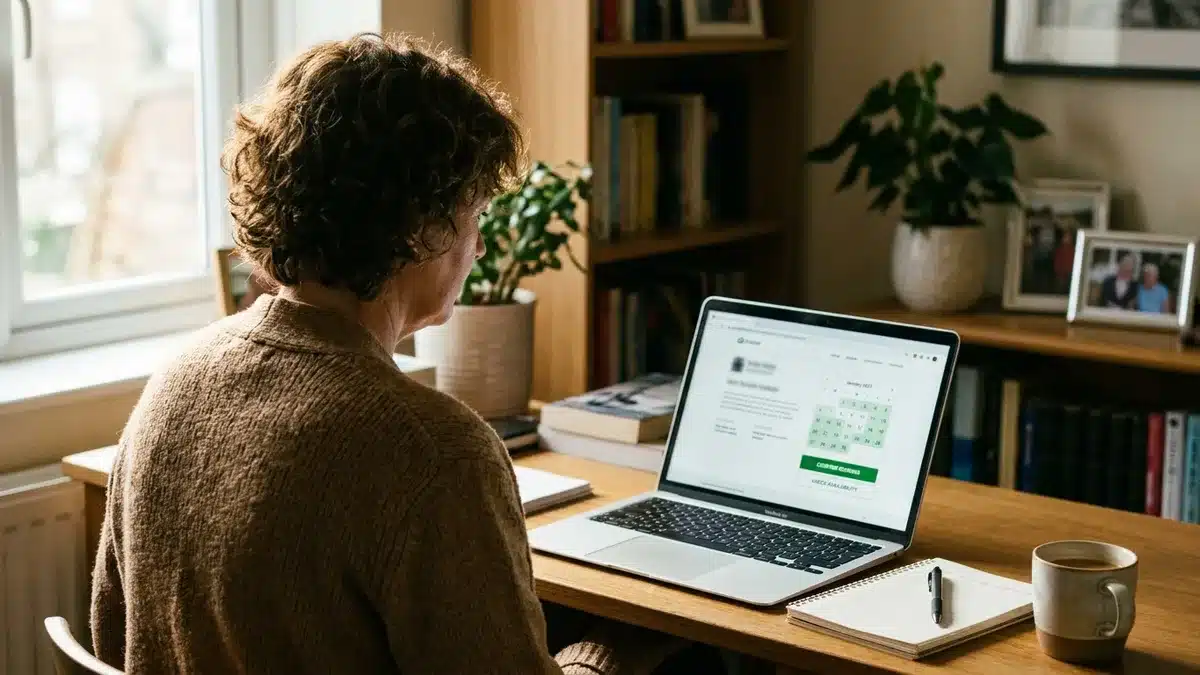
If you want a direct channel live within 35 days, CRM access within 24 hours and a guarantee of 65% direct bookings within 12 months or your money back plus $1,000, book a demo with Boostly. We will show you the build process, which PMS integrations apply to your setup and what keeping roughly 15% more of each booking looks like across your portfolio.