
You turn past Airbnb guests into repeat direct bookers by collecting their email with consent during the stay, thanking them within 48 hours of checkout, and inviting them to rebook through your own website with a clear reason to do so. Repeat guests carry no acquisition cost and bypass OTA commission.
Key Takeaways
- Repeat direct bookings start with a consented email address, collected during the stay or at checkout, because a repeat programme should not depend on a channel you do not own.
- A thank-you within 48 hours of checkout, followed by touches at roughly two weeks, three months and ahead of peak season, covers the main timing windows hosts use.
- Pick an incentive by doing the maths: a low-cost perk usually protects more of the commission saving than a percentage discount.
- Your direct site must show total pricing, secure card payment and plain cancellation terms, or past guests will go back to Airbnb.
- Measure opt-in rate, email click rate, direct-booking conversion, repeat revenue and incentive cost, and adjust one variable at a time.
- Boostly gives members CRM access within 24 hours of signing up and automates guest follow-up and repeat booking sequences, so the programme runs without manual chasing.
Every guest who finishes a stay and never hears from you again is a booking you will pay a marketplace to win back later. Airbnb collects roughly 15% on that next stay, and the guest was already convinced by your property the first time.
At Boostly, we work with STR hosts every day who are stuck in this position: strong occupancy, thin margins, and a guest list that lives inside someone else’s messaging system. Our community of over 2,000 hosts has taught us that repeat booking marketing is the cheapest direct channel to build in 2026.
This guide covers consent, email capture, the website guests land on, follow-up timing across the year, incentive maths and measurement. You can keep your Airbnb listing live throughout. The aim is a second channel alongside it.
Why Do Repeat Direct Bookers Matter More Than a Fresh Airbnb Guest?
A repeat direct booker is a past guest who returns by booking on your own website instead of an online travel agency. You pay no marketplace commission and no ad spend to win them. According to the hostAI Report (2026), guests who book directly return 28.3% of the time, compared with 8.9% through Airbnb.
Length of stay matters as well. Houfy’s 2026 figures show direct bookings produce 45.2% longer average stays than OTA bookings. Longer stays mean fewer turnovers and lower cleaning cost per night. Your calendar also fills in bigger blocks.
Repeat guests also compound. Houfy estimates that ten repeat direct bookings in a year recover $2,520 to $5,820 that would otherwise go to an OTA. One independent operator, Pastel Getaways, reported a repeat guest rate of 25.98% for 2026, with an average of 23.32% over the previous three years.
Most hosts underestimate how much of their revenue sits in a past-guest list they never touch. Picture a host with 120 past guests and a 25% return rate: that is 30 returning stays a year, each one free of commission if it books direct. We built Boostly around a 65% direct bookings target because repeat guests are the shortest route there; our members, including Sergio, Rose Tipka, Seth, Stephanie, Nikki and Harro, average direct booking rates of 65% to 80% within 12 months.
Can You Contact Past Airbnb Guests Directly?
You can contact a past guest directly when they have given you their email address voluntarily and agreed to hear from you. Airbnb messaging exists for the stay and the review. Treat it as a service channel, not a marketing list you can export.
Platform policies on off-platform contact and data use change, so read Airbnb’s current terms and Help Centre before you build your programme. We will not quote a clause from memory, and you should not rely on anyone who does. The safe pattern is simple: never scrape or copy contact details out of the platform for marketing, and only email people who opted in elsewhere.
Privacy law adds a second layer. GDPR and CCPA both apply to any business storing guest personal data, so you need a clear privacy policy and a record of when and how each guest consented. If you host in the UK, Europe or California, check the current requirements with an official source or a qualified adviser.
This is the reason Boostly’s CRM captures guest data at the point of booking on your own site rather than relying on a scraped export. The contact record starts life with the guest’s agreement attached, which keeps your list clean.
How Can You Collect Guest Emails Legally During a Stay?
Collecting guest emails legally means asking for the address in a way that explains what the guest will receive, then storing proof of their agreement. The best capture points sit inside the stay itself, such as the Wi-Fi sign-in or a QR code in the welcome book. A guestbook card or a request at checkout also works.
| Capture method | Best moment | Consent clarity | Effort to run |
|---|---|---|---|
| Wi-Fi sign-up page | Arrival, while the guest connects | High if the form states what they will receive | Low once set up |
| QR code in welcome materials | During the stay | High, guest chooses to scan | Low |
| Guestbook card | Mid or late stay | Medium, depends on card wording | Medium, manual data entry |
| Checkout request | Departure morning | High if asked in person or by message | Medium |
| Booking on your own site | At reservation | Highest, built into the form | Low |
Ask at checkout rather than check-in where you can, because guests are happiest then. Offer something concrete in return, such as a local guide or early calendar access. A returning-guest rate works too. A sample line for a checkout message: “Thanks for staying with us. Want first pick of next summer’s dates? Reply with your email and we will send them before they go public.” For Wi-Fi capture in particular, our piece on how guest Wi-Fi shapes the digital guest experience shows where the sign-in fits.
Free form tools work for a single property. Once you manage several units, exporting a spreadsheet each week turns into admin, which is where we steer hosts toward a CRM that records every address automatically.
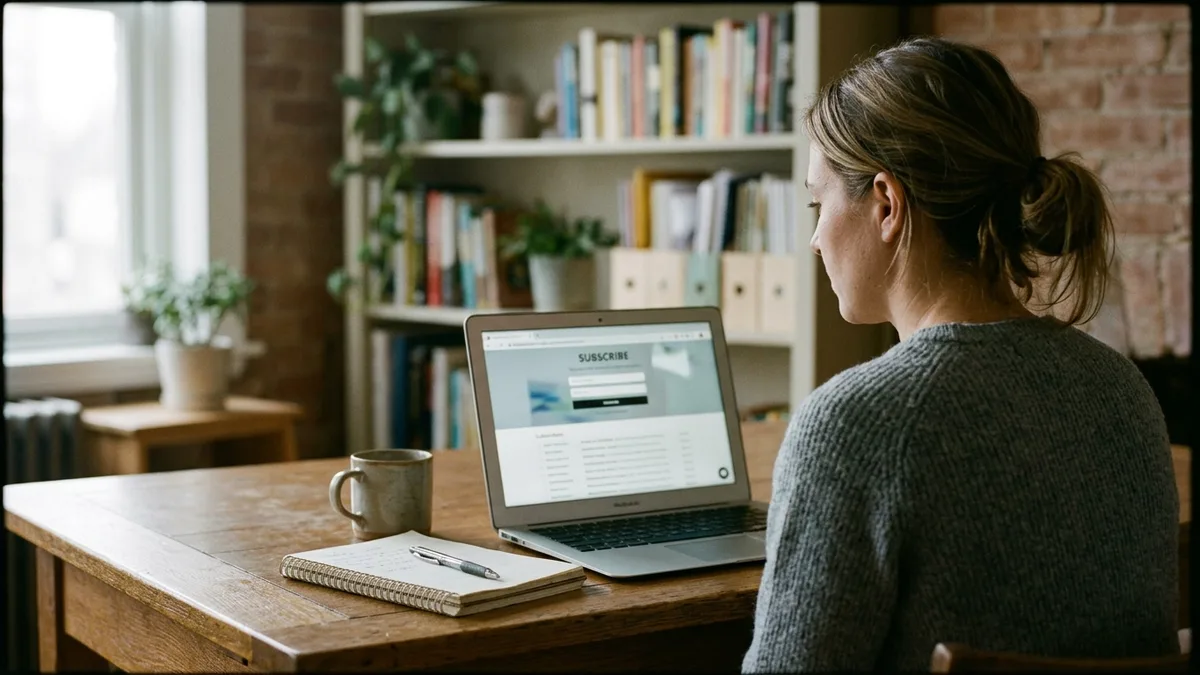
What Does a Direct Booking Website for Vacation Rentals Need Before You Send Guests There?
A direct booking website for vacation rentals is your own branded site where guests check live availability and see total pricing. They pay by card without going through an OTA. Past guests will only follow your email link if that site feels as safe and polished as the Airbnb page they used before.
Four elements decide whether the guest books or bounces. First, you need real-time availability and rates that match your PMS. Second, the full price shown up front, including fees. Third, secure card checkout. Fourth, cancellation terms written in plain English.
Most hosts bolt a booking button onto a generic template and wonder why it never converts. The button is rarely the problem. Missing trust signals and stale calendars are. So is vague pricing. If you are weighing the build yourself, our walkthrough on how to build a direct booking website lists the pieces in order.
We handle this build for you at Boostly. Our done-for-you direct booking sites go live within 35 days, need no coding, and connect to 27+ property management systems with real-time syncing of listings, availability and pricing, so a returning guest never lands on an outdated rate.
How Do You Turn Past Airbnb Guests Into Repeat Direct Bookers Step by Step?
The process runs in five steps: capture consent, send a quick thank-you, invite the guest to book direct, follow up around the guest’s travel rhythm, and remind them before peak dates. Each message carries one call to action and one reason to book direct.
- Capture the address with consent. Use a Wi-Fi page, QR code or checkout request, and store when and how the guest agreed.
- Send a thank-you within 48 hours. Keep it warm and light. Thank them, ask for a review if you have not already, and mention that you also take bookings directly.
- Invite them to book direct about two weeks later. Explain the benefit, such as a returning-guest rate or early access to your calendar, and link to the exact property page.
- Re-engage around three months after the stay. Send fresh dates or a seasonal reason to return.
- Write ahead of peak season. Give past guests first pick before dates open to the wider public.
That mirrors the four-touch sequence we recommend: checkout day, two weeks after the stay, three months after the stay, and ahead of peak season. Take a guest who checks out on 14 June. The thank-you goes by 16 June, the invitation around 28 June, the re-engagement note near mid-September, and the peak-season preview in the weeks before your dates open. Strategy matters more than volume, and our article on strategic creative communications for bookings covers how to keep each message distinct.
Doing this by hand means tracking a calendar of send dates per guest, per stay. Boostly’s automated follow-up and repeat booking sequences run off the stay date held in your CRM, so each touch leaves on schedule without you opening a spreadsheet.
When Should You Follow Up With Past Guests Through the 2026 Seasons?
Follow-up timing depends on how far ahead your guests book and when your peak season falls. Published advice ranges from 24 to 48 hours after checkout to 90 days later, and from 8 to 12 weeks before peak. These windows fit different trips, so match each message to the guest’s likely next booking.
| Timing | Message | Best for |
|---|---|---|
| Within 48 hours of checkout | Thank-you and soft mention of booking direct | All stays |
| Week 2 or 3 | Direct-booking invitation with returning-guest offer | Guests who plan trips months ahead |
| Around 90 days after the stay | Returning-guest rate and fresh dates | Short-lead leisure trips |
| 8 to 12 weeks before peak season | Early access to peak dates | Seasonal destinations |
| 10 to 14 months after the last stay | Anniversary or re-engagement note | Annual-trip guests |
For a 2026 calendar, many hosts settle on four to six emails per year to a past-guest list. A workable pattern is early access to peak dates in January, a shoulder-season message in April, last available dates before year-end in September, and a one-year anniversary note on the guest’s own date. Treat these months as a template, since your own peak season sets the real dates.
Guests who book last minute need shorter gaps. Guests who plan a year ahead respond to the anniversary note. If you manage mixed units, split the list by property type rather than sending one blast. A lakeside cabin list and a city apartment list rarely share the same booking window.
Segmenting by stay date is dull work done manually, which is why we put it inside the Boostly CRM and marketing automation alongside the sequences themselves.

Which Incentive Works Best: A Discount or a Perk?
The right incentive is the one that costs you less than the commission you save. A percentage discount can swallow the saving entirely, while a non-price perk such as free early check-in costs you almost nothing. Run the numbers per booking before you promise anything.
Houfy’s 2026 example uses a $2,000 stay. Airbnb’s host-only fee of 15.5% equals $310 in commission, while direct payment processing at 2.9% costs $58. That leaves roughly $252 of saving before any offer.
| Incentive | Cost on a $2,000 stay | Saving left after processing |
|---|---|---|
| 10% off the next stay | $200 | About $52 |
| $50 credit toward a booking | $50 | About $202 |
| Free early check-in | Little or no hard cost | About $252 |
| No incentive, direct rate only | None | About $252 |
These figures are an illustration built on the Houfy numbers above, not a measured case study, so replace them with your own fees and average booking value. If your average stay is $1,000, for example, the commission saving halves and a 10% discount would cost $100 against roughly $126 saved. A discount still wins when it lifts conversion enough to fill dates that would otherwise stay empty. Test one against a perk on two halves of your list and compare.
Wherever possible, offer early access rather than money. First pick of peak dates costs you nothing and appeals to the guest who already loves the property. Boostly members get templates and AI tools for exactly this kind of offer copy, so you are never starting from a blank page.
How Do Past Guests Rebook You Directly Instead of Through Airbnb?
A past guest rebooks directly by following your email link to your site. They choose dates and pay by card at checkout. The friction comes from trust, not the booking itself. Guests used to Airbnb’s protections want proof that your site is secure and your terms are fair.
Reassure them in the email and on the site. Show the total price including fees before checkout. State the cancellation terms in one short paragraph. Use a payment processor that is PCI DSS compliant, since that standard applies to any platform that handles card data.
Explain why booking direct helps the guest too: a returning-guest rate and a direct line to you, plus the same property they already know. Do not criticise Airbnb. Guests will keep using it, and so will you.
A branded marketplace can also help new guests discover you, as we explain in using a book direct marketplace to drive direct bookings. For repeat guests, your own site does the work. Keep your Airbnb listing live: Boostly is additive, and we never ask hosts to leave OTAs.
What Is Guest CRM Software and Which Email Tools Do You Need?
Guest CRM software for vacation rentals is a database that stores each guest’s contact details and stay history. It also holds preferences and consent status, then triggers messages based on those records. It replaces the spreadsheet of email addresses with something that sends the right message at the right time.
For email marketing, look for four things in any tool: consent tracking, segmentation by stay date or property, automated sequences, and reporting on opens and clicks. A general newsletter tool covers the basics for one property. Multi-property operators usually outgrow it, because it cannot see PMS data.
Fragmentation is the common problem. STR operators typically run three to five software tools, and each extra tool means another login and another place where guest data goes stale. Our look at guest services software covers how those pieces fit together.
We built the Boostly CRM so booking and website data share one record with email data. Guest follow-up and repeat booking sequences draw on PMS-synced stays, and new members get access within 24 hours of signing up.
How Do You Measure Whether Your Repeat Booking Programme Is Working?
Measure a repeat booking programme with five numbers: opt-in rate, email delivery and click rate, direct-booking conversion, repeat-booking revenue, and incentive cost per booking. Change one variable at a time, so you know which change moved the result.
- Opt-in rate: guests who give an email divided by guests who stayed.
- Click rate: how many recipients open your booking link.
- Direct conversion: clicks that turn into paid bookings.
- Repeat revenue: total from returning direct guests in the period.
- Incentive cost: discounts, credits and perks given, set against commission avoided.
Run a clean test. Split your list in two, send the same message with a different offer, and compare conversion over the same window. If 40 of 100 guests give an email and 4 of those 40 book direct, your opt-in rate is 40% and your conversion is 10%. Treat claims that any one tactic is the most effective with caution. Your guests, season and price point decide what works.
Airbnb’s dashboards only show the OTA side of your business. Boostly’s reporting shows direct booking performance against the 65% target, so you can see whether repeat guests are lifting your share.
What Mistakes Cost Hosts Repeat Direct Bookings?
The most costly mistakes are emailing without consent and selling too hard too early. Sending guests to a site that feels unfinished does equal damage. Each one breaks the trust that made the guest book in the first place.
Other frequent errors include inconsistent business naming between your Airbnb listing and your website, which makes guests unsure it is the same host. Another is hiding fees until the last checkout step. A third is sending one generic message to every guest regardless of when they stayed.
Skipping the list is the biggest of all. For practical reading on email and lead generation off-platform, the Price of Business guide on growing a vacation rental business is worth a look alongside this one.
If you are short on time and technical knowhow, the weekly coaching calls and 80+ hours of training that come with Boostly membership exist to stop these mistakes before they cost you a season.

What Should You Do Next to Turn Past Airbnb Guests Into Repeat Direct Bookers?
Start with consent and a working site, then send the first thank-you within 48 hours of the next checkout. That answers the question behind this guide: how do I turn past Airbnb guests into repeat direct bookers? You ask permission, stay in touch at sensible moments, and make rebooking on your own site easy and safe.
Keep the incentive maths honest, test one change at a time, and track your numbers. In 2026 and beyond, hosts who own their guest relationships will keep more of every booking than those who rent that access from a marketplace.
If you want this running without the spreadsheets, book a demo with Boostly and see the guest follow-up workflows in action. We get your direct booking site live within 35 days and back it with a guarantee: hit 65% direct bookings within 12 months, or you get your money back plus $1,000.

Frequently Asked Questions
How can I advertise my vacation rentals to boost direct bookings?
Start with the guests you already have, since a repeat guest costs nothing to acquire. Add a QR code in your welcome materials, send a thank-you after checkout, and link to your own booking site in every message. Pair that with a fast, trustworthy website so interest converts.
Do I have to stop listing on Airbnb to get repeat direct bookings?
No. You can keep your Airbnb listing live while you build a direct channel alongside it. Boostly works this way, so your OTA visibility stays in place while repeat guests move to your own site.
How soon after checkout should I email a past guest?
Within 48 hours, while the stay is fresh. Keep that first message to a thank-you and a light mention that you take direct bookings. Save the actual booking invitation for around two to three weeks later.
Can I email guests who booked through Airbnb?
You can email guests who gave you their address voluntarily and agreed to hear from you, for example through a Wi-Fi sign-up or a checkout request. Do not copy contact details out of the platform for marketing. Check Airbnb’s current terms and the privacy rules that apply to your location.
Is it safe for guests to pay on a direct booking website?
It is when the site uses secure card checkout through a payment processor that meets PCI DSS requirements. Show the total price and cancellation terms before payment so the guest feels as protected as they would on Airbnb.
What does guest CRM software do for a vacation rental?
It stores each guest’s contact details and stay history, along with their consent record. It then triggers messages based on that data. For repeat booking marketing, that means the right email goes out on the right date for each guest. Boostly’s built-in CRM does this with PMS-synced stay data.
What share of bookings should come from direct channels?
There is no single right number, but we work to a clear target: Boostly guarantees 65% direct bookings within 12 months, or you receive your money back plus $1,000. Repeat guests are the quickest way to reach it.