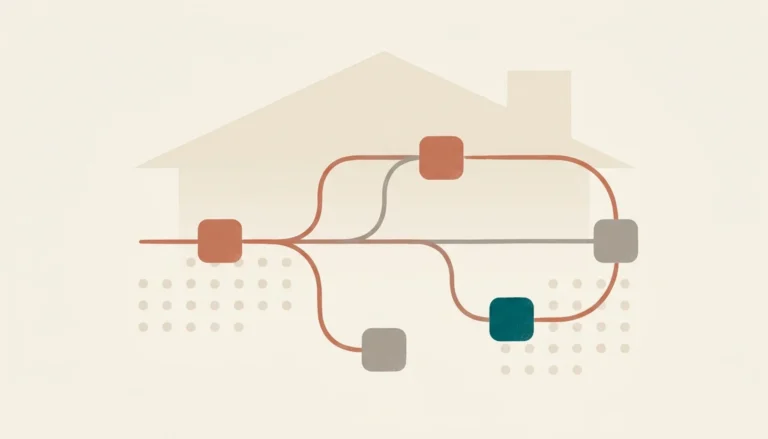
Automating an Airbnb business means using software to handle repetitive tasks, guest messaging, pricing, cleaning coordination, and marketing, so you spend less time on manual admin and more time growing revenue. The right sequence starts with guest communication, then layers in dynamic pricing, operations tools, and finally a direct booking and CRM system.
Key Takeaways
- Most hosts should automate guest messaging first, since a 6-message sequence covering confirmation through post-checkout review requests is the fastest win and reportedly saves 15 to 30 minutes per booking once set up.
- A typical automation stack for a small host running 1 to 5 properties costs roughly $30 to $80 a month, according to multiple 2026 industry guides, before adding a channel manager or direct booking platform.
- Dynamic pricing tools generally show a measurable nightly-rate lift within 60 to 90 days, though the exact percentage varies by market conditions.
- Cleaning and turnover automation with photo-verified checklists can cut 1 to 2 hours of manual coordination per booking compared to phone-and-text scheduling.
- Airbnb hosts pay a host-only service fee that reached 15.5% on a $2,000 booking, equal to $310 in commission, according to Houfy's 2026 breakdown, which is a major reason automation alone isn't the full fix.
- Boostly automates the piece most hosts skip entirely: turning past guests and OTA traffic into repeat, direct bookings through a built-in CRM, automated email and SMS marketing, and a done-for-you website live within 35 days.
If you're running even a single Airbnb listing in 2026, you already know the admin never really stops. Guest questions arrive at odd hours. Pricing needs constant attention if you want to stay competitive. Cleaners need scheduling, and somebody has to check the turnover actually happened. At Boostly, we talk to hosts every week who built a profitable business on Airbnb and Booking.com and are now stuck doing every one of those tasks manually, wondering why growth has stalled.
This guide walks through how to automate an Airbnb business step by step, in the order that actually works, based on what functions first and what depends on something else being in place. We'll cover guest messaging, dynamic pricing, property management systems, cleaning and turnover, smart locks and noise monitoring, financial reporting, and the guest retention layer that most automation guides skip entirely. Each step includes what it typically costs, what mistakes to avoid, and where the manual alternative genuinely starts costing you more than the software would.
We'll also cover a piece competitors rarely address in depth: what happens when you over-automate and guests start noticing the impersonal service, and how a brand-new host can build this system month by month without getting overwhelmed on day one.
What Is the First Step to Automating an Airbnb Business?
The first step to automating an Airbnb business is setting up guest messaging automation, specifically a scripted sequence covering booking confirmation, pre-arrival instructions, check-in, a mid-stay check, pre-checkout reminders, and a post-checkout review request. Industry guidance recommends completing this initial setup in about 45 minutes, after which it saves 15 to 30 minutes per booking going forward.
Messaging automation comes first for a practical reason: it requires no other system to be in place. You don't need a PMS, a smart lock, or a pricing tool. You just need a templated 6-message sequence and a platform (or Airbnb's own automated messages) to trigger it on schedule.
Once this sequence is running, repeat-question volume from guests, “what's the WiFi password,” “where do we park,” “how does the lockbox work,” typically drops significantly when paired with a clear digital guidebook. Several 2026 automation guides put the reduction in repeat questions at 80 to 90% when messaging automation is combined with a well-built guidebook document guests can reference themselves.
The mistake we see most often here: hosts write one generic template and never revisit it. A pre-arrival message that doesn't mention parking, trash day, or the specific check-in code creates more messages, not fewer. Build the sequence around your specific property's friction points, not a copy-pasted script.
How Does Dynamic Pricing Automation Work for Airbnb Hosts?
Dynamic pricing automation is software that adjusts your nightly rate automatically based on demand signals, competitor rates, local events, and booking pace, rather than you manually updating a calendar. Tools in this category, priced roughly $20 to $80-plus per month per listing depending on features, typically show a measurable revenue lift within 60 to 90 days of setup.
Manual pricing means checking a spreadsheet or Airbnb's calendar every few days, guessing at demand, and usually reacting too late to a local event or a competitor's rate drop. By the time you notice a conference booked out every hotel in town, half the nights are already gone at your old rate.
Dynamic pricing tools solve this by pulling market data continuously and adjusting automatically within rules you set (a floor price, a ceiling, minimum stay requirements around weekends). Notably, seasonal peaks around holidays and school breaks can push automated pricing 20 to 40% above annual averages, which is exactly the kind of swing manual pricing tends to miss until it's too late.
Here's a trade-off worth naming honestly: pricing automation optimizes what you charge, not who's booking. It does nothing to reduce the roughly 15.5% commission Airbnb takes on a host-only fee basis, as documented by Houfy for 2026. That's a separate problem, and one we'll come back to.
What Does a Property Management System Actually Automate?
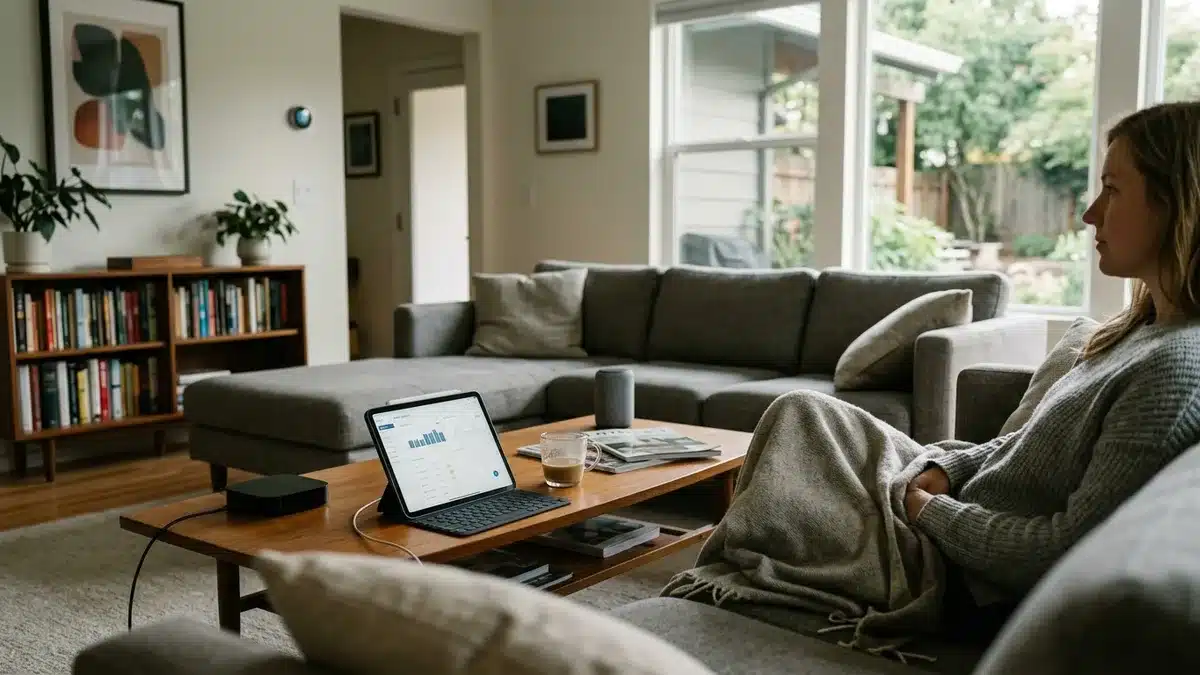
A property management system, or PMS, is software that centralizes calendar syncing, channel management, and booking data across every platform you list on, automatically preventing double bookings and keeping availability current everywhere at once. You typically add a PMS once you're managing two or more platforms, or more than one property, since that's when manual calendar-blocking starts to fail.
Before a PMS, a host listing on Airbnb, Booking.com, and Vrbo has to manually block the same dates on three separate calendars every time a booking comes in. Miss one, and you've got a double booking, a canceled reservation, and a guest who's rightly furious. Industry pricing for PMS tools generally runs in the range of $10 to $50 per listing per month, often on a quote basis.
A connected PMS pushes availability changes in real time across every channel the moment a booking is confirmed. For multi-property operators specifically, this is the single automation that prevents the most expensive mistake in the business: the double booking that forces a same-day guest relocation.
This is also exactly where we position Boostly differently. Rather than treating the PMS as the center of the tech stack, Boostly integrates with 27 or more property management systems and syncs listings, availability, and pricing in real time, but layers a conversion-focused direct booking website and CRM on top, so the PMS handles operations while Boostly handles turning that traffic into bookings you don't pay commission on. If you're deciding what a direct booking site actually needs to convert traffic into revenue, our guide to building a direct booking website breaks down the specifics.
How Do You Automate Cleaning and Turnover Management?
Cleaning and turnover automation uses software to schedule cleaners automatically based on checkout times, send photo-verified checklists confirming the job is done, and flag issues before the next guest arrives. This category, with tools often priced around $150-plus per month for larger operations, is where most hosts still rely on text messages and hope.
Manual turnover coordination means texting your cleaner every time a booking comes in, hoping they see it, then hoping they actually finish before a same-day check-in. There's no record of what was cleaned, no photo proof if a guest complains about a dirty bathroom, and no automatic backup if your regular cleaner is unavailable.
Automated turnover tools solve this with scheduling that triggers directly from your booking calendar, plus a photo checklist the cleaner completes on their phone before marking the job done. Industry estimates suggest this saves 1 to 2 hours per booking compared to manual scheduling, and it creates a paper trail if a guest disputes cleanliness.
As a result, turnover automation is one of the highest-leverage tools for hosts running more than one property, since coordinating multiple cleaners manually across multiple calendars is where most self-managing hosts burn out first.
Should You Add Smart Locks and Noise Monitoring?
Smart locks and noise monitoring devices automate self-check-in and party detection without requiring a host to be physically present at handover or to rely on neighbor complaints. Smart locks typically cost roughly $250 to $300 one-time per lock, while noise-monitoring device subscriptions generally run about $12 to $60 per month depending on plan.
Without a smart lock, every check-in requires either a lockbox (which guests forget the code for constantly) or an in-person meeting, which doesn't scale past one or two properties. Without noise monitoring, the first sign of an unauthorized party is usually a neighbor's angry call, or worse, a damage bill the next morning.
Smart locks like Schlage Encode Plus or Yale Assure Lock 2 generate a unique code per reservation automatically and can be managed remotely, which matters specifically for remote hosts managing properties from another city or country. Noise monitoring devices such as Minut or NoiseAware track sound levels and occupancy patterns without recording audio or video, alerting you if a property exceeds a threshold late at night.
For remote STR owners specifically, this combination, smart lock plus noise monitoring plus a digital guidebook, is usually the highest-priority stack, since it replaces the physical presence a local host would otherwise provide.
How Do You Automate Financial Reporting for an Airbnb Business?
Financial automation connects your booking platforms directly to accounting software, automatically categorizing income, cleaning fees, and platform commissions without manual spreadsheet entry. Tools like QuickBooks, sometimes paired with STR-specific connectors, pull transaction data automatically as bookings and payouts occur.
Manually reconciling Airbnb payouts against actual bookings is tedious specifically because Airbnb bundles cleaning fees, service fees, and taxes into a single payout figure that doesn't match your calendar at a glance. Multiply that across a portfolio of properties and reconciliation becomes a part-time job.
Automated financial tools break that payout into its components automatically and tag each transaction by property, so you can see true revenue per unit without manually cross-referencing three different reports. This matters most for vacation rental property managers who need to report ROI to property owners, since a clean, automated financial trail is the difference between a credible monthly owner statement and a spreadsheet nobody trusts.
What Is the 80/20 Rule for Airbnb Hosts?
The 80/20 principle, applied to Airbnb automation, generally means roughly 80% of a host's repetitive workload, messaging, pricing checks, cleaner coordination, comes from a small set of recurring tasks that automation handles well, while the remaining tasks require human judgment. In practice, this shows up as hosts automating the routine and reserving personal attention for genuine guest issues or property-specific decisions.
Applied practically, this means messaging templates, pricing rules, and cleaning schedules can run on autopilot for the large majority of bookings. What can't be automated is judgment: deciding whether to waive a fee for a guest with a legitimate complaint, or spotting that a property's photos are outdated before a slow season hits.
Hosts who try to automate everything, including guest relationship decisions, tend to run into the over-automation problem covered later in this guide. The tools work best when they handle volume, not nuance.
Why Is Airbnb in Decline for Some Hosts, and Does Automation Fix It?
Some hosts experience declining Airbnb performance not because demand for short-term rentals is falling, Airbnb reported 143.1 million nights booked in Q1 2026 alone, representing 8% year-over-year growth according to Guesty, but because their listing has become one of millions competing purely on OTA search algorithms and price. Automation improves operational efficiency, but it doesn't fix over-dependence on a single platform's algorithm.
Notably, Airbnb's average daily rate actually declined 1% year-over-year to $171 in Q1 2026, per the same Guesty data, while Booking.com's short-term rental nights grew faster at 12% year-over-year in that same quarter. That gap suggests some hosts are losing ground not to a shrinking market, but to competing platforms and to hosts who've diversified their booking sources.
This is precisely the pain point we built Boostly to solve. Automation makes you more efficient at running an Airbnb-dependent business. It doesn't reduce how much of your revenue Airbnb takes, and it doesn't insulate you from algorithm changes you don't control. Boostly exists specifically to give hosts a second, owned booking channel, a direct website, so a dip in OTA visibility doesn't sink the whole business.
How Do You Automate Guest Retention and Repeat Bookings?
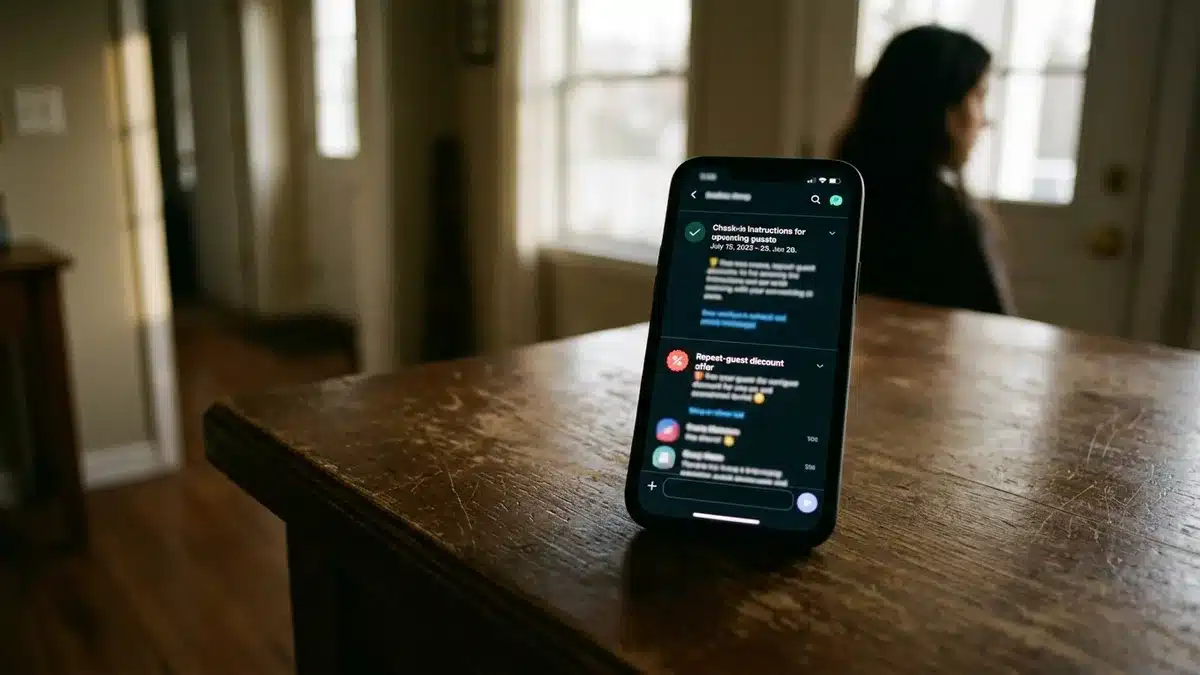
Guest retention automation captures past guest data and triggers scheduled email or SMS offers automatically, turning one-time Airbnb guests into repeat direct bookers without manual follow-up. This is the automation category most guides skip, yet it has some of the clearest documented impact: guests who book directly return 28.3% of the time, compared with only 8.9% through Airbnb, according to a 2026 hostAI report.
Most self-managing hosts never message a guest again after checkout. There's no system capturing their email, no automated offer for their next trip, and no reason for that guest to think of you rather than searching Airbnb fresh next time. That's revenue left on the table with every single stay.
Boostly's built-in CRM captures guest data automatically at the point of direct booking, then triggers automated email and SMS campaigns without you writing a single follow-up message. New members get CRM access within 24 hours of signing up, alongside AI tools and templates built specifically for this repeat-booking motion. It's the same logic behind tools like a host CRM and remarketing platform that assembles guest lists across Airbnb, Vrbo, and direct channels, but Boostly pairs it directly with the booking website itself, so the guest data and the booking engine live in one system rather than two disconnected tools.
In the luxury vacation rental segment specifically, properties with high customer satisfaction report a 60% repeat booking rate, compared to just 20% for average-rated properties, according to 2026 FinModelsLab research. Retention automation is how that gap gets captured systematically rather than by chance.
How Much Does It Cost to Automate an Airbnb Business at Different Portfolio Sizes?
Automation costs scale with portfolio size and tool selection, but a small host running 1 to 5 properties typically spends $30 to $80 a month on a basic stack covering messaging and pricing, before adding cleaning coordination, a PMS, or a direct booking platform. Larger operators layer in additional categories as complexity grows.
| Automation Category | Typical Monthly Cost Range | When to Add It |
|---|---|---|
| Guest messaging automation | Often bundled free with PMS or low-cost standalone | Day one, before any other tool |
| Dynamic pricing | $20 to $80+ per listing | Once you have booking history to price against |
| Property management system | $10 to $50 per listing | 2+ platforms or 2+ properties |
| Cleaning and turnover management | $150+ for larger operations | Once manual cleaner texting becomes unreliable |
| Noise monitoring device | $12 to $60 per plan | Any self-check-in property without on-site oversight |
| Smart lock hardware | $250 to $300 one-time per lock | Before enabling any self-check-in |
The line item missing from most cost breakdowns is the commission cost of staying fully OTA-dependent. On a $2,000 booking, Airbnb's host-only fee reaching 15.5% works out to $310 in commission, per Houfy's 2026 figures. Across a full year of bookings, that adds up to a cost automation tools alone can't reduce, because it's a platform fee, not an inefficiency.
What Mistakes Do Hosts Make When Over-Automating Their Airbnb Business?
Over-automation happens when a host removes human judgment from every guest interaction, resulting in generic, impersonal service that guests notice and mention in reviews. The most common complaint pattern involves guests feeling like they're messaging a bot during a genuine problem, a leaking faucet, a missing amenity, rather than a person who can actually help.
We've seen this play out specifically with hosts who set every message to auto-send with zero human review, including responses to complaints. An automated “thanks for your feedback” reply to a guest reporting a broken air conditioner in July reads as dismissive, and it usually gets called out publicly in the review.
Additionally, over-reliance on automated pricing without a manual sanity check can produce a rate that's technically “optimized” but wildly out of step with a specific weekend, a local festival the algorithm doesn't fully weight, or a competitor property going offline for renovation.
The fix isn't less automation. It's building automation with clear escape hatches: a rule that flags any message containing words like “broken,” “leak,” or “emergency” for human review instead of an auto-reply, and a manual override on pricing during known local events.
How Do You Build an Automation Roadmap From Scratch as a New Host?
A new host should sequence automation in order of dependency, not by whatever tool looks most impressive. First, set up a 6-message guest communication sequence. Second, once managing multiple platforms or properties, add a PMS for calendar sync. Third, integrate dynamic pricing once you have booking history. Fourth, automate cleaning with photo-verified turnover. Fifth, install smart locks and noise monitors. Sixth, connect everything into one data-sharing system, including a direct booking channel.
- Month 1: Build and launch your 6-message sequence, confirmation through post-checkout review request.
- Month 2: Add a digital guidebook to reduce repeat questions, then evaluate dynamic pricing once you have at least a few months of booking data.
- Month 3: If managing 2+ properties or platforms, integrate a PMS for real-time calendar sync.
- Month 4: Automate cleaning and turnover with photo-verified checklists tied to your booking calendar.
- Month 5: Install a smart lock and noise monitoring device if self-check-in is your model.
- Month 6 and beyond: Launch a direct booking website with CRM to start capturing guest data and building repeat bookings, since this is the layer that reduces OTA dependence rather than just improving efficiency within it.
Boostly fits at that final stage deliberately. Hosts don't need to rip out an existing PMS or stop listing on Airbnb to get a direct booking site live within 35 days. Our platform is built to sit on top of the operational stack you've already built, syncing pricing and availability in real time so nothing conflicts. If you're weighing whether the effort is worth it at your specific stage, our piece on using a property management consultant to grow your STR business covers how outside expertise fits into that roadmap.
How to Automate Guest Communication Without Hiring Extra Help
Automating guest communication without adding staff means using a scheduled message sequence and a digital guidebook to cover the questions a human would otherwise answer one at a time. This is achievable for a single host managing several properties without a co-host or virtual assistant, provided the sequence is genuinely tailored to each property.
The scripted 6-message sequence, confirmation, pre-arrival, check-in, mid-stay, pre-checkout, post-checkout review request, covers roughly 80 to 90% of routine questions when paired with a thorough guidebook, based on multiple 2026 industry estimates. That leaves genuine exceptions, a lost key, a maintenance issue, for you to handle personally.
For hosts managing multiple properties, this is where Boostly's automated guest follow-up connects directly to weekly coaching calls and a library of over 80 hours of training, so you're not building message scripts from a blank page. It's templated guidance built specifically around what converts guests to direct bookers, not just what answers a WiFi question. For more on structuring guest communication as a brand asset rather than pure admin, see our guide on transforming bookings with strategic creative communications.
How to Work the Airbnb Algorithm Alongside Automation
Working the Airbnb algorithm means optimizing response time, acceptance rate, and review scores, since Airbnb's search ranking weighs these signals alongside price and location. Automated messaging directly supports this by guaranteeing fast, consistent response times, one of the ranking factors within a host's control.
Automated instant responses to inquiries improve your response rate metric mechanically, since the system replies within seconds regardless of what you're doing at that moment. Automated review request messages, sent at the ideal post-checkout window, also tend to increase review submission rates simply by asking at the right time rather than forgetting.
But optimizing for Airbnb's algorithm still means you're optimizing for a platform you don't control and that takes a cut of every booking. That's a deliberate trade-off worth naming: automation makes you a stronger Airbnb host, but a direct booking strategy, layered on top, is what actually changes your revenue split long term. For a broader look at diversifying beyond any single OTA, the HostPapa article on growing a vacation rental business covers listing optimization as one growth lever among several.
Practical Guidance: How to Prioritize Your Automation Budget
Prioritizing automation spend means matching tools to your specific bottleneck rather than adopting every category at once. A single host with no co-host should prioritize messaging and a guidebook first. A multi-property operator should prioritize PMS sync and cleaning coordination first, since operational risk (double bookings, missed cleanings) scales faster than guest messages do.
- Common mistake: Buying a full PMS before you're managing more than one platform. It's overhead you don't need yet.
- Common mistake: Skipping the direct booking layer entirely and assuming automation alone solves commission cost. It doesn't; it only improves efficiency within the OTA model.
- Trade-off to understand: More automation reduces your hands-on time but increases the risk of impersonal service if you don't build in human review checkpoints for genuine problems.
- Trade-off to understand: Dynamic pricing tools optimize rate but require ongoing calibration, they're not fully “set and forget” if local market conditions shift.
For property managers accountable to owners, the Price of Business guide on growing a vacation rental business covers lead generation and email marketing tactics that pair well with the retention automation discussed earlier in this guide.
Frequently Asked Questions
How to become an Airbnb host?
Becoming an Airbnb host starts with listing your property on the platform, setting your calendar and pricing, and completing Airbnb's identity verification. Most new hosts also need to check local short-term rental registration requirements, since many cities now require a license or permit number before a listing can go live. From there, building a messaging sequence and a guidebook before your first guest arrives sets up automation from day one rather than retrofitting it later.
How do I become an Airbnb host without prior experience?
You don't need prior hosting experience to list a property, but new hosts typically benefit from studying a few active listings in their market to understand competitive pricing and photo standards before publishing. Setting up basic automation, a welcome message sequence and a digital guidebook, from the start avoids the common first-month mistake of manually answering the same three questions repeatedly.
What is the 75-55 rule in Airbnb?
There is no verified, established “75-55 rule” in Airbnb hosting; this isn't a documented Airbnb policy or widely recognized industry framework. If you've seen this referenced, treat it as unverified and instead rely on your own occupancy and pricing data, or a dynamic pricing tool, to set realistic booking targets for your specific market.
What does the 80/20 rule mean for Airbnb hosts?
Applied to Airbnb automation, the general principle is that a small number of recurring tasks, messaging, pricing checks, cleaner scheduling, make up the bulk of a host's repetitive workload, while the remaining tasks require personal judgment. Automating the recurring majority and reserving your attention for exceptions is the practical takeaway, not a strict numeric formula.
Do I have to stop listing on Airbnb to automate direct bookings?
No. Boostly is built to work alongside your existing Airbnb and Booking.com listings, not replace them. Hosts keep their OTA presence for discovery while building a direct booking channel with its own website, CRM, and repeat-guest marketing running in parallel.
How much commission does a typical Airbnb host lose to platform fees each year?
On a host-only fee structure, Airbnb's commission reached 15.5% on a $2,000 booking, equal to $310, according to Houfy's 2026 data. Multiplied across a full year of bookings, that percentage represents a substantial, recurring cost that operational automation alone does not reduce, since it's a platform fee rather than an efficiency problem.
What percentage of Airbnb bookings should be direct versus OTA?
There's no universal target, but hosts building a diversified strategy often aim for a meaningful share of direct bookings within their first year. Boostly's own guarantee is structured around 65% direct bookings within 12 months, with a money-back-plus-$1,000 commitment if a host doesn't reach that threshold while actively following the program.
Why is Airbnb sometimes described as being in decline?
Overall booking volume isn't declining, Airbnb reported 143.1 million nights booked in Q1 2026, up 8% year-over-year according to Guesty, but average daily rates dipped slightly and competing platforms like Booking.com grew short-term rental nights faster in the same period. Individual hosts sometimes describe their own performance as declining when they're competing purely within Airbnb's algorithm rather than diversifying their booking sources.
Conclusion: Building an Automated Airbnb Business in 2026
Automating an Airbnb business works best in sequence: messaging first, then pricing, then a PMS if you're managing multiple platforms, then cleaning and smart-home tools, and finally a direct booking layer that captures guest data automation alone can't create. Each stage removes a specific manual bottleneck, and skipping straight to the most advanced tool without the foundation in place usually creates more confusion than efficiency.
The piece most automation guides leave out is that operational efficiency and OTA independence are two different problems. You can automate every message, every cleaning, and every price adjustment and still hand over roughly 15% of every booking to Airbnb's commission structure. Solving that requires a booking channel you actually own.
That's the layer we built Boostly around. If you're ready to see what a done-for-you direct booking website, real-time PMS sync, and automated repeat-guest marketing look like for your specific portfolio, get started with Boostly and we'll walk through what 65% direct bookings could mean for your numbers.
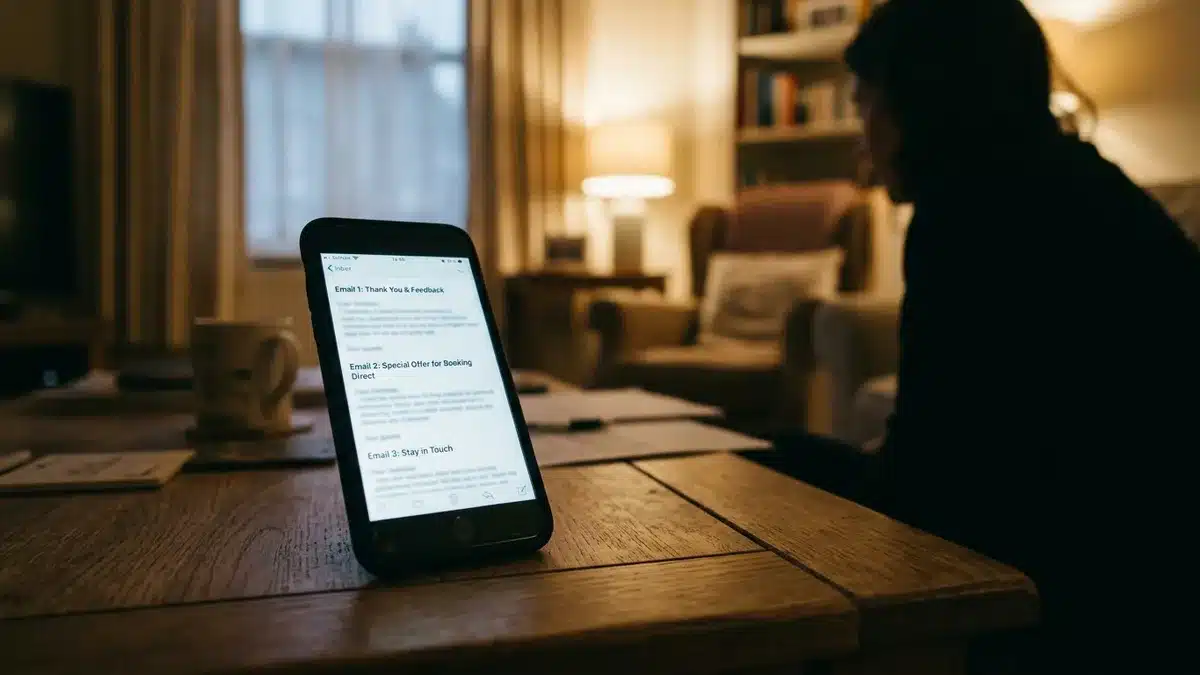
If manual guest follow-up is the piece of your Airbnb business still running entirely by hand, that automated email sequence shown above is exactly what Boostly's built-in CRM sets up for you within 24 hours of signing up. Book a demo with Boostly to see it running against your own booking calendar.