
How do I scale my short-term rental business beyond Airbnb? Build a direct booking channel you own, keep your OTA listings live for discovery, and add properties only once your systems can absorb more bookings. Distribution and guest data come first; extra units come second.
Key Takeaways
- Scaling beyond Airbnb means owning a booking channel and your guest data, not abandoning the platform that currently sends you demand.
- Choose your next channel by comparing net revenue after commissions, cleaning, refunds and staff time, not by headline occupancy.
- A direct booking website does not create demand by itself; it converts repeat guests, referrals and past-guest email lists.
- Industry guidance often puts a realistic direct share at 20% to 40%; Boostly’s guarantee targets 65% within 12 months.
- Add properties only after cash reserves, service quality and automation can handle the extra load.
- Boostly builds the direct booking website, PMS sync and guest CRM for you, so the direct channel is live within 35 days.
Most hosts hit the same wall. Occupancy looks healthy, but every payout arrives with a commission taken out, Airbnb owns the guest relationship, and one algorithm change can drop your calendar overnight. Adding a fifth or tenth unit on that foundation multiplies the exposure rather than fixing it.
At Boostly, we work with STR hosts and property managers every day who are stuck in exactly this position: strong bookings, thin margins and no plan for direct revenue. This guide lays out the order of operations we recommend in 2026, with a channel decision framework, a net revenue worksheet and a compliance checklist most guides skip.

What Does It Mean to Scale a Short-Term Rental Business Beyond Airbnb?
Scaling a short-term rental business beyond Airbnb means growing revenue and profit through channels and guests you control, with systems you control too, rather than relying on one marketplace for most bookings. It covers three levers, and the first two are distribution and direct bookings. Unit growth is the third. Most hosts reach for the third lever first, and that is usually the mistake.
The market gives you room to grow. Demand exists. The question is who captures the margin on it.
The gap comes from systems: pricing, automation and a repeatable guest pipeline. Buying more doors does not close it.
We built Boostly around that insight. Instead of asking you to quit Airbnb, it adds a direct channel alongside your existing listings, so the OTA work you have already done keeps paying off.
What Type of Business Is Airbnb, and Who Are Its Main Competitors?
It also provides trust signals. Its competitors fall into four groups: other large OTAs, hotel-led booking sites, metasearch engines, and your own direct channel.
That last group matters most for you. Airbnb’s search system weighs listing quality, popularity, price and location, and engagement signals such as bookings, wishlist saves and guest messages. You can influence those factors, but you cannot control them, and you pay a commission every time they work in your favour.
Adding a second or third OTA spreads the risk. It also multiplies the dashboards and calendars you manage, along with their fee structures. A direct channel is the only competitor to Airbnb that charges you no platform commission on each stay, which is why we treat it as the foundation rather than an optional extra.
What Is a Direct Booking Website for Vacation Rentals?
A direct booking website for vacation rentals is a branded site where guests see live availability and pay by card. They confirm a stay with you, without passing through an OTA. Bookings can also arrive by phone or email, and even through social media, but the website is the engine that makes them repeatable.
Most hosts try to bolt a booking button onto a generic site builder and wonder why it never converts. The button is rarely the problem. The missing pieces are trust signals and real-time availability. Guests also need clear cancellation terms and a reason to book direct. Our guide on how to build a direct booking website walks through each of those components.
What should you look for in a direct booking platform?
When you compare the best direct booking websites for vacation rentals, check four things. Does it sync with your PMS in real time? Does it capture guest data in a CRM, is it built for search visibility from launch, and who does the build work? Boostly is done-for-you, with no coding required.
How Do You Decide Which Channel to Add Next?
Choosing the next channel means ranking your options by net contribution per booking, not by traffic volume. A new channel earns its place when guests in your market and price band book there, lead times suit your calendar, and the money left after fees beats what you keep today.
Few guides give you a decision process, so here is ours:
- Export 12 months of bookings and tag each by source.
- Profile your typical guest: group size, trip purpose, how far ahead they book.
- Match that profile to each candidate channel’s audience.
- Calculate net revenue per booking on each channel (worksheet below).
- Add one channel at a time and review quarterly before adding another.
For a goal-setting framework that supports this kind of staged growth, the RentalTrader blog on vacation rental business plans covers SMART targets and process-driven expansion.
The direct channel almost always passes this test, because it carries no marketplace commission. Boostly’s reporting shows traffic sources and conversion so you can see how your direct share is moving against your target, instead of relying on OTA dashboards that only show their own side.
What Is a Channel Manager, and Do You Still Need One?
A channel manager is software that synchronises calendars, rates, reservations and listing content across booking channels, so a stay sold on one platform blocks the dates everywhere else. Many PMS tools include one. Without it, double bookings become a matter of when, not if.
Double bookings kill trust fast. One overlapping reservation leaves a guest out of pocket and furious. Then comes the one-star review. A channel manager prevents that on the OTA side, but it does not build a website or capture guest emails.
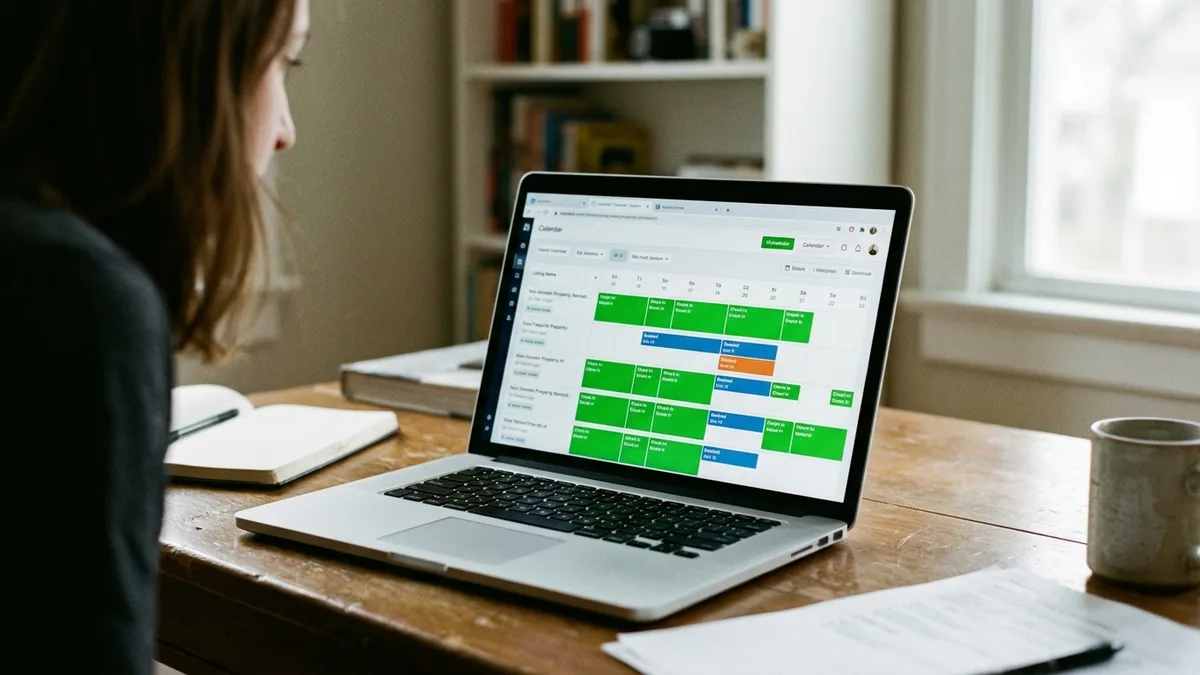
Your PMS handles availability; your website handles conversion. When the two do not talk in real time, you get stale rates and overlaps. Boostly integrates with 27+ property management systems and syncs listings and availability in real time. Pricing syncs too, so your direct site always shows what your PMS knows. If you manage properties remotely, our piece on tactics for managing STR properties remotely covers the wider automation picture.
How Do Vacation Rental Hosts Get More Direct Bookings?
Hosts get more direct bookings by capturing guest contact details during every stay, emailing a direct booking link after checkout, and giving returning guests a clear reason to book direct. A website alone does not create demand; it converts an audience you have already built.
Start with the guests you already have
Export past-guest lists from your OTA stays where the platform allows it, and offer a small perk for a future direct booking, such as late checkout. Keep your nightly rate at parity across channels and differentiate with value, such as flexible cancellation or early check-in. A returning-guest rate works as well. Undercutting your own OTA price invites guests to screenshot the difference and demand it everywhere.
Capture contact details legally and early
Guest Wi-Fi capture tools such as StayFi collect emails in-home with consent, and a digital guidebook can do the same job. For the follow-up emails themselves, the Price of Business guide on growing a vacation rental business covers off-platform lead generation and email tactics worth borrowing.
Manual follow-up breaks down at about the third property. Lists live in spreadsheets, emails go out late, and nobody tracks who rebooked. Boostly’s built-in CRM gives you access within 24 hours of signing up, and it automates email and SMS sequences designed to bring past guests back to book direct.
A consistent business name across your OTA listings helps too. Guests who remember your brand can find your site when they search for you, which is the first step toward the 65% direct share we aim for.
How Do You Calculate Net Revenue by Channel?
Net revenue by channel is the money left from a booking after commissions, payment fees, cleaning, discounts, refunds and your own time. Compare channels on this figure, not on gross booking value, because a booking that looks larger can leave you with less once every cost is subtracted.
Competitor guides recommend direct bookings without pricing the workload. Here is a worksheet you can fill in from your own numbers:
| Line item | OTA booking | Direct booking |
|---|---|---|
| Platform commission | Charged on each stay | None; payment processing fee applies |
| Guest support and messaging | Platform tools, your time | Your time, or automated through your CRM |
| Cancellations and refunds | Set by platform policy | Set by your own policy |
| Chargeback handling | Platform often absorbs part of the process | Falls to you and your payment provider |
| Marketing cost | Built into the fee | Website, email and SEO effort; results take time |
| Guest data ownership | Restricted | Yours |
Be honest about the direct column. SEO takes time to show results, payment processing is not free, and chargebacks are your problem. Even so, Boostly’s figure is that hosts keep 15% on every booking moved off an OTA, and we have not seen a portfolio where the direct column loses once repeat guests enter the mix.
How Can You Reduce Reliance on Airbnb Without Losing Bookings?
You reduce reliance on Airbnb by keeping your listings live while moving repeat and referred guests to your own site. Your target should be a gradual change in channel mix, not a switch-off. Airbnb keeps supplying discovery; your website keeps the guest relationship and the margin.
Industry guidance often suggests that 20% to 40% direct is a realistic target once systems and marketing are in place, and many established managers land around one-third. That is a fair benchmark for hosts who build the pieces separately. Boostly’s guarantee aims higher: if you do not reach 65% direct bookings within 12 months, you receive your money back plus $1,000. The success stories from hosts such as Sergio, Rose Tipka, Seth, Stephanie, Nikki and Harro point to averages of 65% to 80%.
A split-screen of commission invoices next to direct payouts makes the case on its own. Review it quarterly and move your mix by degrees. Our post on the mindset of growing a large STR company explains why operators who treat channel mix as a managed metric outgrow those who treat it as luck.
When Is It Safe to Add More Properties?
It is safe to add properties when your current portfolio runs reliably without your daily attention, cash reserves cover vacancy and repairs, and guest reviews hold steady. Taking on units before those thresholds are met multiplies workload and drags down service quality across every property you already have.
Set three thresholds before signing a new lease or purchase:
- Cash: a reserve that covers a slow quarter on the new unit without touching the others.
- Service: review scores and response times staying where they are during your busiest weeks.
- Systems: messaging, pricing and calendars running on automation rather than your phone.
Multi-unit operators feel this most: our write-up on handling 350 units across six markets shows what a connected stack looks like at volume. Boostly’s PMS sync means a new unit joins your direct site without a rebuild.

What Compliance Checks Apply When You Collect Guest Details?
Collecting guest contact details for post-stay marketing triggers privacy and payment rules. GDPR and CCPA apply to any platform that stores guest personal data, and PCI DSS applies to any platform that processes or transmits card data. Check your own jurisdiction’s requirements before you build the list.
Use this checklist as a starting point:
- Publish a privacy policy that states what you collect and why.
- Get clear consent before adding a guest to marketing emails or SMS.
- Include an unsubscribe route in every message and honour it quickly.
- Use a payment processor that handles card data under PCI DSS rather than storing numbers yourself.
- Check your local short-term rental licensing requirements, which vary by jurisdiction, and confirm current rules with the official source.
These are the details that a self-built website tends to miss. Boostly’s websites are built for short-term rentals with this kind of structure in mind, though you should still confirm your own obligations with a qualified adviser.
What Mistakes Slow Hosts Down When They Scale?
The most common scaling mistakes are launching a website with no audience, adding properties before systems exist, and judging channels by gross revenue. Each one is avoidable, and each one costs months of margin before the owner notices.
Here is the pattern we see most. A host buys a template and publishes it. Then the host waits for bookings that never arrive. A direct site works best when repeat guests and referrals give it traffic from day one. Email lists help too. A related trap: pitching a bargain price directly to the same guest who found you on Airbnb. Hold your rates at parity and compete on perks.
If hiring outside help is on your mind, our article on using a property management consultant to grow your STR business covers when advice pays for itself. And if you want a place to start building direct demand, a book direct marketplace can supplement your own site. Boostly members also get weekly coaching calls and 80+ hours of training, so the playbook does not sit only in your head.
So, How Do I Scale My Short-Term Rental Business Beyond Airbnb in 2026?
Scale your short-term rental business beyond Airbnb by sequencing the work: own a direct channel and measure net revenue by source. Then automate guest follow-up, and add units only when thresholds are met. The short-term rental market keeps growing in 2026, but the margin goes to hosts who control their guest relationships.
Reducing your reliance on OTAs is not about abandoning Airbnb. It is about building a second channel that keeps more of every booking in your pocket. The hosts who do this well combine a converting website with real-time PMS sync. Consistent guest follow-up completes the mix, and none of these works well in isolation. That is the exact system we built.
If you want to see what that looks like for your properties, book a demo with Boostly. We build your direct booking website within 35 days, give you CRM access within 24 hours of signing up, and back it with a 65% direct bookings guarantee or your money back plus $1,000.

Frequently Asked Questions
What percentage of bookings should come from direct channels?
Industry guidance often treats 20% to 40% direct as a realistic target once your website and guest list are in place. Marketing needs to be running too. Many established managers sit around one-third. Boostly’s guarantee aims higher at 65% direct bookings within 12 months.
No. Boostly is additive: you keep your Airbnb and other OTA listings live for discovery while the direct channel grows alongside them. The listing optimisation work you have already done is not wasted.
How long does it take to set up a direct booking website?
Boostly gets hosts live within 35 days of signing up, with no coding required. CRM access arrives within 24 hours of signing up, so you can start organising guest data while the site is built.
What is the difference between a direct booking website and a channel manager?
A channel manager synchronises calendars and rates across booking platforms. It syncs reservations as well, which prevents double bookings. A direct booking website is a branded site where guests book and pay you without an OTA. Most scaling operators need both, connected through the PMS.
Show live availability, clear cancellation terms, secure card payment, genuine photos and visible reviews. Keep your business name consistent across OTA listings so guests recognise you. A site built specifically for short-term rentals carries these trust signals from launch.
Which property management systems integrate with direct booking platforms?
Boostly integrates with 27+ property management systems and syncs listings and availability in real time. It syncs pricing as well. Ask during a demo whether your PMS is on the list, since compatibility varies by platform.
How much can I save by reducing OTA commissions?
Boostly helps hosts keep 15% on every booking that moves from an OTA to their own site. Your total depends on how many bookings you move, so model it against your own 12 months of booking data before setting a target.