A happy guest is a traveller whose stay matched what your listing promised and whose small needs were met before they had to ask: working access instructions, a clean and comfortable space, a quick and friendly reply, and a simple checkout. Those small details decide your reviews, and whether that guest ever books you again.
Key Takeaways
- A happy guest is the product of the whole guest journey (booking, pre-arrival, check-in, stay, checkout and follow-up), not just a clean property.
- The details hosts miss most are arrival and access information, unlabelled climate controls, hard-to-find Wi-Fi details, missing bedside charging, and high-touch surfaces that cleaners skip.
- Rank fixes by cost, effort, how often guests use the detail and how likely a miss is to trigger a complaint. Cheap, daily-use items such as tested access instructions come first.
- Personalisation works when it uses information the guest chose to share. It turns intrusive when the guest realises you know more than they told you.
- A happy guest who rebooks on your own website saves you the roughly 15% OTA commission you would otherwise pay on that stay.
- Boostly builds done-for-you direct booking websites that go live within 35 days, syncs with 27+ property management systems, and automates guest follow-up so a happy guest becomes a direct repeat booking.
You can clean to a high standard, stock the kitchen and still collect a three-star review because nobody could work out the thermostat. Cases like that are common, and they rarely come from big failures. They come from a handful of small details you stopped noticing because you see the property all the time.
At Boostly, we work with a community of over 2,000 STR hosts and property managers, and the pattern repeats: strong occupancy, thin margins and a guest experience that leaks in the same few places. In 2026 that has a direct revenue angle, because every happy guest is also your cheapest source of a next booking.
This guide covers the guest journey, the details hosts miss, how to rank fixes, where personalisation turns intrusive, how to set checkable standards, and how to turn a good stay into a direct repeat booking. One limit up front: nobody has published clean data linking a single detail to a review score, so the prioritisation here rests on operating experience and clear logic, not invented benchmarks.
What Makes a Happy Guest in a Short-Term Rental?
A happy guest in a short-term rental is someone whose expectations, set by your listing and your messages, were met at every step from booking confirmation to checkout. That journey runs through booking, pre-arrival, check-in, the stay, checkout and follow-up. A spotless kitchen cannot rescue a stay that began with a door code that failed at 11pm.
Comfort has an emotional side and a physical one. The emotional side covers trust and clarity; the physical side covers sleep, temperature, cleanliness and noise. Most hosts pour effort into the physical side and neglect the emotional one. A guest who cannot tell where to park feels uncertain before they have unpacked a bag.
Trust also starts before arrival, on whichever site the guest books. Airbnb and Booking.com supply built-in trust signals. On your own website you supply them through honest photos, clear house rules, live availability and secure payment. We built Boostly's direct booking websites around that gap, and real-time syncing across 27+ property management systems keeps what the guest sees in line with what is true.
Which Small Details Do Hosts Overlook Most?
Overlooked details are the low-cost, high-frequency touchpoints you stop noticing because you see the property every week and the guest sees it once. They cluster in four areas.
Arrival and access
Send access instructions, entrance photos, parking details, Wi-Fi information and house rules 24 to 48 hours before arrival. Then test the sequence as a stranger would. Failed entry codes and missing parking details cause more first-hour frustration than any amenity gap.
Climate and sleep
Label the thermostat and give written air conditioning instructions. If you provide blackout curtains, check that they close without a gap in the middle. Guests who sleep badly rarely say why; they just write it in the review.
Cleaning blind spots
Cleaners catch what is obvious. They miss a loose hair on a pillowcase, a sticky kitchen counter or dust on a bedside table. Guests mention exactly those, because they signal that nobody looked.
Power, connectivity and storage
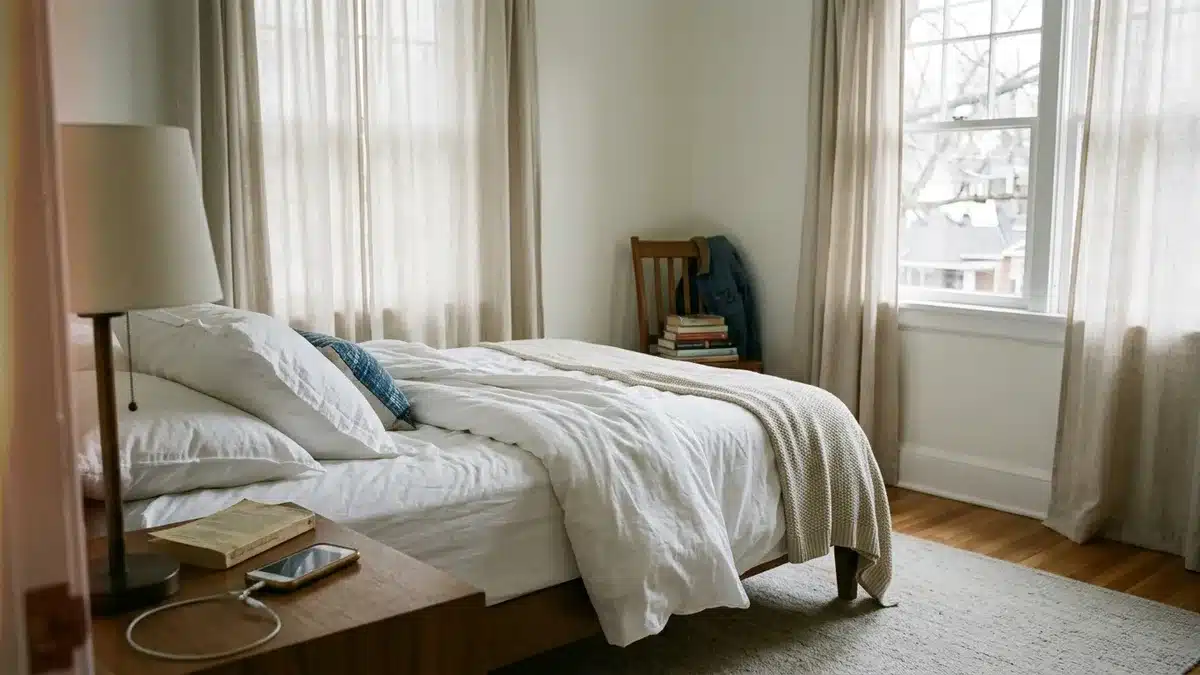
Put charging points, ideally USB, within reach of the bed and the sofa. Show the Wi-Fi name and password where guests will see them first; our piece on how Wi-Fi shapes guest satisfaction lists what to check. Add luggage space and enough hangers.
You should not retype any of this for each booking. Boostly's CRM, synced with your PMS, can send the pre-arrival message automatically, so the details reach every guest at the right time without copying and pasting.
How Do You Work Out What Different Guests Need?
Guest-type mapping means matching your property's small details to the travellers you actually host, rather than to a generic idea of a guest. The risk is stereotyping, so treat the patterns below as hypotheses to test against your own messages and reviews.
- Families often ask about kitchen basics, sleeping arrangements for children and the safety of stairs, balconies or pool areas.
- Older travellers tend to care about steps, night lighting, bed height and heating controls that are easy to read.
- Remote workers notice Wi-Fi reliability, a proper desk and chair, and sockets within reach.
Instead of guessing, ask. One optional question before arrival, such as whether anyone in the party has particular needs, tells you more than any assumption. Then look at what your recent enquiries asked about.
This is where owning your guest data pays off. Boostly's CRM captures guest data at the point of booking, so you can see who you really host across stays instead of relying on memory.
Which Fixes Should You Make First?
Prioritising guest-experience fixes means ranking each detail by cost, effort, how often guests use it and how likely a miss is to trigger a complaint. Most advice gives you a flat list of nice touches. A ranking is more useful, because a labelled thermostat and a stocked minibar do not deserve the same budget.
The table reflects our judgement from working with hosts. Your property, climate and guest mix will shift it.
| Detail | Cost | Effort | Guest use | Complaint risk if missed |
|---|---|---|---|---|
| Tested access instructions with photos | Low | Low | Every guest, at arrival | High |
| Wi-Fi name and password in plain view | Low | Low | Every guest, daily | High, especially for remote workers |
| Labelled thermostat and air conditioning instructions | Low | Low | Every guest, daily | Medium to high |
| Cleaning checklist for high-touch surfaces | Low | Medium, ongoing | Every guest | High |
| Bedside charging points | Low to medium | Low | Daily | Medium |
| Properly fitted blackout curtains | Medium | Medium | Nightly | Medium |
| Local welcome touch | Low to medium | Low | Once | Low, but memorable |
Start at the top: cheap, used by every guest, and costly when missed. Leave the welcome touches for last. They are memorable, but they will not compensate for a Wi-Fi password nobody can find.
If you are unsure of the order for your property, the weekly coaching calls and 80+ hours of courses inside Boostly give you a place to pressure-test it against other hosts' experience.
Where Does Personalisation Cross the Line?
Personalisation is using information a guest chose to share to make their stay fit them better. It crosses the line when the guest realises you know more than they told you.
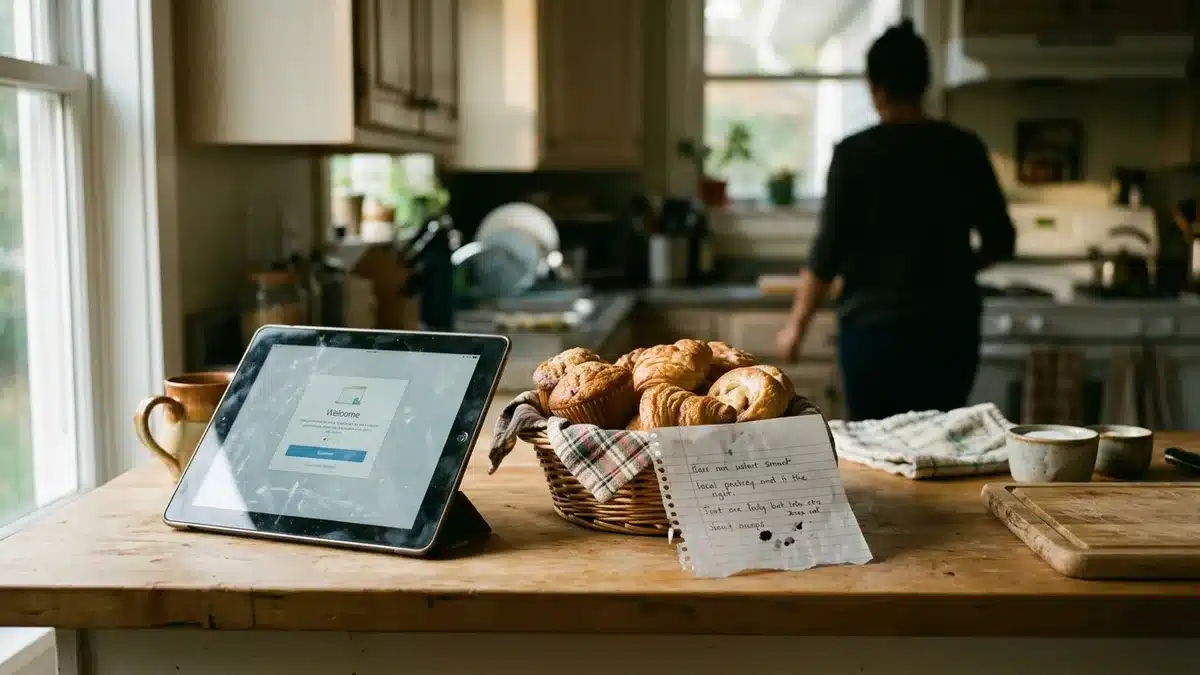
Good examples include greeting guests by name, acknowledging an occasion they mentioned, and matching local recommendations to stated interests. A cookie from a neighbourhood bakery with a handwritten note also works. Intrusive examples include referencing a guest's social media, commenting on details inferred from booking data, checking in every few hours mid-stay and entering without notice.
A quick test works: would the guest be pleased or unsettled if they learned how you knew this? Anything in the second group stays out. For tone and timing across your messages, our guide to strategic, creative guest communications goes deeper.
Ownership matters too. Inside Airbnb's messaging system you never truly hold a guest's contact details. A CRM on your own direct booking site lets you keep them with consent. Data protection rules such as GDPR in the UK and Europe and CCPA in California apply to guest data, so check your obligations. Boostly's CRM captures details at booking and automates the follow-up from there, while you decide what gets sent.
How Do You Measure Whether a Property Is Guest-Ready?
A guest-readiness standard is a written condition that anyone on your team can check and tick off, such as thermostat labelled or every bedside lamp works. Vague goals like make it comfortable cannot be audited. Checks can.
- Temperature: set a comfortable range for your climate and confirm the property sits inside it before each arrival.
- Lighting: every bulb works, and every bedroom has a bedside light.
- Wi-Fi: test from the furthest room with a laptop, not a phone beside the router.
- Supplies: count towels, toilet paper, bin bags and kitchen basics against a written list.
- Response times: choose a reply window, write it down and track the real figure monthly.
We deliberately give no universal number for temperature or response time. Comfortable ranges and guest expectations vary by climate and market, so pick figures that fit yours and hold to them.
Do small details change review scores?
Most advice asserts it without evidence. Our experience points the same way, but nobody has published clean data isolating one detail from another. Treat each fix as a test: change one detail, then watch the next batch of reviews and guest messages.
Boostly's reporting covers the direct side of that picture, including conversion, traffic sources and progress towards your 65% target, so you can see whether happier guests turn into repeat direct bookers.
How Do You Audit Your Rental Through a Guest's Eyes?
A guest-eyes audit is a walk-through of your property using only the information a guest receives, with no insider knowledge. Run it between stays.
- Start at the parking spot or station and follow your own arrival instructions word for word.
- Test every code, lock and Wi-Fi connection from the guest's starting point.
- Operate the thermostat, air conditioning, shower, hob and TV using only your written instructions.
- Inspect pillowcases, kitchen counters and bedside tables under a bright light.
- Count charging points, hangers and supplies against your list.
- Read recent reviews and guest messages for repeated questions. Each repeat marks a missing detail.
- Fix issues in the order set by the table above, then repeat the audit after the next turnover.
If you manage from a distance, our guide to managing your STR properties remotely covers running these checks through photos and cleaner checklists.
Whatever repeated questions you find belong in your automated pre-arrival message and on your direct booking website. The templates and AI tools that come with Boostly mean you are not writing them from a blank page.
Which Guest Management Tools Keep Every Guest Happy?
Guest management tools are the software that handles the repeatable parts of a stay: availability, messaging, access details and follow-up. Four categories matter.
- Property management system (PMS): holds bookings, availability and pricing.
- Automated messaging: sends arrival details, reminders and checkout steps triggered by the booking.
- CRM: keeps guest records, volunteered preferences and follow-up history.
- Direct booking website: where guests book and pay you without an OTA in the middle.
Check-in automation works by tying a message to the booking. Your PMS passes the guest name, dates and property into the message, which goes out at a set time before arrival with the access steps. It saves typing, but only if the instructions inside are correct, so test them first.
Collect the guest information you will use: name, contact details, dates, party size and any needs the guest volunteers. Skip anything you cannot explain a use for. Pricing varies by provider, portfolio size and what is bundled, so check each provider's current pricing page.
Our view is that several disconnected tools cause more guest problems than they solve, because every extra login is another place for data to go stale. Boostly connects to 27+ PMS platforms with real-time syncing of listings, availability and pricing, gives new members CRM access within 24 hours and runs automated guest follow-up. It sits alongside your Airbnb listing, so you do not have to quit anything. For where the category is heading, see our overview of guest services software innovations.
How Does a Happy Guest Turn Into a Direct Repeat Booking?
A direct repeat booking is a return stay booked on your own website rather than through Airbnb or Booking.com, so no OTA commission applies. That is the commercial reason to sweat small details: they decide whether a guest comes back, and where they book when they do.
The appetite for returning exists. A survey of vacation rental visitors along the Gulf Coast found that 89.4% of respondents were repeat visitors (Journal of Travel & Tourism Insights, Grand Valley State University). It covers one region, so read it as a sign that return behaviour can be large at leisure destinations, not as a national benchmark.
Each booking you move off the OTAs keeps roughly 15% more in your pocket. Three habits make that happen:
- Capture contact details with permission at booking, or through in-home Wi-Fi email capture.
- Follow up after checkout with a short thank-you, then early access to dates or a direct-only perk.
- Make your own site credible: honest photos, clear policies and secure payment, so guests trust it as much as an OTA listing.
For email tactics beyond the OTAs, this Price of Business guide on growing a vacation rental business covers lead generation and email marketing.
We built Boostly's automated guest follow-up for exactly this step. Hosts in our community, including Sergio, Rose Tipka, Seth, Stephanie, Nikki and Harro, see average direct booking rates of 65% to 80% within 12 months. If you do not reach 65% in 12 months, you get your money back plus $1,000. Our walkthrough on how to build a direct booking website covers the groundwork.
How Do You Keep Every Happy Guest Coming Back in 2026?
A happy guest is built across the whole journey, and the details that break it are usually small, cheap and repeatable: access instructions, labelled controls, a findable Wi-Fi password and cleaning checks on high-touch surfaces. Rank your fixes by cost, effort, frequency and complaint risk. Personalise only from what guests share, and write your standards down so you can check them.
Start this week with the guest-eyes audit, then connect it to revenue. Every guest who leaves happy and returns through your own website saves you the OTA commission. Looking ahead through 2026 and beyond, hosts with connected systems will find these details easiest to keep under control.

If you want each happy guest to rebook on your own site instead of through Airbnb, Boostly builds a done-for-you direct booking website that goes live within 35 days with no coding, backed by a 65% direct bookings guarantee or your money back plus $1,000. CRM access arrives within 24 hours of signing up, so guest follow-up can start immediately. Book a demo with Boostly to see how it would work for your properties.
Frequently Asked Questions
What platform can I use to manage my rentals and generate more direct guest bookings?
You need a direct booking website connected to your property management system, plus a CRM for follow-up. Boostly builds that for you, goes live within 35 days, and integrates with 27+ PMS platforms with real-time syncing. Your Airbnb and Booking.com listings can keep running alongside it.
What does a happy guest expect from a short-term rental?
A happy guest expects an accurate listing, clear arrival information, a clean and working space, timely replies and a simple checkout. The comfort details matter daily: a labelled thermostat, visible Wi-Fi details, bedside charging and enough storage.
Do I need to stop listing on Airbnb to build a direct channel?
No. Boostly is additive: you keep your Airbnb and Booking.com listings live while building a direct channel next to them. Over time, repeat guests and follow-up move more bookings onto your own site, which saves the roughly 15% OTA commission on each one.
What guest information should I collect?
Collect what you will use: name, contact details, dates, party size and any needs the guest volunteers. Get permission for follow-up emails or SMS, and check data protection rules such as GDPR or CCPA that apply to your guests.
How long does it take to set up a direct booking website?
Boostly gets hosts live within 35 days of signing up, with no coding required. New members also receive CRM access within 24 hours, so you can set up guest follow-up while the site is being built.
How much do guest management tools cost?
Pricing varies by provider, portfolio size and what is bundled, so check each provider's current pricing page. Compare total cost against the commission you currently pay OTAs. To see how Boostly would work for your properties, book a demo.