
You drive direct bookings on a vacation rental website by building specific page structures: a homepage with the booking widget above the fold, individual property pages with clear pricing and trust signals, a checkout flow under three clicks, and a dedicated trust page that answers every hesitation before a guest reaches for their card. Most hosts skip straight to “get a website” and never fix the page architecture underneath it, which is why the site quietly fails to convert.
- Mobile matters more than most hosts think: over 60% of travel searches happen on mobile, so every page structure on a vacation rental website needs to work on a small screen first, not as an afterthought.
- Checkout friction kills conversions fast: every extra click between “Book Now” and confirmed payment measurably reduces the number of guests who finish the booking.
- Trust signals aren't optional decoration: reviews, payment icons, and a visible cancellation policy directly address the hesitation guests feel before paying a stranger online.
- Incentives close the gap with OTAs: a small re-booking discount, early check-in, or a welcome gift gives past guests a real reason to skip Airbnb next time.
- PMS sync prevents the errors that erode trust: real-time availability and pricing sync stop double bookings and outdated rates from undermining a guest's confidence in your direct site.
- Boostly builds these page structures into every direct booking website it launches, live within 35 days, with a booking engine, CRM, and PMS sync already wired to convert instead of just exist.
Building a vacation rental website in 2026 is not the hard part anymore. Templates are everywhere. What's hard is structuring the pages so a stranger with a credit card actually finishes the booking instead of bouncing back to Airbnb out of habit. At Boostly, we've built direct booking websites for a global host community, and the pattern is consistent: hosts with a website that “looks nice” but isn't structured for conversion still send 90 percent or more of their bookings through OTAs.
This guide breaks down the exact page structures that turn a passive website into a functioning direct booking channel: homepage layout, property page components, checkout flow, and the trust and retention elements most guides gloss over. We'll also cover the page-journey gaps that generic “10 tips” articles tend to skip entirely, because structure, not styling, is what determines whether a guest clicks “Book Direct” or closes the tab.
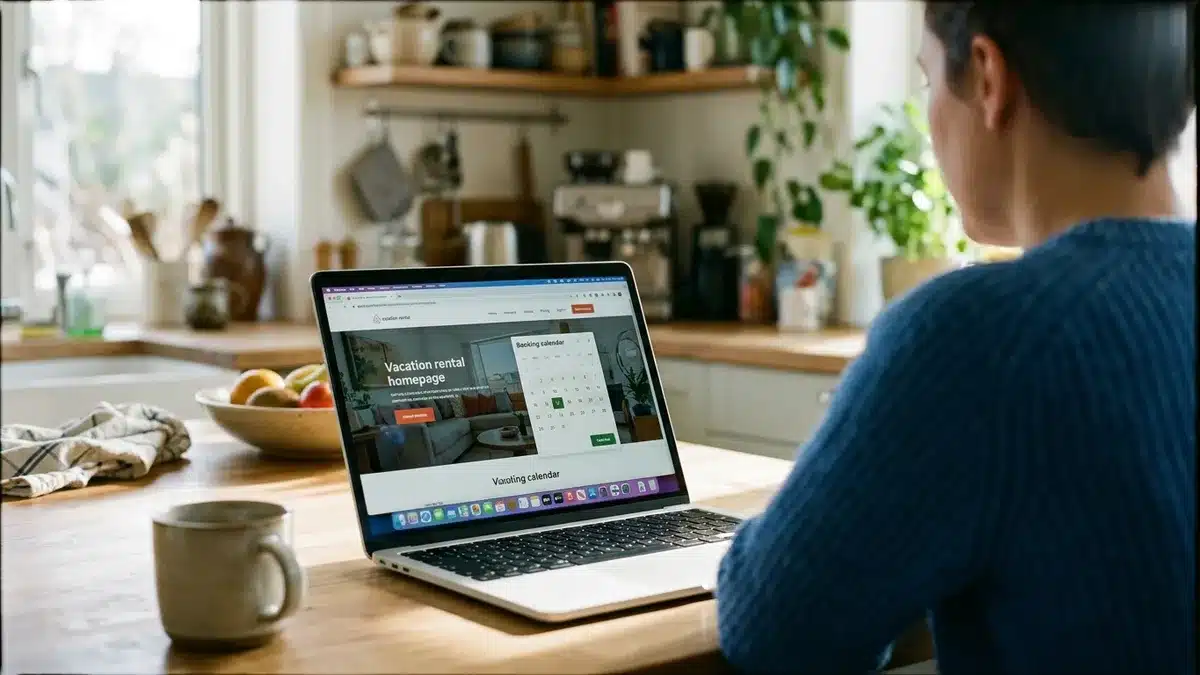
What Is a Direct Booking Website and Why Does Its Structure Matter?
A direct booking website is a property owner's own site where guests search availability, view pricing, and pay without going through Airbnb, Booking.com, or another OTA. Its structure matters because guests decide within seconds whether the page feels trustworthy enough to hand over payment details.
Unlike an OTA listing, where Airbnb's existing trust and checkout flow carries the guest through, a direct booking website has to build that confidence from scratch on every page. If the homepage buries the calendar, if pricing is vague, or if checkout takes six steps, the guest defaults back to the platform they already trust: Airbnb.
That's specifically why page structure, not just design polish, determines conversion. A property page with the right component order (photos, availability, price, reviews, policies, book button) will out-convert a prettier page with the wrong order every time. This is the exact gap Boostly's approach to building a direct booking website is designed to close: not a generic template, but a page architecture built specifically to move a browsing visitor toward checkout.
What Is the Most Used Vacation Rental Website Structure Today?
The most common structure used across successful vacation rental sites in 2026 follows a five-page core: homepage, property listing pages, a booking/checkout flow, an about or trust page, and a contact page. Multi-property operators add a location or portfolio hub; single-property hosts often condense the homepage and property page into one.
The homepage's job is narrow: get the visitor searching dates within seconds. It should lead with a clear, benefit-driven headline (something like “Book a Luxury Beachfront Villa, No OTA Fees”), a booking calendar widget above the fold, and minimal navigation, typically Home, Property, Amenities, Location, Book Now.
Property pages carry the heaviest conversion load. They need a photo gallery, a real-time availability calendar synced to your property management system, transparent nightly pricing with no hidden fees revealed later, and a “Book Now” button repeated after the gallery, near guest reviews, and at the page's bottom.
Where most hosts get this wrong is treating the homepage and property page as marketing brochures instead of conversion funnels. This is where a done-for-you build helps: Boostly's WordPress-based sites come with the booking engine, calendar, and page hierarchy already structured this way, so you're not guessing at component order from scratch.
What Is a Direct Booking Website Missing That Most Guides Never Mention?
Most guides stop at “have a homepage and a booking button.” What they miss is the page-journey difference between property types: a family cabin site needs a different structural emphasis than a couples' retreat or a pet-friendly rental, and almost no published guide addresses this.
For example, a family-oriented property page should surface square footage, bedroom counts, and nearby kid activities near the top, right after the hero image, because that's the first question a parent asks. A couples' getaway page should lead with atmosphere: hot tub, view, privacy, before pricing details. A pet-friendly listing needs pet fees and restrictions stated plainly, high up, not buried in a policy page three clicks deep.
Multi-property portfolios face a different structural challenge entirely. A single-property site can get away with one long homepage. A five-plus property portfolio needs a location or property-type hub page that filters guests into the right listing fast, otherwise visitors land on the wrong property page and bounce. Few articles distinguish this, and it's one of the biggest reasons a portfolio site underperforms a single-property site on conversion rate.
This is exactly the kind of structural nuance Boostly's onboarding team accounts for when building a site: property type and portfolio size change the page hierarchy, not just the copy. If you're managing multiple listings, our approach to running larger portfolios across markets shows how that structure scales without turning into a maintenance headache.
How Should the Booking Engine and Checkout Flow Be Structured?
A high-converting checkout flow requires no more than a few clicks between selecting dates and confirming payment. Every additional field, page, or forced account creation step reduces the percentage of visitors who finish booking, a pattern consistent across nearly all conversion research on ecommerce and travel booking flows.
Structurally, the ideal flow looks like this: guest selects dates on the property page calendar, sees the total price with taxes and fees included (not added later), enters guest details and payment on a single page, and receives instant confirmation. No account login should be required to complete a booking.
Real-time sync between your booking engine and your property management system is non-negotiable here. If your calendar doesn't update instantly across every channel, you risk showing availability that no longer exists, which either causes a double booking or forces you to cancel a confirmed guest, both of which destroy trust fast.
This is specifically the operational risk Boostly's PMS integration layer solves. Boostly connects to 27 or more property management systems with real-time syncing of availability, pricing, and listings, so your direct booking checkout never shows a date that's actually already taken on Airbnb.
Checkout Structure Checklist
- Dates and total price visible before any personal information is requested
- Payment icons and secure checkout badges near the payment field
- Cancellation policy linked directly on the checkout page, not hidden in a separate menu
- Confirmation email sent instantly, not delayed by manual review
- No forced account creation before payment
What Trust Signals Actually Reduce Guest Hesitation?
Trust signals are the specific page elements, reviews, payment security badges, transparent policies, and verifiable contact information, that reduce a guest's hesitation about paying a stranger directly instead of through a familiar platform like Airbnb. Without them, even a well-designed site will underperform.
The single most effective trust element most direct booking sites are missing is a dedicated trust page: a short, clear explanation of who runs the property, how payments are processed securely, and what happens if something goes wrong. Guests hesitate before booking directly precisely because Airbnb's brand does that reassurance work for free, and a direct site has to replace it.
Beyond the trust page, every property page should surface guest reviews near the booking button, not buried at the bottom. Payment processor badges (Stripe, PayPal, or your specific processor) and a visible, plain-language cancellation policy do more to move a hesitant guest toward checkout than another gallery image ever will.
We built Boostly's CRM and website templates around this exact hesitation gap. New members get CRM access within 24 hours of signing up, which means review requests and trust-building follow-up start working from day one instead of months into your direct booking strategy.
What Is the 65-55 Rule for Airbnb and How Does It Relate to Direct Bookings?
The “75-55 rule” refers to search ranking guidance some Airbnb hosts use, tying pricing and response behavior to visibility inside Airbnb's own algorithm. It has nothing to do with your direct booking website's structure, and it's a common point of confusion for hosts researching direct booking strategy.
Here's the distinction that matters: Airbnb's internal ranking rules only affect visibility inside Airbnb's marketplace. Your direct booking website operates entirely outside that algorithm. No ranking rule, pricing rule, or response-rate rule from Airbnb has any bearing on how your own site converts visitors.
That's actually good news. It means the page structures covered in this guide, homepage layout, checkout flow, trust signals, are entirely within your control. You're not optimizing for someone else's algorithm; you're optimizing for a human being deciding whether to trust your site with their money.
This is the core philosophy behind Boostly's guarantee. Hosts don't have to abandon Airbnb's ranking game to win at direct bookings, they run both channels in parallel, which is exactly why Boostly's 65% direct booking guarantee doesn't require leaving OTAs behind.
How Can You Structure a Website to Recover Past Guests From OTAs?
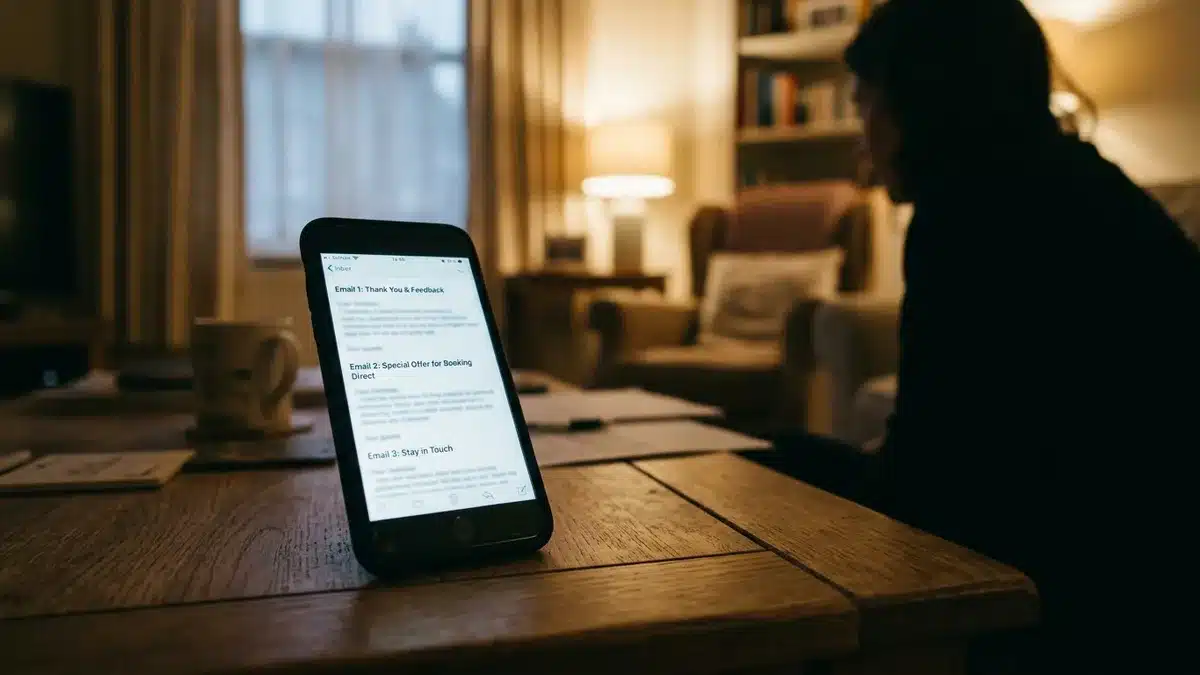
Recovering past guests from OTAs into direct bookers requires a specific page and email structure: a repeat-guest landing page, an automated post-stay email sequence, and a visible incentive for booking direct next time. This is the highest-ROI page structure most hosts never build.
According to Houfy's 2026 data, direct bookings produce 45.2% longer average stays than OTA bookings, and a 200-guest email list with a 15% annual repeat rate generates around 30 commission-free bookings per year. That repeat-guest math only works if your site is structured to capture and act on guest emails in the first place.
Practically, this means your booking confirmation and checkout pages need an opt-in for a welcome email sequence, your post-stay page should trigger a review and re-booking offer, and your homepage should feature a small “returning guest” incentive: a 5 to 10 percent discount, early check-in, or a small welcome gift, consistent with what industry guides on guest retention recommend.
Manually managing this with spreadsheets and one-off emails is exactly the burnout trap that catches self-managing hosts. Boostly's built-in CRM and automated guest follow-up sequences handle the post-checkout email, the review request, and the re-booking offer without you drafting a single message by hand. If you want to see how the guest lifecycle fits together end to end, our piece on using a book direct marketplace to drive direct bookings covers the mechanics in more depth. For a broader definition of what makes a repeat guest valuable in the first place, Hostaway's definition of repeat guest is a useful reference point.
How Can Hotels and Vacation Rentals Drive Direct Bookings With SEO and Local Search?
Driving direct bookings through search requires a page structure optimized for both speed and local relevance: fast-loading, mobile-first pages, location-specific content, and schema markup that helps Google and AI search tools understand what you're offering. Without this, even a well-built booking flow gets no traffic to convert.
Google prioritizes mobile-first, fast-loading websites, and since over half of guests will browse a vacation rental site on a phone or tablet, your booking calendar and search fields need to be finger-friendly, not just visually responsive. Compressed images and minimal page bloat matter more for rankings than most hosts realize.
Beyond speed, location pages, content specific to your property's neighborhood, nearby attractions, and area amenities, help you rank for the searches your actual guests use, rather than competing purely on your property name. This is where a documented content and SEO strategy earns its keep over time.
This is also where most solo hosts run out of time, not skill. Boostly's training library includes SEO-specific coursework inside its 80-plus hours of courses on direct booking strategy, and every Boostly-built site starts with the technical SEO foundation already in place, so hosts aren't debugging page speed and schema from zero.
Data and Evidence: What the Numbers Say About Direct Booking Page Performance
The vacation rental market is not shrinking, it's the opposite. The global vacation rental market was valued at roughly $101.7 billion in 2026 and is projected to reach about $106.5 billion in 2026, according to Grand View Research, and the short-term rental management software segment alone is projected to reach around $2.35 billion by 2026, growing at a 14.5% CAGR through 2033. More hosts are competing for the same guest attention, which makes page structure a real competitive variable, not a nice-to-have.
| Page Element | Common Mistake | Structural Fix |
|---|---|---|
| Homepage | Calendar buried below marketing copy | Booking widget placed above the fold |
| Property Page | Pricing revealed only at checkout | Nightly rate and fees shown upfront |
| Checkout | Multi-page form with forced account creation | Single-page checkout, no login required |
| Trust Page | No dedicated trust or policy page exists | Standalone page covering payment security and cancellation terms |
| Repeat Guest Flow | No post-stay follow-up sequence | Automated email offering a direct re-booking incentive |
On the retention side, a repeat direct booking on a roughly $2,000 stay can save a host between $310 and $640 compared to an OTA booking, per Houfy's 2026 breakdown, once you account for OTA commission versus direct payment processing costs. Multiply that across even ten repeat direct bookings a year and you're recovering thousands of dollars a well-structured site would have captured automatically.
What Practical Steps Should You Take to Fix Your Page Structure This Year?
Fixing a vacation rental website's structure in 2026 starts with an audit, not a redesign. Before touching a single template, walk through your own booking flow on a phone, the same way over 60% of travel searchers will, and count how many taps it takes to reach confirmed payment.
- Audit your homepage first. Confirm the booking calendar sits above the fold, not below a hero video or a paragraph of brand copy.
- Rebuild your property page hierarchy. Order should be: gallery, availability calendar, transparent pricing, reviews, policies, book button repeated at least twice.
- Strip your checkout down to one page. Remove forced account creation and any field that isn't required to process payment.
- Build a trust page if you don't have one. Cover who runs the property, how payments are secured, and your cancellation terms in plain language.
- Add a repeat-guest incentive and email sequence. Even a simple 5 to 10 percent direct-booking discount for returning guests changes behavior.
- Confirm real-time PMS sync. Test that a booking made through your OTA listing instantly blocks that date on your direct site, and vice versa.
The mistake most hosts make is trying to do all six steps manually while still running the property day to day. That's the exact gap Boostly's done-for-you build closes: the page structure, PMS sync, and CRM setup happen during onboarding, live within 35 days, instead of becoming a six-month side project you never finish. For additional structural approaches to portfolio growth, RentAlready's guide on how to scale a vacation rental business and HostPapa's article on how to grow a vacation rental business both cover complementary ground on listing and portfolio strategy.
Frequently Asked Questions
What is a direct booking website?
A direct booking website is a property owner's own site where guests can check availability, view pricing, and pay directly, without going through Airbnb, Booking.com, or another OTA. It's structured with a booking calendar, property pages, and a checkout flow the host fully owns and controls.
What is the most used vacation rental website structure today?
The most common structure includes a homepage with a prominent booking calendar, individual property pages with pricing and reviews, a simplified checkout flow, and a trust or about page. Multi-property operators typically add a portfolio or location hub page to route guests to the right listing.
What is the 75-55 rule for Airbnb?
The 75-55 rule refers to Airbnb's internal search ranking guidance tied to pricing and response behavior inside the Airbnb marketplace. It only affects visibility on Airbnb itself and has no bearing on how your own direct booking website converts visitors.
How can hotels and vacation rentals drive direct bookings?
Hotels and vacation rentals drive direct bookings by combining a fast, mobile-optimized website with a low-friction checkout, visible trust signals like reviews and secure payment badges, and a repeat-guest email sequence offering a direct booking incentive. Structure and follow-up matter as much as design.
Do I need to leave Airbnb to build a direct booking website?
No. Most hosts run both channels in parallel, using Airbnb and Booking.com for discovery while building their direct site as the channel for repeat and referred guests. Boostly's approach specifically supports this dual-channel strategy rather than requiring hosts to abandon OTAs.
How long does it take to see results from a restructured direct booking website?
Setup itself can happen quickly, Boostly gets hosts live within 35 days, but meaningful direct booking volume typically builds over several months as SEO, repeat guests, and referrals compound. Boostly's guarantee targets 65% direct bookings within 12 months of launch.
What page elements reduce guest hesitation the most on a direct booking site?
A dedicated trust page explaining payment security and cancellation terms, visible guest reviews near the booking button, and transparent upfront pricing consistently reduce hesitation the most. These elements replace the trust that Airbnb's brand normally provides automatically.
Conclusion: Structure Is What Actually Drives Direct Bookings
Getting your vacation rental website to drive direct bookings isn't about a prettier homepage. It comes down to page architecture: calendar above the fold, transparent pricing, a checkout flow under three clicks, and a trust page that does the reassurance work Airbnb's brand normally handles for you. Fix those five things and the conversion rate follows.
None of this requires abandoning Airbnb or Booking.com. It requires a site built specifically to capture the guests who are already ready to book direct, if you give them a reason and a frictionless path to do it. That's the entire premise behind Boostly's build process, and it's why the guarantee is tied to a real number, not a marketing promise.
If you want this page structure, the PMS sync, and the guest follow-up automation built for you instead of pieced together over a weekend, get started with Boostly and see what a live site looks like within 35 days. You can also read our companion piece on how to grow your vacation rental business beyond OTAs for the wider strategy behind the pages themselves.
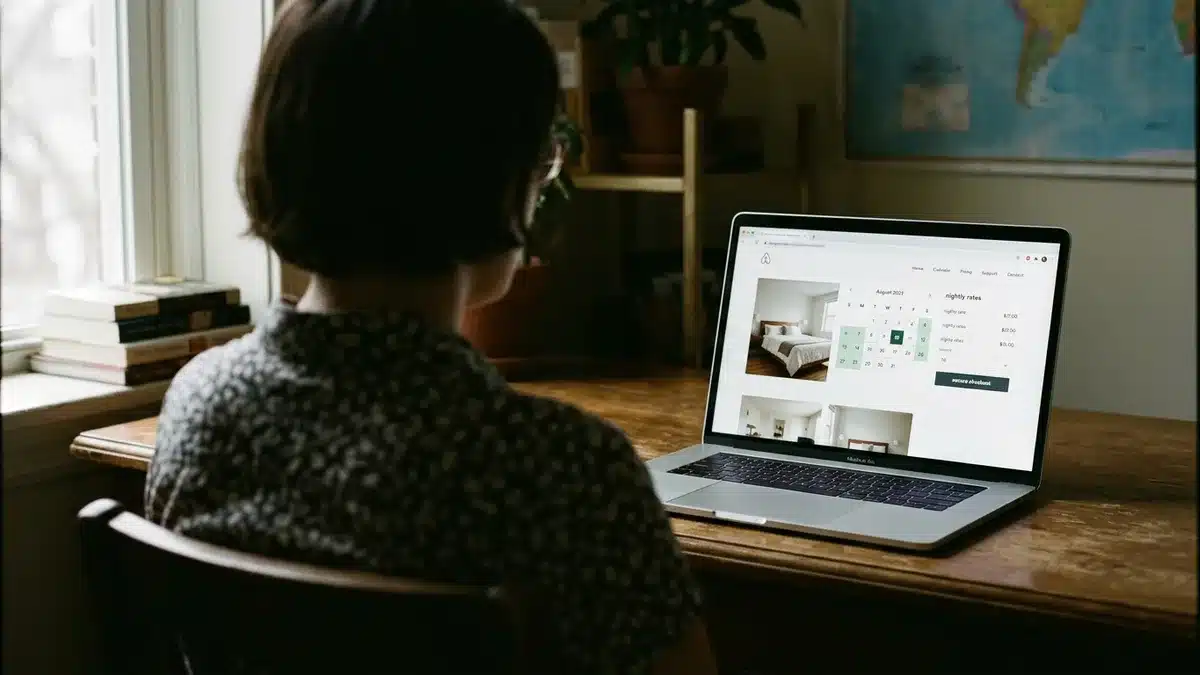
If you're ready to see what a properly structured booking flow looks like on your own property, a Boostly demo walks through exactly this layout, calendar, pricing, checkout, and trust page, built and synced to your PMS from day one. Book a demo at boostly.co.uk to walk through it for your specific property type.