
A direct PMS is either a property management system built with direct-booking capability included, or the integration that connects your existing PMS to a direct booking website so calendars, rates, and availability stay synced without manual updates. Both meanings show up in search results, and hosts often confuse the two.
Key Takeaways
- A “direct PMS” can refer to a property management system with a built-in booking engine, or to the technical connection between a PMS and a separate direct booking website.
- Industry data from AirROI notes that direct bookings can save hosts roughly 15% to 20% in commission compared to OTA channels, since a direct-booking site does not charge Airbnb or Booking.com-style fees on every reservation.
- Real-time two-way sync between a PMS and a direct booking site prevents double bookings and stops guests from seeing outdated rates or availability.
- The global vacation rental management software market is projected to reach USD 238.05 million in 2026, according to Market Reports World, reflecting how many hosts are now investing in connected booking technology.
- Guests who book directly return at a noticeably higher rate than guests who book through Airbnb, based on hostAI Report data cited by gethostai.com.
- Boostly integrates with 27 or more property management systems, delivering real-time syncing of listings, availability, and pricing so hosts get direct-booking benefits without ripping out their existing PMS.
If you have searched “direct PMS” and landed here, you are probably trying to solve one of two problems. Either you want a property management system that includes its own booking engine, or you already have a PMS you like and want to know how to connect it to a direct booking website without creating a scheduling nightmare. Both paths lead to the same destination: fewer commission dollars handed to OTAs and more control over your guest relationships.
At Boostly, we work with hosts every day who assumed their PMS alone would generate direct bookings, only to discover that a PMS and a conversion-focused booking website are two different jobs. In our experience, the hosts who get this distinction right early save themselves months of frustrated troubleshooting later. This guide breaks down what a direct PMS actually means in both senses, what a real integration needs to work reliably, and how to evaluate whether your current setup is costing you bookings.
As of 2026, the property management software market continues expanding quickly, with Grand View Research (via StayFi) projecting the global market to reach USD 3.81 billion in 2026. That growth means more choices for hosts, but also more confusion about which piece of software does what. We will sort through that here.
What Does “Direct PMS” Actually Mean?
Direct PMS most commonly refers to a property management system that includes native direct-booking functionality, such as an embedded booking engine on the host's own website, rather than relying solely on OTA channels for reservations. In a second, equally common usage, it describes the integration linking a separate PMS to a standalone direct booking website.
Industry glossaries like AirROI draw a clear line here: a PMS is a full operations platform handling reservations, messaging, tasks, reporting, and distribution, while a direct-booking site's primary job is accepting reservations without OTA commission. Some PMS platforms bundle both functions into a single product. Others expect you to pair a dedicated operations system with a separate, purpose-built booking website.
This distinction matters because it changes your buying decision entirely. If you search for “direct PMS” expecting an all-in-one product, you might end up with a system that handles reservations well but produces a generic, low-converting website. Conversely, if you already have a PMS you rely on for housekeeping schedules, rate management, and guest messaging, replacing it just to get a better booking site is often unnecessary. That is exactly why Boostly built its direct booking websites to plug into existing PMS platforms rather than forcing hosts to migrate operations systems they already trust.
How Is a Direct Booking Engine Different From a Full PMS?
A direct booking engine is the specific software component that lets guests search availability, see rates, and complete a reservation directly on a host's website, while a full PMS manages the broader operational layer, including housekeeping, maintenance, guest communication, and financial reporting. Confusing the two leads hosts to buy the wrong tool for the wrong problem.
Think of it in layers. At the top sits the guest-facing booking engine, the part guests actually interact with when they book a stay. Underneath that sits the PMS, tracking which units are occupied, what needs cleaning, and what each owner is owed. Connecting these layers requires either a single vendor offering both, or an integration syncing data between two specialized systems in real time.
Notably, SiteMinder's PMS integration guide describes channel managers, booking engines, and payment gateways as separate systems that connect to a PMS, each doing one job well. That modular approach is common across the hospitality industry, not just for short-term rentals. For hosts managing five or more units, we typically recommend keeping your PMS for operations and adding a dedicated booking engine designed specifically to convert website visitors into guests, which is precisely the role Boostly's done-for-you websites play.
Why Does Real-Time PMS Sync Matter for Direct Bookings?
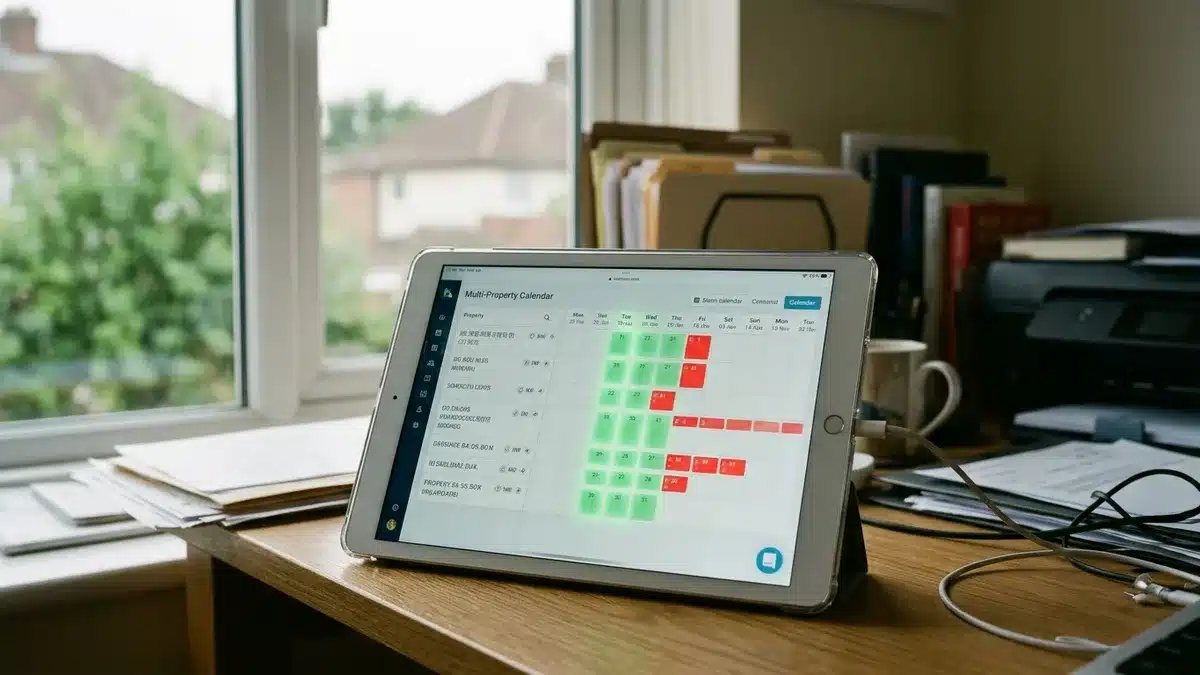
Real-time PMS sync means your calendar, rates, and availability update instantly across every channel the moment a booking happens anywhere, on your direct site, Airbnb, or Booking.com. Without it, you risk double bookings, stale pricing, and guests booking a unit that is already occupied.
Manual calendar management might work fine for a single property. But add a second or third unit, and the math changes fast. You are now updating three or four calendars by hand every time a reservation comes in, and every minute of lag between platforms is a window for a double booking to slip through. Multi-property operators lose hours weekly to this kind of manual reconciliation, and the risk only grows as portfolios scale.
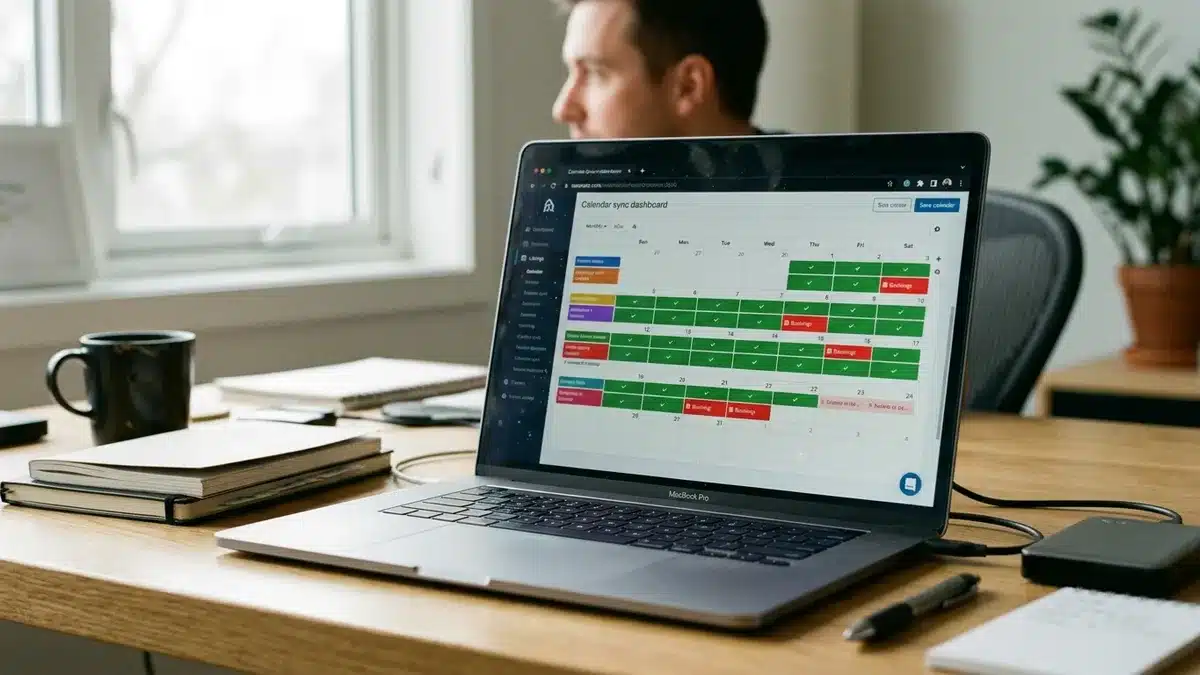
This is precisely the gap Boostly's integration layer closes. Boostly connects with 27 or more property management systems and pushes real-time syncing of listings, availability, and pricing, so a booking made on your direct site instantly blocks that date everywhere else, and vice versa. Hosts running multiple units no longer need a spreadsheet to catch what the software should be catching automatically.
What Should You Look for When Evaluating a Direct PMS Integration?
A reliable direct PMS integration requires open API access, verified two-way data synchronization, clear payment ownership, a defined data migration plan, and a tested rollback process before you fully switch over. Skipping any of these steps is where most hosts run into trouble mid-integration.
Here is the practical checklist we walk hosts through:
- API access: Confirm your PMS offers an open API, since a closed system cannot push real-time data to a direct booking site at all.
- Two-way sync verification: Test that a booking made on either the PMS or the direct site blocks the date on the other, not just a one-way push.
- Data mapping: Check that room types, rate plans, and property groupings map correctly between systems, since mismatched fields cause pricing errors.
- Payment ownership: Clarify who processes guest payments, the PMS, the booking site, or a separate gateway, and confirm PCI compliance responsibility.
- Migration testing: Run a trial period with a subset of properties before moving your full portfolio over.
- Rollback plan: Know exactly how to revert if the integration fails during a peak booking period.
Most competitor product pages list features without walking through this sequence, which is exactly where hosts get burned, discovering a data mapping issue only after a guest is double-booked. Boostly's onboarding process addresses this directly: new members get CRM access within 24 hours of signing up, and the direct booking website itself goes live within 35 days, with the PMS connection tested before launch rather than after.
What Does a Direct PMS Integration Cost Compared to Staying OTA-Only?
The total cost of a direct PMS setup includes subscription fees, payment processing charges, and implementation time, but it is typically offset by the commission you stop paying OTAs on every reservation that shifts to your direct channel. AirROI's short-term rental glossary cites savings in the range of 15% to 20% in avoided OTA commission per direct booking.
Here is a simplified way to think about where the money actually moves:
| Cost Factor | OTA-Only Booking | Direct PMS-Connected Booking |
|---|---|---|
| Commission per booking | OTA commission applies (varies by platform) | No OTA commission; Boostly hosts save 15% per booking that would otherwise go to Airbnb or Booking.com |
| Guest data ownership | Largely retained by the OTA | Retained by the host via built-in CRM |
| Repeat booking capability | Limited; OTA controls guest contact | Automated email and SMS follow-up owned by the host |
| Calendar accuracy | Manual updates required across channels | Real-time sync across 27+ PMS integrations |
| Setup timeline | Immediate (listing already live) | Website live within 35 days with Boostly |
The commission savings compound quickly once you factor in repeat guests. Data from Houfy shows that a repeat direct booking on a $2,000 stay can save a host between $310 and $640 compared to booking that same stay through an OTA, even after accounting for standard payment processing costs. Multiply that across ten repeat direct bookings a year, and Houfy's analysis puts the recovered revenue between $2,520 and $5,820 that would otherwise have gone to an OTA. That is the financial case for building direct PMS connectivity rather than treating your website as an afterthought.
How Do You Set Up a Direct Booking Website Connected to Your PMS?
Setting up a direct booking website connected to your PMS involves choosing a booking site provider, confirming PMS compatibility, mapping your listings, testing the sync, and launching with a payment gateway in place. Most hosts searching for guidance on this process want a realistic timeline, not a vague promise of “easy setup.”
The steps generally look like this:
- Audit your current PMS to confirm it supports open API connections.
- Choose a direct booking website provider built specifically for short-term rentals, not a generic website template.
- Map each property, rate plan, and availability calendar between the two systems.
- Test the sync with a small number of dates before opening it to real guests.
- Connect a secure payment gateway so guests can pay directly on your site.
- Launch the site and monitor the first few weeks of bookings closely for sync errors.
For hosts asking “how do I start a direct booking website” or looking for “guides or tools to help set up a direct booking system,” the honest answer is that the technical setup is only half the job. The other half is building a site that actually converts visitors into bookings, with trust signals, clear pricing, and a frictionless checkout. That is where a generic template usually falls short, and it is the specific gap Boostly's done-for-you build was designed to close, with no coding required and a live site within 35 days. For a deeper walkthrough, our guide on how to build a direct booking website covers the design and conversion side in more detail.

How Do Property Managers Handle Direct PMS Setups Across Multiple Properties?
Property managers running portfolios need a direct PMS setup that groups units by market, submarket, or building, applies consistent rate logic across similar properties, and reports direct booking performance back to individual owners. A single-property setup rarely scales to this without added structure.
Portfolio segmentation, organizing units by geography, building, or owner group, reduces booking confusion and makes bulk pricing updates manageable. Industry tools describe this kind of grouping as essential once a portfolio crosses a handful of units, since manually managing rates property by property becomes unworkable at scale.
Reporting is the other piece property managers ask about constantly. Owners want to see what percentage of bookings came direct versus through an OTA, and most hosts currently track this on a spreadsheet, or not at all. Boostly provides direct booking performance reporting so property managers can show owners measurable progress toward benchmarks like the platform's 65% direct booking guarantee, backed by weekly coaching calls and a training library covering portfolio-specific strategy. If you manage a growing number of units, our piece on handling units across six markets goes deeper on the operational side of scaling.
What Data and Security Questions Should You Ask Before Connecting a PMS?
Data governance in a direct PMS integration covers who owns guest payment data, what PCI compliance scope applies, which staff roles can access booking records, and how backups and audit trails are maintained. Competitor content in this space rarely addresses this, which leaves hosts exposed to gaps they only discover after a problem occurs.
Ask your provider these specific questions before signing anything:
- Who processes and stores guest payment data, and what PCI compliance level applies?
- Can you export your full guest and booking history if you switch providers later?
- What role-based permissions exist for staff accessing guest contact information?
- How often is data backed up, and what is the recovery process after an outage?
- What uptime commitment does the provider offer for the booking engine itself?
These are not abstract concerns. A booking engine that goes down during a peak search weekend costs real reservations. Boostly's built-in CRM gives hosts direct ownership of guest data from the point of booking, rather than leaving that data locked inside a third-party OTA account you cannot export or fully control.
Does a Direct Booking Website Work Differently for Hotels Versus Vacation Rentals?
Direct booking requirements differ meaningfully between hotels and vacation rentals: hotels typically manage room types and rate plans at scale with front-desk and housekeeping workflows, while vacation rental hosts manage whole-unit bookings with a stronger emphasis on guest personalization and repeat-stay marketing.
Hotel PMS platforms often prioritize front-desk check-in flows, point-of-sale integration, and group booking management. Vacation rental hosts, by contrast, care more about guest communication automation, repeat booking marketing, and building a brand identity that a generic OTA listing cannot convey. A boutique host with five architecturally distinct cabins needs a website that reflects that character, not a template built for a 200-room hotel chain.
This is a specific reason multi-brand and portfolio operators sometimes struggle with generic PMS-first solutions: the software optimizes for hotel-style operations rather than the direct-booking marketing engine a vacation rental business actually needs. Boostly was built specifically for the short-term rental use case, which is why its direct booking websites emphasize conversion and guest retention rather than front-desk logistics. Our article on growing a large STR company explores this operator mindset shift in more depth.
Frequently Asked Questions
Is there a platform for building an easy-to-use direct booking channel?
Yes. Boostly builds fully optimized direct booking websites specifically for short-term rentals, with no coding required, and gets hosts live within 35 days of signing up. The platform integrates with 27 or more property management systems so your booking channel stays synced in real time.
How do I establish a direct booking website for my rental properties?
Start by confirming your PMS supports an open API, then choose a booking website provider built for short-term rentals rather than a generic template. Map your listings, test the calendar sync with a small set of dates, connect a secure payment gateway, and launch while monitoring closely for the first few weeks.
Are there guides or tools to help set up a direct booking system on my website?
Yes, and the setup itself is only part of the equation. You also need a site designed to convert visitors into guests, with clear pricing, trust signals, and a frictionless checkout. Boostly's done-for-you build handles both the technical PMS connection and the conversion-focused design in one process.
How do I start a direct booking website if I have never had one before?
Begin by auditing your existing OTA listings for guest data and reviews you can reference for credibility, then choose a provider that builds a site specifically for short-term rentals. You do not need to quit Airbnb or Booking.com to launch a direct site; most hosts run both channels simultaneously while shifting volume toward direct over time.
What's the best way to track direct booking performance?
Track the percentage of total bookings coming through your direct site versus OTAs on a monthly basis, along with repeat guest rate and average booking value by channel. Boostly provides direct booking performance reporting so hosts and property managers can measure progress against clear benchmarks rather than guessing.
Do I have to stop listing on Airbnb to use a direct PMS setup?
No. A direct PMS integration is designed to work alongside your existing OTA listings, not replace them. Boostly's real-time sync keeps your Airbnb and Booking.com calendars accurate while your direct site captures a growing share of bookings over time.
What percentage of bookings should be direct versus OTA?
There is no universal number, but Boostly's guarantee is built around hosts reaching 65% direct bookings within 12 months, with some hosts in Boostly's community reporting rates between 65% and 80%. The right target depends on your market, property type, and how long you have been building direct booking infrastructure.
What happens if my direct PMS integration doesn't hit expected direct booking targets?
Boostly backs its process with a guarantee: hosts who do not achieve 65% direct bookings within 12 months of following the program receive their money back plus $1,000. This is tied to active participation in the full program and the 12-month timeframe, not an automatic outcome without following the framework.
Conclusion: Getting Your Direct PMS Setup Right in 2026
A direct PMS, whether you mean an all-in-one system or the integration linking your PMS to a booking website, only delivers value when the sync is real-time, the data governance is clear, and the site itself is built to convert visitors into guests. As the property management software market keeps expanding through 2026, the technical options keep multiplying, but the fundamentals we outlined above do not change: open API access, verified two-way sync, and a tested migration plan.
Getting to a healthy direct booking share is not one big software purchase. It is choosing a PMS connection that actually holds up under real booking volume, then building a website designed to earn guest trust the way Airbnb's brand already does. Hosts who treat their direct channel as a real system, not an afterthought bolted onto their OTA listings, are the ones who stop handing away commission on every reservation.
If OTA commissions are quietly eating your margin, book a demo with Boostly and see how a direct booking website connected to your existing PMS actually performs, with real-time sync, a built-in CRM, and the 65% direct booking guarantee behind it.