
The difference is scope. The original “for Hosts” app, now sold as a lite tier, gives small portfolios simple per-listing channel syncing and messaging, while the full platform adds owner management, accounting and deeper integrations for growing managers. Neither edition builds you a converting direct booking website.
Key Takeaways
- The host edition was renamed and repositioned as a lite tier, so older articles and app listings use inconsistent names. Confirm the current name and eligibility on the vendor's official pages in 2026.
- The lite tier suits hosts with a small number of listings. Published listing thresholds differ between sources, so verify the current limit before you sign up.
- The full platform suits property managers who need owner portals, professional accounting, revenue management and advanced API integrations.
- Pricing follows a per-listing, per-month model that varies with listing count and selected features, and billing is available monthly or annually.
- Both editions are back-office systems. Neither one moves guests off Airbnb or Booking.com, which is where the roughly 15% commission on each OTA booking is lost.
- Boostly connects to 27+ property management systems with real-time sync and builds the done-for-you direct booking website on top, live within 35 days.
If you searched for the difference between a major PMS vendor's main platform and its “for Hosts” product, you have probably hit the same wall most hosts do. App store descriptions, forum threads and comparison pages use old and new names interchangeably, and several describe features that no longer match the current tiers. A simple question becomes surprisingly hard to answer.
At Boostly, we talk to STR hosts every day who are stuck at exactly this decision point: strong occupancy, thin margins, and a software stack chosen for convenience rather than revenue. The vacation rental management software market was valued at approximately $2.13 billion in 2026 and is projected to grow at a 10.6% CAGR over the rest of the decade, according to StayFi. More vendors means more tiers and more renames.
This guide sets out what each edition is for, how the feature sets compare, how per-listing pricing works, and how to migrate without breaking bookings. It also covers the question most comparisons skip: what neither edition does for your direct booking rate. We avoid quoting exact prices and listing caps because they change, so read them from the vendor's own pages.
What Is the Difference Between the Full Platform and Its Host Edition?
The host edition is the entry-level product for individual hosts with a small number of listings. The full platform is the professional product for property managers running larger or more complex portfolios. Both connect to major OTAs and centralise messaging, but they differ in depth, owner tools, accounting and integrations.
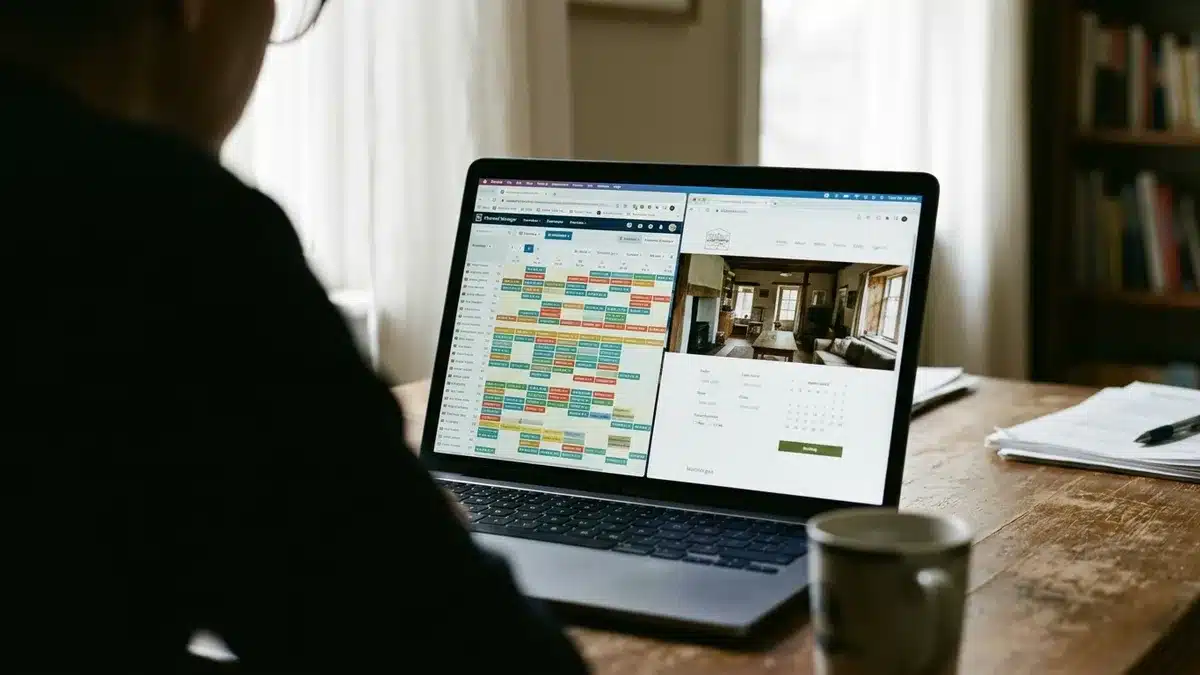
Think of the host edition as a calendar sync and inbox with automation on top. It keeps your Airbnb, Vrbo and Booking.com calendars aligned, gathers guest messages in one place, and sends scheduled messages so you stop typing the same check-in instructions. For a host with a couple of units, that covers the daily grind.
The full platform is built for a different job. Published comparisons commonly describe it as adding owner management, professional accounting, advanced API integrations, revenue management and much wider channel connectivity. If you manage properties on behalf of other owners, you need these to produce statements and stay out of spreadsheets.
Here is where the naming confuses people. “The platform” in casual conversation can mean the company, the flagship product, or the whole family of tiers, so a headline comparison is ambiguous until you know which tier each writer means. Check the tier name on any page before trusting its feature list.
We built Boostly to sit next to whichever tier you choose, not to replace it. Your PMS keeps handling availability and operations; our platform handles the part your PMS was never designed for, which is turning website visitors into direct bookers.
Is the Original Host App Going Away?
The original “for Hosts” app has been renamed and folded into a lite tier rather than continuing as a separate product line. The name is fading even where the function continues. Only the vendor can confirm whether a specific legacy app listing stays live, so check in-app notices and the official pricing page.
Older pages still use legacy names, and some describe the product exactly as it was years ago. One legacy app-store description claims its automation can save hosts 40+ hours a week. That is a vendor claim, not an independently verified result, so discount it.
If you are on the older app today, take three steps before you assume anything. Look for renewal or migration notices in your account. Read the current tier page for your listing count. Ask support in writing whether your channel connections, automations and pricing carry over.
A rename should never take your bookings offline, but it can change what you pay and which features you keep. Because Boostly connects to 27+ property management systems and syncs listings, availability and pricing in real time, your direct booking website keeps reading from the same source of truth whichever tier you end up on. Check that your PMS is on the integration list first.

Who Is Each Edition Built For?
The host edition is built for owner-operators who run a small number of listings themselves. The full platform is built for property management companies, agencies and multi-unit operators who serve owners, employ staff and need audit-ready financials. Portfolio complexity, not property quality, separates the two.
How many listings does the host edition support?
The host edition is designed for a small number of listings, but the exact ceiling differs between published materials and has changed over time. Some official pages present a narrow listing range for the lite tier, while third-party comparisons quote different thresholds. Treat any number you read on a blog, ours included, as a prompt to check the current official page.
Who outgrows it first?
Hosts usually hit the ceiling for one of two reasons: more listings than the tier allows, or a co-owner or investor who wants statements. A need to connect a tool through an advanced API pushes some over too. Operators managing many units across several markets usually need the professional feature set; the write-up on handling 350 units across six markets shows what that scale demands from a tech stack.
What about the direct booking side?
Neither tier is a website product. Solo hosts often assume a PMS “includes” direct bookings because it has a booking widget somewhere in the settings. In our experience, a widget with no trust signals, no SEO structure and no follow-up rarely competes with an Airbnb listing. Boostly builds that layer for single-property hosts and large multi-unit operators alike, so you do not have to change PMS to gain it.
How Do the Two Editions Compare on Features?
The two editions overlap on channel syncing and messaging, then diverge on owner management, accounting, integration depth and channel breadth. The table below is a dated 2026 summary of how published comparisons describe each tier. Confirm every row against the vendor's current pages before you decide, because tiers change.
| Capability | Host edition (lite tier) | Full platform (professional tiers) | Boostly alongside either |
|---|---|---|---|
| Typical portfolio | Small number of listings; threshold varies by source | Growing managers and large operators | Single-property hosts to large multi-unit operators |
| Channel connectivity | Core OTA connections | Wider channel coverage | Keeps your OTA listings live and adds a direct channel |
| Messaging and inbox | Unified inbox and message automation | Typically more advanced workflows for teams | Automated guest follow-up by email and SMS through the built-in CRM |
| Owner management | Commonly not included | Included, with owner reporting | Not a PMS replacement; works with yours |
| Accounting | Commonly limited or not included | Professional accounting features | Not applicable |
| API and integrations | Limited depth | Advanced integrations | 27+ PMS integrations with real-time sync |
| Direct booking website | Not the core purpose; verify current offering | Not the core purpose; verify current offering | Done-for-you site, live within 35 days |
The last row is the one most comparisons leave out. A PMS decides how well you run stays that already exist. It does not decide how many of those stays arrive without an OTA taking a cut.
What Is the Monthly Fee, and How Does Per-Listing Pricing Work?
The monthly fee for the host edition is charged per listing, per month, and varies with listing count and selected features. Monthly and annual billing are both offered, with the monthly plan undiscounted. A free trial has been published, but confirm its length and current price on the official pricing page.
Per-listing pricing means cost rises in a straight line as you add units. That suits a host with one or two properties, and it starts to sting as the portfolio grows. At that point the professional tiers, with their custom or tiered pricing, usually make more sense.
Do the sums on the whole stack, not one line. Most STR operators run several separate tools: a PMS, a pricing tool, a payments provider, a website and some form of guest marketing. Each carries its own fee, and every integration between them is a place where data can go stale.
The PMS fee is also the smaller number. The larger one is the OTA commission on every booking, which is why we frame it as a revenue question. Every booking that moves from Airbnb to your own site keeps roughly 15% more in your pocket, and Boostly backs the shift with a guarantee: reach 65% direct bookings within 12 months or you get your money back plus $1,000.
What Are the Best Alternatives for Small Hosts?
The best property management software for a small host is the simplest system that syncs your calendars reliably, automates guest messages and integrates with a direct booking website. Alternatives fall into four categories, and the right one depends on whether your bottleneck is operations, pricing, or bookings.
- Other lightweight PMS and channel managers: Straightforward calendar sync and messaging, usually priced per listing.
- Website-first booking tools: Built around a booking site, with calendar sync as a secondary feature.
- Full property management suites: Suited to managers who serve owners and need accounting.
- Direct booking platforms such as Boostly: Built to sit on top of your PMS and increase the share of bookings you keep.
For a host new to the industry, our view is blunt: pick the PMS you can learn in a weekend, and make sure it appears on your direct booking provider's integration list. A powerful system you never configure loses to a simple one you use daily.
Skip the temptation to pick a tool because a comparison declares a single winner. Suitability depends on portfolio size, who else needs access and which integrations you need. If you are still working out how to build the website side, our guide on how to build a direct booking website walks through what a converting site needs beyond a booking button.
Which Should You Choose: The Host Edition or the Full Platform?
Choose the host edition if you run a small number of your own listings and want simple sync and messaging. Choose the full platform if you manage properties for other owners, need statements and accounting, or connect through advanced APIs. Portfolio complexity and reporting obligations decide it.
You are a solo host with a few listings
The lite tier is usually enough. Your priorities are reliable calendars and automated messages, plus a direct channel, so put the saved time into the last one. Boostly gives new members CRM access within 24 hours of signing up, so guest data starts working for you straight away.
You run a growing multi-unit portfolio
Expect to outgrow the lite tier. Pricing, availability and owner reporting all get harder when done by hand across many units. Boostly's real-time sync across 27+ PMS platforms keeps pricing and availability accurate whichever system you land on, which protects you from the double booking that wrecks trust with guests.
You are a property manager with owners to report to
You need the professional feature set, and owner-facing accounting is the deciding factor. Your website matters too, because owners increasingly ask what you are doing about OTA dependence. A branded, credible direct booking site per portfolio gives you a marketing answer to that question.
What Mistakes Do Hosts Make When Choosing Between Them?
The most common mistake is picking a tier on price alone, then discovering it lacks a feature you needed within months. Others include trusting outdated comparison pages and ignoring listing thresholds. Many hosts also assume any PMS will produce direct bookings by itself.
- Trusting a legacy name. A page describing the old app may not match today's lite tier.
- Ignoring the listing ceiling. A tier that fits today can force a migration in the middle of peak season.
- Buying tools that do not talk to each other. Manual re-entry between systems is where double bookings start.
- Believing vendor time-saving claims. Measure your own admin hours before and after.
- Treating the PMS as a marketing plan. It organises the bookings you already get.
Remote owners feel these errors most, because they cannot fix a broken sync in person. Our piece on managing your STR properties remotely covers the checks that catch them early.
How Do You Upgrade or Migrate Without Losing Bookings?
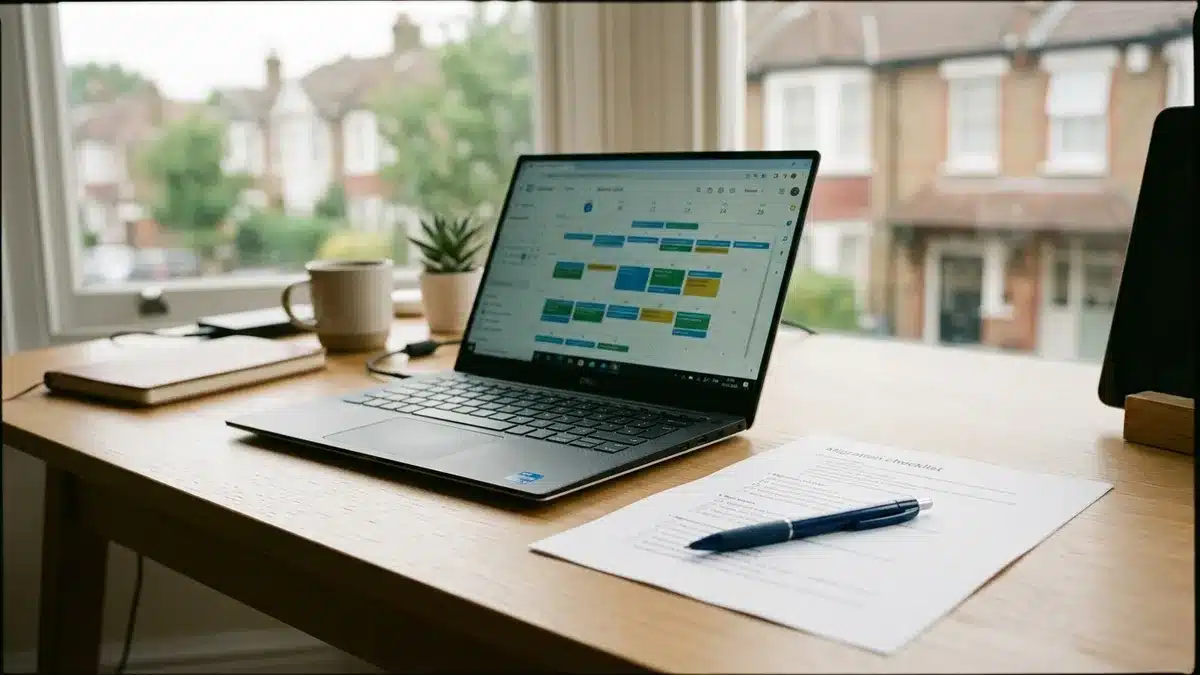
Upgrading from the host edition to the full platform, or moving to a different PMS, is safest when you run it as a checklist rather than a switch flip. The goal is to keep every calendar synced and every guest message flowing while account data, connections and automations move across.
- Ask the vendor in writing which data carries over: reservations, guest records, templates and automations.
- Export your reservations, guest contacts and message templates as a backup.
- Confirm the new pricing at your exact listing count and feature selection, and note any add-ons.
- Pick a low-occupancy window for the switch, never a peak weekend.
- Reconnect channels one at a time and check that each calendar mirrors the others.
- Rebuild or test your automations with a dummy booking before real guests are affected.
- Confirm that your direct booking site still reads availability and pricing correctly after the change.
Step seven is the one hosts skip. Boostly integrates with 27+ PMS platforms, so we can tell you before you migrate whether your target system is supported and what the sync looks like. Book a demo and we will check your PMS against the list.
Why Does Neither Edition Fix Your OTA Commission Problem?
Neither edition fixes OTA dependence because both are operational systems. They manage bookings after a guest has chosen a channel. Reducing commissions requires a separate asset: a direct booking website that ranks, converts and captures guest data for repeat stays.
Here is the pattern we see. A host upgrades software, saves an hour a week on messaging, and still pays around 15% on nearly every booking. The saved hour is real. The commission is larger.
Direct booking needs three things working together: a website guests trust, a PMS that syncs availability and pricing in real time, and a CRM that brings past guests back. Most hosts have one or two of those and wonder why the model does not move the needle. Repeat guests are the cheapest bookings you will ever get, and you can only market to them if you own their contact details rather than leaving them inside an OTA inbox.
Boostly combines all three in one system, backed by weekly coaching calls and over 80 hours of training. Hosts such as Sergio, Rose Tipka and Nikki appear among the success stories that illustrate average direct booking rates of 65% to 80% within 12 months. You keep your Airbnb and Booking.com listings live throughout, since the goal is a second channel and not a walkout.
If the mechanics of that second channel are new to you, our article on using a book-direct marketplace shows one of the ways hosts pull traffic to their own site.

Frequently Asked Questions
What is Boostly?
Boostly is a London-based direct booking website platform for short-term rental hosts and property managers. We build done-for-you direct booking websites with no coding required, live within 35 days, and connect them to 27+ property management systems. Hosts keep their Airbnb and Booking.com listings while building a channel that avoids OTA commissions.
What is the host sign-up process at Boostly?
New members get CRM access within 24 hours of signing up, along with AI tools, templates and access to weekly training calls. Your done-for-you direct booking website goes live within 35 days. The easiest first step is to book a demo, where we check your PMS against our integration list.
What is the most user-friendly PMS for new vacation rental hosts?
The most user-friendly PMS is usually the simplest tier that handles calendar sync, a unified inbox and automated messages for your listing count. Lite tiers from established vendors are a common starting point. Check that your chosen PMS integrates with your direct booking website so you can add that channel later without switching systems.
What platform can I use to manage my rentals and generate more direct guest bookings?
You need two layers. A PMS manages calendars, messaging and operations, while a direct booking platform generates the bookings that skip OTA commissions. Boostly is the second layer: it builds your website, syncs in real time with 27+ PMS platforms and runs guest follow-up through a built-in CRM.
What is the best way to compare vacation rental prices for the same property across different sites?
Compare the total at checkout on each site, including service fees, cleaning fees and taxes, not the headline nightly rate. Guests do this constantly, so your rates should stay consistent across channels. Real-time pricing sync from your PMS to your direct booking site prevents outdated rates, and the roughly 15% OTA commission you avoid on a direct booking gives you room to offer a better direct deal.
Do I have to stop listing on Airbnb to use a direct booking website?
No. You keep your Airbnb and Booking.com listings live and add the direct channel alongside them. Your listing work is not wasted, and you shift bookings gradually as your website and guest follow-up start to perform.
Does Boostly replace my property management system?
No. Boostly connects to your existing PMS and syncs listings, availability and pricing in real time. Your PMS keeps running operations, while Boostly handles the website, CRM and guest follow-up that produce direct bookings.
So What Is the Difference, and What Should You Do Next?
The difference between the full platform and its host edition comes down to portfolio size and reporting needs: a lite, per-listing tool for small hosts against a professional system with owner management, accounting and deeper integrations. Verify the current names, listing thresholds and pricing on official pages in 2026, then choose the tier that fits your portfolio today.
Whichever edition you pick, the software only organises the bookings you already win. If you want to keep more of every booking, the next move is a direct channel. Boostly builds a direct booking website designed to hit 65% direct bookings within 12 months, or you get your money back plus $1,000, and it connects to 27+ PMS platforms so you do not have to change your setup. Book a demo with Boostly to see your PMS on the integration list and what the 35-day launch would look like for your properties.