
A CRM for short-term rentals is software that stores each guest’s contact details, booking history and preferences, then uses them to automate follow-up and win repeat direct bookings. You need one because OTAs keep most guest data to themselves. At Boostly, we build the CRM into your direct booking site.
Key Takeaways
- A short-term rental CRM is a guest relationship database with automated follow-up. A property management system (PMS) is a separate tool that runs reservations, calendars and operations.
- You need a CRM when most of your bookings come through OTAs, because the platform holds the guest data and charges commission again every time a guest rebooks through it.
- Hosts with one or two listings can start with a spreadsheet and consented email capture. The case for a dedicated CRM strengthens as repeat guests, enquiries and listings grow.
- Core features to look for: a guest database, automated email and SMS, PMS sync, segmentation, review prompts and reporting on direct booking share.
- Set up in phases: connect your PMS, import recent guests first, check privacy rules in your market, then switch on one automation at a time.
- Boostly gives new members CRM access within 24 hours and pairs it with a done-for-you direct booking site, 27+ PMS integrations and coaching, so guest follow-up turns into direct revenue.
In 2026, finding guests is the easy part for most hosts; keeping them is where margin leaks. According to AirDNA via StayFi, total nights booked for U.S. short-term rentals rose by 5.5% year over year in 2026. That is a U.S. figure, but the mechanism applies in the UK and Europe too: every night is a guest who could rebook, and on an OTA you usually cannot contact them to ask.
At Boostly, we work with a global community of over 2,000 STR hosts and business owners, and the same picture keeps appearing: strong OTA listings and a full calendar. There is almost no list of past guests. The calendar sits in a PMS, but the guest relationship sits in an OTA inbox you do not control.
This guide explains what a CRM does, how it differs from a PMS, when you can skip one and how to set one up. It applies whether you operate in the UK, Europe or North America, and we flag where privacy rules differ by region.
What Is a CRM for Short-Term Rentals and What Does It Do?
A CRM for short-term rentals is customer relationship management software built around the guest lifecycle, from enquiry through booking and stay. It also covers review and rebooking. It keeps one record per guest and uses that record to trigger the right message at the right moment. In practice, it is your guest memory.
Each record typically holds a name, email, phone number, stay dates, party size, the channel the booking came from and your notes, such as a dog on the last trip or a birthday weekend. A vacation rental CRM then segments those records and sends automated email or SMS: a thank-you after checkout, a review request, a returning-guest offer ahead of the same season next year.
Most hosts start with a spreadsheet. It works until a busy changeover week, when you forget to update it, paste the wrong column into a message, or never send the follow-up at all. Manual follow-up depends on you remembering, and changeover days are exactly when you forget.
We built Boostly’s CRM so the guest record is created at the moment of booking on your direct site, instead of being exported later from a message thread. Automated email and SMS campaigns then follow up with past and future guests without a spreadsheet in sight.
How Is a CRM Different From a Property Management System?
A property management system (PMS) runs your operations: reservations, calendars, channel connections, in-stay messaging, payments and turnovers. A CRM runs your relationships: who your guests are, how they found you and whether they will come back. Most hosts need both, and the two should share data.
| Question | CRM | PMS |
|---|---|---|
| Main job | Manages guest relationships and marketing | Runs reservations, calendars and operations |
| Typical data | Contact details, stay history, preferences, booking source | Availability, rates, bookings, tasks, payments |
| Typical tasks | Follow-up sequences, review requests, repeat-booking offers | Channel syncing, in-stay messages, cleaning schedules, owner reports |
| Question it answers | Who are my guests, and will they return? | What is booked, when, and who handles the turnover? |
| Where Boostly fits | Built-in CRM and marketing automation | Connects to 27+ PMS platforms; does not replace one |
The two overlap. Many PMS platforms store guest profiles and send templated messages. But that messaging is designed around operations, such as check-in details, and rarely around marketing, such as bringing a guest back in the shoulder season. In contrast, a CRM is built to segment guests and nurture them.
Our view: keep your PMS as the source of truth for availability and let the CRM read from it. Boostly syncs listings and availability in real time with 27+ PMS platforms, and pricing syncs too, so an offer never promotes dates that are already taken. In-stay operational messaging stays in your PMS, and Boostly covers marketing and follow-up.

Why Do You Need a CRM When Airbnb Already Sends You Guests?
You need a CRM because an OTA owns the guest relationship and you only rent access to it. The platform holds most of the contact details, controls how you communicate and charges commission again each time a guest rebooks through it. A CRM moves that relationship into a database you own.
The cost shows up at industry scale. eGlobal Travel Media estimates that short-term rentals lose roughly $1 billion a year to OTA fees on repeat guests. Those are people who already know and like the property.
Now run the maths on your own calendar. This is an illustrative example: assume a £200 night and a 15% commission, which is £30. If ten repeat nights a month rebook through an OTA, that is £300 a month, or £3,600 a year, paid to find a guest you had already found. Booked direct, you keep it. A UK host with a two-night average stay would see that as five returning bookings a month.
You do not have to leave Airbnb to fix this. Keep the listing as a discovery channel and use the CRM to bring past guests to a site you own, within platform rules. Boostly helps hosts save the 15% on every booking that would otherwise be lost to OTA commissions, and our coaching covers how to move guests direct without breaking those rules.
Do You Need a CRM If You Only Have One or Two Rentals?
With one or two rentals, you can run guest follow-up from a spreadsheet and a decent email account, provided you capture every guest’s email and send the messages. A dedicated CRM starts earning its place when enquiries and repeat guests outgrow what you can remember. Your listings can outgrow it too.
Be honest about where you are. If nearly every guest is a first-time visitor, you take few enquiries and you have no direct booking channel yet, a CRM without a channel is a filing cabinet. Build the direct site first. A spreadsheet also holds up when bookings are few and you message each guest yourself.
The counter-argument is that data you do not capture today cannot be recovered later. Every guest who books through an OTA and leaves without joining your list is a future rebooking you will pay commission on. So even small hosts should collect emails from day one, with consent.
Remote owners have a stronger case than their portfolio size suggests. When a co-host or cleaner handles the property, nobody is left to remember the follow-up, which is why automation matters; our guide to tactics to successfully manage your STR properties remotely covers the wider routines. Boostly’s CRM access arrives within 24 hours of signing up, so a one-property host starts with a clean database instead of migrating a messy one later.
What Features Should a Vacation Rental CRM Include?
A vacation rental CRM should include a central guest database, automated email and SMS, PMS sync, segmentation by stay history, review and rebooking prompts, and reporting on direct booking share. If one is missing, the work falls back on you, and it is usually the follow-up that gets dropped.
- Guest database: one record per guest with contact details, stay history and your notes.
- Automation: email and SMS sequences triggered by a booking, a checkout or the date a guest last stayed.
- PMS sync: live availability and pricing so offers never point to booked dates.
- Segmentation: lists such as repeat guests, families or off-season visitors.
- Review and reputation tools: prompts after the stay, so reviews build credibility on your direct site.
- Reporting: direct share, traffic and conversion, so you see what each channel earns after commission.
Check data handling before you sign anything. A CRM stores personal data, so guest consent, access controls, retention and export if you leave all matter. UK and EU hosts work under GDPR, and some US states have their own privacy laws, such as California’s CCPA; confirm the current requirements with the official source for your market. Any platform that processes card payments also carries PCI DSS obligations.
Boostly’s CRM covers the guest database, automated email and SMS, upsells and add-ons, review tools and direct booking reporting. Rate logic still comes from your PMS or pricing tool, because Boostly is not a pricing engine. For where this category is heading, read our piece on the future of guest services software.
Which Portfolio Size Needs What From a CRM?
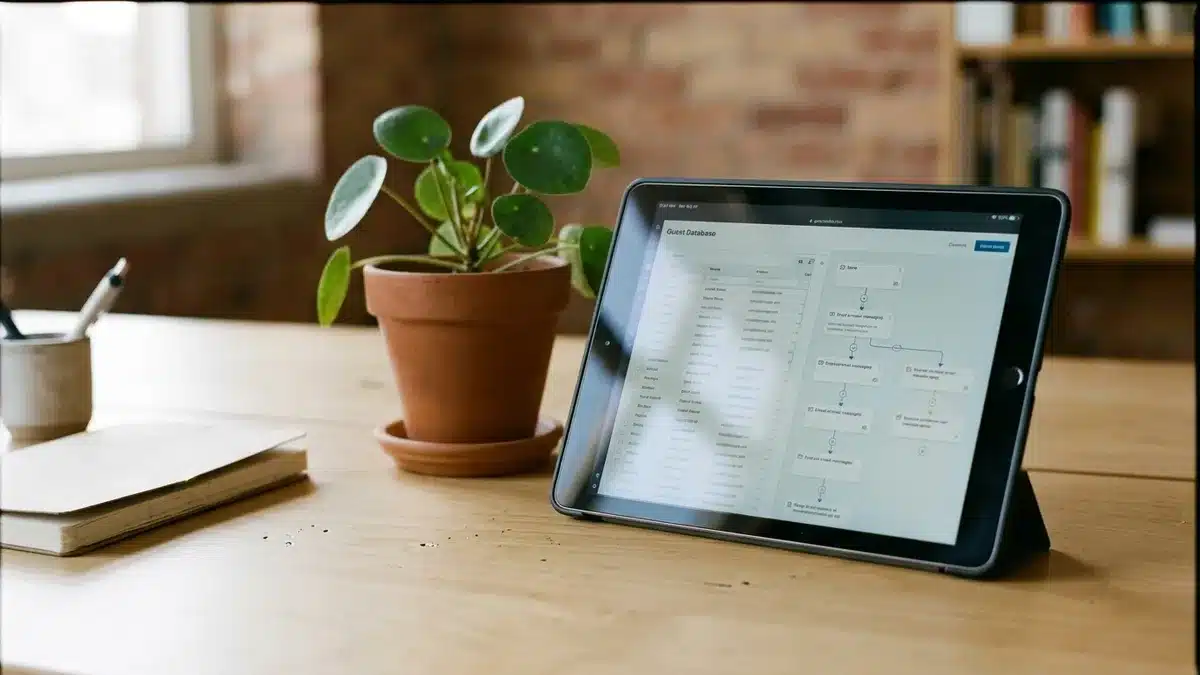
The right CRM setup depends on how many units you run and how much repeat demand you can generate. Hosts with one or two listings need capture and basic follow-up, hosts with three to ten need automation, and operators with ten or more need PMS-synced data and reporting across every property.
| Portfolio | Main risk without a CRM | What to prioritise | How Boostly fits |
|---|---|---|---|
| 1 to 2 listings | Guest emails are never captured, so repeat demand is lost | Consented email capture and a simple post-stay message | CRM access within 24 hours of signing up, alongside a done-for-you direct site |
| 3 to 10 listings | Follow-up slips as enquiries and stays overlap | Automated sequences and past-guest segments | CRM and marketing automation run follow-up and repeat-booking prompts |
| 10+ units | Disconnected tools, outdated rates and double-booking risk | PMS sync and reporting across every property | 27+ PMS integrations with real-time sync; one site and CRM for every property |
| Property managers | Hard to show owners what you add beyond OTA bookings | Direct share, traffic and conversion reporting | Analytics on direct booking performance to support owner conversations |
Managers and investors get a second benefit. Owners want proof that your fee buys something an OTA listing alone would not, and a clear view of direct share and traffic gives you that. Conversion belongs in that view too. In our experience, the managers who report this monthly have easier renewal conversations.
At scale, the failure mode is fragmentation: a PMS, a website, a messaging tool and a mailing list each hold part of the guest picture. For a look at what the technology side can look like, see this write-up on tech solutions for handling 350 units across six markets.
Can a CRM Help You Get More Direct Bookings, Reviews and Repeat Guests?
Yes. A CRM helps you win direct bookings by turning past guests and enquiries into a list you can contact without paying commission. Site visitors join that list too. It works best as half of a system: a direct booking site takes the booking, and the CRM brings guests back to it.
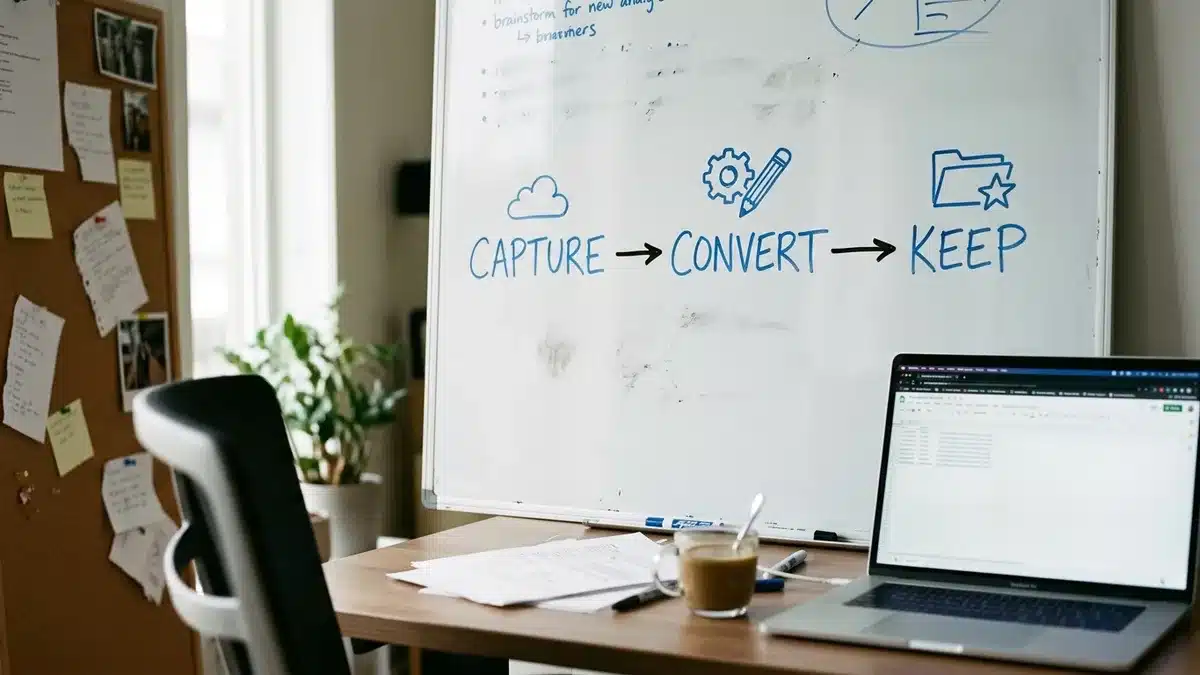
We use a simple framework, Capture, Convert, Keep. Capture means collecting an email and consent at every touchpoint: booking, enquiry form, even in-home WiFi login through tools like the StayFi WiFi capture system. Convert means a short follow-up sequence that answers questions and nudges an enquiry towards booking. Keep means a post-stay thank-you and a review request. It also means a returning-guest offer.
Start with past guests. They already trust you and they cost nothing to reach. They also convert faster than any ad. The Price of Business guide on growing a vacation rental business covers email marketing tactics you can run off-platform.
You also need somewhere to send them. If you have not built that yet, our walkthrough on how to build a direct booking website covers the pieces. Boostly delivers it as one system: a done-for-you site with a built-in CRM. Automated follow-up and repeat-booking prompts come with it. Hosts in our community average 65% to 80% direct bookings within 12 months, though that share builds over months and Airbnb stays useful for discovery.
How Much Does a Rental CRM Cost and Is It Worth It?
Short-term rental CRM and software pricing varies by vendor, and the headline fee rarely shows the full cost. Some charge per listing and some per user, while others take a share of each booking. Setup or add-on fees can sit on top. Judge the total cost against the commission and time you recover.
Measure your own return in a few steps. Note your average nightly rate, your OTA commission rate, how many guests stayed more than once last year and how many of those rebooked through an OTA. Multiply the repeat nights you could move direct by the commission per night. Then add the weekly hours you spend on manual follow-up, valued at what your time is worth.
Here is a worked example using the earlier figures. Ten repeat nights a month at £30 commission each is £300 a month. Add two hours a week of manual follow-up, about eight hours a month, valued at £20 an hour: £160. The total is £460 a month, or £5,520 a year. A CRM costing less than that, and actually moving those nights direct, pays for itself. If the fee is higher, you need a direct channel before you need a CRM.
Put these questions to every vendor:
- How is the price calculated: per listing, per user or per booking?
- Which setup, migration and add-on fees apply?
- Which PMS platforms connect, and is the sync real time?
- Who owns the guest data, and can you export it?
- What happens to your records if you leave?
We would rather run your numbers than quote a generic price. Boostly gives new members CRM access alongside AI tools and templates, plus weekly training calls, so ask what is included before you compare fees. We will model your repeat-guest and commission figures in a demo.
How Do You Choose and Set Up a CRM Without Disrupting Bookings?
Setting up a short-term rental CRM safely means connecting it to your PMS first, importing past guests in phases, then switching on one automation at a time. Your live calendar should never depend on the CRM, so a marketing misstep cannot cause a double booking.
- Audit where guest data lives today: OTA inboxes, your PMS, spreadsheets and your phone contacts.
- Connect your PMS so availability and pricing sync before any offer goes out.
- Import active enquiries and recent guests first, then older records in later batches.
- Check consent and privacy for your region, including how guests can opt out or ask for deletion.
- Launch one sequence first, such as a post-stay thank-you with a review request.
- Add a returning-guest offer once the first sequence runs cleanly.
- Review direct booking share monthly and adjust.
Four mistakes come up often. Hosts buy a CRM before they have a direct channel to send guests to. They import every contact without checking consent. They switch on six automations at once and cannot tell which one works. And they ignore reporting, so they never learn what the channel earns after commission.
This is where our done-for-you model helps. Boostly builds the site and connects your PMS, then gets you live within 35 days with no coding. Weekly training calls and a library of 80+ hours of courses mean you learn the strategy while the build is handled.
Frequently Asked Questions
What does CRM stand for?
CRM stands for customer relationship management. In real estate it tracks buyers and sellers. Leads get tracked too. In short-term rentals it tracks guests and enquiries, along with past stays, so you can follow up and encourage repeat direct bookings.
Is a CRM difficult to learn?
Day-to-day use is simple: you review guest records, check your follow-up sequences and read the reports. The harder part is deciding what to send and when. Boostly handles the build and offers weekly training calls and 80+ hours of courses, so you are not working it out alone.
What platform can I use to manage my rentals and generate more direct guest bookings?
Use two layers. A PMS manages calendars and channels, and operations too, while a direct booking website with a CRM brings guests to book with you. Boostly provides the direct booking website and booking engine, and it adds CRM and automation. It connects to 27+ PMS platforms.
How can I advertise my vacation rentals to boost direct bookings?
Start with the audience you already have: past guests and social followers. Search visitors count too. A CRM sends them email and SMS that point to your direct site, while Airbnb stays useful for discovery. Our guide to using a book direct marketplace covers one more channel to add.
What is the best CRM for vacation rental managers?
It depends on the problem you need to fix. If your problem is operations, you need a PMS. If it is OTA dependence and no repeat-booking system, look for a CRM tied to a direct booking site and your PMS, which is the job Boostly is built for.
How long does it take to implement a short-term rental CRM?
With Boostly, CRM access arrives within 24 hours of signing up and the direct booking website goes live within 35 days with no coding. Automations take longer to tune, because you should switch on one sequence at a time and watch the results. Timelines with other tools vary, so ask each vendor.
Does a CRM help with guest reviews and repeat bookings?
Yes. A CRM can send a review request at a set point after checkout, then follow with a returning-guest offer for another stay. Reviews also build trust on your direct site. Repeat-booking share grows over months rather than days.
What Should You Do Next About a CRM for Your Short-Term Rental?
A CRM for short-term rentals stores and uses your guest data, and you need one once repeat demand and OTA commissions matter more than your memory can handle. Keep your PMS for operations, start capturing every guest email today with consent, and automate one follow-up at a time. In 2026, with U.S. nights booked still rising, the hosts who own their guest list will keep more of each booking than those who rent access to it.
If you want the result in your calendar and not only a database, Boostly’s built-in CRM is designed to turn past guests into repeat direct bookings. Automated follow-up supports that. We state it plainly: “You will get to 65% direct bookings in a year.” Book a Demo with Boostly and we will show you the CRM, how it connects to your PMS and what the numbers look like for your portfolio, while you keep your Airbnb listings.