
Airbnb co-listing is an arrangement where a property manager or co-host runs the day-to-day operations of someone else's rental, listed on Airbnb, in exchange for a percentage of the booking revenue, without ever owning or leasing the property themselves. Commission ranges typically run from 10% to 25% of gross booking revenue depending on scope, with full-service arrangements often reaching 20% to 30% when maintenance and supply management are included.
Key Takeaways
- Airbnb co-listing lets an operator manage pricing, guest communication, and reviews for a property they don't own, typically earning 10% to 25% of gross revenue per booking.
- Airbnb's own Co-Host Network requires a track record of 10 stays or three stays totaling 100+ nights in 12 months, a 4.8-star average rating, and under 3% cancellations.
- Airbnb permits up to 10 co-hosts per home listing, split between full-access co-hosts and limited-access co-hosts who handle only calendar and messaging tasks.
- The Airbnb host-only platform fee runs around 15.5% per booking, a cost co-listing operators and owners need to factor into revenue-share math separately from management commission.
- Since its 2026 launch, Airbnb's formal Co-Host Network has grown to over 15,000 co-hosts managing more than 100,000 listings across roughly 12 countries, with 73% holding Superhost status.
- Operators who scale co-listing into a diversified business increasingly pair it with a direct booking website, since guests booking direct return at far higher rates than guests booked through Airbnb alone, a gap that tools like Boostly are built to close.
If you're weighing whether to start co-listing on Airbnb in 2026, you're probably staring at one of two situations. Either you own a rental and want someone else to run the operational side, or you want to build a management income stream without buying property. Both paths run through the same mechanics, and both carry the same risk of leaving money on the table if the revenue split or the platform strategy isn't structured properly.
We work with hosts and property managers across the short-term rental world every day at Boostly, and co-listing keeps coming up in conversation because it's one of the fastest ways to scale a management business without capital outlay. But most of the guidance floating around online focuses only on Airbnb's mechanics: how to add a co-host, what permissions look like, what commission to charge. It skips the parts that actually determine whether the arrangement survives past month three: how the revenue split interacts with Airbnb's own fees, what happens to your booking mix if you never build anything outside Airbnb, and how local licensing rules can quietly complicate a deal between an owner and a manager who isn't on the lease.
This guide covers the full mechanics of Airbnb co-listing as it works in 2026, the commission structures operators actually charge, the legal and tax wrinkles competitors gloss over, and how to build a co-listing arrangement that doesn't collapse the moment Airbnb changes a policy or an owner gets nervous about liability.
Is Co-Listing on Airbnb Legit?
Yes, Airbnb co-listing is a legitimate, platform-sanctioned arrangement. Airbnb built formal infrastructure for it, including co-host permission tiers and, since 2026, a dedicated Co-Host Network that connects vetted co-hosts with owners actively searching for management help.
Legitimacy doesn't mean risk-free, though. As of 2026, Airbnb's Co-Host Network has grown to over 15,000 co-hosts managing more than 100,000 listings across roughly 12 countries, and 73% of those co-hosts hold Superhost status with an average rating of 4.86. That scale tells you the model works at volume, but it also means you're competing against thousands of established operators for owner attention.
The legitimacy concern most new operators actually have isn't about the platform, it's about the informal side deal. Co-listing arrangements struck outside Airbnb's formal network, where an owner just hands over listing access to a friend or local operator, are still completely valid. But without a written agreement specifying the revenue split, expense handling, and cancellation terms, disputes get messy fast. Airbnb's terms govern the platform relationship; they don't govern the money between you and the owner.
How Do You Become an Airbnb Co-Host?
Becoming an Airbnb co-host starts with getting added to a listing by its owner (or by a full-access co-host, if the owner has delegated that authority), then choosing whether to pursue Airbnb's formal Co-Host Network or operate informally through direct owner relationships.
Here's the practical sequence:
- Get invited to a listing. Only the listing owner, or a full-access co-host they've authorized, can send a co-host invitation. You cannot self-nominate to manage a stranger's property; the relationship has to start with an owner conversation.
- Choose your access level. Airbnb splits co-hosts into full-access (who can edit pricing, communicate with guests, and even add other co-hosts) and limited-access co-hosts, who typically handle only calendar updates and guest messaging.
- Build a track record if you want the Co-Host Network. Airbnb requires co-hosts to log 10 stays, or three stays totaling at least 100 nights, in the past 12 months, alongside a 4.8-star average rating and a cancellation rate under 3%, before they're eligible for the network's visibility benefits.
- Formalize the commission agreement separately. Airbnb doesn't process your management fee automatically in most informal setups; you negotiate and often invoice the owner directly, or structure a split-payout arrangement depending on your accounting approach.
Most first-time co-hosts underestimate step three, the track record requirement, if they're aiming for Airbnb's own network rather than word-of-mouth deals. If you're starting from zero, expect to build credibility on one or two properties informally before the platform's formal program becomes realistic. For a broader look at what onboarding into structured co-host programs involves, the guidance on using a property management consultant to grow your STR business covers how operators formalize this transition.

Can You Actually Make Money on Airbnb Co-Listing?
Airbnb co-listing can generate real, recurring income, and the earning ceiling scales with how many properties you manage and how much service you provide per listing. Operators managing 3 to 5 properties commonly earn in the range of $1,500 to $3,000 per month, while those running 10 or more listings often reach $5,000 to $8,000 monthly, based on typical industry commission structures.
The math depends entirely on volume and service tier. A light-touch co-host handling calendar updates and guest messages on a single $2,000-a-month property, taking a 12% cut, nets around $240 a month, not enough to build a business on its own. Scale that to fifteen properties at similar revenue and the same commission rate, and you're looking at meaningfully different income, which is why nearly every successful co-listing operator treats it as a portfolio game, not a single-property side hustle.
What limits income more than commission rate is how many owners trust you with their asset. That trust-building is slow if you're only pitching cold. Some operators find owners by targeting long-term rentals sitting vacant, since a landlord losing money on a stalled lease is often receptive to a pitch showing what short-term conversion could add. Others build relationships through referrals after their first one or two co-listing deals prove out. Either way, the revenue model rewards scale, and scale rewards a system for finding and onboarding new owners faster than you're currently doing it manually.
How Much Does an Airbnb Co-Host Get Paid?
Airbnb co-hosts typically earn between 10% and 25% of gross booking revenue per property, with the exact figure determined by scope of service rather than a platform-set rate. Light-touch arrangements, covering guest messaging and calendar management only, usually land at the 10% to 15% end. Full-service arrangements, including pricing strategy, cleaning coordination, and supply restocking, commonly command 20% to 25% or more.
| Service Tier | Typical Commission | What's Included |
|---|---|---|
| Light-touch co-hosting | 10% to 15% | Guest messaging, calendar sync, basic pricing updates |
| Standard full-management (minus maintenance) | 15% to 20% | Pricing strategy, review management, guest screening |
| Full-service co-listing | 20% to 30% | Cleaning coordination, maintenance dispatch, supply management, dynamic pricing |
These percentages come off gross booking revenue before Airbnb's own platform fee, not after it. That distinction matters more than most new co-hosts realize. Airbnb charges hosts a platform fee that typically runs around 15.5% per booking as of 2026, according to industry fee breakdowns, with some markets like Brazil and Mexico running slightly higher at 16%. If you structure your commission as a percentage of the total booking price rather than net proceeds after Airbnb's cut, you and the owner need to agree explicitly on which number you're each taking a share of, otherwise the first payout reconciliation becomes an awkward conversation.
We've seen this exact confusion derail otherwise solid co-listing partnerships. An owner expects to net a certain amount, the co-host quotes commission on gross booking value, and neither party accounted for Airbnb's fee eating into the middle. Spell out the math in writing before the first booking, not after.
How Does Co-Listing Differ from Full Co-Hosting on Airbnb?
Co-listing and co-hosting are often used interchangeably, but they describe slightly different scopes of involvement. Co-hosting, in Airbnb's official terminology, refers to the platform permission structure, full-access or limited-access, granted to someone helping manage a listing. Co-listing more commonly describes the broader business arrangement: an independent operator taking on complete operational responsibility for a property under a revenue-share deal, using co-host permissions as the technical mechanism to do it.
In practice, most professional co-listing operators use full-access co-host permissions as their entry point, then layer additional services, pricing strategy, guest screening, cleaning coordination, on top of what Airbnb's permission system technically allows. The platform gives you the access; the business relationship you build around that access is what separates a casual limited-access helper from a co-listing operator running a real management business.
This distinction matters when you're pitching owners. If you present yourself only in Airbnb's technical language (“I'll be your co-host”), owners may assume light-touch help. If you present the full scope, pricing optimization, guest communication, review management, marketing beyond Airbnb, you're pitching a management business, and the commission should reflect that broader scope. For operators building this into a multi-property business, the framework in understanding the mindset of growing a large STR company is worth reading before you scale past a handful of properties.
What Legal and Tax Details Do Co-Listing Partners Need to Sort Out?
Airbnb co-listing arrangements create tax and legal obligations that most informal deals never document properly, and this is the single biggest gap in most co-listing advice available online. Specifically, three areas need explicit agreement before you take on your first property: payout structure, licensing responsibility, and expense allocation.
Payout and 1099-K reporting. Airbnb issues tax reporting documents based on who receives the payout on the platform, not who ultimately keeps the money after a revenue split. If bookings pay out to the owner's account and the owner then pays your commission separately, you're each responsible for reporting your own respective income streams. If payouts route through your account first, the reporting burden shifts. Confirm with a tax professional in your jurisdiction how this affects your specific setup. This is not something a generic co-hosting guide can answer for you; it depends on your account structure and local tax rules.
Local licensing and permits. Short-term rental permits, occupancy taxes, and business licensing requirements vary significantly by city and state, and many jurisdictions require permits to be held by whoever is operationally responsible for the property, not just the title holder. A co-listing arrangement doesn't automatically transfer or share licensing obligations; check with your local permitting office or municipal licensing authority to confirm who needs to be named on any required registration.
Written agreements. Every co-listing deal should have a signed agreement specifying the commission percentage, what services are included, how expenses like cleaning supplies or maintenance callouts are handled, and what happens if either party wants to end the arrangement. Verbal handshake deals are common in this space and are exactly where disputes originate when a booking goes sideways or an owner sells the property mid-season.

How Does Airbnb's Co-Host Network Interact with Informal Co-Listing Deals?
Airbnb's formal Co-Host Network operates as a matchmaking layer sitting on top of, not replacing, the underlying co-host permission system that's powered informal co-listing deals for years. Owners searching the network get matched with vetted co-hosts who meet Airbnb's activity and rating thresholds, but nothing stops an owner and operator from striking a private deal outside the network using the exact same co-host permission tools.
The practical difference is discoverability and vetting. Joining the Co-Host Network gets your profile in front of owners actively searching Airbnb for management help, which is valuable if you don't have an existing pipeline of property owner relationships. But it also means competing on Airbnb's terms, in a pool that has already scaled past 15,000 co-hosts, most of them Superhosts with strong track records.
Operators who build a real business rarely rely on the network alone. Most combine network visibility with direct outreach: contacting landlords with underperforming long-term rentals, building referral relationships with real estate agents, or networking within local STR host communities. The network is a lead source, not a complete business model, and it's worth treating it that way from day one rather than waiting passively for match requests.
What Should You Prioritize When Structuring a Co-Listing Deal?
Structuring a durable co-listing arrangement means locking in scope, commission, and exit terms before you touch the listing, not after the first guest checks in. Here's what to prioritize, in order:
- Define the commission base explicitly. Agree in writing whether your percentage applies to gross booking revenue or net revenue after Airbnb's platform fee. This single line item causes more disputes than anything else.
- Match service tier to commission. If you're handling maintenance dispatch and supply restocking on top of guest communication, price at the 20% to 25%-plus tier rather than underselling full-service work at light-touch rates.
- Clarify who holds the license. Don't assume; confirm which party is named on any local STR permit or business license, and who's responsible for renewals.
- Set a review cadence. Revisit the commission structure every six to twelve months as the property's performance changes, particularly if you've grown occupancy or ADR significantly since taking over.
- Put an exit clause in writing. Specify notice periods and how existing bookings get handled if either party wants to end the arrangement.
A mistake we see constantly among operators scaling past their first few properties: they keep pricing, guest messaging, and calendar sync manual and unconnected across every listing they manage, because the initial deal never accounted for growth. That works fine at two properties. It falls apart at ten, when double bookings and stale pricing start costing you owner trust. Real-time PMS syncing across a growing portfolio isn't a luxury at that stage, it's the difference between managing calmly and firefighting daily.
Data Snapshot: Airbnb Co-Listing by the Numbers
Airbnb co-listing economics in 2026 rest on a handful of verifiable figures worth having in one place. The global vacation rental market, within which co-listing operates as a growing service niche, was valued at approximately $101.7 billion in 2026, according to Grand View Research, with projections pointing toward continued growth through the rest of the decade.
| Metric | Figure | Source Context |
|---|---|---|
| Typical co-listing commission range | 10% to 25% of gross revenue | Industry benchmark across light-touch to full-service tiers |
| Airbnb host platform fee | ~15.5% (16% in some markets) | Applied per booking, separate from co-host commission |
| Airbnb Co-Host Network size (2026) | 15,000+ co-hosts, 100,000+ listings | Grown since the network's 2026 launch, across ~12 countries |
| Co-Host Network eligibility rating | 4.8-star average, under 3% cancellations | Alongside 10 stays or 100+ nights across 3 stays in 12 months |
| Direct booking guest return rate | 28.3% return rate | Versus 8.9% for guests who booked via Airbnb, per hostAI 2026 data |
That last row deserves attention from anyone building a co-listing business for the long haul. If you're managing properties purely as Airbnb listings, every guest you host is a one-time transaction unless Airbnb happens to resurface your listing to them again. Guests who book direct return at a materially higher rate. That gap is exactly why we built Boostly, so that co-listing operators managing multiple owner properties can layer a direct booking channel on top of their Airbnb presence, capturing guest data at the point of booking and bringing past guests back without relying on the platform to do it for them.
What Do Co-Listing Operators Get Wrong When Scaling Past One Property?
Operators scaling co-listing past a single property most often fail because they treat each new listing as a standalone deal rather than building repeatable systems. First, they re-negotiate commission and scope from scratch every time instead of standardizing a service menu. Second, they keep every listing's calendar, pricing, and guest messaging in a separate silo, which multiplies admin time linearly instead of leveraging systems that scale.
A third, subtler mistake: chasing five-star reviews on every stay while ignoring whether any of those guests ever hear from you again after checkout. Reviews matter for Airbnb's search algorithm, but a guest who leaves a great review and never returns is worth far less over time than a guest who books direct a second and third time. Building an automated post-stay follow-up sequence, rather than relying on memory or a spreadsheet reminder, is one of the highest-leverage moves an operator managing five or more properties can make. This is precisely the gap Boostly's built-in CRM and automated guest marketing were designed to close: guest data captured automatically at the point of a direct booking, then used to trigger retention campaigns without a co-listing operator having to remember to send them manually.
For a deeper look at operational scale and communication systems that hold up across a growing portfolio, see tactics for successfully managing STR properties remotely and strategic communications approaches for driving bookings. Both cover ground that pure “how to add a co-host” guides consistently skip.
Frequently Asked Questions
How do I become an Airbnb host if I want to start co-listing instead of owning property?
You don't need to own property to participate in Airbnb co-listing; you need an owner willing to grant you co-host access to their existing listing. Start by building credibility on one property, even informally, then use that track record to approach additional owners or apply to Airbnb's Co-Host Network once you meet its activity and rating thresholds.
How do you become an Airbnb host through a co-hosting arrangement rather than listing your own home?
You become an Airbnb co-host when a listing owner (or an authorized full-access co-host) sends you a co-host invitation through the platform, granting either full or limited access to manage bookings, pricing, and guest communication on their behalf. Airbnb allows up to 10 co-hosts on a single home listing.
Is co-listing Airbnb legit, or is it a common scam angle?
Airbnb co-listing is a legitimate, platform-supported arrangement, formalized further by Airbnb's own Co-Host Network launched in 2026. Legitimacy risk comes almost entirely from undocumented informal deals, not from the co-listing model itself; always use a written agreement covering commission, scope, and expenses.
How much does an Airbnb co-host get paid per property?
Airbnb co-hosts typically earn 10% to 15% of gross revenue for light-touch service, and 20% to 25% or more for full-service management including maintenance and supply coordination. Operators managing 3 to 5 properties commonly earn $1,500 to $3,000 monthly; those managing 10 or more listings often reach $5,000 to $8,000 monthly.
Can you actually make money on Airbnb co-listing as a full-time business?
Yes, co-listing can generate full-time income, but income scales with the number of properties managed rather than commission rate alone. Operators who build referral pipelines and standardize their service delivery across multiple owners consistently outearn those relying on one or two properties and cold outreach.
Do co-listing operators need a local business license or STR permit?
Licensing requirements vary by city and state, and many jurisdictions require the operationally responsible party, not just the property title holder, to hold any required short-term rental permit or business license. Confirm the exact requirement with your local permitting or business licensing office before taking on a co-listing property.
What's the difference between Airbnb co-hosting and co-listing?
Co-hosting refers to Airbnb's specific permission structure (full-access or limited-access) granted through the platform. Co-listing describes the broader business arrangement, where an operator takes on full operational responsibility for a property under a revenue-share deal, typically using co-host permissions as the technical access layer to do it.
Conclusion: Building a Co-Listing Business That Lasts Past Year One
Airbnb co-listing works as a real business model in 2026, with commission structures typically running 10% to 25% of gross revenue and Airbnb's own Co-Host Network now supporting over 100,000 listings globally. But the operators who build something durable go beyond the platform's technical permissions. They document their commission math against Airbnb's roughly 15.5% platform fee, they clarify licensing responsibility upfront, and they build systems, not spreadsheets, as they scale past their first few properties.
The part most co-listing guides leave out entirely is what happens after you've built a portfolio of managed properties: how do you keep guests coming back, and how do you stop losing every guest relationship the moment they check out and Airbnb's algorithm moves on? That's the layer we focus on at Boostly, helping operators pair their Airbnb co-listing income with a direct booking system that captures guest data, automates follow-up, and turns one-time stays into repeat business across every property in a portfolio.
If you're managing multiple co-listed properties and want a clearer read on how many of your bookings could shift direct, book a demo with Boostly and we'll walk through what a connected direct booking system looks like for a portfolio your size.
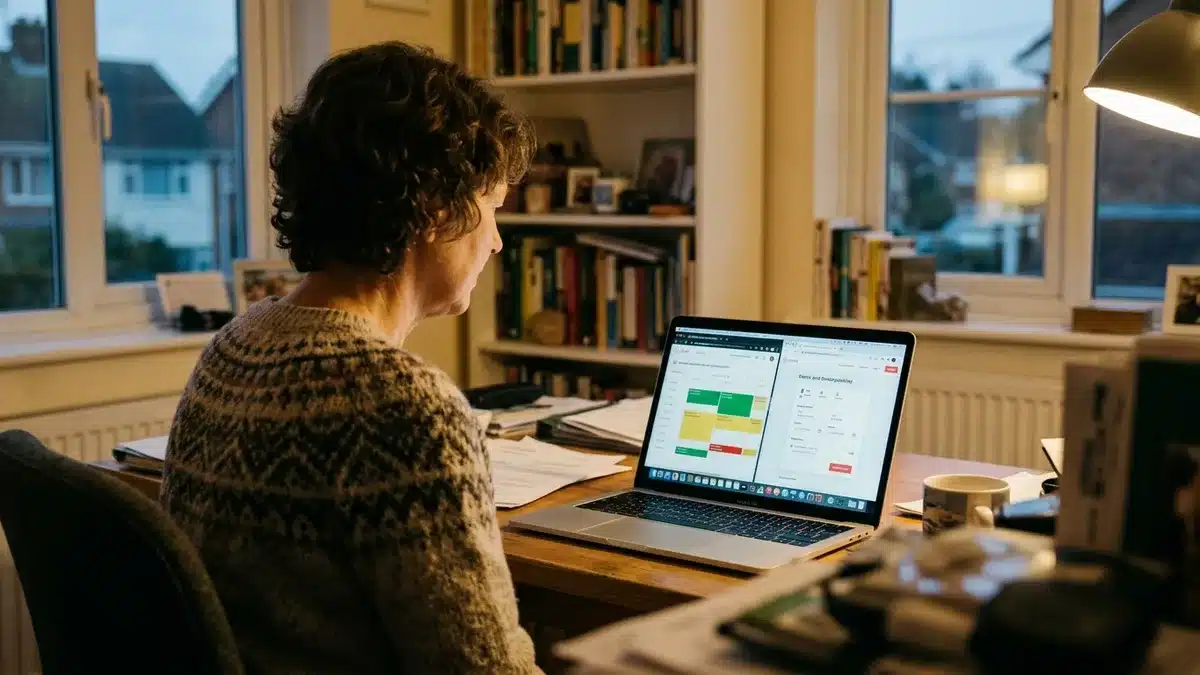
Co-listing multiple owner properties on Airbnb means every guest relationship you build is worth protecting beyond a single booking. Pairing that portfolio with a direct booking system built for repeat guest capture is how operators keep the guests they've already won.