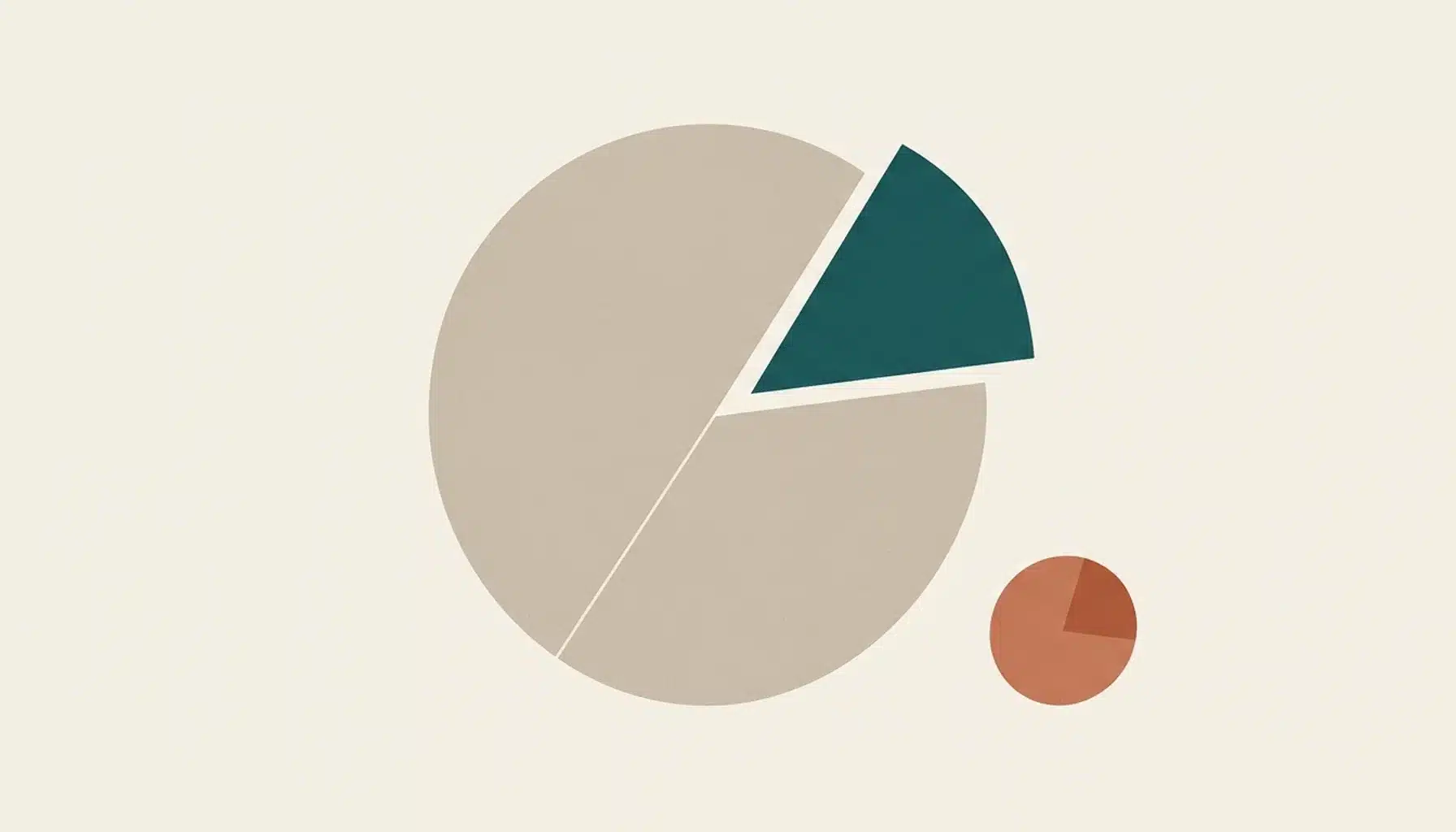
Airbnb takes roughly 15.5% of the booking subtotal from most hosts in 2026 under what's called the host-only fee model. That figure is deducted from your payout before the money ever hits your bank account, calculated against your nightly rate plus any host-set fees, not the total the guest pays.
Key Takeaways
- Most hosts in 2026 are on the host-only fee model, which typically deducts around 15.5% from the payout instead of charging guests a separate service fee.
- An older split-fee model still exists for some accounts: hosts pay roughly 3% while guests pay a separate service fee of about 14.1% to 16.5%.
- Listings in Brazil and Mexico are commonly charged 16% instead of the standard 15.5%.
- The host fee is calculated on the nightly rate plus host-added charges like cleaning fees, but excludes taxes and the guest service fee.
- EU-based hosts may see 15.5% plus VAT applied, and Australian listings can include GST on top of the standard fee.
- Every percentage point Airbnb takes is a percentage point you don't take, which is why Boostly builds direct booking websites that let hosts route reservations around OTA commissions.
If you host on Airbnb, you already know your payout never quite matches what you expected when you set your nightly rate. That gap is Airbnb's service fee, and understanding exactly how it's calculated matters more in 2026 than it used to, because Airbnb has shifted most hosts onto a fee structure that works differently than the one many people still remember.
This guide breaks down what percentage Airbnb takes from hosts, how the current host-only model compares to the older split-fee structure, and where regional exceptions change the math. We'll also walk through a plain-English example so you can see the deduction in real numbers, not just percentages.
At Boostly, we spend our days helping hosts reduce exactly this kind of OTA dependency, so we've seen how much confusion still exists around what Airbnb actually deducts and why. Once you understand the mechanics, the case for building a direct booking channel alongside your Airbnb listing becomes much easier to make to yourself.
What Percentage Does Airbnb Take From Hosts in 2026?
As of 2026, Airbnb takes approximately 15.5% from most hosts under the host-only fee model, deducted directly from the payout before funds are transferred. This is the default structure for the large majority of new and existing individual hosts, and it replaced the separate guest-and-host split fee for most listings.
The 15.5% figure isn't charged on top of your nightly rate the way a guest service fee once was. Instead, Airbnb calculates it against your booking subtotal, meaning your nightly price plus any additional fees you've set, such as a cleaning fee. Taxes and the guest service fee (where one still applies) are excluded from that calculation.
Hosts using certain property management software integrations are also generally placed on this 15.5% host-only structure. For context, a small number of specific reservation types, including some service bookings, carry a flat 15% fee with a minimum charge: a separate category from standard home listings.
The practical effect is straightforward: for every $100 in booking subtotal, you can expect roughly $15.50 to disappear before payout. Multiply that across a full year of reservations and the commission adds up to a meaningful chunk of your top-line revenue: exactly the leak most hosts we work with are trying to plug when they first look into direct bookings.
What Is the 15% Host Fee on Airbnb?
The “15% host fee” people search for typically refers to the host-only service fee, which sits at approximately 15.5% for most standard listings, not an even 15%. The rounder 15% figure gets used loosely in conversation, but the actual deduction sits slightly higher for the majority of reservations.
This fee replaced the old system where guests paid a separate, larger service fee and hosts paid a smaller cut, typically around 3%. Airbnb moved most hosts to the host-only model to simplify the guest-facing price and make listings appear more competitive at checkout, since the total price guests see now includes fewer visible add-on fees.
For hosts, the practical difference is that you now absorb what used to be split between you and your guest. Your headline nightly rate has to work harder to deliver the same net income, because the full commission comes out of your side of the transaction rather than being shared.
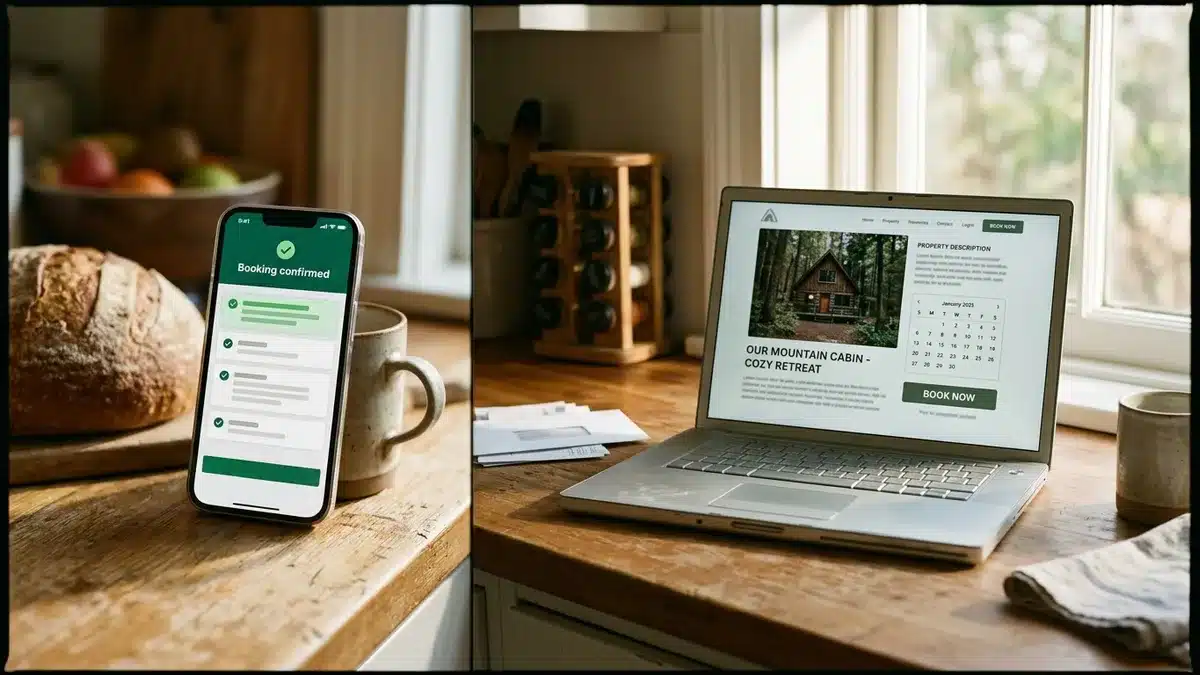
This is precisely the dynamic that makes a second booking channel worth building. When a guest books directly through your own website instead of through Airbnb, you're not handing over that 15.5% at all. That's the entire premise behind Boostly's direct booking websites: every reservation that moves off the OTA and onto your own site keeps roughly 15% more in your pocket: real money on a $2,000 monthly booking that would otherwise be split with Airbnb.
How Does the Host-Only Fee Compare to the Split-Fee Model?
The split-fee model is an older Airbnb structure, still used by a smaller number of accounts, where hosts pay around 3% and guests pay a separate service fee of roughly 14.1% to 16.5% on top of the nightly price. The host-only model consolidates that entire cost onto the host side at approximately 15.5%, removing the guest-facing fee altogether.
Which model applies to your listing depends on your account history, your location, and whether you use a strict cancellation policy or take part in certain professional hosting programs. Airbnb has been migrating hosts toward the host-only structure over time, and as of 2026 it's the default for most new listings.
| Fee Structure | Host Pays | Guest Pays | Who Sees It |
|---|---|---|---|
| Host-only model (2026 standard) | Approximately 15.5% | No separate service fee | Guest sees an all-in price; host absorbs the full commission |
| Split-fee model (legacy, some accounts) | Approximately 3% | Roughly 14.1% to 16.5% | Guest sees a lower base price plus a visible service fee at checkout |
| Brazil and Mexico listings | Typically 16% | Varies by listing type | Regional exception to the standard host-only rate |
Neither structure is inherently better for occupancy. Guests under the split-fee model sometimes balk at the visible add-on fee at checkout, which can suppress conversion; guests under host-only pricing see a cleaner total price, but you're carrying the full commission. Either way, the fee comes out of revenue you generated, not revenue Airbnb generated for you from scratch: worth remembering when you're comparing OTA economics to the cost of running your own booking site.
Why Are People Not Using Airbnb As Much Anymore?
Rising commission awareness and a desire for more control over guest relationships are the main reasons a growing share of hosts and guests are looking beyond Airbnb as their only booking channel. This isn't a story about guests avoiding the platform entirely: it's about hosts diversifying where their bookings come from.
Guests increasingly compare the final checkout price on Airbnb against a host's own website, and when the numbers differ because of fees, some guests choose to book direct if a legitimate option exists. Hosts, meanwhile, have gotten more sophisticated about tracking their true margin per booking, and a 15.5% commission line item is easy to spot once you're looking for it.
We see this shift constantly in conversations with hosts who come to Boostly. They're not trying to abandon Airbnb, since it remains a major source of new guest discovery. Instead, they want a direct booking website running in parallel so that repeat guests and price-sensitive travelers have a way to book without the platform taking its cut every single time. That's additive to your Airbnb strategy, not a replacement for it.
What Is the 80/20 Rule in Airbnb?
The “80/20 rule” referenced in some Airbnb discussions generally describes the idea that a large share of a host's revenue or repeat business tends to come from a relatively small share of guests, listings, or booking channels. It's a general business heuristic, not an official Airbnb policy or a number Airbnb itself publishes.
In practical terms, hosts we work with often find that their most profitable, lowest-hassle bookings come disproportionately from repeat guests or direct referrals rather than first-time Airbnb searchers. Those are exactly the guests who are easiest to convert to a direct booking, because they already trust you and don't need Airbnb's review system to feel confident.
This is where a built-in CRM becomes valuable rather than optional. Boostly's platform captures guest data at the point of booking and automates follow-up so that past guests get an easy path back to your direct site instead of defaulting to an Airbnb search the next time they want to stay with you. If a small slice of your guest base drives an outsized share of repeat revenue, that's precisely the group worth building a direct relationship with.
How Is the Airbnb Host Fee Actually Calculated?
Airbnb calculates the host service fee as a percentage of the booking subtotal, which includes your nightly rate and any host-set charges like a cleaning fee, but excludes taxes and, where applicable, the guest service fee. The deduction happens automatically before your payout is issued, so you never handle the gross amount yourself.
For example, using the 15.5% host-only rate, a booking with a $115 subtotal results in a host fee of roughly $17.83, leaving a payout of approximately $97.18. The guest still pays the $115 total; the difference is absorbed entirely on the host side.
Additional charges you add, such as a pet fee or extra guest fee, are generally treated the same way as the cleaning fee for this calculation, since they're part of what the guest pays you directly through the platform. Security deposits and taxes collected on your behalf are handled separately and aren't part of the commission base.
Most explanations stop at the percentage without walking through an actual dollar example: that's the gap we're closing here. If you're trying to model your real annual take-home from Airbnb bookings, run this calculation across your average nightly rate and cleaning fee, then compare that net figure against what a direct booking would net you with no commission at all.
Do Fees Differ by Country or Listing Type?
Airbnb's host fee percentage varies by region and reservation type, with the standard 15.5% host-only rate carrying specific exceptions in certain countries and for certain booking categories. Brazil and Mexico listings, for instance, are commonly charged 16% instead of the standard rate.
Hosts in the European Union may see the standard 15.5% fee with VAT applied on top, since VAT is a tax obligation separate from Airbnb's commission itself. Listings in Australia can similarly include GST as an additional line item beyond the base host fee. These are tax pass-throughs rather than changes to Airbnb's own commission rate, but they affect your final payout math either way.
Listing type also matters. Standard home and apartment reservations follow the percentage-based host fee described throughout this guide, while certain service-type reservations, such as some experience or add-on services, follow a flat-fee structure with a minimum charge rather than a pure percentage. If you manage a mixed portfolio of standard listings and add-on services, don't assume every reservation type nets out at the same rate: check each listing category individually.
Regional and Category Exceptions at a Glance
- Brazil and Mexico: approximately 16% instead of the standard 15.5% host-only rate.
- European Union hosts: approximately 15.5% plus applicable VAT.
- Australia: standard host fee plus applicable GST.
- Service-type reservations: often a flat 15% fee with a minimum charge rather than a straight percentage.
- PMS-connected listings: generally placed on the host-only 15.5% structure by default.
Does Airbnb Have a Fixed Ratio Between Fees and Occupancy?
Some hosts search for a specific named formula tying Airbnb's fee structure to occupancy or pricing thresholds. No such formula exists on Airbnb's own resource pages, and you should be skeptical of any named “rule” you see referenced online that isn't backed by an Airbnb help article.
Rather than chasing named rules that aren't confirmed by Airbnb's own resource pages, build your pricing strategy around the figures that are actually documented: the host-only fee of approximately 15.5%, the split-fee alternative of roughly 3% plus a 14.1% to 16.5% guest fee, and the regional exceptions covered above.
If a number or rule sounds official but you can't find it directly on Airbnb's own help pages, verify it there before making a pricing decision based on it. Anecdotal “rules” that circulate on forums often oversimplify or misstate the platform's fee structure.
What Does This Mean for Your Real Revenue?
The cumulative effect of Airbnb's host fee is that roughly 15.5% of every dollar of booking subtotal never reaches your account, which compounds across a full year of reservations. On a portfolio doing consistent monthly bookings, that commission represents one of the largest fixed costs in your entire operation, larger than most cleaning or software expenses combined.
Multi-property operators feel this most acutely, since the commission scales linearly with volume; there's no discount for hosting more units through the platform. A host with five properties pays proportionally the same 15.5% as a host with one, which means the absolute dollar impact grows every time you add inventory without also building an alternative booking channel.
This is the exact math that led us to build Boostly around a specific outcome rather than a vague promise. We guarantee hosts hit 65% direct bookings within 12 months, or they get their money back plus $1,000. That guarantee only makes sense once you've seen how much a 15.5% commission actually costs across a real portfolio, because moving even a third of your bookings to a direct channel changes your annual net income meaningfully.

How Can Hosts Reduce What Airbnb Takes From Their Revenue?
Hosts reduce the practical impact of Airbnb's commission by building a direct booking channel that captures repeat guests and referral traffic outside the platform, without needing to remove their Airbnb listing at all. This is an additive strategy, not a replacement for OTA visibility.
Common approaches include:
- Set up a direct booking website that mirrors your Airbnb listing's photos and pricing so guests have a credible alternative when they're ready to rebook.
- Capture guest contact details at check-in or checkout so you can follow up after the stay, rather than relying on Airbnb's messaging system, which you don't control after checkout.
- Automate post-stay email sequences that invite past guests to book directly next time, with a clear reason to do so.
- Sync your calendar in real time across every channel so you never risk a double booking when running Airbnb and a direct site in parallel.
- Track direct versus OTA bookings monthly so you can see your progress and adjust your marketing effort accordingly.
Doing this manually is hard. Building a converting website from scratch, connecting it to your existing property management system, and setting up CRM automation while keeping availability synced across multiple channels is a multi-week technical project for most hosts, and that's before you've written a single guest email. This is precisely the gap Boostly was built to close: a fully optimized direct booking website live within 35 days, no coding required, connected to more than 27 property management systems with real-time sync, and CRM access in your hands within 24 hours of signing up. New members also get access to weekly training calls and more than 80 hours of on-demand courses covering direct booking strategy.
If you want a deeper walkthrough of the technical build process, our guide on how to build a direct booking website covers the specific steps. And if you're weighing whether the growth math justifies the effort at all, our piece on fine-tuning concepts and dominating the market walks through how operators think about scaling beyond OTA dependence.
Common Mistakes Hosts Make With Airbnb's Fee Structure
The most common mistake is pricing a listing without accounting for the host fee at all, then being surprised when the payout lands lower than expected. Build the roughly 15.5% deduction into your nightly rate calculation from the start rather than treating it as an afterthought.
A second common error is assuming every reservation on your account uses the same fee structure. As covered above, service-type bookings, PMS-connected listings, and standard home reservations can carry different fee mechanics, so check your specific payout breakdown rather than assuming.
Third, many hosts don't distinguish between Airbnb's commission and separate tax obligations like VAT or GST that may also appear on their statement. Confusing the two makes it harder to understand your true net margin, and it can lead to inaccurate pricing decisions if you think Airbnb's cut is higher or lower than it actually is.
Finally, some hosts try to build a direct booking presence with a generic website builder that has no real booking engine and no PMS sync. That approach rarely converts well, which is exactly why a purpose-built platform with real-time availability sync and integrated CRM tends to outperform a DIY site cobbled together from a template.
Frequently Asked Questions
What percentage does Airbnb take from hosts in 2026?
Most hosts in 2026 are on the host-only fee model, which deducts approximately 15.5% from the booking subtotal before payout. A smaller number of accounts remain on the older split-fee model, where the host pays roughly 3% and the guest pays a separate service fee of about 14.1% to 16.5%.
What is the 15% host fee on Airbnb?
The commonly referenced “15% host fee” is actually closer to 15.5% for most host-only listings as of 2026. It's calculated against your nightly rate plus host-set charges like cleaning fees, and it's deducted automatically from your payout rather than charged separately to the guest.
How do I become an Airbnb host?
Becoming an Airbnb host involves creating a listing with photos, pricing, and house rules, then verifying your identity and setting your availability calendar through the platform. Most hosts can get a listing live within a matter of days, though building a well-optimized listing that actually converts typically takes more time and iteration.
How long does it take to become an Airbnb host?
Setting up a basic Airbnb listing can take as little as a day or two once you have photos and pricing ready, since the platform's onboarding flow is designed to be fast. Getting your first booking and building a track record of reviews, however, usually takes longer and depends heavily on your pricing, photos, and local demand.
What is an Airbnb co-host?
An Airbnb co-host is someone a host designates to help manage a listing, typically handling tasks like guest messaging or calendar management, without necessarily owning the property. Co-hosting arrangements are common among hosts who manage multiple units or live remotely from their properties.
Does the Airbnb fee apply to cleaning fees and taxes?
The host service fee is calculated on your nightly rate plus host-added charges such as cleaning fees, but it excludes taxes and the guest service fee where one still applies. Security deposits are also handled separately from the commission calculation.
Why are hosts increasingly building direct booking websites alongside Airbnb?
Hosts build direct booking websites to reduce the cumulative impact of OTA commissions on repeat guests and referral traffic, without needing to leave Airbnb entirely. A direct channel lets returning guests book without triggering another host fee, which compounds into meaningful savings across a full year of reservations.
What's the most user-friendly PMS for new vacation rental hosts?
The right property management system for a new host depends on portfolio size and which features matter most to you, whether that's channel syncing, guest messaging, or reporting. Rather than recommending one system as universally best, check that whichever PMS you choose integrates cleanly with a real-time sync direct booking setup, since disconnected tools create the double-booking risk hosts fear most.
Conclusion: Know the Fee, Then Build Around It
Airbnb takes approximately 15.5% from most hosts under the current host-only fee model, with a smaller group of accounts still on the older split-fee structure and regional exceptions in markets like Brazil and Mexico. That commission is calculated on your nightly rate plus host-set fees, and it comes straight off your payout before you see a dollar of it.
Understanding the exact mechanics of that fee is step one. Step two is deciding what you're going to do about it. Hosts who build a direct booking channel alongside their Airbnb listing don't eliminate the platform's fee on every reservation, but they do reduce how much of their total revenue depends on it. As 2026 continues to push more hosts toward diversified booking strategies, that shift from full OTA dependence to a blended model is becoming the norm.
If you're ready to stop watching 15.5% disappear from every Airbnb payout, Boostly builds a fully optimized direct booking website live within 35 days, backed by a guarantee of 65% direct bookings within 12 months or your money back plus $1,000. Book a demo to see exactly how the PMS sync, CRM, and training resources would work for your specific portfolio.
Every booking that skips the Airbnb commission is money that stays in your business instead of going to a platform fee. If you want to see what that adds up to across a full year, get started with Boostly and walk through the numbers with our team.