
A property description is the written copy attached to a real estate or rental listing that explains a property's location, features, and condition to persuade a buyer, renter, or guest to take action. In short-term rental terms, it's the block of text on your listing or website that turns a browsing traveler into a booked guest.
Key Takeaways
- A property description is written marketing copy, separate from the legal description, which is a technical record used for deeds, surveys, and public filings.
- Effective short-term rental descriptions include location, sleeping capacity, standout amenities, and a specific, distinctive hook, not generic adjectives.
- Most MLS-style public remarks fields allow between 250 and 1,500 characters, but short-term rental platforms and direct booking sites often give you more room to work with.
- Fair housing guidance means you describe the property, never the ideal type of guest or buyer, to avoid discriminatory language.
- Descriptions need to flex by property type: a rental listing calls for different emphasis than a luxury home or a historic property.
- Boostly builds direct booking websites with conversion-focused property description templates baked in, so hosts don't have to guess what belongs on the page or reinvent copy every time a listing changes.
If you host or manage short-term rentals, your property description is doing more selling work than almost any other piece of content on your listing. It sits right below your photos and right above your booking button. As global vacation rental supply keeps expanding, a well-written description is one of the few things you fully control that separates your listing from thousands of similar ones.
This guide breaks down exactly what a property description is, what belongs in one, and how it differs depending on whether you're writing for Airbnb, a legal filing, or your own direct booking website. We'll also cover where most hosts go wrong: vague language, fair housing risk, and copy that reads the same on every platform regardless of audience.
What Is a Property Description?
A property description is the narrative section of a listing that summarizes a property's location, layout, features, and condition to market it to a specific audience. For short-term rentals, this typically appears as the “About this space” or listing summary section on platforms like Airbnb and VRBO, and as standalone page copy on a direct booking website.
The term shows up in both residential real estate and short-term rental marketing, and increasingly in commercial real estate too. In every case, the description exists to inform and persuade, not simply to record facts. That distinguishes it sharply from a legal description, which we cover in detail below.
For hosts, the property description functions as a sales page condensed into a few paragraphs. Guests read it after the photos catch their attention but before they check the calendar. It needs to answer three questions fast: where is this, who is it for, and what makes it worth booking over the listing next to it. A property description that fails to answer those three things loses bookings regardless of how good the photos are.
What Is an Example of a Property Description?
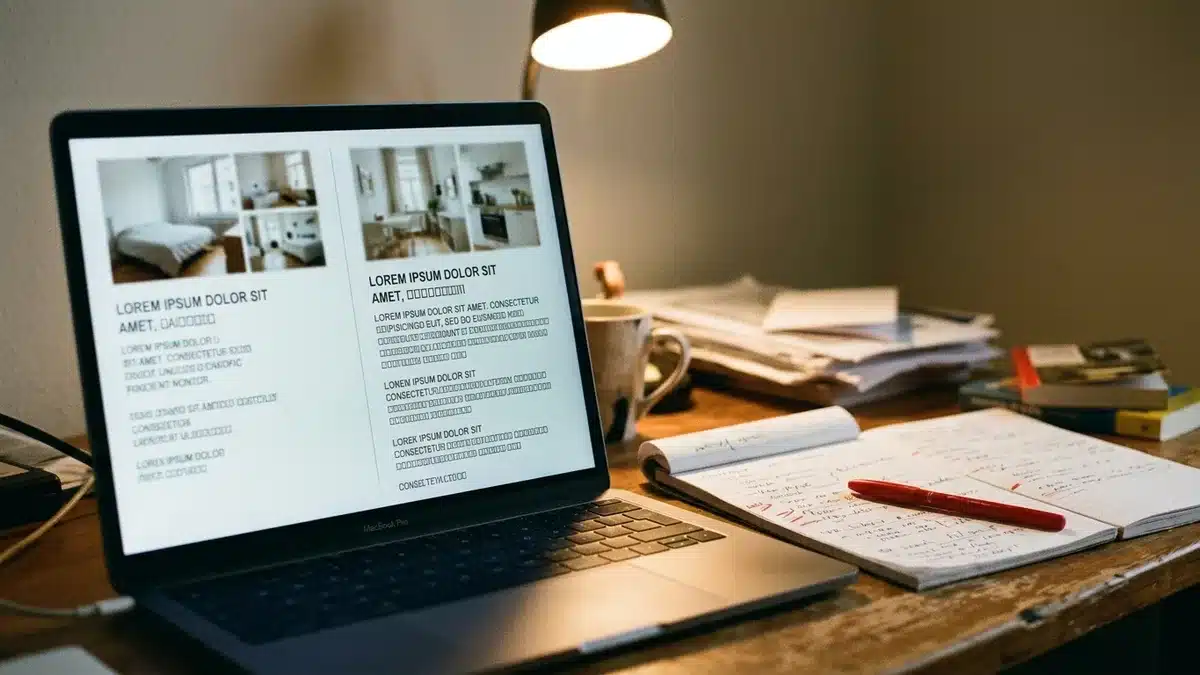
A strong property description example leads with a specific, distinctive feature and closes with a reason to act. A weak one opens with generic adjectives like “cozy” or “beautiful” and never gets specific about what the space actually offers.
Here's the contrast most hosts never see spelled out. A weak description reads: “Beautiful home in a great location. Close to everything. Perfect for families or couples.” That sentence could describe ten thousand listings. It gives a guest nothing to picture and nothing to remember.
A stronger version of the same property might read: “A converted 1920s carriage house four blocks from downtown, with a private courtyard, wood-burning fireplace, and sleeps up to six across two bedrooms. Walk to the farmers market on Saturdays; drive fifteen minutes to the trailhead.” Notice the specifics: a build era, a distance, a capacity number, a named nearby feature. That's the difference a review checklist for your own copy should catch every time.
Real estate listing platforms illustrate this well with example copy that references specific neighborhoods and named features, such as a listing in downtown Portland or one near Brooklyn with a private basketball court. The named detail is what makes the sentence memorable, not the adjective wrapped around it.
How Do I Get a Description of My Property?
You get a property description by writing it yourself using your property's actual features, pulling it from an existing MLS or public record if one already exists for legal purposes, or using a template built specifically for short-term rental marketing copy.
For hosts who already have an Airbnb or VRBO listing, the fastest starting point is your own existing platform description. Rewrite it rather than copy it verbatim, since generic OTA copy rarely converts as well on a direct booking site where guests expect more detail and more trust signals. Pull the raw facts first: bedroom and bathroom count, square footage if you have it, sleeping capacity, parking situation, and any renovation or build year.
If you're trying to locate a legal property description rather than marketing copy, that document typically lives in your property deed, title report, or county assessor records, not on your rental listing. We'll separate that distinction fully in the next section, because confusing the two is one of the most common mistakes hosts make when setting up a new website.
This is exactly the gap Boostly's onboarding process is designed to close. New members get access to templates and AI tools within 24 hours of signing up, built around what short-term rental guests respond to, so you're never starting a property description from a blank page or repurposing legal boilerplate that was never meant to sell anything.
How to Write a Property Description?
Writing a property description starts with a headline of ten words or fewer that leads with your single most distinctive feature, followed by specific details on layout, location context, and a direct call to action. This structure, headline, details, location, CTA, works across MLS listings, OTA platforms, and direct booking websites alike.
Start With the Hook
Your opening line carries the most weight. Lead with the one thing no other listing in your market has: a rooftop hot tub, a private dock, a converted grain silo. Skip “charming” and “stunning.” Those words appear on every listing and mean nothing.
Get Specific on Numbers
Replace vague claims with real figures. “Recently renovated” becomes “renovated in 2026.” “Spacious” becomes “1,800 square feet across three floors.” “Sleeps a lot of people” becomes “sleeps eight across four bedrooms, plus a sofa bed in the den.” Specific numbers and named features build more trust than superlatives, and they read as more credible to a guest scanning ten listings at once.
Add Location Context
Name the neighborhood, the distance to transit or parking, and one specific nearby draw, whether that's a hiking trailhead or a beach access point. Location context is what turns a description into something a guest can actually plan a trip around.
Close With a Clear Action
End with something that prompts a decision: a note about limited availability during peak season, a mention of instant booking, or simply an invitation to check dates. On OTA listings this is often subtle since the booking button does the work. On a direct booking website, the CTA matters more because you're competing with the polish guests expect from Airbnb, which is why Boostly builds every direct booking site with that conversion path designed in from the start, rather than bolted onto a template afterward.
Match Length to Platform
Most MLS public remarks fields allow between roughly 250 and 1,500 characters, which forces tight, efficient copy. Short-term rental platforms and your own website typically give you far more room, so the same property may need two or three versions of its description depending on where it's published.
What Is Considered a Legal Description of a Property?
A legal description of a property is a precise, technical description used in deeds, titles, and survey documents to identify a specific parcel of land for legal and public record purposes. It typically references metes and bounds, lot and block numbers, or a recorded plat, rather than marketing language.
This is where confusion trips up a lot of hosts and even some property managers. A legal description exists purely to identify land ownership boundaries for courts, title companies, and county assessors. You'll find it on your deed or title report, and it reads nothing like listing copy: think coordinate references and survey markers, not “sun-drenched living room.”
Property descriptions are compiled and published to inform and persuade a buyer or guest audience, and they show up in listings, brochures, and websites rather than in the public record. If you're setting up a direct booking website and someone hands you a legal description thinking it will work as listing copy, it won't; guests need marketing language, not a survey document. Rules and formats for legal descriptions vary by jurisdiction, so if you need one for closing or refinancing, check with your title company or county recorder's office directly rather than relying on generic guidance.
How Do Property Descriptions Vary by Property Type?
Property descriptions need to shift emphasis depending on whether the listing is a short-term rental, a commercial space, a luxury home, or a historic property, because each audience evaluates different criteria before they book or buy. A one-size-fits-all description underperforms across every category it's applied to.
| Property Type | Primary Emphasis | What Guests or Buyers Weigh Most |
|---|---|---|
| Standard short-term rental | Sleeping capacity, amenities, proximity to attractions | Group size fit, comfort, convenience |
| Luxury vacation home | Design details, privacy, exclusive amenities | Exclusivity, service level, photo-worthy features |
| Historic property | Architectural provenance, restoration details, character | Authenticity, story, uniqueness of experience |
| Commercial space | Square footage, parking spaces, electrical capacity, loading docks | Operational fit, zoning, functional layout |
| Investment property | Rental history, income potential, condition | Return on investment, maintenance burden |
Commercial descriptions tend to specify parking counts, electrical capacity, or loading dock access, details a vacation rental guest never asks about but a business tenant needs before scheduling a viewing. Historic property descriptions lean into restoration dates and original architectural features because that story is often the reason a guest booked in the first place. If you manage a mixed portfolio, say a few historic cabins alongside standard rentals, writing every listing from a single template guarantees weaker performance across at least one property type.
What Fair Housing Rules Apply to Property Descriptions?
Fair housing guidance requires that property descriptions describe the property itself, not the type of person who should live in or rent it. Referencing protected characteristics, whether directly or through coded language about a “perfect neighborhood” for a certain kind of family, creates legal risk under fair housing law.
This applies most strictly to long-term rental and sale listings, but short-term rental hosts aren't exempt from the underlying principle. Describe the space, the amenities, and the location. Never describe who you imagine will enjoy it. Phrases like “ideal for young professionals” or “great for a Christian family” cross a line that “sleeps four, close to downtown nightlife” never does.
A simple review habit solves most of this: before publishing, read your description and ask whether every sentence describes the property or the location, not a category of person. If a sentence describes a person rather than a place, cut it. This is one of the areas hosts overlook most often when adapting listing copy across multiple platforms, and it's worth building into your standard pre-publish checklist rather than catching it after the fact. Because fair housing requirements can vary by jurisdiction, verify current guidance with your local housing authority or legal counsel before finalizing template language you plan to reuse across many listings.
How Should a Property Description Change Across Platforms?
A property description should shift in length, tone, and emphasis depending on whether it appears on an OTA listing, a direct booking website, or a social media caption, because each platform gives guests a different amount of context and a different stage of decision-making.
On Airbnb or VRBO, guests are comparing your listing against dozens of similar options in the same search results, so your description competes on specificity within a tight scroll. On your own direct booking website, guests have often already decided they're interested, so the copy can do more trust-building work: guarantees, house rules, and a fuller story about the property. On social media, the description shrinks to a single compelling line paired with a strong image.
Most articles on this topic focus almost entirely on MLS-style copy and never address how listing language should adapt across a direct booking website versus a short-form platform. That's a real gap, and it's exactly the kind of platform-specific thinking Boostly's website builds are designed around. Since building a direct booking website means writing copy for an audience that already trusts you enough to leave Airbnb's search results, the tone can lean more personal and detailed than a competitive OTA listing ever allows.
If you're managing multiple properties across several platforms at once, keeping every version consistent and updated by hand becomes its own job. This is where portfolio-level content management starts to matter, since a change to one property's amenities needs to sync everywhere it's published, not just on the platform you happened to edit first.
Why Does a Strong Property Description Matter for Direct Bookings?
A strong property description matters for direct bookings because it's often the deciding factor between a guest who books your website and one who defaults back to a familiar OTA out of habit. Weak or generic copy gives guests no reason to choose your site over Airbnb's built-in credibility.
Airbnb's host-only fee runs around 15.5% on a typical booking, according to Houfy's 2026 cost breakdown, meaning a $2,000 stay costs a host roughly $310 in commission. That's revenue a strong direct booking presence keeps in your pocket instead. But the description alone doesn't close that gap; it has to sit inside a website that guests trust enough to enter payment details on.
This is precisely the problem Boostly was built to solve. Every direct booking website Boostly builds pairs conversion-focused property description structure with the trust signals guests expect: real-time availability, secure payment processing, and PMS-synced pricing across 27-plus integrations. That way, a well-written description doesn't get undermined by a site that feels less credible than the OTA it's competing against. Hosts using Boostly are working toward a documented target of 65% direct bookings within 12 months, backed by a money-back-plus-$1,000 guarantee, and the property description is one of the first pieces of copy our onboarding process helps you get right.
What Mistakes Should Hosts Avoid When Writing Property Descriptions?
The most common property description mistakes are relying on generic adjectives instead of specific details, copying the same description across every platform without adjusting for audience, and burying the property's best feature instead of leading with it.
- Leading with location before the hook. Guests scan the first line fastest. If it's a street address instead of your best feature, you've lost their attention before they reach the part that would have convinced them.
- Overusing vague adjectives. Words like “gorgeous” or “luxurious” carry no information. Replace them with a specific detail: a year, a measurement, a named amenity.
- Ignoring platform character limits. A description written for a 1,500-character MLS field will either get cut off or feel padded on a shorter platform. Write to the space you actually have.
- Describing the ideal guest instead of the property. This creates fair housing risk on long-term listings and just reads oddly on short-term ones. Stick to the space.
- Never updating the description after renovations. A listing still describing a 2019 kitchen when you renovated in 2026 undersells the property and can create guest expectation mismatches.
- Writing once and reusing everywhere. A description built for Airbnb's algorithm rarely performs as well, unedited, on a direct booking website where guests expect a different level of detail and trust-building.
Multi-property operators feel mistake six the hardest. Manually rewriting and syncing descriptions across a growing portfolio eats hours every month, and it pulls owners away from actually growing the business. That's part of why Boostly members get access to AI tools and templates alongside weekly coaching calls and more than 80 hours of on-demand training, so refining listing copy across a portfolio doesn't require starting from zero every time a property changes hands or gets renovated.
Data Snapshot: Property Descriptions and Market Context in 2026
The table below pulls together figures relevant to property descriptions and the broader direct booking landscape as of 2026, giving hosts context for why description quality carries real commercial weight, not just cosmetic value.
| Metric | Figure | Source |
|---|---|---|
| MLS public remarks character limit | Typically 250 to 1,500 characters | Industry listing standards |
| Airbnb host-only commission on $2,000 booking | Approximately $310 (15.5%) | Houfy, 2026 |
| Savings on a repeat direct booking vs OTA (on $2,000 stay) | $310 to $640 | Houfy, 2026 |
| Boostly direct booking target | 65% within 12 months, or money back plus $1,000 | Boostly |
Notice how the commission figure and the direct booking savings figure connect directly back to description quality. A guest who reads a compelling, trustworthy description on your own site is a guest who never generates that $310 in Airbnb commission in the first place.
Frequently Asked Questions
What is an example of a property description?
A strong example leads with a distinctive feature, includes specific numbers like bedroom count and square footage, and names the neighborhood, then ends with a reason to book. A weak example relies on generic words like “cozy” or “beautiful” without any specific, memorable detail attached.
How do I get a description of my property?
Write one yourself using your property's real features, adapt your existing OTA listing copy for a new platform, or use a template designed for short-term rental marketing. If you need a legal description instead, that comes from your deed, title report, or county assessor records, not your rental listing.
How do I write a property description?
Start with a ten-word-or-fewer headline highlighting your best feature, follow with specific details like bedroom count and amenities, add neighborhood context, and close with a clear call to action. Match the length to the platform, since MLS fields, OTA listings, and websites all allow different amounts of space.
What is considered a legal description of a property?
A legal description is a technical identification of land boundaries used in deeds, titles, and surveys, typically referencing metes and bounds or lot and block numbers. It's used for public record and legal purposes, and it has no marketing function, unlike a property description written for a listing.
What is boostly?
Boostly is a direct booking website platform for short-term rental hosts and property managers that builds fully optimized, no-code websites live within 35 days, integrates with 27-plus PMS platforms for real-time syncing, and includes a built-in CRM with automated guest follow-up. Hosts working with Boostly target 65% direct bookings within 12 months, backed by a money-back-plus-$1,000 guarantee.
Is there a tool that integrates direct booking management with my current property management software?
Yes. Boostly integrates with 27 or more property management systems and syncs listings, availability, and pricing in real time, so your direct booking website never shows outdated rates or risks a double booking against your existing PMS calendar.
What marketing listing sites are good for vacation rentals?
OTAs like Airbnb and VRBO remain the primary discovery channels for most hosts, but relying on them exclusively means paying commission on every booking. A direct booking website, paired with an active OTA presence, lets you keep OTA visibility while building a commission-free channel alongside it, which is the model Boostly is built around.
What is an Airbnb co-host?
An Airbnb co-host is a person or company who helps manage a listing on behalf of the primary host, typically handling tasks like guest messaging, pricing, or turnover coordination, in exchange for a share of revenue or a flat fee. Co-hosts work within Airbnb's existing platform rather than managing a separate direct booking channel.
Conclusion: Getting Your Property Description Right in 2026
A property description is your listing's sales pitch, not a legal record, and the difference between a generic version and a specific one shows up directly in your booking rate. Lead with a distinctive feature, use real numbers instead of adjectives, and adapt the copy to whichever platform is hosting it, whether that's Airbnb, your own website, or a social caption.
As the vacation rental market keeps growing through 2026, the listings that convert best will keep being the ones that treat description copy as a commercial tool rather than an afterthought filled in after the photos go up. Get the fundamentals right once, then adapt them by platform and property type rather than starting from scratch every time.
If you're ready to stop rewriting the same description five different ways across five different platforms, Boostly builds direct booking websites with conversion-ready description structure, PMS syncing, and guest CRM automation built in from day one. Book a demo to see how your current listing copy could perform on a site designed to hit 65% direct bookings within 12 months, backed by a money-back-plus-$1,000 guarantee.
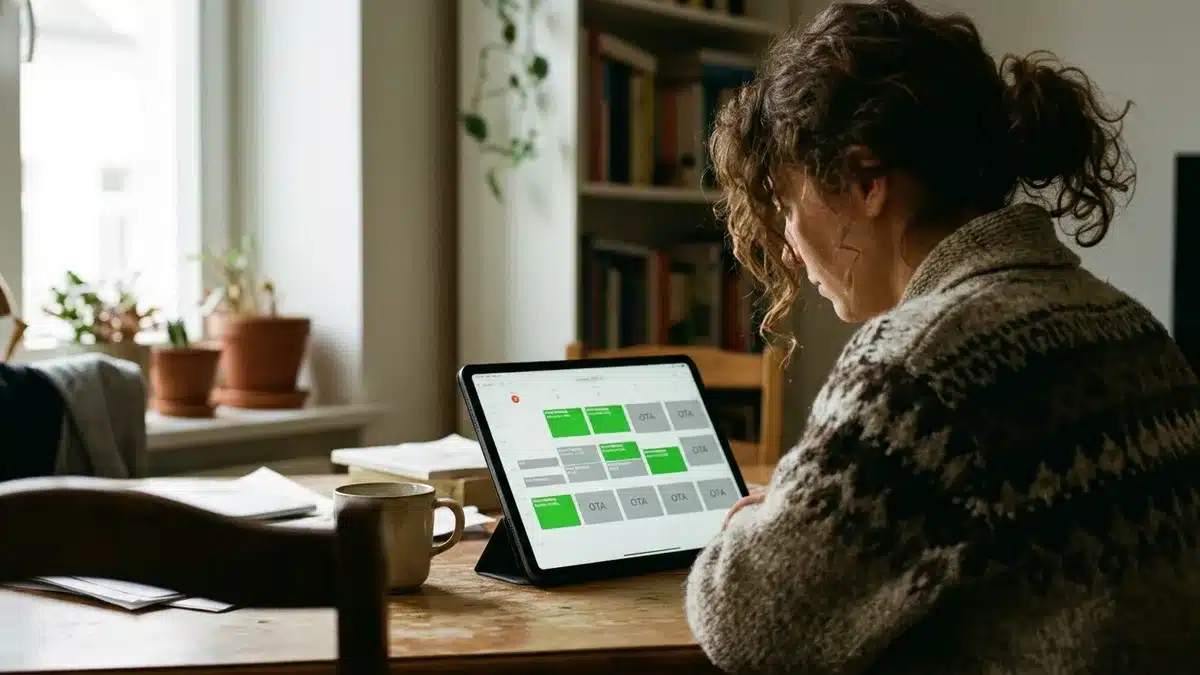
Once your property description is written and your listing photos are locked in, the next step is putting that copy on a website built to convert it into bookings. Get started with Boostly to see what a done-for-you direct booking website looks like for your property.