
Vacation rental brand building is the process of turning a generic listing into a recognizable, trusted hospitality business that guests seek out and book directly, rather than one they stumble across in an OTA search results page. It combines visual identity, a dedicated booking website, consistent guest experience, and repeat guest marketing into one system. Done properly, it shifts a portfolio's revenue mix away from commission-heavy platforms and toward a channel the host actually owns.
TL;DR
- Vacation rental brand building means creating a consistent identity, website, and guest experience that guests remember and rebook directly instead of searching Airbnb again.
- Airbnb's host-only fee runs around 15.5% on a typical booking, meaning a $2,000 stay costs a host roughly $310 in commission alone, according to Houfy's 2026 breakdown.
- Repeat guests matter more than most hosts realize: one hospitality dataset found 759 of 5,324 bookings were repeat stays, a 14% repeat rate that brand-building tactics can push much higher.
- The global vacation rental market is projected to reach roughly $106.5 billion in 2026, according to Grand View Research, meaning competition for guest attention is only intensifying.
- A 200-person email list with a modest 15% annual repeat rate can generate around 30 commission-free bookings a year, based on Houfy's model, without spending a cent on ads.
- Boostly builds the branded direct booking website, CRM, and guest follow-up automation that makes vacation rental brand building measurable rather than a vague aspiration.
Most hosts think branding means picking a nice logo and calling it done. That's not vacation rental brand building, that's decoration. Real brand building is a system: a defined identity, a website that converts, and a guest journey that turns a single stay into years of repeat direct bookings.
We work with over 2,000 STR hosts and property managers at Boostly, and the pattern is consistent: the hosts who treat their rental like a brand, not a listing, are the ones who eventually stop needing Airbnb to fill their calendar. In 2026, with the global vacation rental market pushing toward $106.5 billion according to Grand View Research, standing out on an OTA search page alone is getting harder every quarter.
This guide walks through 12 specific, actionable strategies for building a vacation rental brand that guests recognize, trust, and book directly. Each one addresses a real gap we see in host strategy, from defining your positioning to structuring a post-stay campaign that keeps guests coming back for years.
1. Define Your Unique Selling Proposition Before You Touch a Logo
A unique selling proposition (USP) is the specific reason a guest should choose your property over the dozens of similar listings in your market. Without one, every branding decision you make afterward is guesswork. Notably, most hosts skip this step entirely and jump straight to visuals, which is why so many vacation rental “brands” look identical.
Start by naming your ideal guest type: families needing space, remote workers needing reliable WiFi, or couples wanting a design-forward stay. For example, a seven-cabin glamping site positioned around “off-grid luxury for burned-out professionals” attracts a completely different guest than one positioned around “affordable family basecamp.” Both can work. Neither works if you try to be both at once.
Once you know your USP, every other decision, your website copy, your photography style, your amenity choices, gets easier. This is also where we start every conversation with new Boostly members: before we build a direct booking website, we ask who it needs to convert. A website built for a vague “anyone welcome” positioning converts worse than one built for a specific guest persona.
2. What Is the 3 7 27 Rule of Branding?
The 3 7 27 rule of branding refers to the idea that a person needs roughly 3 seconds to form a first impression, 7 seconds to decide whether to keep engaging, and up to 27 touchpoints before they fully trust a brand enough to convert. For a vacation rental, this means your hero image and headline have seconds to hook a guest, and your overall brand needs repeated exposure, through OTA listings, social posts, email, and reviews, before that guest books directly instead of defaulting to Airbnb.
In practice, this rule explains why a single beautiful listing photo isn't enough. A guest might see your Airbnb listing, then your Instagram, then a Google search result, then a friend's recommendation, before they finally land on your direct booking site and convert. Each touchpoint needs to look and sound like the same business.
This is exactly why consistency matters more than any single asset. If your OTA profile photo, your website hero image, and your email signature all look like they belong to different companies, you're resetting the guest's trust clock every time. We built Boostly's website templates specifically to keep this consistency intact across every channel a guest might encounter, from the first OTA impression to the final direct booking confirmation.
3. How Do You Build a Visual Identity That Guests Actually Remember?
A visual identity is the consistent combination of logo, color palette, typography, and photography style that makes a property instantly recognizable across every platform. For vacation rentals specifically, this means the same visual language should appear on your Airbnb profile, your direct booking website, your email templates, and your printed check-in guide.
Pick two or three brand colors that reflect your property's character, a warm terracotta and deep green for a desert retreat, for example, and use them everywhere. Choose one font for headlines and one for body text. Commit to a consistent photography style: natural light, minimal staging, and the same editing filter across every listing photo.
The biggest mistake we see is hosts changing their visual identity every time they refresh photos. Guests build recognition through repetition, and inconsistent visuals reset that recognition to zero. When Boostly builds a direct booking website for a host, we lock in brand colors and fonts as part of the build so that consistency carries through automatically, rather than depending on the host remembering to match every new asset by hand.

4. What Is the 80 20 Rule for Airbnb?
The 80 20 rule for Airbnb, as most hosts apply it, suggests that roughly 80% of your bookings and revenue come from around 20% of your efforts, typically your best-performing listing features, your highest-converting photos, or your most loyal repeat guests. Applied to brand building, it means you should identify which 20% of your guest touchpoints are driving most of your bookings and repeat stays, then double down there instead of spreading effort evenly across everything.
For most hosts, that high-value 20% turns out to be repeat guests and referrals, not new OTA discovery. A dataset covering 5,324 bookings found 759 were repeat stays, a 14% repeat rate, and in some vacation rental markets that number runs far higher; one study of Gulf Coast rentals in Southern Alabama and Northwest Florida found 89.4% of survey respondents were repeat visitors, according to the Journal of Travel & Tourism Insights.
If repeat guests are your highest-leverage 20%, your brand-building energy should go toward the post-stay relationship, not just pre-booking marketing. That's the exact gap Boostly's CRM and automated follow-up sequences are built to close: capturing guest data at the point of direct booking and triggering the emails that bring that guest back without requiring manual outreach every time.
5. How Do You Build a Direct Booking Website That Reinforces Your Brand?
A vacation rental brand website is the digital home base where your visual identity, guest trust signals, and booking engine come together in one place you fully control, unlike an OTA listing you're renting space on. It needs to load fast, look consistent with your other channels, and make booking directly feel at least as safe as booking through Airbnb.
Specifically, your website needs three things an OTA listing can't offer: your own domain and email capture, full control over pricing and add-ons, and a guest-facing story that reflects your actual brand voice rather than a template description. As a result, guests who land on a branded site convert with more confidence than they do on a generic listing page.
This is the single most common gap we see in host strategy: hosts spend months on visual identity and social media, then send guests to a bare-bones site with no booking engine, no trust signals, and no PMS sync, which kills conversion at the final step. Boostly's done-for-you direct booking website gets hosts live within 35 days, with a built-in booking engine, secure payments, and real-time sync across 27 or more property management systems, so the brand you've built actually converts instead of leaking guests back to Airbnb at the last click.
6. How Should You Optimize OTA Listings to Match Your Brand?
OTA listing optimization for brand building means making your Airbnb and Vrbo profiles look and read like an extension of your direct brand, not a separate identity. Your listing photos, headline tone, and host bio should use the same visual language and voice as your website, so a guest recognizes you across platforms even before they know your brand name.
Keep your listing description voice consistent with your website copy. If your brand voice is warm and casual on your site, your Airbnb description shouldn't read like a legal disclaimer. Additionally, use your host bio section to plant a subtle brand signal, mentioning your property collection name or a distinctive amenity that carries through to your direct site.
You don't have to choose between OTA visibility and direct booking growth. Keep your Airbnb and Vrbo listings live as top-of-funnel discovery channels while building the parallel brand relationship that eventually pulls repeat and referral guests to your own site. Our training library inside Boostly, part of the 80-plus hours of courses available to members, covers exactly how to optimize listing content on Airbnb and Vrbo without diluting the brand identity you're building elsewhere.
7. Who Is the Largest Vacation Rental Company?
Among global online travel platforms, Airbnb and Booking.com's Vrbo brand are widely recognized as the largest vacation rental distribution platforms by listing volume and booking share, giving them enormous reach but also enormous pricing power over the hosts who depend on them. Notably, over 7 million active short-term rental listings exist across major OTA platforms globally as of early 2026, with professional management companies controlling an estimated 42% of that inventory.
That scale is precisely why individual host branding matters so much. When you're one listing among 7 million, generic positioning gets you buried in search results. A defined brand, consistent visual identity, and owned guest relationships are how independent hosts and small management companies compete against portfolios with far larger marketing budgets.
The size of these platforms isn't a reason to avoid them, it's a reason to build a parallel channel you control. As we tell every host who joins Boostly: the goal isn't leaving Airbnb, it's making sure Airbnb isn't your only option. Hosts in our community typically reach 65% to 80% direct bookings within 12 months by building that parallel brand and booking channel systematically rather than hoping OTA algorithm visibility holds steady forever.
8. How Do You Use Social Media and Email to Reinforce Your Brand Story?
Social media and email marketing for vacation rentals work by extending your brand story between stays, keeping past and prospective guests engaged with your property's personality long after they've closed the Airbnb tab. Instagram and Facebook are best for visual storytelling and local area content, while email is where actual repeat bookings get generated.
For example, a post-stay email sequence that shares seasonal offers, local event updates, or a simple “we'd love to have you back” message keeps your brand top of mind without feeling like a hard sell. This is where the math gets compelling: a 200-guest email list with just a 15% annual repeat rate generates around 30 commission-free bookings a year, according to Houfy's 2026 model, a return most hosts never capture because they simply never collect guest emails in the first place.
Tools like a StayFi WiFi capture system solve the legal email collection problem at the property level, giving hosts a compliant way to build that list from every stay. Once you have the list, the follow-up has to actually fire. Boostly's built-in CRM captures guest data the moment a direct booking happens and triggers automated email sequences post-checkout, so the repeat guest math above isn't theoretical, it's running in the background without you writing a single manual email.
9. How Do You Deliver a Branded Guest Experience That Guests Talk About?
A branded guest experience means every touchpoint, from check-in instructions to in-property amenities to local partnerships, reflects the same identity and tone as your marketing. Guests notice when the website promised something the property doesn't deliver, and that gap is the fastest way to lose repeat booking potential.
Specifically, this means your welcome book uses your brand voice, your check-in process feels as polished as your website photography suggested, and any local partnerships, a coffee shop discount, a curated activity guide, reflect your positioning. A remote-worker-focused property should have a genuinely good desk setup and fast WiFi, not just a mention of it in the listing.
Guests staying in vacation rentals along the Gulf Coast and in destinations like The Bahamas often stay between four and seven days according to Taylor & Francis research, which means there's real time for a branded in-stay experience to leave an impression, not just a quick overnight transaction. Longer stays give hosts more opportunity to reinforce brand touches that a one-night guest might never notice. In our experience working with STR operators, the properties that convert repeat guests best are the ones where the digital brand promise and the in-person reality match exactly.
10. How Do You Turn One Stay Into a Multi-Year Direct-Booked Relationship?
A post-stay campaign is a structured sequence of follow-up communications designed to convert a single guest stay into repeat bookings over multiple years, rather than a one-time transaction that ends at checkout. This is the single biggest content gap in most vacation rental brand-building advice: plenty of guides tell you to “stay in touch,” almost none show you the actual structure.
A working post-stay campaign typically includes a checkout-day thank-you and review request, a 30-day follow-up sharing local seasonal content, a pre-anniversary “come back” offer timed to their original stay dates, and periodic brand updates, like new amenities or nearby attractions, spaced through the year. As a result, the guest relationship compounds instead of going cold after the first stay.
Segmenting this campaign by guest type sharpens it further: families respond to school-holiday timing and space-focused offers, remote workers respond to extended-stay discounts, and couples respond to seasonal romantic-getaway framing. Generic blanket emails convert far worse than segmented ones. This is precisely the workflow Boostly's CRM and automation were built to handle, capturing which guest type booked and triggering the right sequence automatically, so a multi-year relationship builds itself instead of depending on the host remembering to follow up eighteen months later.
11. How Do You Track Whether Your Brand Building Is Actually Working?
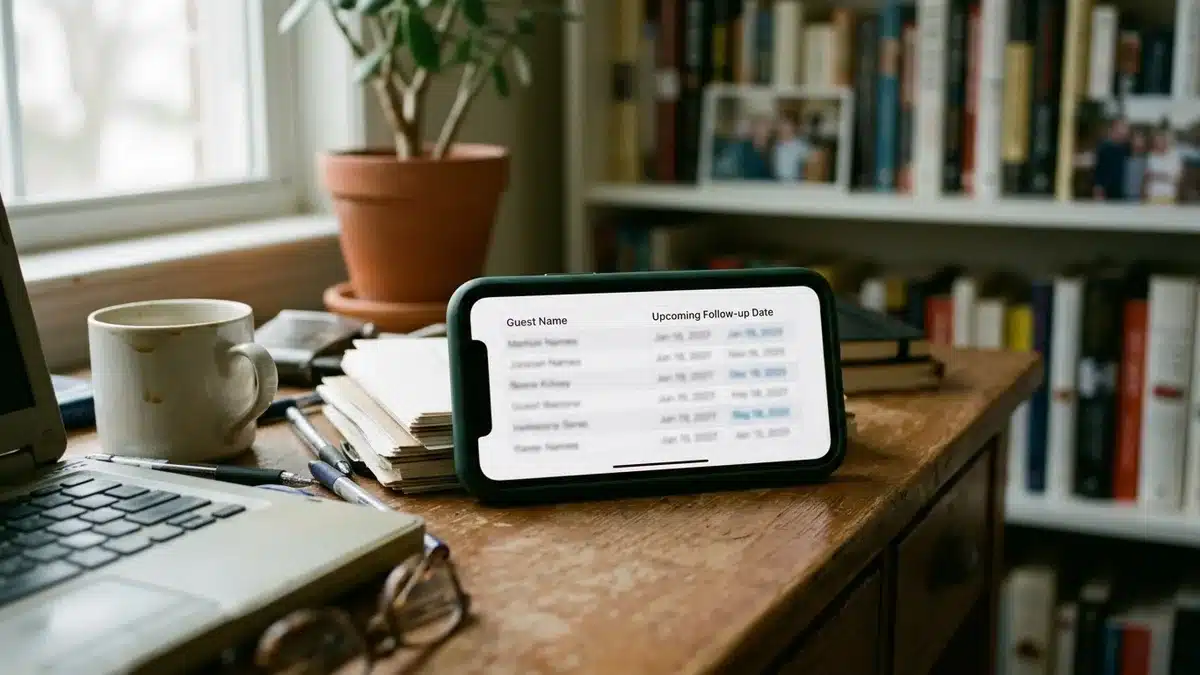
A brand-tracking dashboard for a vacation rental is a simple set of recurring metrics, direct booking percentage, repeat guest rate, email list growth, and review sentiment, that tell you whether your brand-building efforts are translating into bookings, not just goodwill. Most solo hosts and small operators never build this, which means they can't tell if a rebrand or new marketing push actually moved the needle.
At minimum, track four numbers monthly: the percentage of total bookings that came direct versus through an OTA, your repeat guest rate as a percentage of total bookings, your email list size and open rate, and a rolling average of review scores. Comparing these month over month, rather than staring at a single snapshot, is what reveals real trends.
Feedback loops matter here too. Reading OTA reviews and guest comments specifically for language guests use to describe your property, “cozy,” “perfect for families,” “felt like a boutique hotel,” gives you free market research for refining your brand story and future direct-booking messaging. Few operators mine their existing reviews this way, which makes it one of the easiest wins available. Boostly's reporting dashboard gives hosts exactly this visibility, tracking direct booking conversion, traffic sources, and repeat guest percentage in one place, so you always know whether you're on pace toward a meaningful direct booking share rather than guessing.
12. Should You Build Sub-Brands for a Multi-Property Portfolio?
A sub-brand, or portfolio brand, is a distinct identity created for a specific group of properties under one host or management company, used when a portfolio spans different guest types or price points that a single brand voice can't credibly cover. For example, a management company might brand its high-end units as “The Executive Collection” while marketing its family cabins under a separate, more casual name.
This matters most for hosts managing five or more units. Trying to market a $150-a-night family cabin and a $600-a-night luxury lodge under one identical brand voice usually confuses both audiences. Splitting them into sub-brands lets each speak directly to its actual guest persona without diluting the other.
The trade-off is added complexity: two visual identities, two sets of marketing copy, and potentially two websites or website sections to maintain. For hosts scaling a portfolio across multiple guest segments, that complexity is worth navigating carefully. As you weigh it, our guide on how to grow your vacation rental business beyond OTAs covers the operational side of scaling a multi-property brand without losing consistency, and Boostly's PMS integrations sync pricing and availability across every unit regardless of how many sub-brands sit on top of them.
Vacation Rental Brand Building Data at a Glance
| Metric | Figure | Source |
|---|---|---|
| Global vacation rental market size, 2026 | Approx. $106.5 billion | Grand View Research |
| Airbnb host-only fee on a $2,000 booking | 15.5% (approx. $310) | Houfy, 2026 |
| Repeat booking rate (5,324-booking dataset) | 14% (759 repeat bookings) | OwnerRez Blog, 2014 |
| Repeat visitor rate, Gulf Coast rentals | 89.4% of survey respondents | Journal of Travel & Tourism Insights |
| Active global STR listings, early 2026 | Over 7 million | Industry listing data |
| Commission-free bookings from a 200-guest list at 15% repeat rate | Approx. 30 bookings/year | Houfy, 2026 |
This table is a useful reference, but the number that matters most for your own brand is your direct booking percentage relative to your OTA percentage. That's the metric worth tracking every single month.
Practical Guidance: How to Prioritize Your Brand-Building Effort
Not every host has time to execute all 12 strategies at once. If you're starting from zero, prioritize in this order:
- Define your USP and guest persona first. Every downstream decision depends on this.
- Build a converting direct booking website before investing heavily in social media, a beautiful Instagram feed with no booking engine behind it converts nothing.
- Set up email capture and one automated post-stay sequence before worrying about segmented campaigns for every guest type.
- Audit your OTA listings for visual and voice consistency with your new brand.
- Build your tracking dashboard once the above is live, so you can measure what's actually working.
Common mistakes to avoid: changing your visual identity every season, building a website with no booking engine or PMS sync, and collecting guest emails without ever sending a single follow-up. Each of these undermines the entire brand-building effort, no matter how good your photography looks.

Frequently Asked Questions
What is vacation rental brand building?
Vacation rental brand building is the practice of creating a consistent identity, direct booking website, and guest experience for a short-term rental property or portfolio so guests recognize, trust, and rebook the property directly rather than relying solely on OTA search results.
How long does vacation rental brand building take to show results?
Visual identity and website changes can go live within weeks, but measurable shifts in direct booking percentage and repeat guest rate typically take several months to a year to show meaningfully, since much of the impact depends on accumulating repeat and referral guests over time.
Do I need to leave Airbnb to build my own brand?
No. Most successful hosts keep their Airbnb and Vrbo listings active as discovery channels while building a parallel direct booking brand and website. The goal is reducing dependence on OTAs, not abandoning them entirely.
What is the biggest mistake hosts make when building a vacation rental brand?
The most common mistake is investing in visuals and social media before building a direct booking website that can actually convert traffic into bookings. A beautiful brand with no functioning booking engine behind it generates attention but no revenue.
How much does OTA commission actually cost over a year?
Airbnb's host-only fee runs around 15.5% per booking according to Houfy's 2026 breakdown, meaning a $2,000 booking costs roughly $310 in commission. Across a full year of bookings, that adds up to a substantial recurring cost that a direct booking brand strategy is designed to reduce.
Can a single-property host benefit from brand building, or is it only worth it at scale?
Single-property hosts benefit significantly, since even one property generating consistent repeat bookings can save thousands annually in avoided OTA commissions. Brand building scales in complexity for larger portfolios, but the fundamentals, a clear USP, consistent identity, and a repeat guest system, apply at any size.
What tools do I need to start building a vacation rental brand?
At minimum, you need a defined visual identity, a direct booking website with a booking engine, an email capture method, and a CRM or automation system to manage guest follow-up. Boostly combines these into one system: a done-for-you website, built-in CRM, and automated guest communication, backed by weekly coaching to help hosts execute the strategy consistently.
Conclusion: Building a Brand Guests Choose On Purpose
Vacation rental brand building isn't a marketing exercise you finish once, it's an ongoing system connecting your positioning, your website, and your guest relationships into something guests choose deliberately instead of stumbling into through an OTA search. The hosts who treat it that way are the ones consistently reducing their reliance on commission-heavy platforms, one repeat booking at a time.
Start with your USP, build a website that actually converts, and put a post-stay follow-up system in place before you worry about anything else. If you want that system built for you, with a direct booking website live in 35 days, a CRM ready within 24 hours, and a guarantee of 65% direct bookings within 12 months or your money back plus $1,000, Boostly is built to get you there. Book a demo at boostly.co.uk and see what the first 35 days of building your brand actually look like.

If your current site is more of a digital brochure than a brand asset, a purpose-built direct booking website is usually the fastest way to turn your brand-building work into actual revenue. Check what a Boostly-built site looks like for your property type.