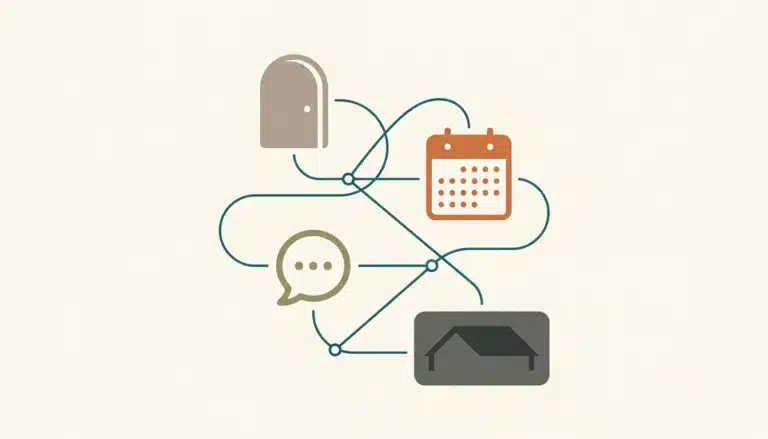
If you're just starting out with short-term rentals, the four tools you need first are a property management system (PMS), a channel manager, a guest messaging or CRM system, and a direct booking website. Everything else, dynamic pricing, smart locks, cleaning apps, can wait until you have your first bookings under your belt.
Key Takeaways
- New hosts need four core tools before anything else: a PMS, a channel manager, a guest communication or CRM system, and a direct booking website.
- A single-property host can often start with a simpler setup and grow into a full PMS as bookings increase, rather than buying every tool on day one.
- The global vacation rental market is growing quickly as more owners list properties on Airbnb, Vrbo, and Booking.com every month, which means competition for guest attention keeps intensifying.
- A complete short-term rental technology stack can cost roughly $80 to $120 per unit per month once you add channel management, CRM, and operations tools together.
- Skipping real-time syncing between your calendar and your listings is one of the most common and costly mistakes new hosts make, leading directly to double bookings.
- Boostly closes the direct booking gap in this stack by building a done-for-you website with 27+ PMS integrations and CRM access within 24 hours of signing up, so new hosts don't have to stitch together five separate systems by hand.
Getting into short-term rentals in 2026 means walking into a market that's more competitive and more automated than it was even two years ago. Home accommodation makes up nearly half of the global vacation rental market, and that share keeps climbing as more owners list properties on Airbnb, Vrbo, and Booking.com every month.
The good news: you don't need to buy every tool in the industry to compete. Most new hosts overspend on software they don't need yet, or underinvest in the one thing that protects their margin, a direct booking channel. This guide breaks down what to buy first, what to skip, and how the pieces fit together so you're not rebuilding your tech stack six months from now.
We work with hosts at every stage at Boostly, from someone listing their first spare room to operators managing dozens of units, and the pattern is consistent: the hosts who plan their tool stack early spend less money and less time fixing mistakes later.
What Are the Best Tools for Managing Airbnb Rentals?
The best tools for managing Airbnb rentals fall into four categories: a property management system for calendars and reservations, a channel manager for cross-platform syncing, a guest communication tool for messaging, and a direct booking website to reduce commission dependence. Most new hosts don't need all four immediately.
A property management system, or PMS, is the central hub. It combines your reservation calendar, guest messaging, task scheduling, and often basic accounting into one dashboard rather than juggling Airbnb's app, a spreadsheet, and your email inbox separately. For one property, some hosts start lighter, using Airbnb or Vrbo directly alongside a simple spreadsheet in Google Sheets or Airtable to track income and expenses before graduating to a full PMS.
A channel manager keeps your availability, rates, and listing details synced across Airbnb, Vrbo, and Booking.com in real time. Without one, you're manually updating three calendars every time a booking comes in, and a missed update means a double booking. As you add a second or third listing platform, this becomes non-negotiable rather than optional.
The piece most beginner guides skip: a direct booking website. Every booking that comes through Airbnb or Booking.com pays a commission that a direct booking, on your own site, doesn't. Boostly builds that website for you, with no coding required, and gets you live within 35 days. It's the one tool in this list that pays for itself instead of costing you a percentage of every reservation.
What Is the 80/20 Rule in Airbnb?
The 80/20 rule, in the context of Airbnb hosting, generally refers to the idea that roughly 80% of your booking revenue or guest satisfaction outcomes tend to come from about 20% of your effort or listing features, most commonly your photos and pricing strategy. It's a rough operating heuristic, not a scientific finding specific to Airbnb.
For new hosts, this plays out practically in a few areas. Professional photography and an accurate, benefit-driven listing description tend to drive a disproportionate share of booking inquiries compared to every other listing tweak combined. Fast, thorough guest communication before booking, answering questions within an hour rather than a day, converts a large share of undecided lookers into bookers.
This is where the rule connects directly to tool selection: automating the highest-leverage 20% of your workflow, guest messaging and booking confirmations, protects the majority of your time for the parts of hosting that need a human, like resolving a guest issue.
This is why guest communication automation sits near the top of any beginner's tool list. Manually replying to every inquiry across multiple platforms eats hours you don't have as a new host still learning the ropes. A connected system that pulls guest messages into one inbox, and automates repeat-guest follow-up, is the kind of leverage this rule is describing. It's part of why Boostly‘s built-in CRM automates guest follow-up and repeat booking outreach rather than leaving it to a host's memory.
What Is the 2% Rule for Rentals?
The 2% rule is a real estate investment guideline suggesting that a rental property's monthly rental income should equal at least 2% of its purchase price for the investment to generate strong cash flow. It originated in long-term rental investing and is applied loosely, if at all, to short-term rental underwriting because nightly rate income varies far more than a fixed monthly lease.
For someone evaluating a potential short-term rental purchase, the 2% rule can serve as a rough first filter before you dig into actual seasonal occupancy and nightly rate data for the market. A property priced at $300,000 would need to generate roughly $6,000 a month to clear that threshold, which is a high bar for most single-family short-term rentals in most markets.
More useful for STR-specific underwriting is running a realistic occupancy and average daily rate model for your actual market rather than relying on a rule built for long-term leases. AirDNA's 2026 outlook, as reported by BuildUp Bookings, forecasts U.S. short-term rental occupancy at 57.4% for 2026, compared with a 57.0% pre-pandemic average, giving new investors a benchmark closer to reality than a blanket percentage rule.
Once you've underwritten the property, the tools you choose determine whether you hit those occupancy projections. A revenue-focused pricing tool paired with a direct booking channel captures demand your OTA listing alone won't reach, since Boostly-built websites are structured for search visibility from launch rather than bolted on as an afterthought.
What Is the Real Cost of a Short-Term Rental Tool Stack?
A complete short-term rental technology stack, covering property management, channel management, CRM, and operations tools, typically costs somewhere in the range of $80 to $120 per unit per month once fully built out. New hosts rarely need the full stack from day one, which is where most people overspend.
Pricing models vary between providers, and that inconsistency is one of the biggest headaches for new hosts trying to compare options. Some platforms charge a flat monthly fee per listing. Others charge a percentage per booked night, or use tiered plans that jump in price once you cross a listing threshold. As one industry comparison from Buildium points out, per-property pricing can work fine at small scale but becomes expensive fast as you add doors, while flat-rate plans often become the more economical choice as your portfolio grows.
The table below breaks down the core categories you'll be pricing out, what each one does, and where the cost trade-offs typically show up as you scale.
| Tool Category | What It Does | Typical Pricing Model | When You Need It |
|---|---|---|---|
| Property Management System (PMS) | Central calendar, messaging, task and booking hub | Per-listing monthly fee or tiered plan | From your second listing onward; optional for one property |
| Channel Manager | Syncs availability and rates across Airbnb, Vrbo, Booking.com | Often bundled into PMS or priced per listing | As soon as you list on more than one platform |
| Dynamic Pricing Tool | Adjusts nightly rates based on demand signals | Percentage of revenue or flat monthly fee | Once you have booking history to optimize against |
| CRM & Guest Marketing | Captures guest data, automates follow-up and repeat bookings | Flat monthly fee, often tiered by contact volume | From day one, since guest data compounds over time |
| Direct Booking Website | Owned booking channel that reduces OTA commission dependence | Flat monthly or annual fee | As early as possible; commissions add up from your first year |
Notice the last row. A direct booking website is the one line item on this table that actively works to reduce what you spend elsewhere, since every booking routed away from Airbnb or Booking.com keeps roughly 15% more of that reservation's value in your pocket rather than paying it out in commission. That's the specific gap Boostly was built to close, and it's why new hosts often see it as a priority investment rather than a “someday” upgrade.
Do Airbnb Occupancy and Pricing Benchmarks Follow a Fixed Formula?
No fixed formula like a “75-55 rule” exists for Airbnb hosting. If you've seen this term referenced elsewhere, treat it with caution, it doesn't correspond to any documented Airbnb policy, pricing formula, or hosting standard.
What we'd recommend instead: focus on benchmarks that are documented. AirDNA's 2026 outlook projects U.S. short-term rental demand growing 2.7% year over year alongside a matching 2.7% growth in available listings, with RevPAR expected to rise 2.9%. Those are the kinds of figures worth building your pricing and occupancy targets around, not an unverified rule with no clear origin.
If you come across a named “rule” or framework while researching short-term rental strategy that sounds suspiciously tidy, check whether it traces back to a credible source like AirDNA, a government tourism board, or a documented industry report. A lot of STR advice circulating online repeats numbers that started as a blog author's guess and got treated as gospel after enough repetition.
This is also where working with a platform that grounds its guidance in documented figures rather than invented rules matters. At Boostly, our training content and weekly coaching calls are built around what we observe across our host community, not repackaged internet folklore.
Are There Guides or Tools to Help Set Up a Direct Booking System?
Yes, direct booking website builders exist to help hosts set up a booking system separate from Airbnb and Booking.com, and Boostly is one option built specifically for the short-term rental industry rather than general small business websites. The right one for you depends on your comfort with DIY setup versus wanting the build handled for you.
If you're comfortable with website builders and have time to learn a booking engine plugin, a self-service approach can work, though you'll be responsible for design, payment integration, and PMS connectivity yourself. Most new hosts underestimate how long this actually takes, particularly getting real-time availability syncing right so the website never shows a date that's already booked on Airbnb.
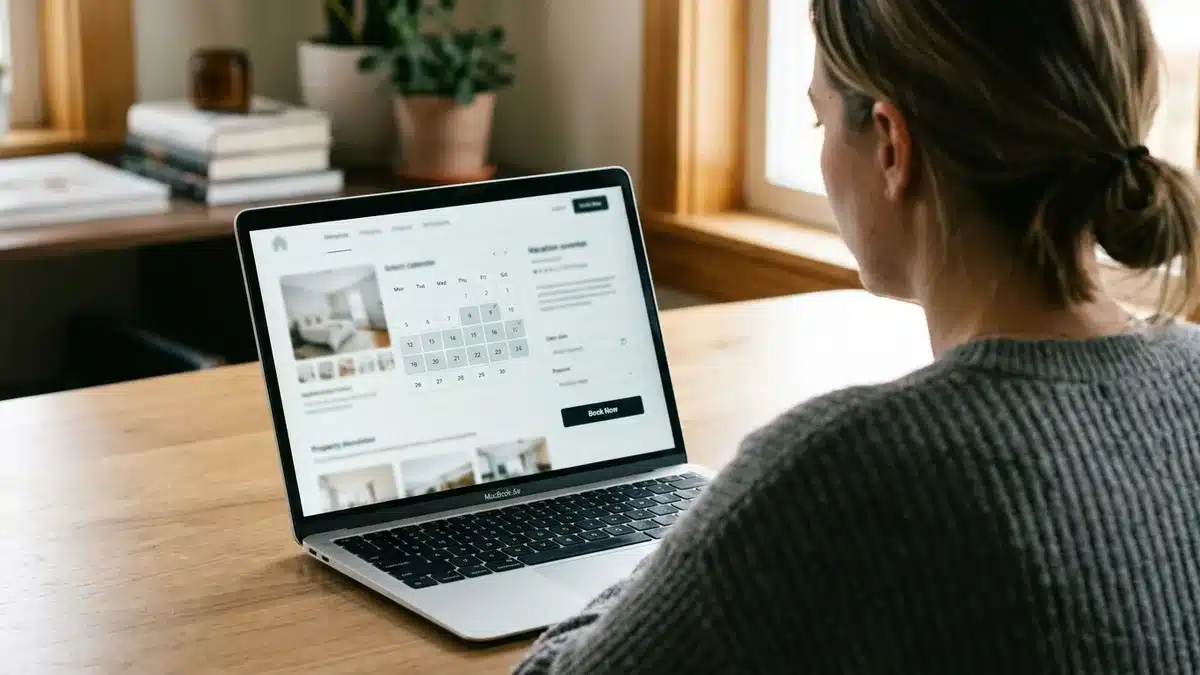
The alternative is a done-for-you build. Boostly builds a fully optimized direct booking website with no coding required and gets hosts live within 35 days of signing up, connecting to 27 or more property management systems so your website calendar and your OTA calendars stay in sync automatically. New members also get CRM access within 24 hours, so guest data capture starts almost immediately rather than after months of manual setup.
Whichever path you choose, verify that whatever you build has real-time API syncing rather than relying on manual updates or nightly batch syncs, since a lag of even a few hours between your website and your PMS calendar is enough to create a double booking. If you want a deeper walkthrough of the build process itself, our guide on how to build a direct booking website covers the technical decisions step by step.
How Can I Advertise My Vacation Rental to Boost Direct Bookings?
Advertising a vacation rental to boost direct bookings works best through a combination of search visibility and guest email marketing, plus a WiFi-based email capture system at the property itself, rather than relying solely on paid ads. Direct bookings compound over time as your guest list and search rankings grow, unlike OTA traffic which resets with every new listing algorithm change.
Organic search is worth prioritizing early. Organic search drives a larger share of vacation rental website traffic than paid search does, which means a website built with SEO fundamentals from the start has a measurable advantage over one that treats search as an afterthought.
Email marketing to past guests is the second lever. A guest who stayed with you once already trusts your property; they don't need convincing from scratch the way a stranger browsing Airbnb does. Tools like a WiFi capture system collect guest email addresses automatically when they connect to your property's network, and a host CRM and remarketing platform can then assemble that list alongside your Airbnb and Vrbo guest history to automate personalized repeat-stay offers.
This is the workflow Boostly's built-in CRM and marketing automation was designed around: capturing guest data automatically and running the follow-up sequences for you, rather than a new host trying to manually export guest lists from three different platforms and build a mailing list by hand in a spare evening.
What's the Practical First Tool Stack for a New Host?
A practical first tool stack for a new short-term rental host starts small: one or two OTA listings, a lightweight spreadsheet or basic PMS for tracking bookings and expenses, a guest communication system, and a direct booking website launched as early as financially possible. Adding tools in the wrong order is one of the most common mistakes new hosts make.
Common Mistakes New Hosts Make With Their Tool Stack
- Buying a full enterprise PMS for one property. Most single-property hosts don't need trust accounting or multi-owner statement features that come with larger platforms; they add cost and learning curve without matching benefit.
- Relying on manual calendar updates across platforms. Even careful hosts eventually miss an update, and a double booking damages guest trust immediately, often before you've had a chance to explain the mix-up.
- Delaying a direct booking website until “later.” Every month spent purely on OTAs is a month of commissions you can't recover retroactively once you finally set up a direct channel.
- Skipping guest data capture. Airbnb and Vrbo guest contact details stay largely locked inside their platforms; if you don't capture guest emails yourself from the start, you have nothing to market to later.
- Ignoring tax and compliance tools until tax season. Short-term rental tax obligations vary by location; check your local licensing and tax authority requirements early rather than reconstructing a year of records afterward.
A Sensible Sequencing Order
- List on Airbnb and Vrbo, and set up a basic spreadsheet or lightweight PMS for tracking bookings, income, and expenses.
- Add a channel manager once you list on more than one OTA, so availability and pricing sync automatically.
- Set up guest communication automation for booking confirmations, check-in instructions, and common questions.
- Launch a direct booking website connected to your PMS, so you start capturing bookings and guest data outside the OTA ecosystem as early as possible.
- Layer in dynamic pricing and operations tools once you have enough booking volume to justify the added cost.
Step four is where most beginner guides go quiet, treating a direct booking website as an advanced-stage tool rather than a foundational one. We disagree with that framing. The earlier you start capturing direct bookings and guest data, the sooner you stop handing over commission on every reservation. That's the entire premise behind why Boostly focuses on getting hosts live within 35 days rather than treating it as a year-two upgrade.
Is There a Tool That Integrates Direct Booking Management With My Current PMS?
Yes, direct booking website platforms that integrate with your existing property management system exist to solve the double-calendar problem new hosts run into when their website and their PMS don't talk to each other. Boostly integrates with 27 or more property management systems, syncing listings, availability, and pricing in real time.
Without this kind of integration, you're stuck manually copying rate changes and blocked dates between your PMS and your website, error-prone manual work new hosts don't have time for while they're still learning day-to-day operations. A missed update here doesn't just cost you a booking; it risks a guest showing up to a property that's already occupied.
When evaluating any direct booking tool, ask specifically whether the integration uses a live API connection or relies on scheduled syncs, hourly or nightly batch updates. Verify real-time API connections between tools rather than depending on CSV imports or delayed syncing, since even a short lag window is enough to create a conflict during high-demand periods.
This real-time requirement is why we built Boostly's PMS integration the way we did: listings, availability, and pricing update instantly across your connected systems, so a booking made on your direct site blocks that date everywhere else immediately, not an hour later.
Frequently Asked Questions
What marketing listing sites are good for vacation rentals?
Airbnb, Vrbo, and Booking.com remain the three primary listing platforms most new hosts start with, since they carry the largest volume of ready-to-book travelers. Beyond those, a direct booking website functions as your owned channel, one that doesn't charge a booking commission and that you fully control.
Is there a tool that integrates direct booking management with my current property software?
Yes. Boostly integrates with 27 or more property management systems, syncing availability, listings, and pricing in real time so your direct booking website and your existing PMS never fall out of sync. Always confirm any tool you're considering uses live API syncing rather than delayed batch updates before connecting it to a live calendar.
What platform can I use to manage my rentals and generate more direct guest bookings?
A combination of a PMS for operations and a dedicated direct booking website for guest-facing bookings covers both needs. Boostly focuses specifically on the direct booking side, building the website, connecting it to your PMS, and automating guest follow-up through a built-in CRM, with a documented goal of helping hosts reach 65% direct bookings within 12 months.
Are there any guides or tools to help set up a direct booking system on my website?
Yes, several resources walk through the technical steps, from choosing a booking engine to connecting payment processing and PMS syncing. Our own guide on building a direct booking website covers the process in detail, or you can use a done-for-you platform like Boostly that builds and connects everything for you within 35 days.
How can I advertise my vacation rentals to boost direct bookings?
Focus on organic search visibility and guest email marketing to past stays, plus on-property WiFi email capture rather than paid ads alone. A well-structured direct booking website ranks in search over time, and a CRM system that automates follow-up to previous guests turns repeat stays into a low-cost, high-conversion booking channel.
Do I have to stop listing on Airbnb to use a direct booking website?
No. A direct booking website works alongside your existing Airbnb and Vrbo listings rather than replacing them. Boostly is designed to run in parallel with your OTA presence; real-time syncing keeps all your calendars accurate whether a booking comes through Airbnb or your own site.
How much can I actually save by reducing OTA commissions?
Every booking that moves from an OTA to a direct channel keeps roughly 15% more of that reservation's value, since you're not paying the platform's commission on that stay. Over a full year of bookings, that adds up meaningfully, particularly for hosts running multiple properties.
Which property management systems integrate with direct booking platforms?
Boostly connects with 27 or more property management systems, covering a wide range of the platforms hosts already use for calendar and reservation management. Confirm your specific PMS is on the supported list before signing up, and ask whether the sync is real-time or scheduled.
Conclusion: Build Your Stack in the Right Order
Starting out with short-term rentals doesn't require buying every tool on the market on day one. The core sequence holds up regardless of your portfolio size: get your listings and calendar organized, add a channel manager once you're multi-platform, automate guest communication early, and launch a direct booking website as soon as you reasonably can rather than treating it as a year-two upgrade. As the vacation rental market keeps growing and competition intensifies, waiting to build your direct channel simply means longer paying full commission on every booking you take.
The hosts who get this right treat their direct booking website as core infrastructure, not an optional extra layered on after everything else is running. That's the specific gap Boostly closes: a done-for-you website live within 35 days, connected to your PMS in real time, backed by a CRM that starts working within 24 hours of signup, and a guarantee that if you don't hit 65% direct bookings within 12 months, you get your money back plus $1,000.

If you're weighing which management tools should be first on your list, start with the one that pays you back instead of charging you a fee. Book a demo with Boostly to see exactly how the website build, PMS sync, and CRM setup would work for your first property.