
A site like Airbnb refers to any short-term rental platform where guests search, book, and pay for a stay directly through a listing, whether that's a global OTA, a regional cottage marketplace, or a host's own branded booking website. For hosts, the real question isn't just which platform looks similar. It's which channels actually reduce commission costs and put more of the guest relationship back in your hands.
Key Takeaways
- Airbnb operates over 7.7 million listings worldwide, but hosts increasingly diversify across other platforms and their own direct booking sites to reduce commission exposure.
- Host-only commission models on major platforms run around 15% per booking, while split-fee models charge roughly 3% to the host and 14-16% to the guest.
- Guests who book directly return at a rate of 28.3%, compared to just 8.9% through Airbnb, according to a 2026 hostAI report.
- Regional and niche platforms (community-focused, luxury-focused, corporate housing) exist alongside major OTAs, each with different fee structures and audience reach.
- Listing across multiple channels affects pricing visibility and calendar management, which is why real-time syncing matters for hosts running more than one property.
- Boostly builds direct booking websites that work alongside existing OTA listings (not instead of them), with 27+ PMS integrations for real-time sync and a built-in CRM that captures guest data automatically.
If you're reading this, you're probably not looking for a hobby project. You're running a business, or trying to, and you've noticed how much of your revenue disappears into platform commissions every month. In 2026, hosts have more options than ever: global OTAs, regional marketplaces, niche community platforms, and increasingly, their own branded direct booking sites.
This guide walks through what a site like Airbnb actually offers versus what it costs you, how fee structures differ across platforms, and where direct bookings fit into a smarter distribution strategy. We work with hosts every day at Boostly who came in thinking their only choice was Airbnb or nothing. That's rarely true, and it's rarely the smartest setup.
We'll cover platform types, fee breakdowns, guest experience differences, and the practical trade-offs of listing on multiple channels at once. By the end, you'll have a clearer framework for deciding where your properties should actually be listed, and why the answer usually includes more than one channel.
What Is a Good Alternative to Airbnb for Hosts?
A good alternative to Airbnb is a platform (or combination of channels) that reaches the same traveler demand while charging a fee structure that works for your margins. For whole-property hosts, platforms focused exclusively on entire homes tend to attract travelers who specifically want privacy over shared-space arrangements. For hosts targeting international demand, OTAs with broad global inventory, sometimes listing over 6 million private homes and apartments alongside hotel rooms, extend reach into markets a single-property host couldn't access alone.
The trade-off is always the same: broader reach usually means a commission cut, typically in the 15% range for host-only models or a split structure where guests pay more of the fee upfront. Regional cottage and villa marketplaces, common across Europe, often carry different fee schedules than global platforms, so it's worth checking each one's current terms directly.
Community-focused platforms that funnel a portion of commission into local projects have grown as an ethical alternative for hosts who want their booking fees to do more than fund a corporate margin. None of these replace the value of owning your own booking channel outright, which is exactly the gap Boostly was built to close: a direct booking website that captures guest data and keeps the full nightly rate, no third-party commission attached.
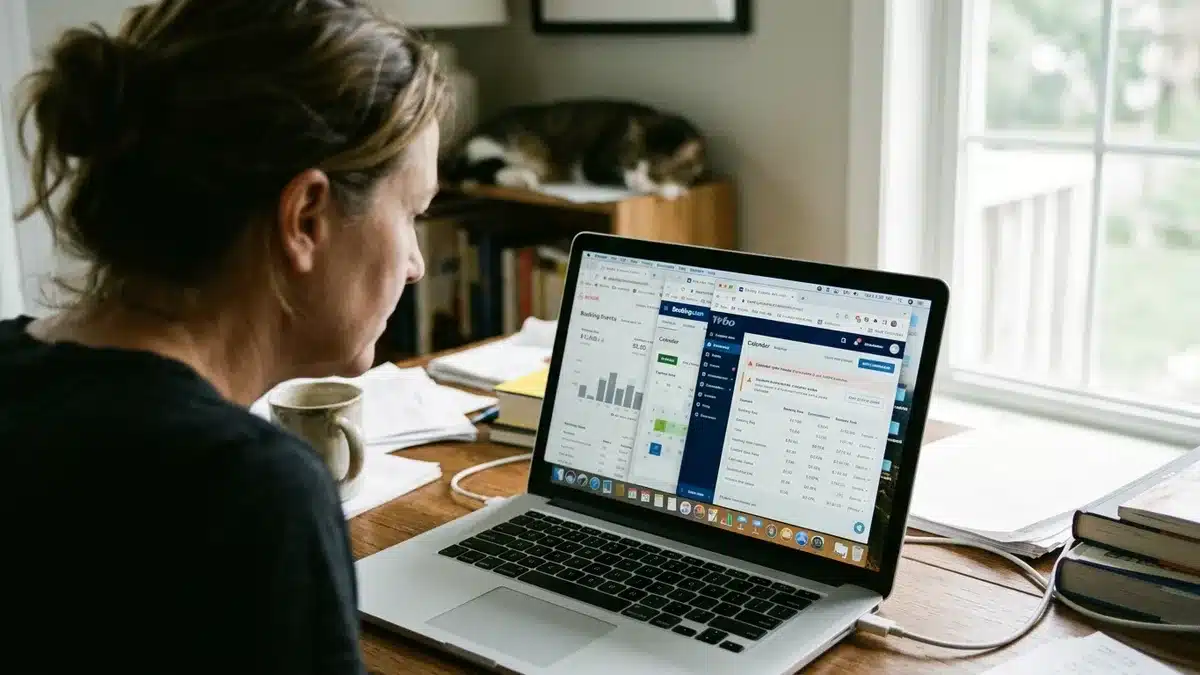
Who Is Airbnb's Biggest Competitor in the Short-Term Rental Space?
Airbnb's biggest competition comes from a mix of global OTAs focused on whole-property rentals, hotel-and-vacation-rental hybrids, and increasingly, hosts' own direct booking websites. Platforms specializing exclusively in entire properties, rather than shared or room-based stays, appeal to travelers who specifically want a full home to themselves, which is a meaningful chunk of Airbnb's original guest base.
Metasearch-style platforms that aggregate listings from Airbnb, hotels, and B&Bs into a single search interface have also grown, giving travelers a way to compare across categories without committing to one brand. Search-led channels, including options that integrate commission-free listing visibility through a partner connection, add another layer of discovery that doesn't route through a traditional OTA commission model at all.
What most competitor content misses is this: the biggest long-term threat to Airbnb's grip on host revenue isn't another OTA. It's hosts building their own audience and repeat booking pipeline. That's a structural shift, not a platform swap, and it's the exact strategy our guide to growing a vacation rental business beyond OTAs breaks down in more detail. Guests who book direct return at roughly 28.3% versus 8.9% through Airbnb, based on a 2026 hostAI industry report, which tells you where the real competitive pressure is building.
Is There a Website Like Airbnb Built Specifically for Direct Bookings?
Yes. Rather than a single alternative OTA, hosts increasingly build their own direct booking website that functions like a private version of Airbnb, with a real-time calendar, secure payment processing, and a booking engine, but without the commission cut. This isn't a workaround; it's become a standard part of a diversified distribution strategy for hosts managing one property or fifty.
The technical bar used to be high. Building a booking site that actually converts traffic into completed reservations required custom development, a secure payment gateway, and calendar sync logic to avoid double bookings across channels. That complexity is exactly why most self-managed hosts never got past a basic template with a “contact us” form instead of a working booking engine.
Boostly removes that barrier by building a fully optimized, no-code direct booking website for hosts, live within 35 days of signing up. Every site connects to 27+ property management systems for real-time syncing of availability and pricing, so a booking on your direct site instantly blocks that date everywhere else. New members also get CRM access within 24 hours, which starts capturing guest data from day one instead of losing it to a third-party platform's database.
Why Are Some Hosts Moving Away from Airbnb-Only Distribution?
Hosts are diversifying away from Airbnb-only distribution primarily because of commission cost and limited control over the guest relationship, not because Airbnb demand has disappeared. Airbnb still reported 143.1 million nights booked in Q1 2026, an 8% year-over-year increase according to Guesty's June 2026 industry data, so the platform's overall booking volume remains strong.
The issue for individual hosts is margin, not visibility. A host-only fee structure around 15.5% on a typical booking translates to real dollars lost per reservation; on a $2,000 booking, that's roughly $310 in commission, per 2026 data from Houfy. Multiply that across a full year of bookings and the number gets hard to ignore, especially for multi-property operators running five, ten, or twenty units.
There's also a data problem. When a guest books through a third-party platform, the host often can't message that guest directly once the stay ends, can't build an email list, and can't market a return stay without going through the platform again. That's the exact gap a built-in CRM and automated guest marketing system closes: capturing guest details at the point of direct booking and triggering post-stay email or SMS campaigns automatically, without a host manually chasing down contact information.
Airbnb's average daily rate also declined about 1% year-over-year to $171 in Q1 2026, per the same Guesty report, a reminder that OTA demand and OTA revenue per booking don't always move in the same direction. Hosts who diversify aren't abandoning Airbnb; they're building a second, more profitable channel alongside it.
How Do Platform Fees Actually Compare in 2026?
Platform fee structures fall into two broad categories: split-fee models, where hosts pay a smaller percentage and guests absorb a larger service fee, and host-only commission models, where the full fee comes out of the host's payout. Understanding which model a platform uses matters more than comparing headline commission percentages, since the guest-facing price ends up similar either way.
| Fee Model | Typical Host Cost | Typical Guest Cost | Best Fit For |
|---|---|---|---|
| Split-fee (Airbnb-style) | Around 3% | 14-16% service fee | Hosts prioritizing broad discovery traffic |
| Host-only commission | Around 15-15.5% | None or minimal | Guests who want an all-in price upfront |
| Direct booking website | No per-booking commission | No platform service fee | Hosts with repeat guests and their own marketing |
Notice what's missing from most fee comparisons: the cost of guest acquisition on a direct channel isn't zero, you still need traffic and trust signals. But once you have a returning guest, a direct booking website carries no per-transaction commission at all, which is why the math favors direct channels heavily for repeat stays. This is precisely where Boostly's 65% direct bookings guarantee comes in: hosts who don't hit that benchmark within 12 months get their money back plus $1,000, a structure that only makes sense if the underlying system reliably shifts booking volume off commission-based channels.
What Do Guests Actually Expect from a Direct Booking Experience?
Guests booking directly with a host expect the same core functionality they get on any major platform: a live calendar, transparent pricing, secure payment, and a clear cancellation policy, just without the platform's brand name attached. Trust, not technology, is usually the bigger hurdle. A guest who has never heard of your property name needs some reassurance before entering a card number on an unfamiliar site.
That's why review visibility, clear house rules, and a professional-looking booking flow matter as much as the underlying tech. A direct site that looks unfinished or has a clunky payment step will lose bookings even if the nightly rate is competitive. First-time direct booking converts often assume the hard part is the technology. It's usually the trust-building design choices around it.
WiFi-based data capture tools illustrate this trust-and-convenience trade-off well: tools like StayFi's WiFi capture system report opt-in rates of 85 to 92%, compared to roughly 8% from manual guestbook sign-ups, because guests connect to WiFi automatically without a decision fatigue moment. The same principle applies to a direct booking site: reduce friction, and conversion follows. Boostly's websites are built around this exact conversion logic rather than a generic template, with trust signals and a booking engine designed to turn traffic into completed reservations, not just page views.
How Should Multi-Property Hosts Manage Listings Across Several Channels?
Multi-property hosts managing listings across several channels need real-time synchronization between every platform and their internal calendar, or they risk double bookings and stale pricing. Manually updating five, ten, or twenty calendars across Airbnb, regional platforms, and a direct site is not a scaling strategy; it's a full-time job that leaves no room for the actual business of hosting.
The operational risk compounds with portfolio size. A single missed calendar update on one platform can mean a guest books a date that's already gone, which then means a cancellation, a refund, and a damaged review, all from one manual sync failure. Property managers accountable to owners for reporting ROI feel this risk most acutely, since a double booking doesn't just cost a night's revenue, it costs the owner's confidence in the management relationship.
This is exactly why Boostly integrates with 27 or more property management systems and delivers real-time syncing of listings, availability, and pricing across every connected channel. A booking made on the direct site, an OTA, or a regional platform updates everywhere else instantly, so multi-property operators stop reconciling calendars by hand and start trusting the system to do it. For a deeper look at scaling operational systems as portfolios grow, our piece on the mindset behind growing a large STR company covers the operational shift that happens past a handful of units.
What Should Hosts Know About Regional and Niche Platforms?
Regional and niche platforms serve travelers with specific needs that broad OTAs don't always prioritize, including luxury-focused stays, corporate or mid-term furnished housing, and outdoor or camping-adjacent accommodations. A luxury-focused platform, for instance, curates listings around a higher service standard and price point, which can mean less volume but stronger margins per booking.
Corporate housing and mid-term furnished rental platforms cater to travelers booking 30 days or more, a different demand pattern entirely from a weekend leisure guest, with different pricing logic and cancellation norms. Outdoor and camping platforms specializing in RVs, campgrounds, and glamping sites reach a traveler who wouldn't search a standard vacation rental listing at all.
Hosts running a design-led or characterful property often find these niche channels convert better per lead than mass-market OTAs, simply because the traveler arriving already wants what the property offers. If you're building out a differentiated property type, our beginner's guide to starting a glamping business covers positioning for exactly this kind of niche demand. The trade-off is smaller total search volume, which is why niche platforms rarely replace a direct booking site entirely; they supplement it.
What Are the Biggest Content Gaps in Most Airbnb Alternative Guides?
Most guides comparing a site like Airbnb to other options skip the operational details that actually affect a host's bottom line: how listing across multiple platforms impacts pricing visibility on Airbnb itself, how local tax registration requirements differ by platform, and how cancellation policy handling varies for guests booking through different channels.
Listing the same property across several platforms at different prices can trigger rate-parity issues, where a booking engine or search algorithm deprioritizes a listing it perceives as inconsistently priced. Hosts running dynamic pricing across channels need a way to keep base rates aligned even as individual platform fees change the guest-facing total.
Local tax registration and regulatory compliance also vary significantly by jurisdiction and by platform; some OTAs handle occupancy tax collection automatically, while a direct booking site puts that responsibility fully on the host. This is worth confirming with your local tax authority directly rather than assuming any platform handles it for you. For a broader look at building sustainable channel strategy that accounts for these gaps, the HostPapa guide on growing a vacation rental business and the Price of Business guide on vacation rental growth both cover listing optimization and lead generation tactics worth reviewing alongside your platform mix.
How Do Hosts Automate Guest Retention Without Adding More Manual Work?
Automating guest retention means capturing guest contact data at the point of booking and triggering follow-up marketing without a host manually tracking every past guest in a spreadsheet. Manual guest retention typically fails at scale; even a host with genuinely good intentions loses track of who stayed when, and the personalized-return-offer idea quietly dies after the third property.
Repeat guests carry essentially zero acquisition cost and convert at a far higher rate than a first-time searcher, a concept Hostaway's definition of repeat guest value lays out clearly in terms of the underlying economics. The data backs this up directly: guests who book direct return at 28.3%, versus 8.9% through Airbnb, as referenced earlier from the 2026 hostAI report.
A CRM and remarketing platform, similar in concept to systems that assemble guest lists across Airbnb, Vrbo, and direct bookings, automates the personalized offer a host would otherwise send manually, or more likely, never send at all. Boostly's built-in CRM captures every guest's information automatically at the point of direct booking, then powers automated email and SMS campaigns that bring past guests back without a host lifting a finger post-checkout. Points-based loyalty structures, similar to what Houfy's loyalty program model illustrates, can layer on top of this for hosts who want tiered incentives for their highest-value repeat guests.
Data & Evidence: Market Size and Growth Behind the Direct Booking Shift
The vacation rental market's overall growth trajectory explains why competition for guest attention keeps intensifying across every distribution channel, direct or otherwise. Fortune Business Insights values the global vacation rentals market at $174.84 billion in 2026, projecting growth to $481.8 billion by 2034 at a 10.42% CAGR. Separately, Mordor Intelligence estimates the market at $104.62 billion in 2026, rising to $109.40 billion in 2026, a reminder that market sizing methodology varies significantly between research firms.
Regional growth is uneven. Grand View Research data shows Europe's vacation rental market generating $47.12 billion in 2026 with an expected 11.9% CAGR from 2026 to 2033, while Asia-Pacific generated $41.09 billion in 2026 and is forecast to grow at 12.9% CAGR over the same period, making it the fastest-growing region tracked.
On the U.S. side specifically, the market is projected to reach $76.46 billion in 2026, growing to $125.14 billion by 2033 at a 7.3% CAGR. That growth is happening alongside a professionalization trend: management companies now control an estimated 42% of the roughly 7 million active short-term rental listings globally as of early 2026, per AirROI data, meaning independent hosts are increasingly competing against professionally managed portfolios for the same guest searches. Occupancy benchmarks vary widely by market too; AirROI's data across 44,000-plus active listings shows median occupancy ranging from 42% in Las Vegas to 55% in San Francisco, underscoring why a one-size-fits-all pricing or distribution strategy rarely works across markets.
Practical Guidance: How to Choose Where Your Property Should Be Listed
Choosing the right mix of listing channels comes down to matching your property type and guest demand pattern to the platform's strengths, then layering a direct booking channel on top rather than treating it as an either-or decision. Here's a practical sequence for evaluating your current setup:
- Audit your current commission spend. Add up total commission paid across all platforms over the past 12 months. Most hosts have never actually calculated this number, and it's usually higher than expected once you include both host and guest-facing fees.
- Identify your repeat guest rate. If you don't know this number, that's itself a signal you're missing a CRM system that should be tracking it automatically.
- Keep your existing OTA listings active. You don't need to delist from Airbnb or any regional platform to add a direct booking channel; the two work in parallel, with the direct site capturing repeat and referral traffic while OTAs handle new guest discovery.
- Build (or rebuild) your direct booking site with real conversion features. A contact form isn't a booking engine. You need live calendar sync, secure payment, and mobile-responsive design at minimum.
- Set up automated guest follow-up before your first direct booking, not after. Waiting until guests start booking direct to build a retention system means losing the first wave of guest data entirely.
- Track direct booking percentage monthly. A rough industry aim many operators reference is landing somewhere in the 65% direct booking range within a year of committing to the strategy, though this depends heavily on marketing consistency and property type.
Common mistakes to avoid: treating a direct booking website as a one-time project instead of an ongoing marketing channel, underpricing direct bookings to “compete” with OTA rates instead of highlighting the value of booking direct, and neglecting post-stay follow-up because the guest already completed the transaction. Weekly coaching support, like the structure built into Boostly's program with 80+ hours of on-demand training, exists specifically because most hosts don't fail at direct bookings from lack of effort. They fail from lack of a system that keeps the strategy consistent past the first month.

Frequently Asked Questions
Is there a website like Airbnb that doesn't charge a commission?
A direct booking website is the closest option to a commission-free version of Airbnb, since it removes the per-transaction platform fee entirely once it's live. There is still a setup and marketing effort involved, but no ongoing commission cut on completed bookings, unlike OTA-based platforms that typically charge in the 15% range.
Why are some travelers moving away from booking through Airbnb?
Some travelers cite added guest-side service fees, which on split-fee models can run 14-16% on top of the nightly rate, as a reason they're comparing other options. Others simply prefer booking directly with a host or property manager for clearer communication and often better rates once commission costs aren't baked into the price.
What percentage of bookings should come from direct channels versus OTAs?
There's no universal number, but many operators aim for a meaningful share, often cited around 65%, of bookings coming direct within about 12 months of building out a dedicated direct booking strategy. The right mix depends on property type, repeat guest volume, and how much marketing effort a host puts into the direct channel.
Do I have to stop listing on Airbnb to build a direct booking channel?
No. A direct booking website works alongside existing Airbnb and other OTA listings rather than replacing them. Most hosts keep OTA listings active for new guest discovery while directing repeat guests and referrals to their own site to avoid the commission on those specific bookings.
How long does it typically take to launch a direct booking website?
Timelines vary by provider and complexity, but a done-for-you build, like Boostly's process, can get a host live within 35 days of signing up, including PMS integration and CRM setup. A fully custom-built site from scratch usually takes considerably longer.
What platforms integrate with a direct booking website for calendar syncing?
Most modern direct booking platforms connect to property management systems that handle calendar and pricing sync across every listed channel. Boostly specifically integrates with 27 or more PMS platforms, syncing availability and pricing in real time to prevent double bookings across a host's full distribution mix.
Is it safe for guests to pay directly on a host's own website?
Yes, provided the site uses a secure, PCI-compliant payment processor, which any reputable direct booking website platform should include by default. Guests should look for the same trust signals they'd expect anywhere online: a secure checkout, clear cancellation terms, and verifiable contact information for the host or property manager.
Conclusion
A site like Airbnb isn't a single platform to switch to; it's a category of distribution channels, from global OTAs to regional marketplaces to a host's own direct booking website, each with different fee structures and guest expectations. The commission math is the part most hosts underestimate: a host-only fee around 15.5% on a $2,000 booking works out to roughly $310 lost per reservation, and that adds up fast across a full year of stays.
Diversifying doesn't mean abandoning Airbnb. It means building a direct channel that captures repeat guests, who return at 28.3% compared to 8.9% through Airbnb, and keeping every calendar synced so double bookings never become a risk. In 2026, that infrastructure is far more accessible than it used to be, and it no longer requires a developer or months of custom build time.
If commission costs have been quietly eating into your margin and you're ready to see what a done-for-you direct booking website, real-time PMS sync, and built-in CRM actually look like in practice, book a demo with Boostly. We'll walk through what a realistic path to 65% direct bookings looks like for your specific property mix, backed by our guarantee: hit that target within 12 months or get your money back plus $1,000.
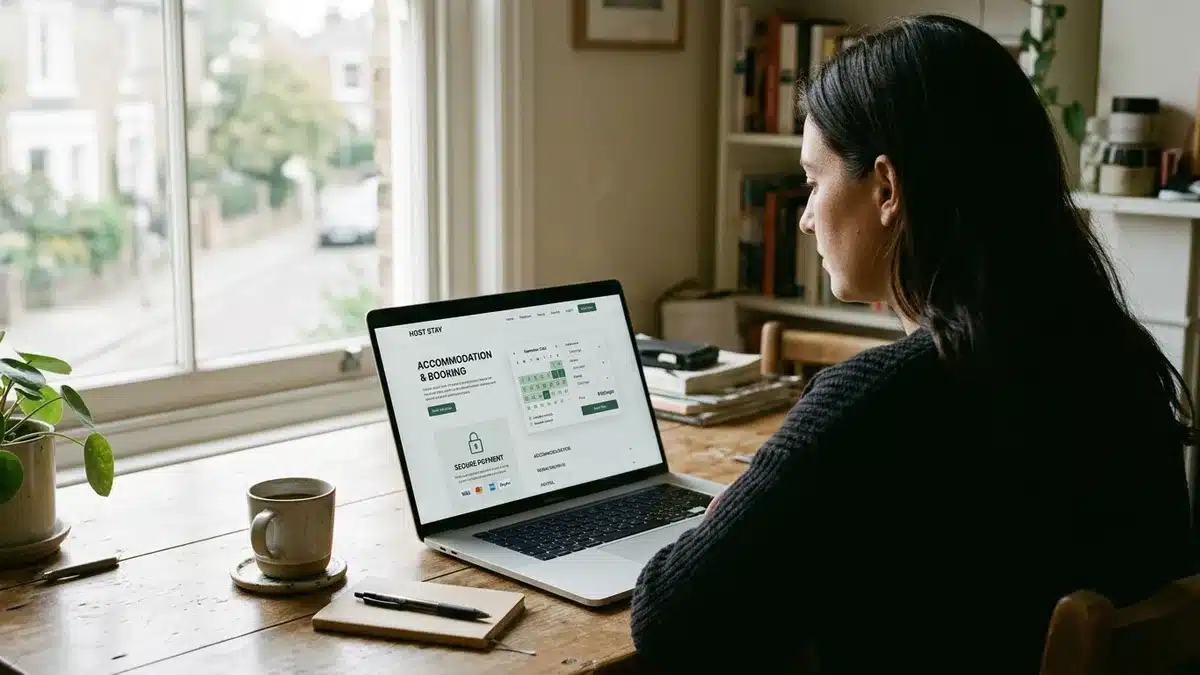
A working direct booking site with a real-time calendar widget, like the setup shown above, is what turns a static “contact us” page into an actual revenue channel. See how Boostly builds this for your property before your next OTA payout reminds you how much commission you're still paying.