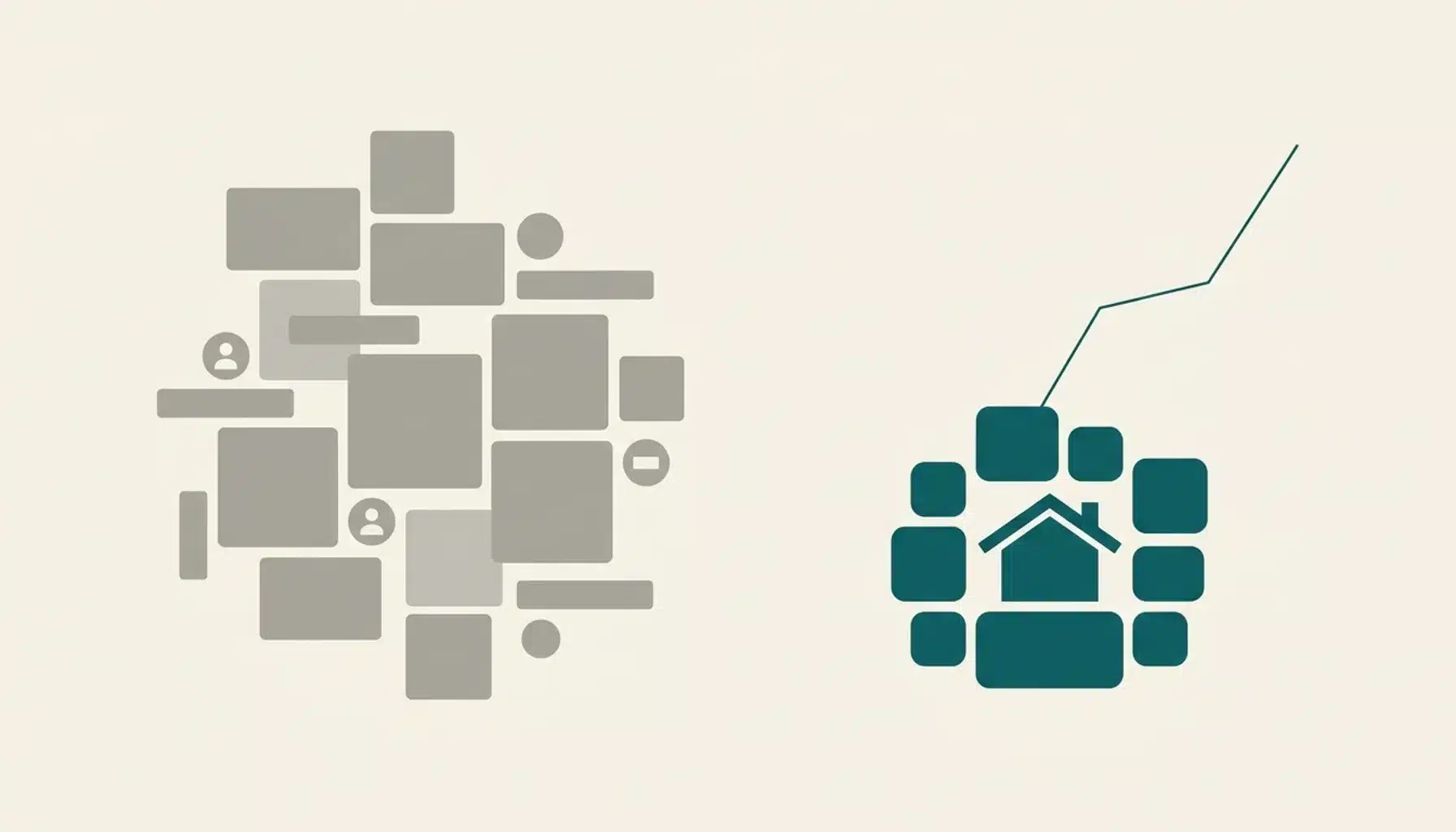
Yes, direct booking website software exists specifically to reduce what you lose to listing fees on Airbnb and Booking.com. These platforms build you a branded booking site, sync with your existing property management system, and route guests to a channel where you're not paying a commission on every single stay.
Key Takeaways
- Direct booking software builds you a standalone, guest-facing website that accepts reservations and payments without routing the guest through an OTA that charges a commission.
- Industry pricing research shows OTA commissions typically run 15% to 25% per booking, while the effective cost of a direct booking (software, payment processing, marketing) often lands closer to 4% to 8%.
- You don't need to remove your listings from Airbnb or Booking.com to run a direct booking site alongside them; the two channels work in parallel.
- Real-time PMS syncing is the feature that prevents double bookings once you're managing availability across a direct site and multiple OTAs at the same time.
- According to Houfy data, a repeat direct booking on a $2,000 stay can save a host between $310 and $640 compared to booking the same stay through an OTA.
- Boostly builds fully optimized direct booking websites within 35 days and backs the work with a guarantee: hit 65% direct bookings within 12 months, or get your money back plus $1,000.
What Software Reduces Listing Fees Through Direct Bookings?
Direct booking website software is a category of tool built specifically to give short-term rental hosts an owned, commission-free channel that sits alongside Airbnb and Booking.com listings. Instead of guests booking through an OTA and you paying a percentage of that stay back to the platform, guests book through your own site and you keep the full rate, minus payment processing.
This isn't a channel manager and it isn't a generic website builder. A proper direct booking platform combines three things in one system: a conversion-focused website with a working booking engine, real-time synchronization with your property management system (PMS) so availability and pricing never fall out of step, and some form of guest data capture so you can market to past guests directly rather than relying on repeat traffic through an OTA.
At Boostly, this is the entire premise of the platform. We build the website, connect it to your PMS through one of 27 or more supported integrations, and get you live within 35 days without you writing a line of code. The goal isn't to replace your Airbnb listing, it's to give you a second channel where the guest pays you directly and nobody takes a cut.
How Much Does an Online Booking System Cost?
Online booking system costs for short-term rentals typically combine a monthly subscription with per-booking payment processing, and the total varies depending on how many properties you run and which features you need. Payment processing across most platforms runs around 3%, and single-property hosts often see combined monthly software costs somewhere in the range of $9 to $90 before other charges.
For hosts running three properties, total monthly software costs across reviewed direct booking tools have been estimated at roughly $27 to $93, according to comparison data from the software review space. That's a meaningful range, and it depends heavily on whether you're paying per listing, per booking, or a flat monthly rate regardless of property count.
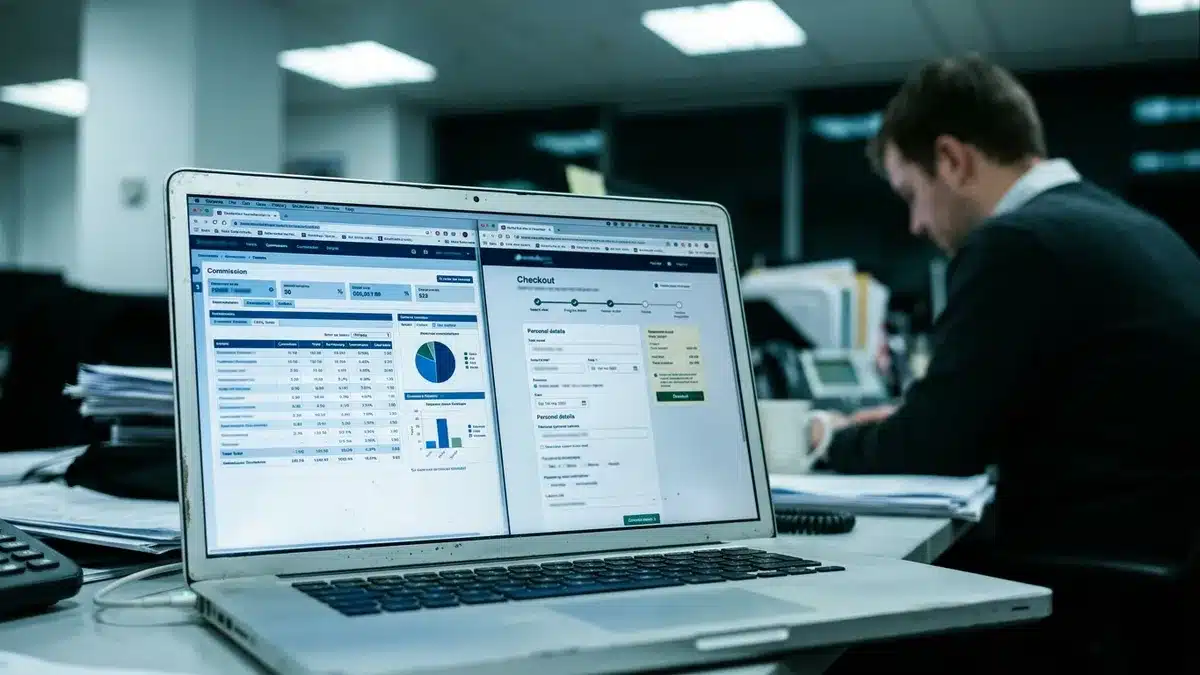
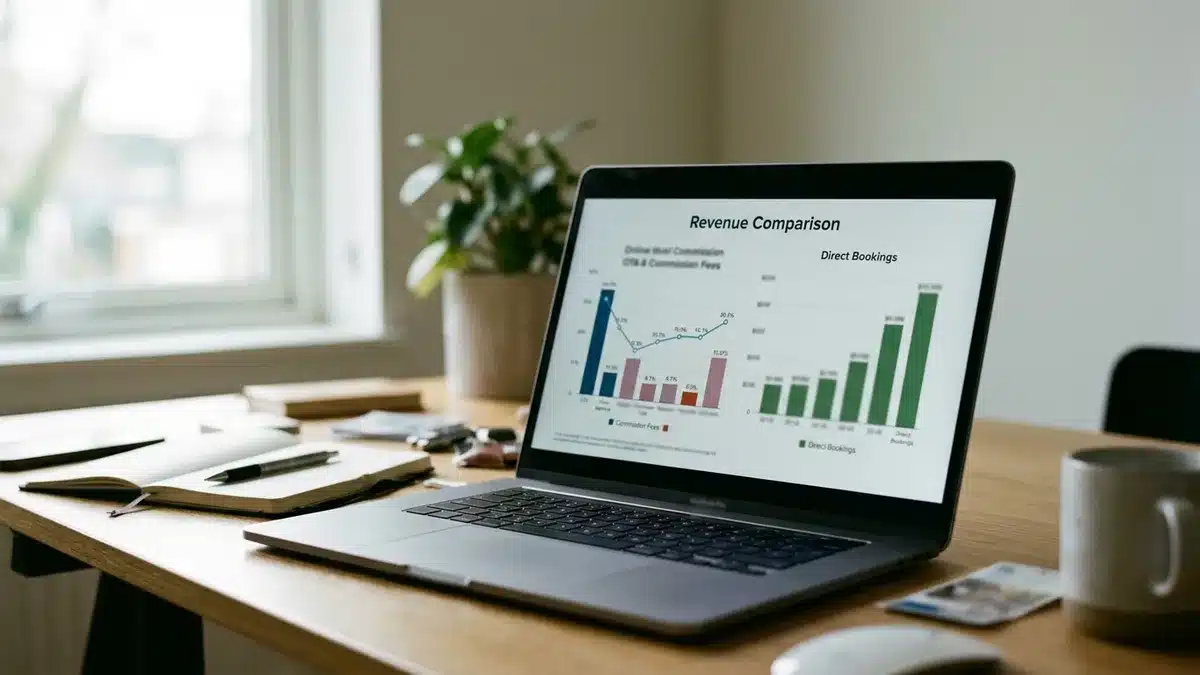
The number that matters more than the subscription fee, though, is what you're comparing it against. Industry pricing analysis from RateGain puts OTA commissions at 15% to 25% per booking, against an effective direct-booking cost of roughly 4% to 8% once you factor in software, payment processing, and any marketing spend. On a $2,000 booking, that gap is the difference between losing $300 to $500 to commission or paying a fraction of that to run your own channel.
We built Boostly around that gap. Every booking that moves from an OTA to your own site keeps roughly 15% more in your pocket, based on what we typically see hosts recover once their direct channel starts pulling real volume. Book a demo if you want to model what that actually looks like against your current occupancy and rate.
What Does the 80/20 Rule Mean for Airbnb Hosts?
The 80/20 pattern that hosts commonly reference isn't an official Airbnb rule; it's shorthand some hosts use to describe how a small share of highly engaged repeat guests can generate a disproportionate share of future bookings if you have a way to reach them directly. Airbnb doesn't publish an official ratio, and you should treat any specific percentage you hear as informal, not policy.
What is measurable is the value of a repeat guest relationship once you own the contact. Houfy's 2026 data shows that a 200-guest email list with a 15% annual repeat rate can generate 30 commission-free bookings a year. That's not a rule, it's a direct outcome of having guest emails you can actually market to, something Airbnb's own messaging system doesn't hand you outright.
The catch is that Airbnb's terms restrict how you solicit guests off-platform during an active booking. Where direct booking software helps is in the post-stay window: once a guest has checked out, a properly built CRM can follow up, invite them back, and convert that relationship into a direct booking next time, without touching the original OTA reservation. Boostly's built-in CRM handles exactly this, with new members getting CRM access within 24 hours of signing up.
What Is the Best Airbnb Pricing Software?
Airbnb pricing software refers to dynamic pricing tools that adjust your nightly rate based on demand, seasonality, and local market conditions, and the strongest options sync that pricing across every channel you list on, including your own direct booking site. According to Rentals United's 2026 data, high-frequency dynamic pricing has been associated with up to 30% higher occupancy compared to static rates.
The important distinction for this article isn't which pricing tool wins on algorithm sophistication, it's whether your pricing engine talks to your direct booking site in real time. A pricing tool that updates your Airbnb calendar but leaves your own website on yesterday's rates creates a trust problem the moment a guest compares prices across channels.
This is precisely why PMS-level integration matters more than picking a standalone pricing tool in isolation. Boostly connects to your existing PMS, which typically already handles your pricing strategy, and syncs those rates to your direct booking website in real time across 27 or more supported systems. You keep whatever pricing tool you're already using; Boostly just makes sure your direct channel reflects it accurately, everywhere, all the time.
What Is the Best Software to Manage Vacation Rentals?
The best vacation rental management software depends on whether your core problem is operations (a PMS), OTA distribution (a channel manager), or converting website visitors into direct bookings (a booking engine), and most experienced operators end up running a combination rather than a single all-in-one tool. Understanding which category solves which problem is the first step before you shop.
PMS vs Channel Manager vs Direct Booking Website: What's the Difference?
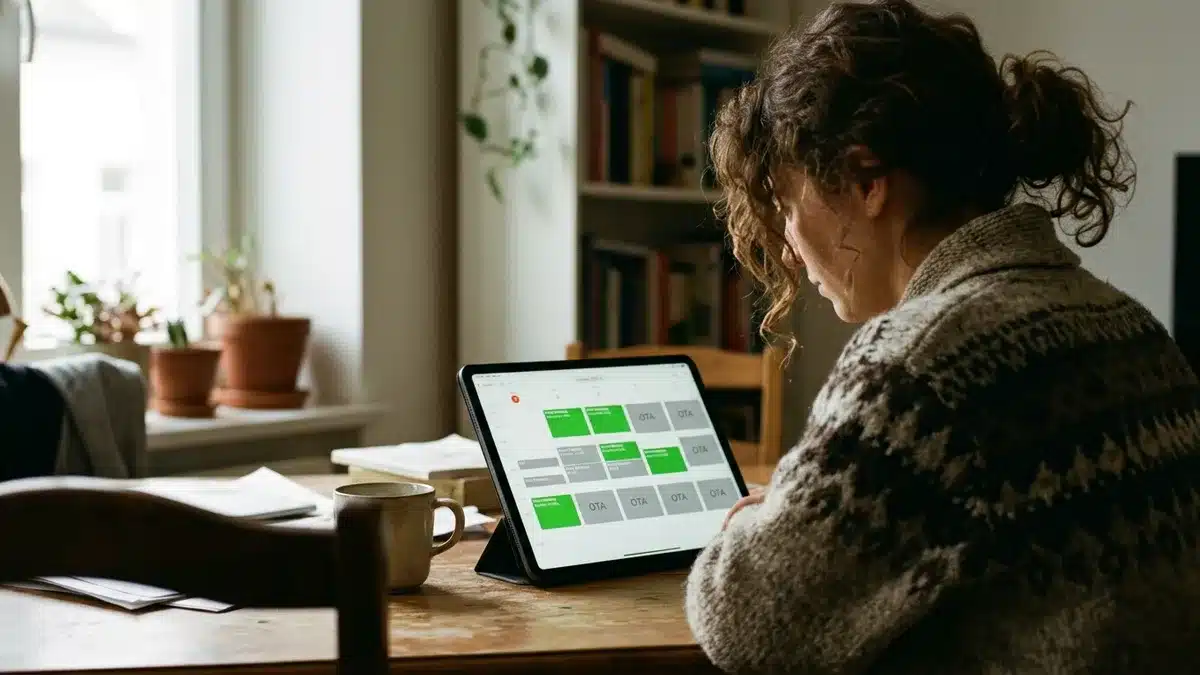
A property management system (PMS) handles the operational side: reservations, guest communication, cleaning schedules, and often pricing. A channel manager synchronizes your availability and rates across OTAs like Airbnb, Vrbo, and Booking.com so you don't double-book. A direct booking website is the piece most hosts skip entirely: the branded, guest-facing site where someone can actually book and pay you without an OTA in the middle.
Most software comparisons in this space focus heavily on the PMS and channel manager layer because that's where the bulk of vendors compete. Far fewer articles walk through what it actually takes to launch the direct booking layer itself, which is the gap Boostly was built to close, connecting to your existing PMS rather than asking you to replace it.
Who Should Prioritize a Done-For-You Build vs a Self-Service Tool?
If you're comfortable spending time on design, copywriting, and testing a booking flow yourself, a self-service website builder can work. If you'd rather have a team build a conversion-focused site around your PMS data and be live within a set timeframe, a done-for-you model fits better. Boostly falls into the second category: no coding required, live within 35 days, with weekly coaching calls and over 80 hours of training included so you're not left figuring out the marketing side alone.
How Direct Booking Software Actually Cuts Your OTA Costs
Direct booking software cuts your OTA costs by shifting a share of your total reservations from a commission-based channel to a channel where you own the transaction. The mechanism is straightforward: every booking that would have gone through Airbnb or Booking.com instead lands on your own site, and the commission that channel would have charged simply doesn't apply.
The numbers make the case clearly. Houfy's 2026 research shows that direct repeat bookings incur roughly $58 in payment processing on a $2,000 stay at a standard 2.9% processing rate, versus the 15% to 25% an OTA typically charges. Scale that across a year: ten repeat direct bookings can recover between $2,520 and $5,820 that would otherwise have gone to an OTA, according to the same Houfy analysis.
There's a second, quieter benefit that rarely gets discussed: direct bookings tend to run longer. Houfy's data shows direct bookings produce stays that are 45.2% longer on average than OTA bookings. Longer stays mean fewer turnovers, less cleaning cost per booked night, and a guest who's more invested in the property before they even arrive.
None of this requires abandoning your existing listings. You keep your Airbnb and Booking.com presence exactly as it is; the direct channel simply captures bookings that would otherwise be split with a commission. This is the model we've built Boostly around from day one, and it's why hosts like Sergio, Rose, Seth, Stephanie, Nikki, and Harro have been able to push their direct booking share up to the 65% to 80% range within 12 months without ever pulling their listings.
What Should You Compare Before Choosing a Direct Booking Platform?
Choosing a direct booking platform means weighing setup approach, PMS compatibility, and what happens after launch, not just the sticker price on a pricing page. The table below breaks out the categories worth evaluating.
| Category | Self-Service Website Builder | Channel Manager Add-On | Boostly Done-For-You Model |
|---|---|---|---|
| Setup approach | You design and build it yourself | Basic template, limited customization | Fully built for you, no coding required |
| Typical launch timeline | Varies, often weeks to months of your own time | Days, but limited conversion focus | Live within 35 days |
| PMS synchronization | Depends on plugin quality | Usually strong on this specific point | Real-time sync across 27+ PMS platforms |
| Guest data / CRM | Rarely included by default | Not typically included | Built-in CRM, access within 24 hours of signup |
| Ongoing marketing support | You handle it alone | Not typically offered | Weekly coaching calls, 80+ hours of training |
| Results guarantee | None | None | 65% direct bookings in 12 months or money back plus $1,000 |
Notice that the two variables most articles ignore, ongoing marketing support and a results guarantee, are exactly where a done-for-you model earns its cost. A website with no follow-up marketing plan behind it will convert some traffic, but it won't build the repeat-guest engine that actually moves your direct booking percentage over time.
What Does It Actually Take to Launch a Direct Booking Site?
Launching a direct booking site involves more than picking a template. It requires connecting a domain, syncing your PMS data, configuring your cancellation and deposit policies, setting up payment security, and running test reservations before you send real traffic to the page. Most comparison guides skip this operational sequence entirely, which leaves hosts underprepared for what launch week actually looks like.
The Practical Sequence, Step by Step
- Connect or purchase your domain and confirm it's pointed correctly at your new site.
- Sync your PMS so availability, rates, and property details populate automatically rather than being entered manually.
- Configure taxes and local lodging fees so your checkout totals are accurate for your jurisdiction; confirm current requirements with your local tax authority since these vary by location.
- Set your cancellation policy, deposit structure, and any minimum-stay rules.
- Enable secure payment processing; any platform handling card payments should be PCI DSS compliant, and if you're storing guest data, GDPR or CCPA obligations may apply depending on where your guests are based.
- Build or confirm automated confirmation emails so guests get instant, professional communication the moment they book.
- Run a full test reservation, including a test refund, before your first real guest books.
This is the sequence we walk every new Boostly host through as part of onboarding, which is part of why we can commit to a 35-day live timeline: the steps are repeatable, not reinvented for every new site.
What Trust Signals Make Guests Comfortable Booking Direct?
Guest trust on a direct booking site comes from visible payment security, clear cancellation terms, and a professional design that doesn't look like an afterthought bolted onto an existing website. Guests who are used to Airbnb's built-in trust signals, reviews, verified profiles, secure checkout, need to see equivalent signals on your own site or they'll bounce back to the OTA out of habit.
Specifically, that means a checkout that clearly states your cancellation and refund policy before payment, secure payment processing badges or language, a design that loads fast on mobile (most vacation rental site traffic skews heavily mobile), and social proof such as guest reviews pulled through from your OTA listings where possible. Skip any of these and conversion suffers, even if your direct rate is genuinely cheaper for the guest.
Payment safety is not optional, and it's an area we take seriously in every Boostly build: as a result, secure processing and clear policy display are standard, not an upsell, because a guest who doesn't trust your checkout will never complete it.
Common Mistakes Hosts Make When Trying to Cut Listing Fees
The most common mistake is building a website with no follow-up marketing plan behind it, expecting traffic to appear and convert on its own. A domain and a booking button are not a strategy; without guest data capture and repeat-guest marketing, a direct site tends to sit quiet after launch.
- Treating the website as a one-time project. A site that isn't updated with fresh pricing, availability, and content loses guest trust fast.
- Ignoring PMS synchronization. Manually updating a separate calendar is how double bookings happen; real-time sync across your PMS and website removes that risk almost entirely.
- Trying to pull guests off Airbnb mid-stay. This risks violating platform terms. The compliant approach is following up after checkout, through your own CRM, not during an active OTA booking.
- Underpricing the direct channel. Some hosts discount their direct rate so aggressively they erase the margin gain. A modest incentive, not a fire sale, protects your revenue per booking.
- No plan for repeat guests. As referenced above, a modest email list with a healthy repeat rate can generate dozens of commission-free bookings a year, but only if you're capturing that data in the first place.
For more on the mechanics of getting a site live correctly the first time, see our guide on how to build a direct booking website, and if you're weighing whether the whole strategy is worth the effort at your current portfolio size, our piece on using a book direct marketplace to drive direct bookings covers a complementary angle.
How Does Repeat Guest Marketing Fit Into Reducing OTA Fees?
Repeat guest marketing is the ongoing practice of following up with past guests through email or SMS to bring them back for a future direct stay, and it's the mechanism that turns a one-time direct booking website into a compounding revenue channel. Without it, a direct site converts new visitors but never captures the guests you've already hosted.
Capturing guest contact data is the first hurdle, and tools like StayFi's WiFi capture system illustrate why this matters: StayFi's own 2026 data shows WiFi-based capture tools achieve 85% to 92% email opt-in rates, compared with roughly 8% for manual guestbook methods. That gap is the entire difference between a marketing list that actually works and one that never gets built.
Once you have that data, the value compounds. As referenced earlier, Houfy's research shows a repeat direct booking on a $2,000 stay saves a host $310 to $640 versus an OTA booking of the same value, and a modest 200-guest list with a 15% repeat rate can produce 30 commission-free bookings annually. Boostly's built-in CRM automates this exact workflow, capturing guest data at booking and running the follow-up sequences without you manually chasing every past guest.
How Should You Approach Payment Security and Compliance?
Payment security on a direct booking site means the platform processing your guest payments must meet PCI DSS standards, the industry requirement for any system that handles, stores, or transmits card data. If your provider can't confirm this, that's a disqualifying red flag, not a minor detail.
Data privacy adds a second layer. If you're storing guest names, emails, or payment details, GDPR obligations apply for European guests and CCPA obligations may apply depending on your guests' location, meaning you need a clear privacy policy and proper data handling practices. Local lodging taxes are a separate compliance layer entirely, and requirements vary by jurisdiction, so confirm the current rules with your local tax authority rather than assuming a flat rate applies everywhere.
These aren't glamorous topics, but they're exactly the kind of operational detail that separates a site guests trust from one that quietly leaks bookings back to Airbnb. Boostly builds payment processing and compliance considerations into every site from the start rather than treating them as an add-on step after launch.
Frequently Asked Questions
Is there a tool that integrates direct booking management with my current property software?
Yes. Boostly integrates with 27 or more property management systems and syncs listings, availability, and pricing in real time, so your existing PMS setup doesn't need to be replaced to add a direct booking channel.
Is there a platform for building an easy-to-use direct booking channel?
Yes, Boostly builds a fully optimized direct booking website with no coding required, and gets hosts live within 35 days of signing up, including CRM access within the first 24 hours.
Are there guides or tools to help set up a direct booking system on my website?
Boostly members get templates, AI tools, weekly coaching calls, and a library of over 80 hours of training to help build and market their direct booking site, rather than starting from a blank page. Our own guide on building a direct booking website walks through the setup sequence in more detail.
How can I advertise my vacation rental to boost direct bookings?
Combine repeat-guest email marketing with a fast-loading, trust-building website, since organic search and direct traffic together make up a substantial share of vacation rental site visits industry-wide. Capturing guest emails through your booking flow or WiFi login, then following up after checkout, tends to outperform one-off paid advertising for STR hosts long-term.
What platform can I use to manage my rentals and generate more direct guest bookings?
A platform combining a PMS-synced website, CRM, and guest follow-up automation in one system is generally more effective than piecing together separate tools. Boostly was built specifically to combine those three functions, plus training and coaching, rather than leaving hosts to stitch together multiple vendors.
Do I have to stop listing on Airbnb to use a direct booking website?
No. A direct booking website works alongside your existing Airbnb and Booking.com listings; you keep your OTA presence while building a second, commission-free channel in parallel.
How much can I actually save by reducing OTA commissions?
Industry pricing data suggests OTA commissions typically run 15% to 25% per booking, versus an effective direct-booking cost closer to 4% to 8% once software and payment processing are factored in. Boostly's model is built around helping hosts capture roughly 15% more per booking that would otherwise go to OTA commission.
Is a direct booking website safe for guests to pay through?
It should be, provided the platform is PCI DSS compliant for payment processing and clearly displays cancellation and refund terms before checkout. Boostly builds secure payment handling and policy transparency into every site as a standard, not an optional upgrade.
Where This Leaves You Heading Into 2026
Direct booking software exists precisely to solve the problem you started with: reducing what you lose to listing fees without walking away from Airbnb or Booking.com. The mechanics are clear, a branded website, real-time PMS sync, and a repeat-guest marketing engine working together, and the commission gap between OTA and direct channels remains wide enough in 2026 to make the shift worth pursuing for almost any host running more than a handful of bookings a year.
The hosts who see the biggest change aren't the ones who build a website and stop there. They're the ones who pair the site with real-time PMS syncing and consistent guest follow-up, the combination that actually moves a direct booking percentage over a 12-month period rather than a one-time traffic bump. That's the system Boostly was built to deliver, backed by a guarantee: 65% direct bookings within 12 months, or your money back plus $1,000.
If cutting what you hand over in listing fees every month is the goal, Boostly builds the website, connects your PMS, and sets up the CRM that brings guests back, all live within 35 days and backed by our 65% direct booking guarantee. Book a demo to see what your own direct booking site could look like.