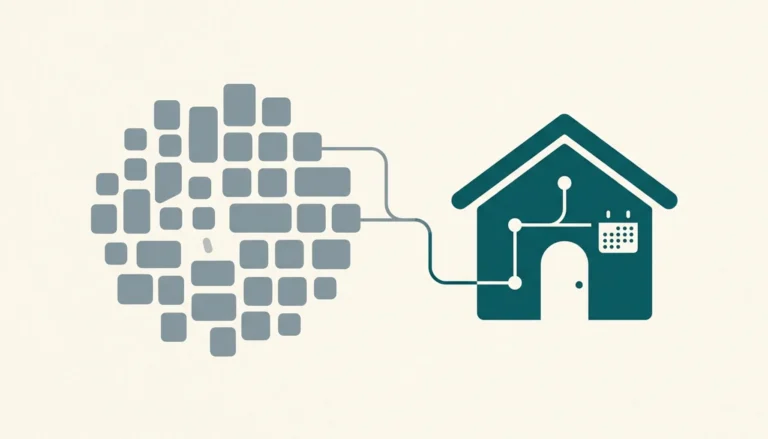
Yes, platforms built specifically for short-term rental hosts exist that let you launch a direct booking channel without writing code or hiring a developer. These platforms combine a booking-ready website, real-time PMS syncing, and payment processing into one system, and some, including Boostly, build the entire site for you within 35 days.
Key Takeaways
- Direct booking platforms bundle a website builder, booking engine, payment processing, and calendar sync into a single system, so you don't need separate tools or developer help.
- Industry vendor estimates put OTA commissions at 15 to 20% per booking, which is why a second, direct channel protects margin on every reservation you win back.
- Boostly saves hosts roughly 15% per booking that would otherwise go to Airbnb or Booking.com commissions, by routing that reservation through your own site instead.
- A done-for-you platform can launch a fully functioning site faster than a self-service build; Boostly gets hosts live within 35 days, with CRM access delivered within 24 hours of signing up.
- The vacation-rental market keeps expanding year over year, which means competition for guest attention on OTAs is only getting tighter.
- Boostly is built specifically to answer this question in practice: its no-code direct booking websites and 27+ PMS integrations are designed to take a host from zero direct bookings to a 65% direct booking rate within 12 months, backed by a money-back-plus-$1,000 guarantee.
If you've typed some version of “is there a platform for building an easy-to-use direct booking channel” into Google at 11pm after another OTA payout came in lighter than expected, you're not alone. It's one of the most common questions we hear from hosts who are ready to stop paying commission on every booking but don't know where to start.
The honest answer is yes, this category of software exists, and it has matured a lot since the early days of hosts bolting a “book now” button onto a generic Squarespace template. In 2026, purpose-built direct booking platforms handle the website, the booking engine, and the payment and calendar sync as one connected system, rather than separate logins you have to keep updated by hand.
At Boostly, we built our entire platform around this exact problem. We work with hosts every day who have strong occupancy on Airbnb but almost nothing coming through a channel they actually control. This guide walks through what these platforms do, what to look for, and how to evaluate whether a done-for-you build or a self-service tool fits your situation better.
What Is a Direct Booking Platform, Exactly?
A direct booking platform is software that lets a short-term rental host accept reservations and payment directly through their own website, bypassing OTA commission fees on that booking. It combines four core pieces: a website builder, an embedded booking engine, payment processing, and calendar synchronization with your existing listings.
The point isn't to replace Airbnb or Booking.com. It's to add a second channel that doesn't take a cut of every reservation. Industry vendor estimates put OTA commissions in the range of 15 to 20% per booking, so even a modest share of bookings moving to a direct channel adds up over a year.
Most platforms in this category fall into two camps: self-service builders where you configure templates and settings yourself, and done-for-you services where a team builds the site to your property and brand. Boostly falls into the second camp, specifically because most hosts we talk to don't have the time or web design background to build a converting site from scratch, and a half-finished DIY site converts worse than no site at all.
Which Direct Booking Platform Is the Best Fit for Your Situation?
There is no single “best” direct booking platform; the right choice depends on your portfolio size and how much time you can dedicate to building and maintaining a site yourself. A single-property host with spare time might do fine with a self-service template. A multi-property operator juggling several PMS logins usually needs something built and synced for them.
Self-service tools give you control over every detail but require you to learn the interface and troubleshoot when something breaks. That's a real time cost, especially if you're already handling guest messages and pricing on your own.
Done-for-you platforms trade some of that granular control for speed and reliability. Boostly builds the site for you, live within 35 days, with no coding required on your end. If you're managing three, five, or twenty units, the time you save on building and debugging a website goes back into guest communication or expanding the portfolio instead.
The trade-off worth understanding: a done-for-you build usually costs more upfront than a free or low-cost self-service tool, but it removes the ongoing maintenance burden entirely, which matters most once you're past a single property.
Which Website Builder Is Best for Building a Booking System?
General-purpose website builders like WordPress or Squarespace can technically host a booking widget, but they weren't designed for short-term rental conversion, and you'll end up frustrated by how much extra setup it takes to get calendar sync, payment processing, and mobile-friendly booking flows working correctly together.
These builders aren't bad tools, they're generic. A wedding photographer and a five-unit STR operator have completely different booking needs, but a general website builder treats them the same. You end up hunting for plugins, testing payment gateways, and hoping nothing breaks when your PMS updates availability.
Purpose-built STR platforms skip that entirely because the booking engine, payment flow, and calendar logic are already built specifically for short-term rental reservations, not e-commerce carts or appointment scheduling. That's the gap Boostly fills: rather than adapting a general builder, we design every site around the short-term rental booking journey from the first click to a confirmed, paid reservation.
If your current site was built on a general platform and traffic isn't converting into bookings, the problem is rarely the template design. It's usually the missing infrastructure underneath it, like real-time availability and secure checkout.

What Is the Best Booking Platform for Small Businesses?
For a small short-term rental business (one to five properties), the best booking platform is one that requires minimal ongoing maintenance while still handling payments and calendar sync reliably, since a solo host or small team rarely has time to manage a complex tech stack.
Small operators tend to underestimate how much time a “simple” DIY site actually costs once you factor in updating availability by hand, chasing failed payments, and fixing broken plugins after a software update. That time comes directly out of hours you could spend on guest experience.
Boostly's platform includes built-in CRM and marketing automation from day one, with CRM access delivered within 24 hours of signing up. For a small operator, guest data starts flowing into a system that can follow up automatically, rather than sitting unused in an OTA inbox you don't fully control.
The other consideration for small businesses is credibility. Guests who've booked hundreds of Airbnb stays expect a certain level of polish on any site asking for a card number. A generic template rarely delivers that; a purpose-built STR site is designed with those signals baked in from the start.
How Do You Set Up a Direct Booking Website for Your Rental Properties?
Setting up a direct booking website involves more than picking a template and adding photos. A complete launch checklist covers domain setup, PMS integration, payment processor verification, cancellation policy pages, tax collection settings, and testing the full booking flow before you send any traffic to it.
Most guides skip the unglamorous middle steps. Here's the fuller picture:
- Domain and DNS setup: Point your domain to the new site and confirm SSL is active before launch, since browsers flag unsecured checkout pages immediately.
- PMS or channel manager connection: Sync your existing listings so availability and pricing update automatically, avoiding the double-booking risk that comes with manual calendar updates.
- Payment processor verification: Complete merchant account checks so you can accept card payments securely; this step often takes longer than hosts expect if documentation isn't ready.
- Legal and policy pages: Publish clear cancellation terms, house rules, and any required tax disclosures for your jurisdiction, since these build guest trust and can matter for local licensing compliance.
- Test bookings end to end: Run a full mock reservation, including payment, confirmation email, and calendar block, before opening the site to real guests.
- Connect guest follow-up automation: Set up email or SMS sequences so guests who book once have a reason to come back directly next time.
Skipping any of these steps is how hosts end up with a site that looks finished but fails at checkout, or double-books a property because two calendars weren't actually talking to each other. This is exactly why Boostly handles PMS integration and real-time syncing across 27+ systems as part of the build, so pricing and availability stay accurate everywhere without you manually checking multiple dashboards. Our related guide on how to build a direct booking website walks through the build process in more depth.
Which Platform Type Fits Your Portfolio Size?
The right direct booking platform depends heavily on how many properties you manage and which PMS you already use. There's no universal answer, but a decision framework based on portfolio size clarifies the choice fast.
| Portfolio Situation | What Usually Works Best | Main Trade-Off to Understand |
|---|---|---|
| Single property, no existing website | A done-for-you build gets you live without a learning curve | Higher upfront cost than a free template, but no ongoing maintenance burden |
| 2 to 5 properties, using one PMS | A platform with direct PMS integration to avoid manual double entry | You need to confirm your specific PMS is supported before committing |
| 6+ properties, multiple markets | A platform built for real-time multi-property sync and centralized CRM | Setup takes longer since more listings and policies need configuring |
| Existing website that isn't converting | A rebuild focused on booking engine and trust signals, not just design refresh | Requires migrating existing content and SEO history carefully |
| Property management company representing owners | A brandable, repeatable system that works across every managed listing | Needs owner buy-in and consistent branding across the portfolio |
Boostly works across every row in that table because our system scales with a portfolio rather than requiring you to switch tools as you grow. Whether you're launching your first property site or managing sync across dozens of units, the same PMS integrations and CRM infrastructure apply.
What Does a Direct Booking Channel Actually Cost You to Run?
Running a direct booking channel involves subscription or platform fees, payment processing costs, and the ongoing marketing spend needed to drive traffic to your own site instead of relying on OTA search visibility. Most vendor pages gloss over this full picture and focus only on the commission savings side.
Payment processing is a real, recurring cost regardless of which platform you choose. Standard card processing rates, commonly around 2.9% plus a per-transaction fee, apply to direct bookings the same way they'd apply to any online payment. That's a fraction of a typical OTA commission, but it isn't zero, and it's worth budgeting for honestly.
The other cost that's easy to underestimate is demand generation. A direct booking site with zero traffic won't book itself; you still need SEO or past-guest remarketing to drive visitors to it. This is where automation genuinely changes the math: Boostly's built-in CRM and marketing automation nurture past guests toward rebooking directly, which lowers the ongoing cost of generating that second-channel demand compared to paying for traffic from scratch every time.
Where Boostly's model differs from a monthly software subscription is the guarantee structure: hosts who don't hit 65% direct bookings within 12 months get their money back, plus $1,000. That shifts the cost conversation from “what does this cost per month” to “what's the actual downside risk if it doesn't work,” a more honest way to evaluate the investment.
How Do You Build Guest Trust on a Direct Booking Site?
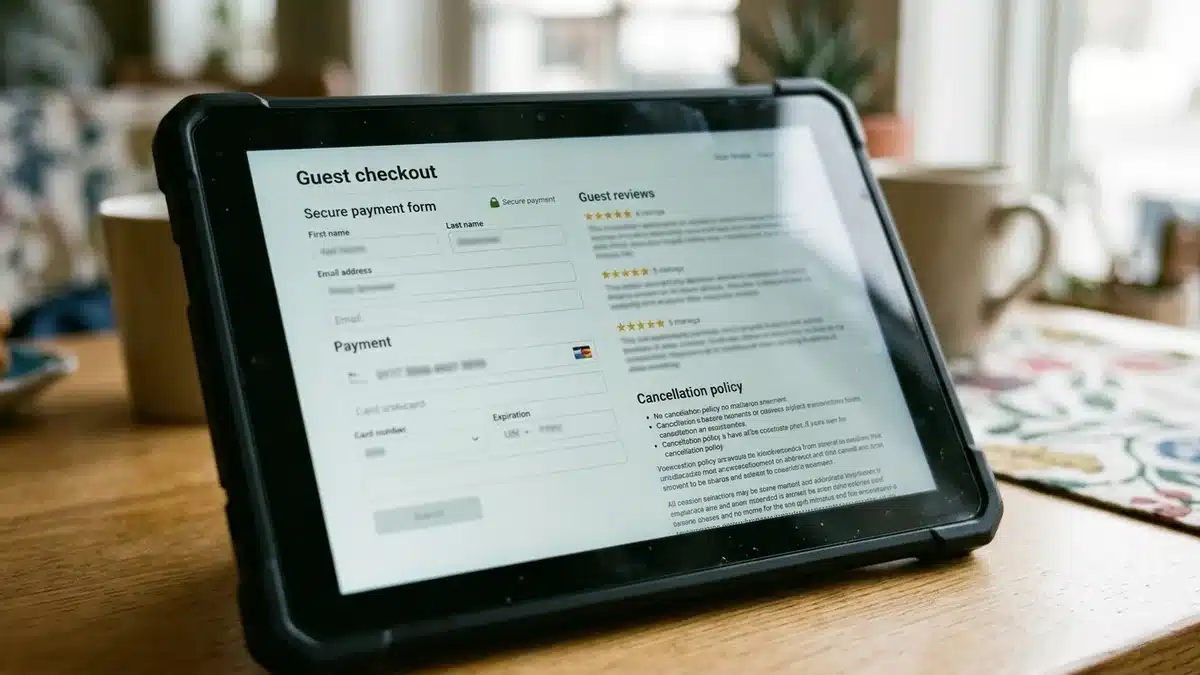
Guest trust on a direct booking site comes from the same signals Airbnb and Booking.com have trained travelers to expect: visible reviews, secure payment badges, and clear cancellation terms with responsive support contact information. Without these, even a beautifully designed site will struggle to convert visitors into paid reservations.
This is one of the most underexplained parts of going direct. Hosts spend time on photos and property descriptions, and then guests hit a checkout page with no reviews displayed, vague refund terms, and no visible way to contact a human if something goes wrong. That hesitation kills conversions.
Concrete trust builders worth prioritizing: display guest reviews from your OTA listings directly on the site, use a recognizable payment processor, state your cancellation policy in plain language above the fold on the booking page, and include a real phone number or live chat option instead of just a contact form.
Automated guest follow-up plays a role here too. When a past guest gets a personal, well-timed message inviting them back for their next stay, it reinforces that there's a real host behind the booking. Boostly's automated guest follow-up and repeat booking tools are built around this exact trust-building loop, keeping past guests engaged after checkout so the next booking comes directly rather than through an OTA search.
What Are the Operational Risks of Running a Direct Booking Channel?
Direct bookings come with operational risks that OTAs typically absorb or manage on your behalf, including chargeback disputes, guest verification, and the risk of calendar conflicts if channel syncing fails. Understanding these risks upfront prevents costly surprises after launch.
Chargebacks are the biggest one hosts underestimate. When a booking runs through Airbnb or Booking.com, the platform mediates disputes. On your own site, you're the merchant of record, which means you need clear terms, documented guest communication, and a payment processor with reasonable dispute support.
Guest verification matters more without an OTA's built-in identity checks. Requiring a booking agreement or ID verification for direct reservations reduces fraud risk, particularly for higher-value or longer-stay bookings.
Tax collection varies by jurisdiction, and rules change periodically, so confirm current occupancy tax and reporting requirements with your local licensing authority rather than assuming your OTA handled this for you automatically. Calendar conflicts remain a real threat if your direct site and PMS aren't syncing in real time. This is precisely why real-time sync across your PMS matters so much: Boostly's integration with 27+ property management systems keeps availability and pricing accurate everywhere, which is the single biggest defense against a double booking that damages guest trust and your review score.
Practical Guidance: How to Choose and What to Avoid
Choosing a direct booking platform comes down to matching the tool to your actual operational reality, not the flashiest feature list. A few practical rules cut through most of the noise.
- Confirm PMS compatibility before committing. A platform that doesn't sync with your current system creates manual double entry, which defeats the purpose of automating your calendar.
- Don't quit your OTA listings. A direct channel works best as an addition, not a replacement; most platforms, including Boostly, are designed to run alongside Airbnb and Booking.com.
- Ask what happens after launch. A site that goes live but has no plan for driving traffic or nurturing past guests will sit idle. Look for built-in CRM and follow-up automation, not just a website shell.
- Budget for payment processing and marketing, not just the platform fee. The full cost picture includes transaction fees and the ongoing effort to generate direct demand.
- Check for a results guarantee. A platform confident in its results will typically stand behind them. Boostly's 65% direct booking guarantee within 12 months, backed by a money-back-plus-$1,000 promise, is one example of that accountability in practice.
Common mistakes we see: launching a site with no reviews displayed, skipping the tax and legal pages, and assuming traffic will show up without any remarketing to past guests. Each is fixable, but easier to avoid from the start than to patch later.
For hosts building out a broader growth plan, resources like the HostPapa article on how to grow a vacation rental business and the Price of Business guide on growing a vacation rental business cover broader listing and lead-generation tactics worth pairing with a direct channel strategy. And for a concrete definition of why repeat guests matter to this whole equation, the definition of repeat guest from Hostaway's glossary is a useful reference point.
What Data Actually Supports Going Direct in 2026?
The case for a direct booking channel is stronger in 2026 than it was a few years ago, largely because the vacation rental market keeps growing while OTA commission structures haven't changed. That sustained growth means more competition for guest attention on OTAs, which makes a commission-free channel worth more each year you delay building one.
Repeat guests are where a direct channel pays off fastest. A repeat direct booking on a $2,000 stay can save a host between $310 and $640 compared to booking that same stay through an OTA, once commission and processing costs are accounted for. Ten repeat direct bookings a year can recover between $2,520 and $5,820 that would otherwise go to OTA commissions.
Direct bookings also tend to run longer: average stays booked directly run roughly 45% longer than OTA bookings, which compounds the revenue benefit per reservation beyond just the commission saved.
This is the exact math Boostly's guarantee is built around. When 65% of your bookings move to a direct, commission-free channel, the combined effect of saved commission and longer average stays adds up fast, which is why we're confident enough to put a $1,000 guarantee behind it.
Frequently Asked Questions
Is there a platform for building an easy-to-use direct booking channel?
Yes. Purpose-built platforms exist that combine a website, booking engine, payment processing, and calendar sync into one system designed specifically for short-term rentals. Boostly is one example, building a fully optimized, no-code direct booking website for hosts and getting them live within 35 days.
Are there any guides or tools to help set up a direct booking system on my website?
Yes, both self-service guides and done-for-you services exist. Self-service guides typically walk you through domain setup, plugin installation, and payment gateway configuration on a general website builder, while done-for-you platforms like Boostly handle the entire build, PMS sync, and payment setup for you, with training and templates included.
Is there a tool that integrates direct booking management with my current property software?
Yes, several platforms integrate directly with existing property management systems to sync availability and pricing in real time. Boostly integrates with 27 or more PMS platforms, so your existing system continues to handle day-to-day operations while the direct booking site stays automatically synced with it.
How do I establish a direct booking website for my rental properties?
Setting one up involves connecting your PMS for real-time calendar sync, verifying a payment processor, publishing clear cancellation and policy pages, and testing the full booking flow before launch. Done-for-you platforms handle most of this setup on your behalf, while self-service builders require you to configure each piece yourself.
How do I start a direct booking website without technical experience?
The most practical route without coding experience is a done-for-you platform that builds the site, connects your PMS, and sets up payment processing for you. Boostly's model requires no coding from the host and includes CRM access within 24 hours of signing up, along with weekly training calls to help you use the system effectively.
Do I have to stop listing on Airbnb to use a direct booking website?
No. A direct booking channel is designed to run alongside your existing Airbnb and Booking.com listings, not replace them. Most hosts keep their OTA visibility for discovery while building direct bookings as a second, commission-free channel over time.
How much can I actually save by reducing OTA commissions?
Savings depend on your booking volume and current OTA reliance, but industry vendor estimates put typical OTA commissions at 15 to 20% per booking. Boostly's model saves hosts roughly 15% on every booking that shifts from an OTA to their own direct channel, which compounds significantly as direct booking share grows.
Is a direct booking website safe for guests to pay through?
Yes, provided the platform uses a reputable payment processor with SSL encryption and PCI DSS compliance, which is standard for platforms handling card payments online. Displaying reviews and clear cancellation terms alongside secure checkout further reassures guests who are used to booking through Airbnb or Booking.com.
Conclusion: Yes, the Platform Exists, and the Data Backs Going Direct
The direct answer to “is there a platform for building an easy-to-use direct booking channel” is yes, and in 2026 these platforms are more capable than the bolt-on booking widgets of a few years ago. The best fit depends on your portfolio size, your existing PMS, and how much time you can realistically dedicate to building and maintaining a site yourself.
What matters most is picking a system that handles the full picture: website, PMS sync, payments, and guest follow-up, rather than solving one piece and leaving you to stitch the rest together. Boostly was built specifically to be that complete system, and we back it with a guarantee because we've seen the results play out across our host community.
If you're ready to stop losing 15% of every booking to OTA commissions, Boostly builds a fully optimized direct booking website for you, live within 35 days, backed by a guarantee of 65% direct bookings within 12 months or your money back plus $1,000. Book a demo to see how the build, the PMS integrations, and the CRM would work for your specific properties.
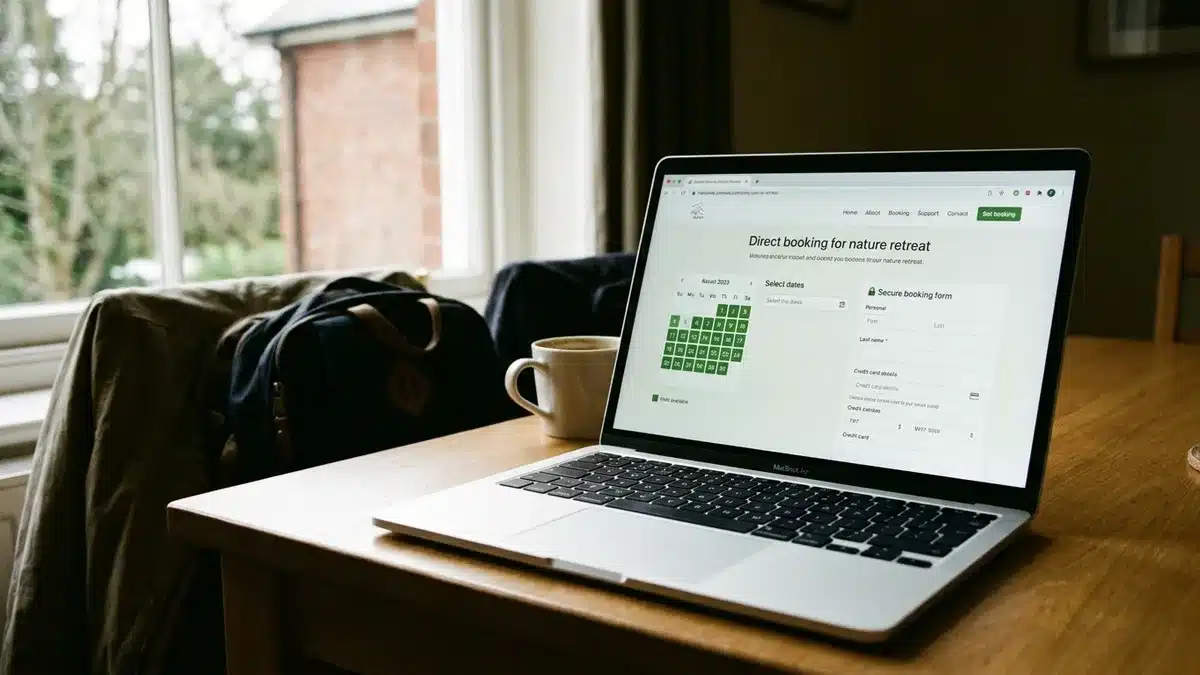
If your current site is little more than a digital brochure with no working booking engine behind it, that's the gap worth closing first. A clean, direct booking website with real-time availability and secure checkout is the foundation everything else in this guide builds on. Get started with Boostly to see what that foundation looks like for your properties.