
An owner vacation for a short-term rental host is a planned stretch of time away from day-to-day property operations, made possible by automation, delegation, and systems that keep guest communication and bookings running without the owner at the keyboard. It requires more setup than a typical employee's time off, but it's achievable at any portfolio size.
Key Takeaways
- An owner vacation depends on three systems working without you: guest messaging, calendar and pricing sync, and a way to keep bookings flowing while you're offline.
- Manual multi-calendar management is one of the top reasons hosts cancel their own time off; a single missed sync can create a double booking within hours.
- Repeat guest email lists remove pressure during time off because returning guests already trust the property and need less hand-holding than first-timers.
- According to Houfy, a repeat direct booking on a $2,000 stay saves a host between $310 and $640 compared to an OTA booking, money that funds the systems needed to take real time off.
- Real-time PMS integration across 27 or more platforms is what lets a host step away without checking four different calendars a day, a capability Boostly builds into every direct booking website it launches.
- Boostly's automated CRM and guest marketing tools mean a host's business keeps generating direct bookings and guest follow-up even while the owner is unreachable, which is the actual foundation of a workable owner vacation strategy.
If you run a short-term rental, you already know the uncomfortable truth: most hosts don't take real vacations. They take trips where they still answer messages from a beach chair, still adjust pricing from an airport lounge, and still panic when a smart lock stops syncing three time zones away. That's not time off. That's just work with a nicer backdrop.
At Boostly, we talk to hosts every week who've built profitable STR businesses but haven't had an uninterrupted week away in years. The problem usually isn't lack of desire, it's lack of infrastructure. Guest messages pile up. Calendars across Airbnb, Booking.com, and a direct site fall out of sync. Nobody else knows the WiFi password reset process. So the owner stays tethered.
This guide breaks down what actually needs to be true for an owner vacation to work in 2026, what the biggest failure points are, and how the systems side, not the willpower side, is what determines whether you come home to a smooth operation or a mess of unanswered inquiries and pricing errors.

What Actually Stops a Host From Taking a Real Owner Vacation?
The main barrier to an owner vacation is operational dependency: the business can't run without the owner personally handling guest messages, pricing updates, and calendar management across platforms. Remove that dependency and the vacation becomes possible.
Most self-managing hosts built their process around themselves. They answer every inquiry personally. They manually block dates when a maintenance issue comes up. They check three or four calendars daily to avoid double bookings across Airbnb, Booking.com, and a direct site. None of that scales to “I'm unreachable for ten days.”
Specifically, the risk compounds with portfolio size. A single-property host missing a message for six hours is annoying. A twelve-unit operator missing sync updates across platforms for six hours can mean multiple double bookings, refunds, and angry guests arriving to a locked door. This is exactly the operational risk Boostly's real-time PMS integration was built to eliminate, syncing listings, availability, and pricing across 27 or more property management systems so nothing drifts out of date while you're gone.
As a result, the fix isn't “work harder before you leave.” It's building a system, before you ever book the flight, that doesn't need daily manual intervention to function correctly.
How Do You Prepare Guest Communication for Time Away?
Preparing guest communication for an owner vacation means automating the repetitive 80% of messages (check-in instructions, WiFi details, checkout reminders) so a human only needs to step in for genuine exceptions. This is the single highest-leverage change most hosts can make before traveling.
Most guest questions are predictable: parking instructions, door codes, restaurant recommendations, late checkout requests. Answering these manually, every single day, is exactly the kind of task that traps a host at their laptop during what's supposed to be time off.
Boostly's platform connects to a host's PMS to automate these workflows from booking confirmation through post-stay follow-up, which means the automated sequence keeps firing whether the owner is in the kitchen or on a plane. For example, a booking confirmation, a pre-arrival check-in guide, and a post-checkout thank-you can all go out without anyone typing a word that week.
Notably, this doesn't remove the human element entirely. Hosts should still designate someone (a co-host, a family member, or a property manager) to handle the small number of genuine emergencies that automation can't resolve, like a broken appliance or a lockout. Automation handles volume; a person handles exceptions.
What Is the 1 in 4 Rule and How Does It Apply to STR Owners?
The 1 in 4 rule, most commonly referenced in vacation ownership and timeshare contexts, suggests owners typically use their vacation property or benefit roughly one out of every four years, or one out of every four available booking windows, due to scheduling conflicts and life changes. For STR hosts, the equivalent lesson is that unplanned time off gets postponed indefinitely unless it's scheduled and systemized in advance.
In the timeshare and vacation club world, this rule explains why many owners underuse benefits they've paid for. Life gets in the way. For STR hosts, the parallel is direct: if taking a vacation depends on “finding a slow week” or “catching up on messages first,” it rarely happens, because there's always another booking, another guest question, another small fire.
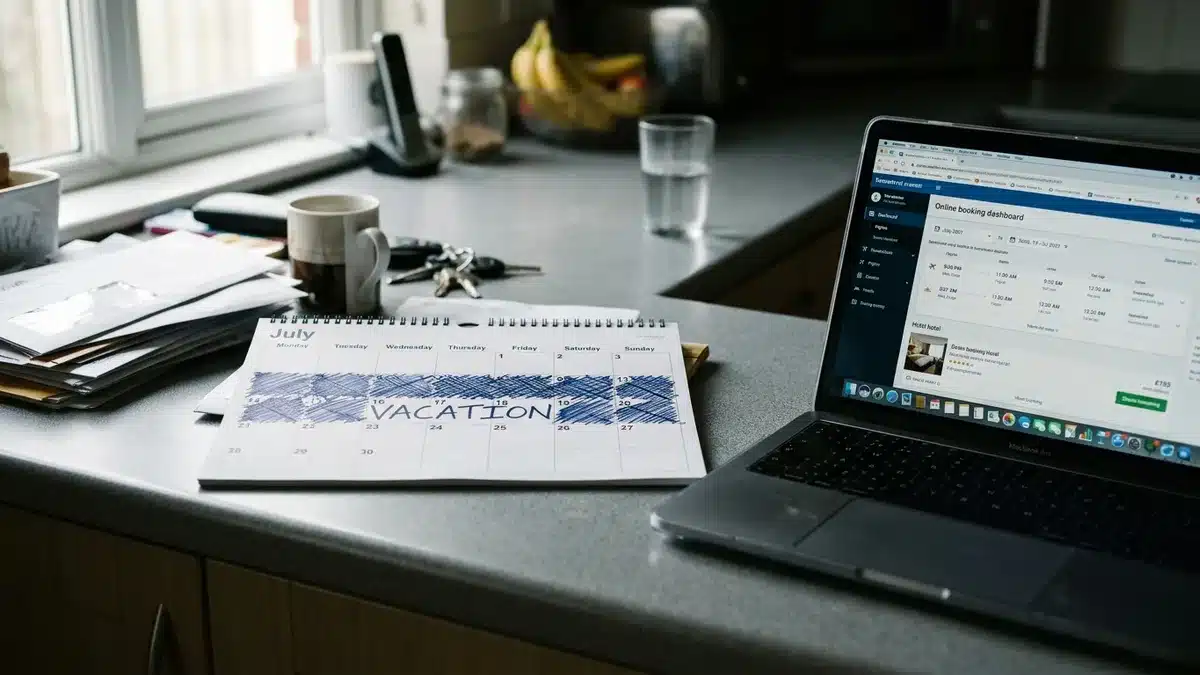
The practical fix is treating your own vacation the way you'd treat a confirmed guest reservation: block it on the calendar first, then build the operational coverage around that fixed date, instead of waiting for a naturally quiet moment that never arrives.
Hosts using Boostly's weekly coaching calls and training library often build this exact habit, scheduling their own time off as a non-negotiable calendar block and then working backward through automation and delegation to make it stick.
Is It Worth Investing in Systems Before Taking Time Off?
Yes, investing in booking systems, guest CRM, and PMS integration before taking time off is worth it because the upfront setup cost is far smaller than the revenue and reputation risk of double bookings, missed messages, or pricing errors while unreachable. Most hosts recover the setup effort within their first extended trip.
Consider what happens without these systems: a host manually updates pricing across multiple listing platforms, watches four calendars for conflicts, and answers every guest message personally. That's sustainable when you're home. It falls apart the moment you're not checking your phone for two days straight.
By contrast, Boostly's built-in CRM captures guest data at the point of direct booking and automates follow-up campaigns without manual input, so guest relationships keep building even when the owner is offline. And because Boostly's websites go live within 35 days with no coding required, the setup itself doesn't become another project that delays the vacation further.
Additionally, hosts who route more bookings direct reduce a specific kind of stress: reliance on OTA algorithms and support queues that can be slow to resolve issues while you're away. A direct booking relationship means the guest already has your communication system, not a third-party inbox you can't monitor from a hiking trail.
What Is the Marriott Vacation Club Lawsuit and Does It Affect STR Owners?
Legal disputes involving major vacation ownership and timeshare companies periodically arise around contract terms, fee structures, and consumer protection issues specific to the timeshare industry. These cases are specific to deeded and points-based timeshare ownership models and don't apply to short-term rental hosts, who operate under a fundamentally different ownership and booking structure.
STR hosts own or manage individual properties and control their own booking terms, pricing, and guest agreements directly. Timeshare and vacation club litigation typically centers on maintenance fee disputes, exchange program terms, or contract disclosure practices, none of which apply to someone running an Airbnb or a direct booking website.
That said, the broader lesson for STR owners is worth noting: regulatory complexity and consumer protection requirements are consistently cited as challenges across the vacation ownership industry. STR hosts face their own version of this in the form of shifting local short-term rental regulations, licensing requirements, and zoning rules that vary by city and change over time. Staying current on local requirements before you travel is part of preparing for time away, not an afterthought.
Is Vacation Ownership Worth It Compared to Running a Direct Booking STR Business?
Vacation ownership (timeshares and points-based vacation clubs) and running a short-term rental business are fundamentally different financial structures: one is a prepaid usage right in a shared resort, the other is an income-generating asset the owner controls directly. For someone evaluating both, the STR model offers revenue potential and operational control that vacation ownership doesn't.
Global vacation ownership was valued at approximately $11.9 billion in 2023, with the industry projected to grow at more than 8% annually through 2032, according to GM Insights. Deeded ownership structures represent roughly 57% of that market, meaning most vacation ownership is a fixed usage right rather than a flexible income asset.
By comparison, the global vacation rental market reached an estimated $97.85 billion in 2026 and is projected to hit approximately $101.37 billion in 2026, according to Precedence Research, with the homes segment (rather than resorts) making up roughly half of that market share. Unlike a timeshare week, an STR property can generate income year-round and appreciate as a real estate asset.
The trade-off is operational responsibility. A timeshare owner pays fees and shows up for a scheduled week. An STR owner runs a business, guest communication, pricing, maintenance, and marketing, which is exactly why systems for time away matter so much more for STR hosts than for vacation club members.
How Do Multi-Property Operators Take Time Off Without Losing Sync Across Units?
Multi-property operators avoid sync failures during time off by consolidating calendar, pricing, and availability management into one connected system rather than checking each platform manually. Without this, an owner vacation across a five-plus unit portfolio becomes nearly impossible to manage safely.
The math is simple: one property means one calendar to check. Ten properties across three OTAs and a direct site means up to thirty separate points of failure. Manually keeping all of them accurate, especially while traveling, is where most multi-property hosts lose confidence in stepping away at all.
Boostly integrates with 27 or more property management systems for real-time syncing of listings, availability, and pricing, specifically so operators never face double bookings or outdated rates across a growing portfolio. That single point of sync is what turns “I can't leave, I have twelve calendars to watch” into “the system updates itself while I'm gone.”
Property managers reporting results back to property owners have an added layer here: they need to show measurable performance, not just describe it. Boostly's analytics and reporting on direct booking performance gives managers a way to demonstrate progress even during a period when the manager themselves was on leave, which matters for client trust.
| Portfolio Size | Manual Calendar Checks Needed Daily | Sync Risk While Traveling | What Reduces the Risk |
|---|---|---|---|
| 1 property, 2 platforms | 2-4 | Low to moderate | Basic channel manager sync |
| 3-5 properties, 3 platforms | 9-15 | Moderate to high | Real-time PMS integration |
| 10+ properties, multiple platforms | 30+ | High | Full PMS sync plus automated guest messaging |
What Role Does a Repeat Guest List Play in a Stress-Free Owner Vacation?
A repeat guest list reduces the operational load of an owner vacation because returning guests already know the property, ask fewer questions, and generally require less hands-on management than first-time bookings. Building this list before you travel pays off directly during time away.
According to Hostaway's definition of a repeat guest, returning visitors carry zero acquisition cost and convert at a higher rate than new inquiries, meaning less marketing effort and less guesswork about who's booking. A 2014 OwnerRez analysis found that out of 5,324 bookings studied, 759 were repeat bookings, a 14% repeat rate, a meaningful chunk of revenue that didn't require fresh guest vetting or new-guest hand-holding.
According to Houfy, a 200-guest email list with a 15% annual repeat rate generates 30 commission-free bookings a year, a volume that keeps revenue flowing with guests who already trust the property. Tools like a dedicated host CRM and remarketing platform or a WiFi-based guest email capture system are two concrete ways hosts build that list without extra manual data entry.
This is precisely the gap Boostly's built-in CRM and automated email and SMS marketing close. The CRM captures guest data automatically at the point of direct booking, then triggers repeat-stay campaigns without the owner lifting a finger, so the guest list keeps growing and converting whether the host is home or 4,000 miles away on their own owner vacation.
What Should a Host Do in the 30 Days Before Leaving?
The 30 days before an owner vacation should focus on stress-testing automation, briefing a backup contact, and confirming every platform's calendar is synced correctly, not on last-minute manual fixes. Rushing this window is the most common reason trips get interrupted by property issues.
- Audit your PMS sync across every platform. Confirm Airbnb, Booking.com, and your direct site are pulling from the same real-time calendar, not separate ones updated by hand.
- Test your automated guest messaging sequence end to end. Book a mock reservation if needed to confirm confirmation, check-in, and checkout messages fire correctly.
- Brief a backup contact on genuine emergencies only. Automation handles routine questions; a person should only be looped in for maintenance issues or lockouts.
- Review your pricing rules for the travel window. Confirm dynamic pricing or minimum-stay rules won't need manual adjustment while you're away.
- Check your CRM's scheduled campaigns. Make sure any repeat-guest offers or post-stay emails are queued and won't require you to hit send manually.
- Confirm local regulatory compliance is current. Renew any permits or licenses that expire during your trip so you're not dealing with a compliance issue remotely.
Hosts working through Boostly's 80-plus hours of training and weekly coaching calls typically run through a version of this checklist with their coach before a big trip, catching gaps a solo review might miss.
What Common Mistakes Derail an Owner Vacation Plan?
The most common mistake is leaving without testing the automation first, assuming a system will work correctly simply because it's set up. A close second is failing to separate “routine question” from “genuine emergency” for a backup contact, which leads to either constant interruptions or missed real problems.
- Assuming OTA notifications alone are enough. Relying only on Airbnb or Booking.com's native tools without a direct site or CRM means you have less visibility and control over guest communication while traveling.
- Not blocking dates far enough in advance. Last-minute calendar blocks risk conflicting with bookings already confirmed on another platform if sync isn't real-time.
- Overloading a backup host with unclear instructions. A backup contact needs a short, specific list of what requires their attention, not a full operations manual read in a panic.
- Ignoring local STR regulation deadlines. Permit renewals or inspection windows that fall during your trip can create compliance headaches if not handled beforehand.
- Treating repeat guest marketing as optional. Skipping this means missing out on the guests who need the least active management, exactly the bookings that make time away easier.
Frequently Asked Questions
Can a short-term rental host actually take a vacation without checking their phone constantly?
Yes, but it requires automated guest messaging, real-time calendar sync across platforms, and a clear backup contact for genuine emergencies. Hosts who rely entirely on manual processes rarely manage more than brief, interrupted breaks.
What is the 1 in 4 rule mentioned in vacation ownership?
It's a general observation from the timeshare and vacation club industry that owners often use their allotted vacation time roughly one out of every four years due to scheduling conflicts. For STR hosts, the takeaway is that unscheduled time off tends to get pushed indefinitely unless it's planned and systemized in advance.
Do I need to stop listing on Airbnb to build a system that supports time off?
No. Boostly's direct booking approach layers a website, CRM, and automated marketing on top of your existing Airbnb and Booking.com listings, rather than replacing them. You keep your OTA visibility while building the direct booking channel that gives you more control while traveling.
How much does a host typically lose to OTA commissions each year?
According to Houfy, the Airbnb host-only fee runs around 15.5% on a booking, meaning a $2,000 stay carries roughly $310 in commission. Across a full season of bookings, that adds up to a significant amount that could otherwise fund the systems and support needed to take real time off.
What PMS platforms work with direct booking automation tools?
Boostly integrates with 27 or more property management systems, delivering real-time syncing of listings, availability, and pricing across them. This is what allows multi-property operators to travel without manually reconciling separate calendars.
Is vacation ownership a good alternative to running my own short-term rental?
Vacation ownership and STR hosting solve different problems: one is a prepaid usage right in a resort, the other is an income-generating property you control. If you want revenue and flexibility rather than a fixed usage week, running your own STR business, supported by the right automation, generally offers more upside.
What happens if my automated systems fail while I'm away?
This is exactly why a designated backup contact matters, someone who can step in for the rare genuine issue automation can't resolve, like a maintenance emergency. Testing your systems thoroughly in the 30 days before departure, as outlined above, significantly reduces this risk.
Conclusion: Owner Vacation Is a Systems Problem, Not a Willpower Problem
Taking a real owner vacation comes down to removing yourself as the single point of failure in your STR operation. That means automated guest messaging, real-time calendar sync across every platform you list on, and a repeat guest list that keeps bookings coming in without heavy manual effort. As shown above, the operational risk grows fast with portfolio size, but so does the payoff of solving it properly.
In 2026, the hosts who actually get away are the ones who built the infrastructure months before booking the flight, not the ones who hoped a quiet week would show up on its own. That's the direct lesson from the 1 in 4 rule: unplanned time off rarely happens, so plan it and systemize around it.
If OTA commissions and manual guest messaging are the reason you haven't taken real time off in years, book a demo with Boostly and see the done-for-you website, CRM, and real-time PMS sync that make an owner vacation actually possible. We'll walk you through what a 65% direct booking rate could mean for your portfolio, and how the systems behind it keep running whether you're at your desk or on a beach. For more on building the marketing engine that supports this kind of independence, see our guide on how to grow your vacation rental business beyond OTAs.