
To list a property for rent without handing your margin to an online travel agency, publish the listing on one or two OTAs for reach. Then build your own direct booking website and sync both calendars so repeat and referred guests book with you instead. Gather your property facts first, price from comparable rentals, and confirm local registration rules before anything goes live.
Key Takeaways
- Every channel asks for the same core facts when you list a property for rent: address, property type, bedroom and bathroom counts, maximum occupancy, amenities, house rules and photos. Prepare them once and reuse them everywhere.
- An OTA listing buys reach but charges you per booking. Each booking you move to your own site keeps roughly 15% more in your pocket; on a $2,000 stay, 15% is $300 (illustrative arithmetic, not a fee quote).
- You do not need to leave Airbnb to build a direct channel. Keep your OTA listings live and add your own site alongside them.
- Set your nightly rate from comparable rentals for the same dates and season. Treat shortcuts such as the 2% rule as a rough filter at most.
- Check short-term rental registration, zoning, HOA or lease limits and lodging tax obligations with your local authority before you advertise anywhere.
- Boostly builds your direct booking website for you, live within 35 days, syncs listings, availability and pricing with 27+ property management systems, and guarantees 65% direct bookings within 12 months or your money back plus $1,000.
Most guides on how to list a property for rent end the moment your listing goes live. That is where the margin problem starts. Every booking that arrives through an OTA arrives with a commission attached, and the guest's contact details stay with the platform.
At Boostly, we work with STR hosts every day who are in exactly that position: strong occupancy, thin margins and no plan for direct bookings. The seven steps below follow the order you will actually do them, from preparing property details through to rebooking past guests on your own site. Each step covers what to do, where it tends to go wrong, and how to protect your margin.
In 2026 the sensible approach to renting out a property uses two channels. OTAs still put you in front of guests who have never heard of you. Your own website is where you keep the margin on everyone who has.
1. What Should You Prepare Before You List a Property for Rent?
Preparing to list a property for rent means collecting the facts every channel will ask for, so you enter them only once. Start with the full address, property type (house, condo, cabin or apartment), bedroom and bathroom counts, and maximum occupancy. Add your amenities, house rules, cancellation terms and the bank details where payouts will land.
Photos deserve the most prep time. Shoot every bedroom, bathroom and living area in daylight, then add the exterior and any outdoor space. Keep the sequence consistent: a hero image first, then the rooms in the order a guest would walk through them. Note any recent renovations and what sits nearby, such as shops and public transit, because that copy gets reused on every channel.
We ask for the same core inputs when we build a host's direct booking website at Boostly, so the preparation does double duty. Do it once and your OTA listing, your website and your guest emails all draw from the same file. A simple spreadsheet or shared document works well: one tab for facts, one for photo order, one for policies.
2. Which Platforms Should You Publish Your Rental Listing On?
The right platform mix is one or two OTAs for reach plus your own direct booking site for margin. OTAs introduce you to guests who have never heard of you, and they charge for the introduction. Fees usually combine a host commission, a payment processing charge and sometimes a guest-side service fee. The mix varies by platform, region and account, so check each platform's current fee page before you compare.
Compare channels on net payout for the same stay, not on headline percentages. Run one $2,000 booking through each fee structure and see what lands in your account. Marketplaces built around direct bookings can also help, and we cover them in our piece on using a book direct marketplace to drive direct bookings. For wider context on listing optimization and OTA use, the HostPapa article on how to grow a vacation rental business covers the core growth moves.
Boostly sits alongside this choice rather than replacing it. You keep your Airbnb and other OTA listings live while we build the direct channel next to them, so none of your listing work is wasted. If you can only pick one OTA, choose the one where most of your local competitors already hold strong reviews, because that is where your target guests are searching.
3. How Do You Write a Rental Listing That Converts?
A converting rental listing leads with the one detail that separates your property from the next search result, then backs it with specifics. Put that detail in the title and the first two sentences of the description: a hot tub, a walkable location or a dedicated workspace. Guests scan before they read.
Cover property type, sleeping arrangements, square footage if you know it, amenities, appliances and the neighborhood. State house rules and policies plainly, because surprises at check-in produce bad reviews. Skip words like cozy and charming unless a photo or a fact backs them up.
Most host-built websites fail to convert because they lack what OTAs supply automatically: reviews, clear policies and visible trust signals. We design Boostly sites to compete with the polish of an Airbnb listing, so the copy you wrote for the OTA carries over with the credibility to match. Write it once, then adapt only the first paragraph for each channel.

4. How Do You Set a Competitive Rental Price?
A competitive rental price comes from comparable properties, not from your mortgage. Pull listings with the same bedroom count, similar amenities and the same dates, then price against the middle of that set. Adjust upward for features guests pay extra for. Check the same weekend, a midweek night and a peak holiday, because the gaps differ.
Configure nightly rates, minimum and maximum stay lengths, seasonal pricing, weekend rates and blocked dates up front. Add cleaning and pet fees separately, and state how lodging taxes are collected where your jurisdiction requires it. You may see the 2% rule cited for long-term rents, where monthly rent is set at roughly 2% of the purchase price. It works as a rough filter for long-term lets and a poor guide to nightly pricing.
Rates must match across channels or you will undercut your own site. Boostly syncs listings, availability and pricing in real time across 27+ property management systems, so a change in your PMS appears on your direct site without retyping.
5. How Do You Publish the Listing and Keep Calendars in Sync?
Publishing an online rental listing takes six moves in a fixed order, and calendar sync is the one that protects you afterwards.
- Create your host account and verify your identity.
- Enter the property details and amenities.
- Upload photos in your chosen sequence and write the description.
- Set rates, minimum stays, cancellation terms and house rules.
- Connect calendar sync through iCal or your PMS channel connection.
- Review the preview and publish.
Decide early between instant booking and request-to-book. Instant booking removes friction for guests; request-to-book gives you time to screen. Once two channels are live, an overlapping reservation is the failure to prevent. One double booking means a refund, an angry guest and a review you cannot reply your way out of.
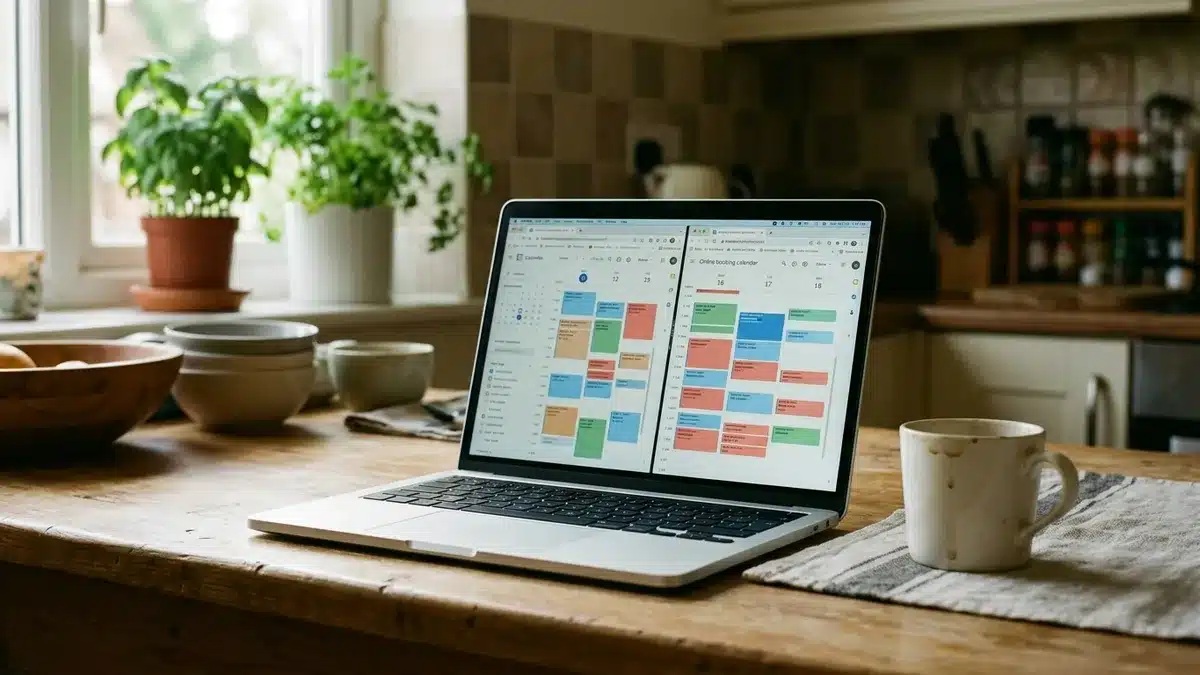
Boostly connects to 27+ PMS platforms, so the listing, availability and pricing on your own website update in real time alongside your OTA calendars. If you rely on iCal alone, remember that it refreshes on a delay, so a PMS connection is the safer choice.
6. How Do You Build a Direct Booking Channel Next to Your OTA Listings?
A direct booking channel is your own website with a booking engine that takes card payments and syncs to your calendar, so a guest can reserve without touching an OTA.
Most hosts bolt a booking button onto a generic site builder and wonder why it never converts. The button is rarely the problem. What is missing is everything around it: real-time availability, clear policies, reviews, secure payment and a reason to book direct. Our guide on how to build a direct booking website walks through the build in detail.
Traffic is the other half. An owner-controlled site does not inherit OTA search traffic, so it needs a search-ready page structure, fast load times and a plan to reach past guests and referrals. That is the work we take off your plate. Boostly builds the site for you, no coding required, live within 35 days. The hosts in our community average 65% to 80% direct bookings within 12 months, and if you do not reach 65% in that window, you get your money back plus $1,000.
7. How Do You Turn OTA Guests Into Repeat Direct Bookers?
Repeat direct booking means a past guest returns and reserves on your own website, so the stay carries no OTA commission. The maths is simple. A 200-guest email list with a 15% annual repeat rate produces 30 repeat bookings a year, and none of them pays a per-booking platform fee. Repeat demand is real: guests who enjoy a destination often come back to the same area, and your own list is the cheapest way to reach them.
Rebooking has to be transparent and lawful. Check each OTA's terms on contacting guests off-platform, collect consent, and respect privacy laws such as GDPR and CCPA where they apply. The cleanest capture points are your own: a website booking form, a welcome message with an opt-in, or in-home WiFi email capture. Our article on wifi for guests covers the guest-experience side, and the Price of Business guide on growing a vacation rental business covers email marketing off-platform.
Boostly's built-in CRM captures guest data at the point of booking and runs automated email and SMS follow-up. New members get CRM access within 24 hours of signing up.
How Much Margin Do You Keep With a Direct Channel?
Net payout is what reaches your account after every platform, processing and guest-facing fee is taken out, and it is the only number that compares channels fairly. Take a $2,000 stay. At the 15% commission figure we use at Boostly, an OTA booking costs you $300, leaving $1,700 before processing and other fees.
The same booking made on your own site avoids that commission. Your payment provider still charges a card processing fee, so check its current rate. Fee levels vary by account, region and platform terms in 2026, so run your own numbers against each platform's current fee page.
| Route | Commission per booking | Guest contact data | Setup effort | Trust signals |
|---|---|---|---|---|
| OTA listing only | Set by the platform; varies by account and region | Mostly held by the platform | Low | Built in by the platform |
| DIY site with a booking widget | None per booking; payment processing fees apply | You own it | High; you assemble site, payments and sync | You must build them yourself |
| OTA listings plus a done-for-you direct site (Boostly) | Roughly 15% saved on every booking moved from an OTA | You own it, captured in the CRM | Site live within 35 days, no coding | Designed into the site |
Our view: OTA-only is the lowest effort and the highest long-term cost. A DIY widget saves the commission but will not out-convert an Airbnb listing's trust signals on its own. The third route costs more upfront than the others and is the only one that builds an asset you own.

What Should You Check Before You Advertise a Rental Anywhere?
Pre-launch compliance means confirming you are allowed to host short stays at the address and knowing which registrations and taxes apply. Most pages explain how to publish and skip this part. Do it first.
Local rules and taxes
Check your local short-term rental licensing requirements, any registration number you must display, zoning, and HOA or lease restrictions. Lodging tax obligations depend on your jurisdiction. Some platforms may collect and remit on your behalf, while on your own site you are responsible for getting it right. Confirm the current rules with your local authority rather than relying on a blog post, including this one.
Taking payments directly
Direct bookings need an operating stack: booking terms, a deposit policy, tax handling, identity or fraud checks, a chargeback process and secure handling of guest data. Use a payment provider that processes cards under PCI DSS requirements, so you never store card numbers yourself. If you manage from a distance, our tactics for managing your STR properties remotely cover how to keep this running without being on site.
Measuring whether direct is cheaper
Track your direct share of bookings, where site visitors come from and what each direct booking costs you in time and ad spend. Compare that against the commission you would have paid. OTA dashboards only show OTA-side data, so Boostly's reporting shows conversion rates, traffic sources and progress toward the 65% direct booking target.
What Mistakes Cost Hosts Margin When They List a Rental?
- Different rates per channel. Guests compare totals, and a higher price on your own site sends them straight back to the OTA.
- A website with no booking engine. An enquiry form adds a day of delay, and many guests will not wait.
- No guest data capture. Without an email or phone number, you have nobody to rebook.
- Cancelling OTAs too early. Direct bookings should grow beside your OTA listings, not replace them overnight.
- Ignoring local rules until the first booking. Registration and tax problems are cheaper to fix before you advertise.
Our weekly coaching calls and 80+ hours of Boostly training cover each of these pitfalls, so you are not learning them from expensive mistakes.
How Do You List a Property for Rent and Keep Your Margin in 2026?
To list a property for rent and protect your margin, prepare your property facts once, publish on the OTAs that give you reach, and price from comparables. Then sync every calendar and build a direct channel that captures guests for repeat stays. Each booking you move off an OTA keeps roughly 15% more in your account. Hosts who own their guest relationship through 2026 and beyond will keep the margin that OTA-only hosts hand over on every stay.
If you want that direct channel built for you, book a demo with Boostly. We get your direct booking website live within 35 days, give you CRM access within 24 hours of signing up, and back it with a guarantee of 65% direct bookings within 12 months or your money back plus $1,000. The demo also shows whether your PMS is on our list of 27+ integrations.
Frequently Asked Questions
What's the best platform for a new host to list a vacation rental for the first time?
Start with one major OTA for visibility, since a brand-new website has no traffic yet. Add a direct booking site within the first few weeks so your early guests' details and repeat stays belong to you. Boostly is built for that second step and works alongside your OTA listing.
Is there a tool that integrates direct booking management with my current property software?
Yes. Boostly integrates with 27+ property management systems and syncs listings, availability and pricing in real time. Your direct website reads from the same data as your current software, which prevents double bookings and outdated rates. Book a demo to confirm your PMS is supported.
What's the best way to compare vacation rental prices for the same property across different sites?
Open each channel's public listing for identical dates and compare the total a guest pays, including cleaning fees and any guest-side service fee, not just the nightly rate. Then compare your net payout after commission and processing charges. Keep base rates consistent so your own website never looks more expensive than the OTA.
Do I have to stop listing on Airbnb to use a direct booking website?
No. A direct booking website works alongside your Airbnb and other OTA listings. Boostly is additive: you keep OTA visibility while the direct channel grows and takes a larger share of your bookings over time.
What details should a rental property listing include?
Include the address, property type, bedroom and bathroom counts, maximum occupancy, amenities, appliances, photos, house rules, cancellation policy, rates, minimum stay and neighborhood details. Add any registration number your local rules require.
How long does it take to get a direct booking website live?
Boostly gets hosts live within 35 days of signing up, with no coding required. CRM access arrives within 24 hours, so you can start capturing guest data while the site is being built.