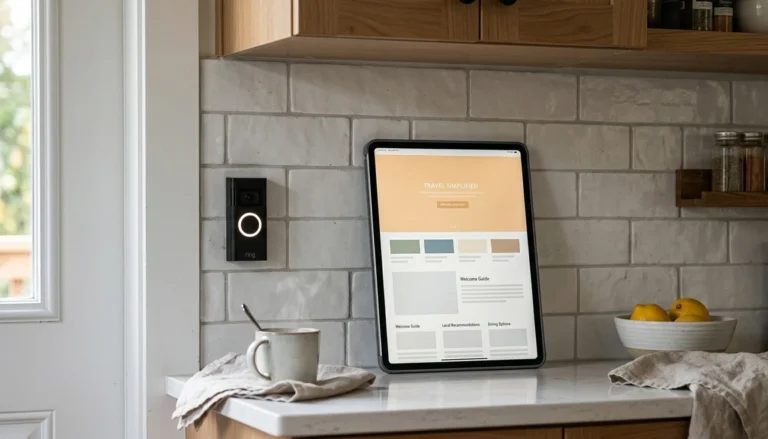
Setting up a direct booking site requires five core components: a domain and hosting account, a booking engine with secure payment processing, real-time calendar sync with your existing OTA listings, conversion-focused page design, and a system for capturing guest data after checkout. Most hosts can go from zero to a working site within a matter of weeks if they follow a structured build order.
- A direct booking site needs a domain, hosting, SSL, a booking engine, and PMS calendar sync to function without double bookings or payment errors.
- Commission math matters: every booking routed direct instead of through an OTA keeps the 15-20% that platforms like Airbnb and Booking.com would otherwise take.
- Conversion depends on trust signals, not just design, including clear cancellation policies, verified reviews, and secure checkout badges.
- You don't have to leave Airbnb or Booking.com to build a direct channel; most successful hosts run both simultaneously.
- DIY builds typically involve WordPress themes and reservation plugins, while done-for-you platforms handle the technical build, PMS integration, and ongoing support.
- Boostly builds the entire site for you, syncs with 27 or more property management systems, and backs the process with a guarantee: hit 65% direct bookings within 12 months or get your money back plus $1,000.
If you're reading this in 2026, you're likely paying somewhere between 15% and 20% in commission on every booking that comes through an OTA. That's not a rounding error on a $250-a-night cabin booked 20 nights a month. It's a structural cost that compounds every year you don't have an alternative channel.
A direct booking site is exactly that alternative: a website you own, where guests can search availability, see your nightly rate, and pay you directly, with no platform taking a cut. This guide walks through the actual build process, from domain and hosting through to the PMS sync and post-launch marketing that determines whether the site converts or just sits there.
We've built Boostly specifically because most hosts who try this alone get stuck somewhere between hosting setup and calendar sync, and give up before the site ever earns a booking. What follows is the same build order our onboarding team uses with new members, whether you end up doing it yourself or having it done for you.
What Is a Direct Booking Site?
A direct booking site is a website owned and controlled by a short-term rental host or property manager that allows guests to check availability, view pricing, and book a stay without going through Airbnb, Booking.com, or VRBO. The host keeps 100% of the nightly rate, minus payment processing fees, instead of paying OTA commission.
Unlike an OTA listing, a direct booking site gives you ownership of the guest relationship. You capture their email address, phone number, and stay history. That data belongs to you, not to a platform that can change its algorithm or fee structure without warning. Specifically, a functioning direct booking site includes a booking engine, real-time availability sync, and a secure payment gateway, typically Stripe or PayPal.
Most hosts assume a direct booking site is simply “having a website.” It's not. A static site with a contact form isn't a booking engine, and it won't convert. As a result, the difference between a site that gets bookings and one that just sits online usually comes down to whether the booking flow actually works end to end: search, select dates, pay, confirm, all without the guest leaving the page.
How Much Does It Cost to Create a Booking Website?
Costs for a direct booking website vary widely depending on the build path, ranging from a low-cost domain and hosting setup with a free WordPress theme, up to a fully managed, done-for-you platform that includes design, PMS integration, and ongoing support. The right choice depends on your technical comfort and how many properties you're managing.
If you go the DIY route, your baseline costs typically include a domain registration, a hosting plan, and either a free or paid WordPress theme paired with a reservation plugin. Additionally, most booking plugins charge either a flat licensing fee or a small transaction fee per booking, on top of whatever your payment processor (Stripe or PayPal) takes per transaction.
If you hire a web developer, costs rise significantly because you're paying for custom design, integration work, and ongoing maintenance every time something breaks. That's the trade-off: a developer gives you a custom look but leaves you dependent on that person (or agency) for every future update.
A done-for-you platform changes the cost structure entirely. Instead of paying separately for design, hosting, plugins, and a developer relationship, you pay one predictable amount for a built, synced, and supported site. Boostly builds the entire WordPress site for you and gets it live within 35 days, which for most hosts works out cheaper than piecing together a developer, a theme, and a plugin stack on their own, especially once you factor in the time cost of doing it yourself.

What Do You Actually Need Before You Start Building?
Before building a direct booking site, you need a registered domain name, a hosting account, an active PMS or channel manager if you already list on OTAs, and a payment processor account. Skipping any one of these means you'll hit a wall partway through the build.
First, register a domain that matches your property name or brand, not a generic address tied to a builder platform. Second, choose hosting: managed WordPress hosting is the most common path because it pairs with the largest ecosystem of vacation rental themes and booking plugins. Third, set up your Stripe or PayPal account in advance, since payment processor approval can take a few days and will otherwise delay your launch.
You'll also need your existing calendar data if you're already listing on Airbnb or Booking.com. Specifically, you want your current availability, blocked dates, and pricing rules ready to import so your direct site never shows a date as open that's already booked elsewhere. This is where most DIY builds run into trouble: connecting a new booking engine to an existing OTA calendar without creating a double booking.
This exact sync problem is why building a direct booking website the right way from day one matters more than it seems. Boostly's platform integrates with 27 or more property management systems and syncs listings, availability, and pricing in real time, so a booking made directly on your site instantly blocks that date everywhere else.
How Do You Choose a Platform for Your Direct Booking Site?
Choosing a platform for your direct booking site comes down to three realistic paths: build it yourself on WordPress with a vacation rental theme and booking plugin, hire a developer to build a custom site, or use a done-for-you platform that combines the website with PMS sync and guest marketing tools. Each path trades off cost, control, and ongoing maintenance differently.
The DIY WordPress path gives you the most control over design and the lowest upfront cost, but it demands ongoing technical maintenance: plugin updates, theme conflicts, security patches, and manual troubleshooting when calendar sync breaks. This path suits hosts who enjoy the technical side and have time to spend on it.
Hiring a developer removes the technical burden but creates a different dependency: every future change, whether it's adding a new property page or fixing a broken sync, requires paying that developer again. And if they move on to other clients, you're stuck finding someone new who understands your build.
A done-for-you platform, in contrast, bundles the website, the booking engine, the PMS sync, and ongoing support into one system that's maintained for you. This is the model we built Boostly around: hosts get a live site within 35 days, CRM access within 24 hours of signing up, and weekly coaching calls so they're never troubleshooting alone. For multi-property operators especially, that removes the single point of failure that comes with relying on one freelancer or one plugin stack.
What Pages Does a Direct Booking Site Need?
A direct booking site needs, at minimum, a homepage, individual listing pages for each property, an about or trust page, an area guide, an FAQ page, and a contact page. Each of these pages plays a specific role in moving a visitor from browsing to booking.
Your homepage should immediately show what you offer and where, with a clear path to check availability. Your listing pages need high-quality photos, a full amenity list, house rules, and a visible booking widget, not just a “contact us to book” form. Your area guide builds trust and SEO value simultaneously by showing genuine local knowledge, something OTAs rarely give hosts space to communicate.
An FAQ page addresses the objections that stop guests from booking direct: cancellation policy, check-in process, payment security, and pet or damage policy. Your about or trust page matters more than most hosts realize, since guests booking direct for the first time are looking for reassurance that they're not sending money into a void.
Notably, your contact page should offer more than a form: a phone number or live chat option signals that a real person stands behind the booking. As a result, sites that skip this trust layer tend to see visitors browse and leave without ever reaching the payment step.
How Do You Get Direct Bookings Instead of Relying on OTAs?
Getting direct bookings instead of relying on OTAs requires more than a live website. It requires a system that captures guest data at every touchpoint, follows up automatically after checkout, and gives past guests a reason to book direct next time instead of defaulting back to Airbnb. Most hosts have a website; very few have a follow-up system.
This is the gap that separates a site that occasionally gets a direct booking from one that consistently converts repeat guests. Think about what happens today when a guest checks out through Airbnb: the messaging thread goes quiet, you never capture their email, and the next time they want to book, Airbnb's app is the easiest path back to you, complete with another commission charge.
A working direct booking system flips that. Every direct booking captures the guest's email and phone number into a CRM you own. Post-stay, an automated sequence requests a review, then later re-engages with a seasonal offer or early access to new dates. Boostly's built-in CRM does exactly this: guest data flows in automatically, and pre-built email sequences run without you lifting a finger, which is the piece most DIY builds never get around to setting up.
For a deeper look at the mechanics of this, our guide on using a book direct marketplace to drive direct bookings covers how hosts layer additional discovery channels on top of their own site.
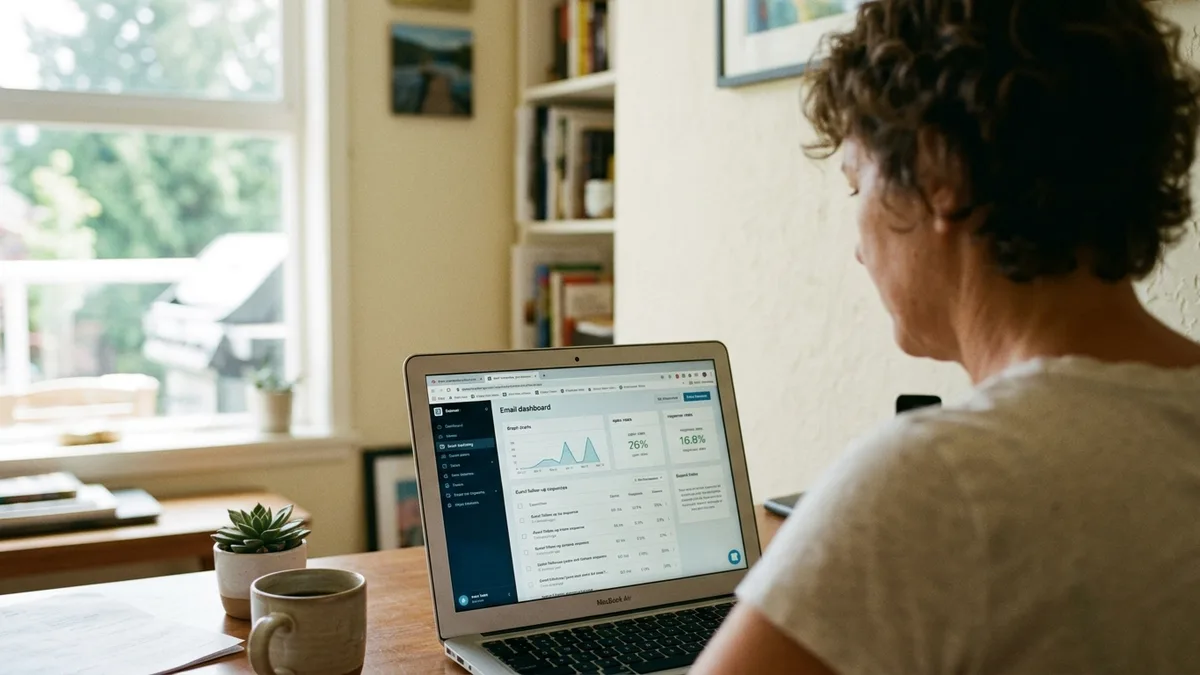
How Do You Get Direct Bookings to a Hotel or Rental Website?
Getting traffic and bookings to a hotel or vacation rental website depends on three channels working together: organic search visibility, a Google Business Profile linked to your site, and remarketing to guests who've already stayed with you. None of these work in isolation, and none of them happen automatically just because your site is live.
Organic search takes time to build, but it's the most durable channel because it doesn't cost per click and it compounds. Your area guide pages, listing pages, and blog content all contribute to this over months, not days. A Google Business Profile linked to your booking site captures local search intent, particularly from guests searching your property name or destination directly rather than through an OTA.
Remarketing to past guests is the highest-converting channel of the three because these people already trust you. This is where the email sequences mentioned above earn their keep: a guest who stayed with you last summer is far more likely to book direct for their next trip if they get a well-timed email than if they're left to remember your listing on their own.
Boostly's training library includes more than 80 hours of courses covering SEO, Google Business Profile setup, and content strategy specifically for STR hosts, alongside weekly coaching calls where members work through their specific traffic challenges in real time. Our STR insights on fine-tuning concepts and dominating the market goes further into positioning your listing against local competition.
Direct Booking Site vs OTA Listing: What's the Real Difference?
The core difference between a direct booking site and an OTA listing is commission and data ownership. An OTA listing gives you access to a large existing audience but charges 15-20% commission and gives you no ownership of guest contact data. A direct booking site keeps the full nightly rate and gives you a guest database you control, but requires you to generate your own traffic.
| Factor | OTA Listing (Airbnb, Booking.com) | Direct Booking Site |
|---|---|---|
| Commission cost | 15-20% per booking | Payment processing fee only |
| Guest data ownership | Retained by the platform | Owned by the host |
| Traffic source | Built-in platform audience | Requires SEO, email, and repeat guest strategy |
| Pricing control | Subject to platform discount algorithms | Fully host-controlled |
| Repeat guest marketing | Not possible directly | Automated email/SMS follow-up |
| Setup effort | Minimal, listing form only | Domain, hosting, booking engine, PMS sync |
Neither channel needs to fully replace the other. In our experience working with Boostly's host community, the most resilient operators run both: OTAs as top-of-funnel discovery, and a direct site as the channel that captures repeat business and first-time guests who found them through search or referral. That dual approach is exactly what Boostly's platform is designed to support, letting hosts keep their existing OTA listings live while building toward the platform's 65% direct booking benchmark.
What Common Mistakes Stop a Direct Booking Site From Converting?
The most common mistake that stops a direct booking site from converting is treating the website as a brochure instead of a booking engine, meaning visitors can browse photos but can't actually check live availability and pay without emailing the host first. Every extra step between a visitor landing on the page and completing payment costs conversions.
Second, many sites launch without real-time calendar sync, which creates a trust-breaking experience: a guest books a date that's already taken elsewhere, and the host has to cancel and refund. Third, sites frequently skip trust signals entirely, no visible cancellation policy, no verified reviews displayed, no clear house rules, leaving guests uncertain whether booking direct is safe.
Fourth, hosts often build the site and never touch it again, missing the area guide, FAQ, and blog content that drives organic search traffic over time. Fifth, and most overlooked: no post-stay follow-up system, meaning every guest who books direct once has no reason or reminder to do it again.
Each of these mistakes is fixable, but fixing them one by one, after launch, wastes months. That's the exact sequence Boostly's done-for-you build addresses from day one: booking engine, PMS sync, trust signals, and CRM follow-up all live together instead of being bolted on later.
What Is the Best Free Booking Website Option?
There isn't a genuinely free option that includes real-time PMS sync, secure payment processing, and ongoing support, because these require server infrastructure, payment gateway integration, and maintenance that cost money to run reliably. What's marketed as “free” typically means a free theme or a free tier of a booking plugin, with hosting, domain, and payment processing fees still applying separately.
A free WordPress theme paired with a free-tier booking plugin can get a basic site online cheaply, but you'll still pay for hosting and a domain, and you'll hit plugin limitations quickly once you need multi-property calendars or advanced sync. Free tiers also tend to cap the number of properties or bookings before requiring an upgrade, which catches hosts off guard mid-season.
If your goal is genuinely minimal cost and you're comfortable troubleshooting your own tech stack, the DIY path with free or low-cost tools is workable for a single property. But as soon as you're managing multiple units or want automated guest follow-up, the maintenance burden of a free setup usually outweighs the savings, which is exactly why most multi-property operators move to a managed platform once they've outgrown the DIY phase.
Practical Guidance: How to Prioritize Your Build
If you're setting up a direct booking site for the first time, prioritize in this order: payment processing and calendar sync first, trust-building pages second, and traffic-generation content third. Getting the order backwards, building a beautiful area guide before your booking engine even works, wastes early momentum.
- Secure your domain and hosting before anything else. This is the foundation everything else depends on.
- Connect your payment processor (Stripe or PayPal) early, since approval can take several days.
- Sync your calendar with your existing OTA listings to eliminate double-booking risk from day one.
- Build your core pages: homepage, listing pages, FAQ, and about/trust page.
- Test the entire booking flow on both desktop and mobile before announcing the site publicly.
- Set up your CRM and follow-up sequences so every direct booking captures guest data automatically.
- Launch your traffic strategy: Google Business Profile, email to past guests, and area guide content.
Common trade-off to understand: speed versus control. Building it yourself gives you full control over every design decision, but it slows your launch timeline and puts the maintenance burden on you indefinitely. A done-for-you build gets you live faster, in Boostly's case within 35 days, and hands off the ongoing PMS sync and CRM maintenance, at the cost of some design customization. For most hosts managing properties alongside a full workload, that trade-off favors speed.
Our piece on tactics to successfully manage STR properties remotely is worth a read if you're running this build while managing properties you don't live near.

Frequently Asked Questions
How long does it take to start getting direct bookings after setting up a website?
Most hosts see their first direct bookings within a few months of launch, once search visibility and repeat guest follow-up start working together. Boostly's members typically get their site live within 35 days of signing up, with the platform's 65% direct booking guarantee measured over a 12-month window.
Do I have to leave Airbnb or Booking.com to get direct bookings?
No. Most successful hosts keep their OTA listings active as a discovery channel while building a direct site as their repeat and referral channel. You can list on Airbnb, Booking.com, and your own site simultaneously without conflict, as long as your calendars stay synced in real time.
What is the real cost of OTA commissions over a full year?
If your property generates $80,000 a year through Airbnb or Booking.com at a 15-20% commission rate, you're paying roughly $12,000 to $16,000 annually just in platform fees. Routing even a portion of that volume through a direct booking site keeps that money in your pocket instead.
What PMS platforms does a direct booking website need to sync with?
Your direct booking site needs real-time sync with whatever property management system or channel manager you currently use to avoid double bookings. Boostly integrates with 27 or more PMS platforms, syncing availability, pricing, and listing data in real time across every channel you use.
How do guests feel about booking directly instead of through Airbnb?
Guests booking direct for the first time look for the same trust signals they'd expect on any OTA: secure payment processing, a clear cancellation policy, verified reviews, and a professional-looking site. Hosts who display these clearly on their booking page see far less hesitation at checkout.
What is Boostly's 65% direct booking guarantee?
Boostly guarantees that hosts who don't reach 65% direct bookings within 12 months of joining receive a full refund plus $1,000. It's a contractual performance commitment, not a marketing claim, and it's built into the platform's onboarding agreement.
Is a direct booking website worth it for a single-property host?
Yes. Even a single property generating $50,000 a year saves roughly $7,500 to $10,000 annually in OTA commissions at a 15-20% rate once a meaningful share of bookings move direct. That savings alone typically justifies the setup investment within the first year.
What marketing tools do I need alongside my direct booking website?
Beyond the website itself, you need an SEO foundation, an email CRM to capture and follow up with guests, a Google Business Profile linked to your site, and a review management process. Boostly bundles the CRM, automated email sequences, and SEO-ready site structure into one system, with the training library covering the rest.
Conclusion: Building a Direct Booking Site That Actually Converts
Setting up a direct booking site is a defined process, not a mystery: domain and hosting, payment processing, PMS calendar sync, conversion-focused pages, and a CRM to capture guest data after checkout. Skip any one of these and you'll end up with a site that looks fine but doesn't earn bookings. Get all five right, and you've built a channel that keeps the commission OTAs would otherwise take.
The path from fully OTA-dependent to a working direct channel isn't a shortcut, but it is a system you can follow step by step. If you want that system built for you, with a live site in 35 days, real-time sync across 27-plus PMS platforms, a CRM ready within 24 hours, and a 65% direct booking guarantee backing the whole thing, Boostly is where hosts start. Book a demo to see exactly what your first 35 days would look like.

If you're weighing whether the commission math actually works out for your property, this side-by-side view of direct income against OTA fees is the same comparison our onboarding team walks new members through. Get started with Boostly to see your own numbers mapped out before you commit to a build path.