
You improve Airbnb listing SEO by optimizing five ranking factors together: your title and description keywords, photo quality and count, calendar accuracy, response speed, and review volume. Airbnb's search algorithm weighs these signals collectively, so fixing just one rarely moves your ranking on its own.
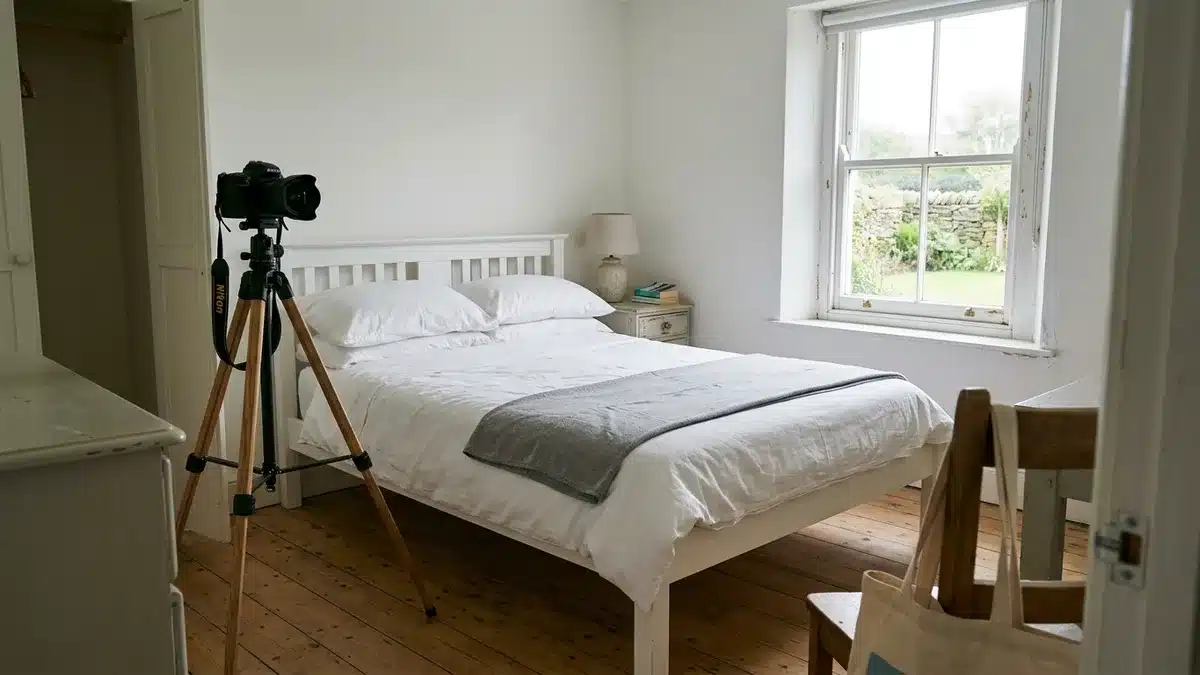
- Airbnb's search algorithm rewards completeness: listings with 15 to 20 high-resolution photos (at least 1,200 x 800 pixels) and every amenity box checked tend to outrank thinner listings.
- Response time matters more than most hosts realize: replying to guest inquiries in under one hour is a direct ranking signal, not just a guest-experience nicety.
- Calendar accuracy and zero host cancellations protect your search position, since Airbnb penalizes listings that create booking friction.
- Keyword placement in your title should pair location with a specific feature (for example, “hot tub cabin near the Smokies”) rather than generic adjectives.
- Direct booking sites and Airbnb SEO are not competing strategies; they work together, with Airbnb as top-of-funnel discovery and your own site capturing repeat and referral guests without the 15.5% host-only commission Airbnb charges on a typical $2,000 booking.
- Boostly's training library includes dedicated modules on Airbnb listing optimization, so hosts fix ranking factors and build a direct booking channel in parallel rather than treating them as separate projects.
If you've spent any time on host forums in 2026, you already know the frustration: your listing looks good to you, but it's buried on page three while a nearly identical property two streets over sits at the top. That gap almost always comes down to SEO fundamentals that Airbnb's algorithm quietly rewards or punishes.
This guide breaks down exactly what moves your ranking, what doesn't, and where most hosts waste time optimizing things that barely matter. We've spent years working with short-term rental hosts on the marketing side of their business at Boostly, and the pattern we see repeatedly is hosts obsessing over description copy while ignoring response time and photo count, the two factors that actually carry the most weight.
By the end of this article you'll have a practical checklist covering title structure, photo strategy, keyword research, seasonal adjustments, and the property-type nuances that most guides skip entirely. We'll also cover why treating Airbnb SEO as your only distribution channel is a mistake, and what a smarter dual-channel approach looks like in 2026.
What Is the 75-55 Rule for Airbnb?
The 75-55 rule is a shorthand some hosts use to describe Airbnb's emphasis on response rate and booking conversion in search ranking, though Airbnb has never published an official rule under this exact name. What matters in practice is that Airbnb's algorithm consistently rewards hosts who respond quickly and convert inquiries into confirmed bookings at a healthy rate.
Whatever name you attach to it, the underlying mechanic is real: Airbnb tracks your response rate, response time, and booking acceptance rate as ranking inputs. Hosts who let inquiries sit for six or eight hours see their search position slip, even if their listing content is otherwise strong.
The practical fix is straightforward but requires discipline. Turn on mobile notifications, use saved replies for common questions, and consider Instant Book for at least part of your calendar. Notably, Instant Book listings tend to convert faster simply because they remove a step from the guest's booking journey.
If you're managing multiple listings and can't realistically monitor inboxes around the clock, that's exactly the operational strain Boostly‘s automated guest communication tools are built to absorb, handling pre-arrival and inquiry responses so your response time stays fast without you being glued to your phone.
What Is the 80/20 Rule for Airbnb?
The 80/20 rule, as most hosts apply it, means roughly 80% of your bookings will come from 20% of your optimization effort, typically your photos, pricing, and location accuracy. In our experience advising STR hosts, this tracks closely with what actually moves the needle in search results.
Specifically, photo quality and count consistently outperform description copywriting in terms of ranking impact. A listing with 18 professional photos and a mediocre description will usually beat a listing with 6 photos and beautifully written copy.
Pricing accuracy is the second lever. Airbnb's search results favor listings priced competitively for their local market and season, which means checking comparable listings in your area regularly rather than setting a rate once and forgetting it. Location accuracy, meanwhile, feeds directly into map-based search results, so pinning your property precisely (not just the general neighborhood) affects whether nearby searchers even see you.
As a result, if you only have time to fix three things this month, fix your photos, your price, and your map pin. Everything else is secondary. This is also where hosts often realize that Airbnb search visibility alone caps their growth, and diversifying toward a direct booking strategy becomes the next logical step once the OTA listing itself is dialed in.
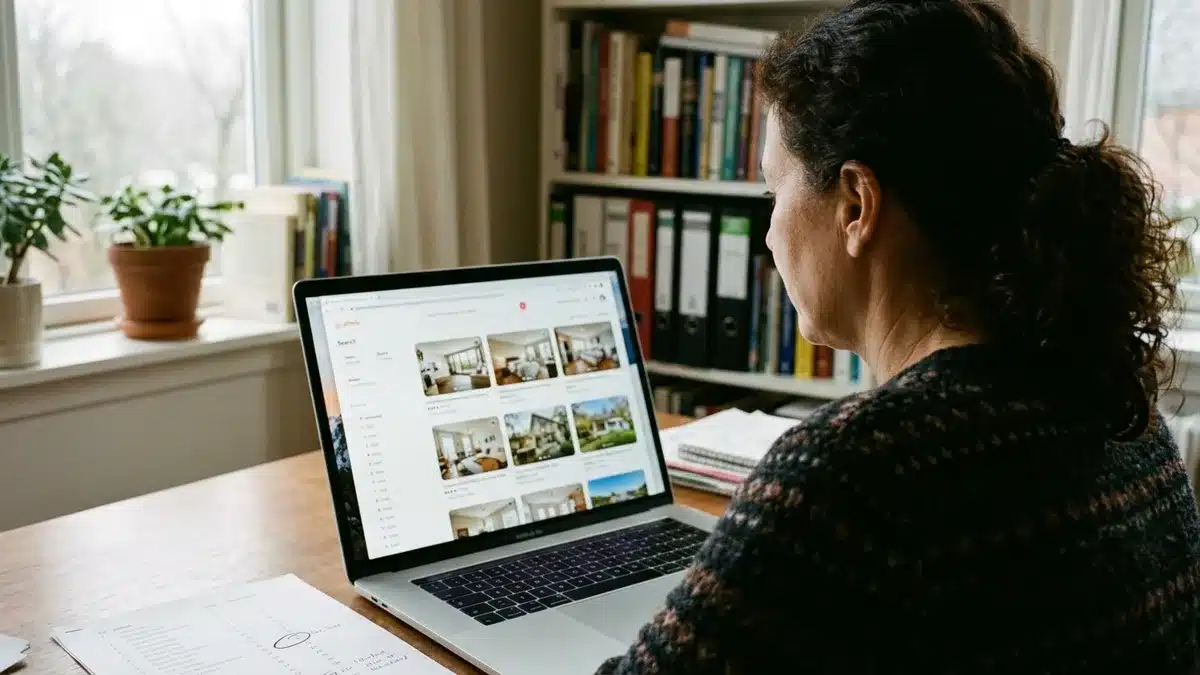
How Do You Get Into the Top 1% on Airbnb?
Reaching the top tier of Airbnb search results requires sustained performance across occupancy, review scores, and cancellation avoidance, not a single optimization trick. Top-performing hosts typically maintain 40 to 55% occupancy compared to 30 to 40% for typical hosts, according to vacation rental industry benchmarks.
Notably, this occupancy gap isn't achieved through better luck. It comes from compounding small advantages: faster responses, more complete listings, and near-zero cancellations, all of which feed Airbnb's algorithm positive signals over time.
Review velocity matters too. Listings that accumulate reviews steadily, rather than in occasional bursts, tend to signal consistent demand to the algorithm. This means every stay is a ranking opportunity, and skipping a review request email costs you more than one lost testimonial.
For example, a five-bedroom lake house charging $220 a night that never cancels, replies within 20 minutes, and requests a review after every checkout will consistently outrank a comparable property that's inconsistent on any of those three fronts. If manually sending review requests after every stay feels unsustainable across a growing portfolio, Boostly's automated post-checkout email sequences handle that step so no review request slips through, which is one of the reasons Boostly members report averaging 65 to 80% direct booking rates within 12 months once their guest follow-up runs on autopilot.
What Is the 90 Day Rule for Airbnb?
The 90-day rule refers to occupancy caps that some cities impose on non-owner-occupied short-term rentals, commonly limiting entire-home listings to a maximum of 90 nights per year in residential zones. This is a regulatory rule, not an Airbnb algorithm setting, though it directly affects how you should plan your calendar strategy.
In jurisdictions where this cap applies, Airbnb often enforces it automatically by blocking bookings once you hit the limit, aligning host activity with regional regulations. Check your specific city's short-term rental ordinance before assuming you're exempt, since rules vary significantly by municipality and by whether you're a resident host or an investor-owned property.
Beyond the legal cap, some hosts confuse this with Airbnb's calendar-availability window, which is a separate SEO factor. Airbnb's search algorithm favors listings with availability extending well into the future, not just the next few weeks. Keeping your calendar open and priced 90-plus days out signals reliability to both guests and the algorithm.
If your city's 90-day cap limits your Airbnb revenue ceiling, that's precisely the scenario where a direct booking channel earns its keep. Direct booking guests return 28.3% of the time compared with only 8.9% through Airbnb, according to a 2026 hostAI report, meaning repeat direct guests can fill the gap left by capped OTA nights without touching your regulatory limit.
Does Property Type Change Your Airbnb SEO Strategy?
Property type significantly changes which SEO levers matter most, because a tiny home, a cabin, and a downtown apartment compete in different search result pools with different guest expectations. Airbnb's search algorithm factors in property type filters, so misaligning your listing category with guest search behavior costs you visibility before content even matters.
For a cabin or tiny home, specifically, unique amenities like a wood-burning stove, a hot tub, or a fire pit deserve top billing in both your title and your first three photos, since these features drive filter-based searches more heavily than in urban listings. Rural and remote properties should also lean harder on nearby landmark mentions, because guests searching rural areas often start with a destination name rather than a neighborhood.
Urban apartments, in contrast, compete on walkability and proximity. Mentioning specific transit lines, named nearby attractions, or walking distance to a downtown core does more SEO work than generic phrases like “close to everything.”
Additionally, larger group-friendly properties (multi-bedroom houses, glamping sites) benefit from explicitly stating sleeping capacity and bedroom configuration in the title, since Airbnb's group-size filter is a common search entry point. Hosts running unique property types like glamping sites often find that a branded, direct booking presence differentiates them even further; our guide to starting a glamping business covers how niche operators build that identity beyond what an OTA listing template allows.
How Does Seasonality Affect Airbnb Listing SEO?
Seasonality affects Airbnb listing SEO because the algorithm weighs recent booking velocity and pricing competitiveness, both of which shift as demand patterns change throughout the year. A listing that ranked well in July can slide in November if pricing and content aren't adjusted to match the new season's demand curve.
Specifically, failing to update your title, cover photo, and amenity highlights seasonally is a missed opportunity most hosts overlook. A lake house that leads with “private dock and swimming” in summer should pivot toward “cozy fireplace retreat” language and photography in colder months, matching what winter searchers are actually filtering for.
Pricing responsiveness matters just as much. Airbnb's algorithm favors listings that adjust rates to match seasonal demand rather than holding a flat rate year-round, since static pricing during low-demand periods creates the appearance of overpricing relative to comparable listings.
As a result, build a quarterly calendar reminder to swap your cover photo, review your top amenity call-outs, and rebalance your minimum-night requirements for the season ahead. This is also a natural checkpoint to review your broader marketing calendar; our piece on fine-tuning concepts to dominate the STR market digs deeper into aligning seasonal strategy across your whole distribution mix, not just your Airbnb listing.
Do Multilingual Listings Improve Airbnb Search Visibility?
Multilingual listings can improve Airbnb search visibility in markets with meaningful international guest traffic, since Airbnb surfaces translated content to guests browsing in their native language and rewards listings that read naturally rather than through machine translation. This matters most for properties in destinations that draw a significant share of international bookings.
Specifically, Airbnb offers built-in translation tools, but relying entirely on automatic translation for your title and description can produce awkward phrasing that hurts conversion even if the listing technically appears in search. Reviewing the translated version yourself, or having a native speaker check it, closes that gap.
For hosts in border regions, major tourist gateways, or cities with consistent international arrivals, adding a manually reviewed secondary-language description is a low-effort way to capture search traffic competitors ignore entirely. Notably, this is one of the most overlooked SEO levers because most host guides only address English-language optimization.
If your property draws a mixed domestic and international guest base, this is also a strong argument for a direct booking site with proper multilingual SEO infrastructure, since Airbnb's translation tools are limited to their platform and don't extend to any off-platform marketing you do.
What Tools Should You Use to Monitor Airbnb SEO Long-Term?
Long-term Airbnb SEO monitoring requires tracking your search position, response metrics, and booking conversion rate on a recurring schedule rather than a one-time setup. Most hosts optimize their listing once and never revisit it, which is exactly why rankings drift over months as competitors update their content and pricing more actively.
Specifically, Airbnb's own host dashboard provides response rate, response time, and cancellation data, all of which you should review monthly at minimum. Beyond the built-in dashboard, market data platforms like AirDNA offer occupancy and pricing benchmarks that help you gauge whether your listing is underperforming relative to your local market, not just relative to your own history.
A simple monthly workflow works well: check your response time trend, compare your nightly rate against five comparable listings, confirm your calendar extends 90-plus days out, and audit your photo set for anything outdated or low-resolution. Set a recurring calendar reminder; this is the step almost every host guide skips, which is exactly why the content gap around long-term SEO monitoring exists in the first place.
For hosts running five or more properties, doing this manually across every listing becomes a second full-time job. That's the operational load Boostly's reporting tools are designed to lift, giving you visibility into direct booking conversion and channel performance in one dashboard so you're not toggling between spreadsheets and the Airbnb app to figure out what's working.
Airbnb Listing SEO: What the Data Shows
The table below summarizes the ranking factors covered in this guide, alongside the practical benchmark or action tied to each one, based on published platform guidance and industry data as of 2026.
| SEO Factor | What Airbnb's Algorithm Rewards | Practical Action |
|---|---|---|
| Photos | 15 to 20 high-resolution images (1,200 x 800px minimum), 3+ per room | Shoot every room, refresh seasonally |
| Response Time | Replies under one hour | Enable notifications, use saved replies |
| Cancellations | Zero host-initiated cancellations | Block dates in advance, never overbook |
| Calendar Availability | Open 90+ days into the future | Update pricing and availability monthly |
| Reviews | Steady review accumulation post-stay | Automate post-checkout review requests |
| Occupancy | Top hosts average 40 to 55% vs 30 to 40% typical | Adjust pricing to local comparable listings |
| Location Accuracy | Precise map pin for proximity search | Verify pin placement, mention landmarks |
These benchmarks reflect the collective weight Airbnb's search algorithm places on operational reliability over pure content polish. According to AirDNA's published market data, top-performing hosts don't just write better listings, they run tighter operations.
How Do You Choose the Right Keywords for Your Airbnb Title?
Choosing the right keywords for your Airbnb title means pairing your location with a specific, searchable feature rather than relying on vague, generic adjectives. Airbnb's search suggestions, visible as you type in the search bar, function as a free keyword research tool most hosts never use.
To find your keywords, open Airbnb's search bar and type your city or neighborhood name, then note which autocomplete suggestions appear (pet-friendly, hot tub, downtown, waterfront, and so on). These are terms Airbnb's own system recognizes as high-volume filters, and building them into your title and first paragraph increases the odds you match a guest's actual search query.
Common mistakes to avoid:
- Stuffing five keywords into a 50-character title, which reads as spammy and confuses guests scanning search results.
- Using subjective adjectives like “amazing” or “beautiful” instead of concrete, searchable features.
- Ignoring long-tail combinations (for example, “pet-friendly cabin near hiking trails”) that face less competition than single broad keywords.
- Forgetting to check every relevant amenity box in your listing settings, since unchecked boxes exclude you from filter-based searches entirely, even if your description mentions the amenity.
Keep your title under 50 characters where possible for clean mobile display, and lead with the feature guests filter on most in your specific market.
Should You Rely on Airbnb SEO Alone, or Build a Direct Channel Too?
Relying on Airbnb SEO alone caps your growth at whatever the algorithm decides to show you, while pairing it with a direct booking channel gives you a guest relationship the platform doesn't control. This isn't an either-or decision. Most successful hosts run both simultaneously.
Specifically, Airbnb functions well as a discovery engine, especially for new hosts building their first reviews. But every booking through Airbnb costs a 15.5% host-only fee on a typical $2,000 reservation, according to Houfy's 2026 fee breakdown, and that guest's contact details stay largely inside Airbnb's messaging system rather than becoming part of your own guest database.
This is the exact gap we built Boostly to close. Boostly's platform gives hosts a done-for-you direct booking website live within 35 days, syncing in real time with 27 or more property management systems so your Airbnb calendar and your direct site never conflict. You keep listing on Airbnb, use the SEO tactics in this guide to maximize that channel's performance, and simultaneously build a direct booking presence that captures repeat guests without the recurring commission.
Hosts who commit to this dual-channel approach with Boostly's CRM, automated guest follow-up, and weekly coaching average 65 to 80% direct bookings within 12 months, backed by a guarantee: if you don't hit 65% direct bookings in that window, Boostly refunds your investment plus $1,000. That's not marketing copy, it's a contractual commitment.
What Mistakes Should You Avoid When Optimizing Airbnb SEO?
The most common Airbnb SEO mistake is treating listing optimization as a one-time task rather than an ongoing process tied to seasonal demand, pricing shifts, and algorithm updates. Hosts who set up their listing once in year one and never revisit it consistently lose ground to competitors who iterate monthly.
Other frequent mistakes include:
- Uploading photos once at move-in and never refreshing them, even as furniture, staging, or seasonal context changes.
- Leaving amenity checkboxes unchecked because the host assumes the description covers it (it doesn't, for filter-based search).
- Setting a flat nightly rate and ignoring how it compares to nearby listings month over month.
- Letting response time slip during busy weeks, not realizing it directly damages search ranking, not just guest satisfaction.
- Writing a generic title with no location-plus-feature pairing, missing an easy keyword win.
Avoiding these mistakes takes discipline more than expertise. The hosts who consistently rank well are simply the ones who treat their listing like a living asset that needs monthly attention, not a page they published once and forgot about.
Frequently Asked Questions
How long does it take to see Airbnb SEO improvements after optimizing my listing?
Most hosts see measurable changes in impressions and search position within two to four weeks of updating photos, title, and response settings, since Airbnb's algorithm continuously re-ranks listings based on recent performance. Booking conversion improvements often take a full booking cycle (30 to 60 days) to show clearly.
Does Superhost status directly improve Airbnb SEO ranking?
Superhost status itself is a badge based on review scores, response rate, and cancellation history, and those underlying metrics are the same factors Airbnb's search algorithm rewards directly. So while the badge is a byproduct rather than a direct ranking input, the behaviors required to earn it overlap almost entirely with strong SEO practice.
Do I need professional photography to rank well on Airbnb?
Professional photography isn't strictly required, but listings need at least 1,200 x 800 pixel resolution images, and most top-ranking listings feature 15 to 20 photos with 3 or more per room. A well-lit smartphone shoot following these specs can perform nearly as well as a professional shoot if lighting and composition are handled carefully.
Can I improve Airbnb SEO without lowering my price?
Yes. Price competitiveness relative to comparable listings matters more than being the cheapest option in your market. Improving photos, response time, calendar availability, and review consistency all move your ranking without touching your rate, though staying within a reasonable range of local comparables still helps.
How many reviews do I need before my Airbnb listing ranks well?
There's no official minimum review count published by Airbnb, but listings with steady, ongoing review accumulation consistently outperform listings with a review gap of several months. Automating a post-checkout review request after every stay is the most reliable way to keep that momentum going.
Should I use Instant Book to improve my Airbnb SEO?
Instant Book removes a friction point in the guest journey and tends to improve booking conversion, which feeds positively into search ranking. You don't need to enable it for every date on your calendar, but offering it on at least part of your availability is worth testing.
Does changing my Airbnb title too often hurt my SEO?
Occasional seasonal title updates (a few times a year) don't hurt ranking and can actually help by matching current search intent. Constant weekly changes, however, don't provide enough time for Airbnb's algorithm to evaluate performance and offer no additional benefit.
What is the difference between Airbnb SEO and a direct booking website's SEO?
Airbnb SEO operates entirely within Airbnb's closed search algorithm and only affects your visibility on that one platform. A direct booking website's SEO works through Google and other search engines, building visibility that exists independently of any single OTA and that you fully own long term.
Conclusion: Turning Airbnb SEO Into a Repeatable System
Improving Airbnb listing SEO comes down to five consistent factors: photo quality and count, response speed, calendar accuracy, competitive pricing, and steady reviews, reviewed and adjusted monthly rather than set once and forgotten. Get those fundamentals right and your search position follows.
But Airbnb SEO alone will always cap your revenue at what one algorithm decides to show you, and it comes with a recurring commission on every booking. The hosts building the most resilient businesses in 2026 treat Airbnb as a discovery channel while investing in a direct booking presence they fully own.
If you want a system that handles both sides of that equation, Boostly's training library covers Airbnb listing optimization directly, and the platform's done-for-you website, CRM, and PMS sync give you the infrastructure to convert Airbnb-sourced guests into repeat direct bookers. Book a demo with Boostly and see exactly what the first 35 days look like for your property.

If Airbnb SEO has taken your listing as far as the algorithm will let it, pairing that visibility with a direct booking site is the next logical step. See how Boostly builds that site for you and starts converting repeat guests without the recurring OTA commission.