You get more direct bookings without a big marketing spend by fixing your booking flow first, then turning past guests into repeat bookers through email and SMS, not by buying more ads. Most hosts overspend on traffic and underinvest in conversion and retention, which is exactly backwards.
Key Takeaways
- Repeat direct bookings cost a fraction of new guest acquisition: a $2,000 direct booking processed through Stripe's standard 2.9% rate runs about $58 in payment fees, compared to the commission an OTA would take from the same stay.
- According to Houfy, ten repeat direct bookings a year can recover between $2,520 and $5,820 that would otherwise go to an OTA in commission.
- Direct bookings run 45.2% longer on average than OTA bookings, according to Houfy data, which means more revenue per reservation without adding a single new guest.
- Industry estimates cited by hotelagio.com put repeat customers at roughly 25% of vacation rental bookings, showing how much revenue already sits in a host's existing guest list.
- A modest 200-person email list with a 15% annual repeat rate generates around 30 commission-free bookings a year, per Houfy, without spending anything on new ad traffic.
- Boostly's done-for-you direct booking website, built-in CRM, and automated guest marketing tools let hosts capture and reactivate their guest list without hiring a marketer or building a tech stack from scratch.
Marketing budgets are the wrong place to start if you're an Airbnb host or property manager trying to reduce OTA dependence in 2026. Every host we talk to at Boostly assumes the fix is more ad spend, more social posts, more paid traffic to a website that was never built to convert. It usually isn't. The fix is almost always upstream of marketing: a booking site that turns visitors into reservations, and a system that brings past guests back without you lifting a finger each time.
This guide walks through exactly where to focus if your budget is thin: fixing the booking path, capturing guest data at the point of stay, using low-cost retention plays instead of expensive acquisition ones, and measuring the handful of numbers that actually tell you whether it's working. None of this requires a big media budget. It requires sequencing the right work in the right order.
We built Boostly because we kept seeing hosts pour money into traffic before their site could even convert that traffic into a booking. If you fix conversion and retention first, the marketing spend you do make goes a lot further.
Why Do Most Direct Booking Efforts Fail Without a Big Budget?
Most direct booking efforts fail not because of low traffic, but because of a weak conversion path: a website that looks fine but has no functioning booking engine, no trust signals, and no clear call to action. Industry guidance consistently notes that conversion beats visibility. Optimizing the booking path produces more bookings than simply driving more visitors to a broken funnel.
Think about what happens when a past guest searches your property name after a great stay. If they land on a generic template site with a “contact us” form instead of a working booking calendar, you've lost them back to Airbnb or Booking.com, the exact channel you're trying to reduce. That's the single most expensive mistake we see in 2026: hosts spending on Google or social ads while their own site quietly leaks the guests who were already sold.
Specifically, a high-performing booking engine needs to be mobile-optimized, show live availability, and support promo codes and upsells without redirecting off-site. If a guest has to email you to check dates, you've added friction at the exact moment they were ready to pay. Boostly's done-for-you sites are built with an integrated booking engine and real-time PMS sync across 27 or more platforms, so availability, pricing, and calendars stay accurate without a host manually updating three different systems every time a booking comes in.
How Do I Fix My Website So It Actually Converts Visitors Into Bookings?
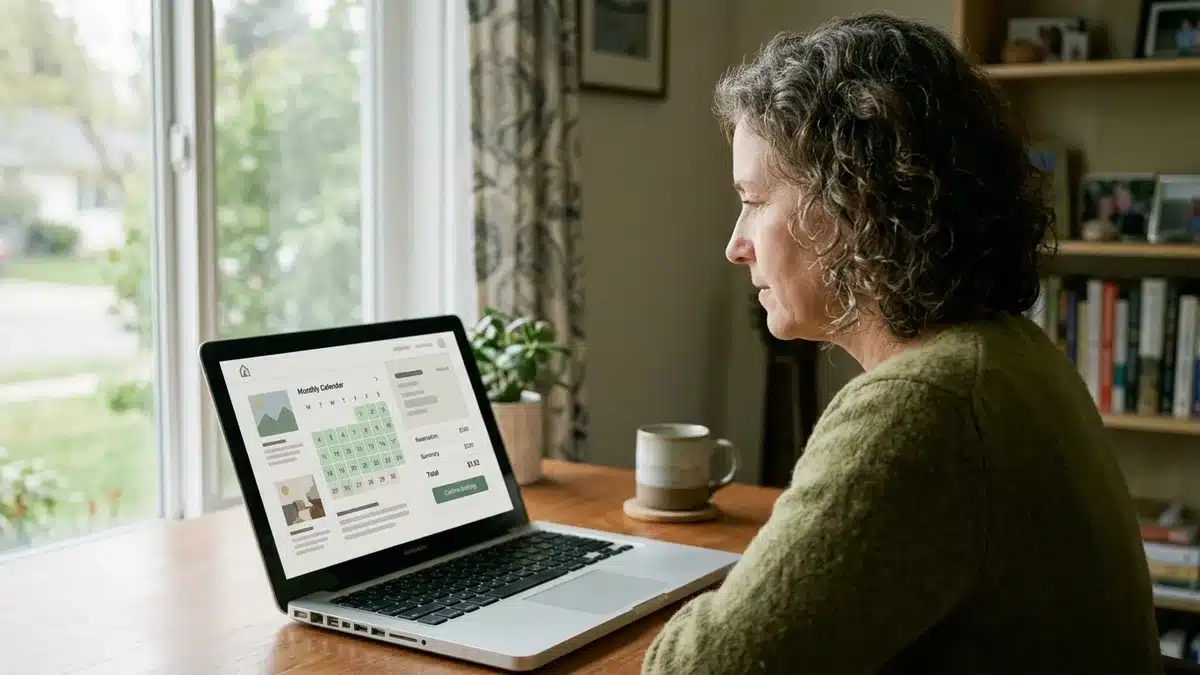
A converting direct booking website needs a working booking engine, transparent pricing, and a visible reason to book direct instead of through Airbnb. Fixing these three things costs nothing beyond the setup itself, and it's the first move that should happen before any paid marketing.
Start with pricing transparency. Show your nightly rate, cleaning fee, and any minimum stay requirements upfront, the same way guests already expect from an OTA listing. Hidden fees discovered at checkout are one of the fastest ways to lose a direct booking to a familiar platform where the guest already trusts the process.
Next, give guests a concrete reason to book direct rather than through an OTA. A best-rate guarantee, a small perk (early check-in, a welcome basket, a discount code), or simply cheaper pricing because you're not paying commission all work. Several established guides recommend using a consistent business name across every OTA listing so guests can find your direct site through a simple search after their stay.
Finally, add a clear, single call to action above the fold: “Check Availability” or “Book Now,” not a menu of five competing buttons. Every extra click between a guest landing on your page and confirming a reservation is a chance for them to bounce. This is precisely why Boostly builds every direct booking site around a single, no-code booking flow instead of handing hosts a generic template and hoping they figure out conversion themselves.
What Trust Signals Actually Move the Needle?
Guests booking direct for the first time are taking on a small leap of faith away from a platform they already trust. Visible reviews (even a handful pulled from your OTA listings), clear cancellation policies, and secure payment processing all reduce that hesitation without costing anything beyond the initial setup.
Do I Have to Choose Between Airbnb and a Direct Booking Website?
No. Keeping your Airbnb and Booking.com listings live while building a direct booking channel is the standard approach, not a compromise. OTAs still function as discovery, guests search there first, then research your property, and a well-built direct site captures the guests who are ready to rebook or refer you without ever losing your existing OTA visibility.
The mistake we see hosts make is treating direct bookings as an all-or-nothing switch. It isn't. Your Airbnb listing keeps bringing new guests into your funnel. Your direct site is where those guests land the second time, and every time after that, at a lower cost per booking. Boostly is built specifically around this layered approach: hosts keep every existing OTA listing exactly as it is, while the direct site and CRM work in parallel to capture repeat business.
Where this gets confusing for hosts is deciding how much of their marketing effort to redirect. A reasonable target many hosts work toward is shifting a meaningful share of total bookings to direct over time, not overnight. Boostly's program is structured around helping hosts reach 65% direct bookings within 12 months, and the platform backs that target with a guarantee: hosts who don't hit it within the program timeframe get their money back plus $1,000, tied to active participation in the coaching and setup process.
How Do I Get Past Guests to Book Direct Next Time Without a CRM Budget?
You get past guests to rebook direct by capturing their email or phone number at the point of booking or during their stay, then sending a simple, automated follow-up sequence after checkout. This costs far less than acquiring a new guest through paid channels and works even with a modest list.
Here's the math that makes this worth prioritizing over ad spend. According to Houfy, a repeat direct booking on a $2,000 stay saves a host between $310 and $640 compared to the same stay booked through an OTA. Scale that across just ten repeat bookings a year and you're recovering $2,520 to $5,820 that would otherwise have gone to commission, as noted above. That's revenue sitting in your existing guest list right now, not revenue you need to buy with ad spend.
The tools for this don't need to be complicated. A WiFi capture system collects guest emails legally the moment they connect to your property's network, no app download or awkward ask required. From there, a simple automated email sequence, thank you for staying, a follow-up discount a few weeks later, a seasonal reminder, does the heavy lifting without a marketing team.
Manually building this by hand means tagging guests in a spreadsheet, remembering to email them individually, and hoping you don't lose track after your fifteenth booking of the season. Most hosts stop after a month or two because the admin outweighs the payoff. This is exactly the gap Boostly's built-in CRM closes: it captures every guest's data automatically at the point of direct booking, and new members get CRM access within 24 hours of signing up, so the follow-up sequence runs without you remembering to send a single email.
What Does a Simple Repeat-Guest Sequence Look Like?
- Send a thank-you email within 24 hours of checkout, no offer attached, just a genuine note.
- Two to three weeks later, send a modest returning-guest discount or perk with a clear expiry date.
- Three to six months later, send a seasonal reminder tied to a local event or booking window.
- Twelve months later, send an anniversary-of-stay message with a fresh incentive to rebook.
None of these steps require design skill or a big list. A single host running one property can build this by hand in an afternoon. A multi-property operator managing dozens of units needs it automated, because manually tracking 200 guests across four sequences isn't sustainable past the first quarter.
Is a Loyalty Program Worth Building If I Only Have a Handful of Properties?
A loyalty program is worth building even with a single property, because the return comes from a small number of repeat bookers, not from scale. A simple points system, a returning-guest discount tier, or an early-access booking window for past guests all qualify, and none require software beyond your existing booking site and email tool.
Industry estimates cited by hotelagio.com put repeat customers at roughly 25% of vacation rental bookings, which tells you loyalty isn't a nice-to-have add-on, it's a real share of the business most hosts already have and simply aren't capturing. A simple loyalty program structure, bonus points for repeat stays, or graduated discounts based on stay count, gives guests a reason to skip the OTA search next time instead of starting from zero.
Boostly's coaching program includes templates for building exactly this kind of retention offer, part of the 80+ hours of training members get access to, so hosts aren't designing a loyalty structure from a blank page. The weekly training calls also cover how to test small incentive changes (a discount percentage, an early-checkin perk) without eroding your nightly rate, which is where a lot of DIY loyalty programs quietly lose money.
How Do I Segment Guests Without a Full Marketing Department?
Guest segmentation means grouping past guests by trip type, business travelers, families, couples, so your low-budget follow-up messages actually feel relevant instead of generic. You don't need software to start; a simple tag in your booking system or spreadsheet noting trip purpose is enough to send two or three different email versions instead of one blanket blast.
A family that stayed over a school holiday responds better to a seasonal family package offer than a couples' getaway discount. A business traveler who booked a short mid-week stay is a better candidate for a loyalty perk tied to convenience (late checkout, faster check-in) than a discount code. Most direct booking guides skip this step entirely and treat every past guest as identical, which flattens response rates and wastes the limited outreach budget a small host actually has.
As your guest list grows past what a spreadsheet can reasonably manage, this is where a connected host CRM and remarketing platform becomes worth the investment, since it assembles guest lists from Airbnb, VRBO, and direct bookings automatically and lets you build segmented, automated offers instead of manually filtering rows. Boostly's CRM performs this tagging automatically at the point of booking, so a host managing 15 units doesn't need a spreadsheet at all to send a segmented seasonal campaign.
What Should a Month-by-Month Direct Booking Plan Look Like on a Small Budget?
A realistic direct booking roadmap for a host with a small budget prioritizes fixing conversion first, then adds guest data capture, then layers in retention and light organic marketing, spread across roughly 90 days rather than attempted all at once. Trying to do everything simultaneously with no budget is how most low-cost direct booking attempts stall out by month two.
| Timeframe | Primary Focus | What to Do |
|---|---|---|
| Month 1 | Fix the booking path | Working booking engine, transparent pricing, single clear call to action, mobile check |
| Month 1 to 2 | Capture guest data | Add WiFi email capture or a booking-confirmation opt-in; start a simple guest spreadsheet or CRM |
| Month 2 | Build the follow-up sequence | Thank-you email, returning-guest discount, seasonal reminder scheduled automatically |
| Month 2 to 3 | Add light organic reach | Google Business Profile listing, consistent name across all OTA profiles, a handful of local SEO pages |
| Month 3 onward | Test and refine incentives | Try one new perk or discount tier per month, track direct share monthly, drop what doesn't move the number |
Notice paid advertising doesn't appear until nothing else is left to fix, and even then it's optional. A host who follows this sequence typically sees direct bookings become a meaningful, measurable channel well before they've spent anything on ads, simply because the booking path and guest list were doing the work.
For a small bed-and-breakfast or single-cabin host without the appetite for a complex tech stack, this same roadmap scales down cleanly: skip the CRM software in month one, use a shared spreadsheet, and add automation once the guest list grows past what's manageable by hand. Boostly's 35-day setup timeline for a done-for-you site means a host can compress the month-one work into the first five weeks and spend the rest of the quarter on retention instead of technical setup.
How Do I Know If My Low-Budget Direct Booking Strategy Is Actually Working?
The clearest sign a low-budget direct booking strategy is working is a rising share of total reservations coming from your own site rather than OTAs, tracked monthly rather than guessed at. Without a number, hosts tend to either overestimate progress from a handful of good weeks or give up too early after a slow month.
Three metrics matter more than anything else here: direct booking share (direct reservations divided by total reservations), website conversion rate (visitors who complete a booking versus total visitors), and repeat-guest direct rate (what percentage of past guests rebook direct rather than through an OTA). A 2014 OwnerRez analysis of booking data found that out of 5,324 total bookings, 759 were repeat bookings, a 14% repeat rate, giving a useful benchmark for what a healthy repeat share can look like even before any retention program is added.
Boostly's reporting dashboard tracks direct booking performance specifically, so hosts working toward the platform's 65% direct booking benchmark can see the trend monthly instead of relying on a gut feeling or a manual spreadsheet reconciliation at year end.
Frequently Asked Questions
How much money does a host typically lose to OTA commissions each year?
The exact figure depends entirely on booking volume and nightly rates, since commission structures vary by platform and region. What's consistent is that every booking routed through an OTA instead of direct costs a percentage of that reservation's total value, which compounds significantly across a full year of bookings. Boostly's direct booking approach is built to save hosts roughly 15% per booking that would otherwise go to OTA commission.
Can I get more direct bookings without spending money on ads at all?
Yes. Fixing your booking engine, capturing guest emails through WiFi login or booking confirmation, and running a simple automated follow-up sequence all cost setup time rather than ongoing ad spend. Most of the direct booking gains documented in this guide come from conversion and retention work, not paid traffic.
Do I need to stop listing on Airbnb to build a direct booking channel?
No. Keeping your existing Airbnb and Booking.com listings live while building a direct site is the standard approach most hosts use successfully. OTAs continue to bring in new guest discovery while your direct site captures repeat business and referrals at a lower cost per booking.
How long does it take to see results from a direct booking strategy?
Most hosts see measurable movement in their direct booking share within a few months of fixing their booking path and starting guest follow-up, though building this into a majority of total bookings typically takes sustained effort over 6 to 12 months. Boostly structures its program around a 12-month timeframe for this reason, backed by a guarantee tied to active participation.
What's the fastest low-cost way to start capturing guest emails?
A WiFi login capture system is one of the fastest, since it collects a guest's email the moment they connect to your property's network without requiring an app download or an awkward in-person ask. A booking-confirmation opt-in checkbox is a close second option that costs nothing beyond adding a field to your existing booking flow.
Is it safe for guests to pay directly on my own website instead of through Airbnb?
Yes, provided your direct booking site uses secure, PCI-compliant payment processing, which is standard on any properly built booking engine. Guests should see the same trust signals they'd expect from an OTA: clear cancellation policy, secure checkout, and visible reviews, all of which reduce hesitation about paying off-platform.
How do I decide what percentage of my marketing effort should go toward direct bookings versus OTAs?
Start by fixing your booking path and guest follow-up system before reallocating any spend, since these cost time rather than ad budget and typically produce the fastest direct booking gains. Once that foundation is in place, many hosts find that shifting a growing share of bookings toward direct happens naturally as repeat guests and referrals compound, without needing to actively cut OTA marketing spend.
Conclusion: Fix the Funnel Before You Fund the Ads
Getting more direct bookings without spending a fortune on marketing comes down to sequencing: fix your booking engine and pricing transparency first, capture guest data at every stay, then automate a simple follow-up sequence that turns one-time Airbnb guests into repeat direct bookers. None of this requires a media budget. It requires doing the conversion and retention work most hosts skip in favor of chasing more traffic.
As the vacation rental market keeps expanding through 2026, the hosts who win aren't the ones spending the most on ads, they're the ones who've built a booking path guests trust and a guest list they actually use. That's a fixable problem with the right system, not a budget problem.
If you're ready to stop losing repeat guests back to Airbnb and want a done-for-you site, CRM, and coaching program built specifically around this exact sequence, get started with Boostly and see what a 65% direct booking target looks like for your own portfolio.

If your current site is quietly leaking repeat guests back to Airbnb, a purpose-built direct booking website changes that math fast. Book a demo with Boostly to see the done-for-you setup, CRM, and coaching in action.