
The main competitors of Airbnb for short-term rental hosts are Vrbo, Booking.com, Expedia Group, Agoda, Trip.com, and a growing list of niche platforms like Plum Guide, GlampingHub, and Vacasa, each pulling from a different mix of the roughly 45% of bookings that currently flow through Airbnb, according to Hostfully's 2026 survey of 256 property managers. None of these platforms solve the underlying commission problem: they simply move the fee to a different name on the invoice.
Key Takeaways
- Vrbo is Airbnb's largest direct competitor, with over 2 million listings across 190 countries, focused on entire-home and family travel rather than shared spaces.
- According to Hostfully's 2026 industry survey of 256 property managers, Airbnb accounts for an average of 45% of bookings, Vrbo 15%, Booking.com 14%, and direct bookings just 20%.
- Booking.com and Expedia Group operate as broad OTAs with hotel and vacation rental inventory across 227 countries and 40+ languages, according to Booking.com's own reach data.
- Niche platforms like Plum Guide (which accepts roughly 1% of applicant homes), GlampingHub, and Fairbnb serve specific traveler segments Airbnb doesn't fully own.
- Hotel brands including Hilton Apartment Collection and Marriott Homes & Villas are now competing directly for vacation rental inventory, blurring the line between hotels and STRs.
- Boostly gives hosts a direct booking channel that sits alongside every OTA listed here, so instead of choosing which platform gets the 15% commission, hosts keep more of it themselves.
If you're an Airbnb host in 2026, you've probably already noticed the platform doesn't operate in a vacuum. Guests compare listings across Vrbo, Booking.com, and increasingly hotel-branded vacation rental programs before they ever land on your Airbnb page. Understanding where those bookings are going, and why, is the first step to deciding how to compete for them.
This guide breaks down the real competitors of Airbnb by category: the large OTAs fighting for the same guest, the niche and ethical platforms carving out smaller segments, and the hotel brands now entering the vacation rental space. We'll also cover what the research actually says about fees, guest behavior, and where direct bookings fit into the picture, because at Boostly we work with hosts every day who are trying to figure out exactly this.
What Is the Best Alternative to Airbnb?
Vrbo is generally considered the best overall alternative to Airbnb for hosts renting entire homes, with over 2 million listings across 190 countries and a guest base that skews toward families and groups rather than solo travelers or shared-space bookers.
Unlike Airbnb, Vrbo has never allowed shared rooms or single-room listings, which means the guests searching there are already looking for a whole-property experience, similar to what most STR hosts already offer. That audience overlap makes Vrbo a natural secondary channel for hosts who already have professional photography and a polished listing.
Booking.com is the next most common alternative, particularly for hosts targeting international travelers. With listings across 227 countries and support for more than 40 languages, Booking Holdings pulls a different demographic than Airbnb, often more hotel-conditioned guests who expect instant booking and flexible cancellation.
Neither platform, though, changes your underlying commission structure. Airbnb's host-only fee runs around 15.5% on a $2,000 booking, roughly $310 in commission, according to Houfy's 2026 fee breakdown, and Vrbo and Booking.com both charge comparable percentages. Adding a second OTA diversifies your traffic source, but it doesn't reduce what you're paying per booking.
Why Are People No Longer Using Airbnb As Their Only Channel?
Hosts are diversifying away from exclusive Airbnb reliance because commission costs compound quickly at scale, and because guest loyalty data increasingly favors direct relationships over any single OTA. This isn't about abandoning Airbnb, it's about not depending on it entirely.
The clearest evidence comes from repeat guest behavior. According to a 2026 report from hostAI, guests who book directly return 28.3% of the time, compared with only 8.9% through Airbnb. That's more than three times the repeat rate, and it's the single biggest reason multi-property operators start building a direct channel alongside their OTA listings.
There's also a volume story here. Airbnb reported 143.1 million nights booked in Q1 2026, an 8% year-over-year increase, according to Guesty's June 2026 market analysis. That growth is real, but the same report noted Airbnb's average daily rate slipped 1% year-over-year to $171, meaning more nights booked didn't translate into proportionally higher host revenue per stay.

This is precisely the gap Boostly was built to close. Rather than asking hosts to pick a favorite OTA, Boostly builds a direct booking website that captures guest data at the point of booking, so the 28.3% repeat-guest pattern becomes something you can actually market to instead of losing track of after checkout.
Is Vrbo or Booking.com Better for Short-Term Rental Hosts?
Vrbo suits hosts with whole-home properties targeting families and groups, while Booking.com suits hosts wanting broader international exposure and hotel-style guest expectations. Neither is universally “better”; the right choice depends on your property type and target guest.
Vrbo's audience tends to book further in advance and stay longer, which works well for larger properties in vacation-destination markets. Its listing fee structure and lack of shared-space inventory also mean less competition from budget single-room listings that can crowd Airbnb search results in dense urban markets.
Booking.com, part of the broader Booking Holdings portfolio, brings volume through its hotel-conditioned user base. Guests searching Booking.com often book on shorter notice and expect the same instant-confirm, free-cancellation experience they'd get at a hotel chain. That can mean higher turnover but also more last-minute fill-in bookings for hosts managing occupancy gaps.
In our experience working with hosts across single-unit and multi-property portfolios, the operators who do best aren't choosing one OTA over another. They're using both where relevant while building a direct booking website that doesn't pay either platform a commission at all. That's the layer most hosts skip, and it's the one with the highest margin.
Which Platforms Are Better Than Airbnb for Specific Niches?
No single platform outperforms Airbnb across every category, but several niche platforms outperform it for specific guest segments: Plum Guide for curated luxury, GlampingHub for outdoor and glamping stays, and Fairbnb for travelers prioritizing community impact over price.
Plum Guide accepts only about 1% of applicant homes after a formal inspection process, positioning itself at the premium end of the market. If your property is professionally furnished and in a desirable location, this scarcity model can command a rate premium that generalist platforms like Airbnb rarely match for the same unit.
GlampingHub focuses specifically on glamping and eco-conscious stays, drawing travelers who wouldn't necessarily search Airbnb's general category filters. Fairbnb, co-developed in 2016 by European citizens, redirects roughly half of its platform fee to local community projects, appealing to travelers who weigh ethical impact alongside price and location.
For budget and social travelers, Hostelworld combines hostel dorms with private rooms and coliving options, while Couchsurfing operates on a non-profit-oriented, non-monetary model entirely outside the commercial STR space. These aren't direct Airbnb replacements for most hosts, but they show how fragmented the guest base has become.
Vacasa, meanwhile, offers full-service property management across more than 400 destinations, competing less on booking volume and more on hands-off management for owners who don't want day-to-day involvement. If niche or managed positioning fits your property, our guide to using a property management consultant covers how to evaluate that trade-off.
How Do Aggregators and Metasearch Sites Fit Into the Competitive Picture?
Metasearch and aggregator platforms like HomeToGo and Agoda don't hold their own inventory; instead, they pull listings from Vrbo, Booking.com, and other partners, competing with Airbnb by offering guests one search across many sources at once.
HomeToGo aggregates more than 20 million offers from partner platforms, functioning as a comparison layer rather than a booking system in its own right. For hosts, this means your Vrbo or Booking.com listing might appear on HomeToGo without any additional action, but also without any additional control over how it's presented.
Agoda lists around 2 million properties, spanning hotels and private homes, and is headquartered in Singapore with particularly strong penetration across Asian markets. Trip.com offers more than 1.4 million hotel listings across 200 countries and regions, again skewing toward markets where Airbnb has less brand dominance.
Expedia Group, which owns Hotels.com and Trivago alongside its core Expedia and Vrbo brands, operates as one of the largest OTA competitors by sheer portfolio breadth. Understanding which aggregator surfaces your listing helps you diagnose where unexpected booking spikes or dips are actually coming from, something worth tracking in your own STR market insights review.
Are Hotel Brands Really Competing With Airbnb Now?
Yes. Major hotel brands have moved directly into vacation rental inventory, with Marriott Homes & Villas allowing guests to earn and redeem Bonvoy points on rental stays, and Hilton Apartment Collection entering the vacation rental market in early 2026 as part of Hilton's broader portfolio expansion.
This shift matters because it changes guest expectations. A traveler loyal to a hotel loyalty program now has a reason to book a vacation rental through that brand instead of Airbnb, purely to keep earning points. That's a guest Airbnb, and by extension your listing, never had a real shot at competing for on loyalty terms alone.
For independent hosts, this trend reinforces why building your own guest relationship matters more than ever. You can't out-loyalty-program Marriott or Hilton. But you can build a direct relationship with your own past guests that no OTA, and no hotel brand, has access to. That's a different kind of loyalty, and it's one you control entirely.
This is where Boostly's built-in CRM comes in: it captures guest details automatically at the point of direct booking, so you can run your own repeat-guest outreach without needing a hotel-scale loyalty infrastructure behind you.
Airbnb vs. Its Competitors: A Data Comparison
The table below summarizes how the major competitors of Airbnb differ in scale, audience, and positioning, based on verified figures from platform data and Hostfully's 2026 property manager survey.
| Platform | Scale / Reach | Primary Audience | Booking Share (Hostfully 2026 survey avg.) |
|---|---|---|---|
| Airbnb | 143.1M nights booked Q1 2026, 8% YoY growth | General travelers, entire homes and shared spaces | 45% |
| Vrbo | 2M+ listings, 190 countries | Families and groups, entire-home only | 15% |
| Booking.com | 227 countries, 40+ languages | Hotel-conditioned, international travelers | 14% |
| Direct booking (host's own site) | Varies by host | Repeat guests, brand-loyal travelers | 20% |
| Agoda | ~2M properties | Asia-Pacific hotels and private homes | Not separately reported |
| Trip.com | 1.4M+ hotel listings, 200 countries/regions | International, hotel-heavy inventory | Not separately reported |
What stands out here isn't just Airbnb's dominant 45% share, it's that direct bookings, at 20%, already outperform both Vrbo and Booking.com individually for the average property manager surveyed. That's a strong signal that the direct channel isn't a fringe strategy anymore, it's competitive with the second-largest OTA on the list.
What Sets Apart the Ethical and Community-Focused Alternatives?
Ethical and community-focused platforms differentiate from Airbnb by redirecting a portion of revenue toward local causes or by removing the profit motive entirely, appealing to a specific traveler segment that weighs impact alongside price.
Fairbnb's model, co-developed in 2016 by European citizens, funds community projects with roughly 50% of the tourist's platform payment. This isn't a scale play, Fairbnb will never match Airbnb's listing volume, but it captures travelers who specifically search for lower-impact or community-benefiting options.
Couchsurfing takes this further by removing money from the equation almost entirely, operating as a non-profit-oriented network built on shared living rather than commercial transactions. It's not a competitor in the revenue sense, but it does compete for the attention of budget-conscious, community-minded travelers who might otherwise book a cheap Airbnb room.
For most professional hosts, these platforms aren't where your next booking is coming from. But they're worth understanding because they represent a growing traveler segment that values transparency and story, something a well-built direct booking site can communicate far better than a generic OTA listing template ever could.
How Do Trust and Safety Features Compare Across Platforms?
Trust and safety infrastructure, verified identity, review systems, damage protection, and payment security, varies significantly across Airbnb's competitors, and this is one of the most underexamined differences for hosts choosing where to list.
Airbnb's review system and host guarantee programs are widely recognized by guests, which is part of why it retains 45% of average booking share. Vrbo and Booking.com have built comparable trust layers, but with different verification standards and different guest expectations around instant booking versus host approval.
Specifically, guests booking through Booking.com often expect hotel-grade cancellation flexibility, while Vrbo guests are more accustomed to longer-stay, less flexible terms typical of vacation home rentals. Mismatched expectations here are a common source of guest friction regardless of which platform you list on.
A direct booking site sidesteps this problem in a specific way: it lets you set your own trust signals, verified reviews pulled from your OTA history, clear house rules, and secure payment processing, without inheriting a platform's generic policy defaults. Boostly's done-for-you sites are built with these trust elements from day one, which matters because guests need to feel just as confident booking on your own page as they would on Airbnb.
Practical Guidance: How Should You Actually Respond to Airbnb's Competitors?
The right response to a fragmented competitive landscape isn't picking a single winning platform, it's building a channel strategy where OTAs bring new guests and your own direct site brings them back. Here's how to approach it:
- Audit your current booking mix. If you don't know what percentage of your bookings come from Airbnb versus Vrbo versus direct, you can't make an informed decision. Hostfully's 2026 survey average (45% Airbnb, 20% direct) is a useful benchmark to compare against.
- Don't quit any platform prematurely. Diversifying doesn't mean abandoning Airbnb or Vrbo. It means adding a channel, not replacing one blindly.
- Capture guest data at every booking. Whichever platform a guest books through, make sure you have a system to bring them back directly next time. Tools like StayFi's WiFi capture system or a host CRM and remarketing platform are common examples of building this from scratch.
- Understand what a repeat guest is actually worth. Hostaway's definition of repeat guest makes the case clearly: zero acquisition cost and higher conversion rates than first-time bookers.
- Avoid the common mistake of chasing five-star reviews at the expense of infrastructure. Reviews matter, but a five-star rating on Airbnb with no direct booking system behind it still leaves 15%+ of every booking on the table.
- Build the direct channel properly, not as an afterthought. A generic WordPress template with no booking engine won't convert. This is exactly the gap Boostly's done-for-you website build closes, live within 35 days, with real-time PMS sync across 27+ platforms so your direct site never shows outdated availability.

Frequently Asked Questions
What is the best alternative to Airbnb for property managers?
For property managers handling multiple units, Vrbo and Booking.com are the most commonly used OTA alternatives, but the highest-margin alternative is building a direct booking website that eliminates commission entirely on repeat and referral guests.
Why are people no longer using Airbnb exclusively?
Hosts are diversifying because commission costs compound at scale and because direct guests return at more than three times the rate of Airbnb guests (28.3% versus 8.9%, according to hostAI's 2026 report), making a single-platform strategy increasingly costly over time.
Is Vrbo or Airbnb better for hosts?
Neither is universally better. Vrbo suits whole-home properties targeting families with no shared-space competition, while Airbnb offers broader reach and higher overall booking volume, at 143.1 million nights in Q1 2026 alone, per Guesty's market data.
Which platform is better than Airbnb for niche properties?
Plum Guide fits curated luxury properties, GlampingHub fits outdoor and glamping stays, and Fairbnb fits hosts appealing to community-impact-conscious travelers. None replace Airbnb's volume, but each captures a segment Airbnb doesn't dominate.
Do I have to stop listing on Airbnb to build a direct booking site?
No. A direct booking website works alongside your existing Airbnb, Vrbo, and Booking.com listings. Boostly's platform is specifically designed to integrate with your current OTA presence rather than replace it, syncing calendars in real time across 27 or more property management systems.
How much commission does a typical host lose to Airbnb and other OTAs?
Airbnb's host-only fee runs approximately 15.5% on a typical booking, for example about $310 on a $2,000 stay, according to Houfy's 2026 fee data. Vrbo and Booking.com charge comparable percentages, meaning every booking routed through an OTA carries a similar cost regardless of which one you choose.
What percentage of bookings should come from direct channels?
There's no universal target, but Hostfully's 2026 survey found the average property manager already gets 20% of bookings direct, more than either Vrbo or Booking.com individually. Boostly's program is built around a 65% direct booking benchmark within 12 months, tied to consistent use of the platform's website, CRM, and coaching resources.
Conclusion: Choosing Your Position Among Airbnb's Competitors
The competitors of Airbnb, Vrbo, Booking.com, Expedia Group, Agoda, and the growing list of niche and hotel-branded platforms, aren't going anywhere in 2026. Each pulls a different slice of guest demand, and most hosts will end up listing on more than one. But the data is clear on one point: direct bookings already outperform individual OTAs like Vrbo and Booking.com in booking share for the average property manager, and repeat direct guests return at more than three times the rate of Airbnb guests.
The smartest response isn't picking a favorite platform. It's building the direct channel you actually own, one that captures guest data, keeps availability synced, and brings past guests back without paying a fresh commission every time. That's the exact gap Boostly was built to close, and it's why over 2,000 hosts globally now use it as the layer that sits underneath all their other listings.
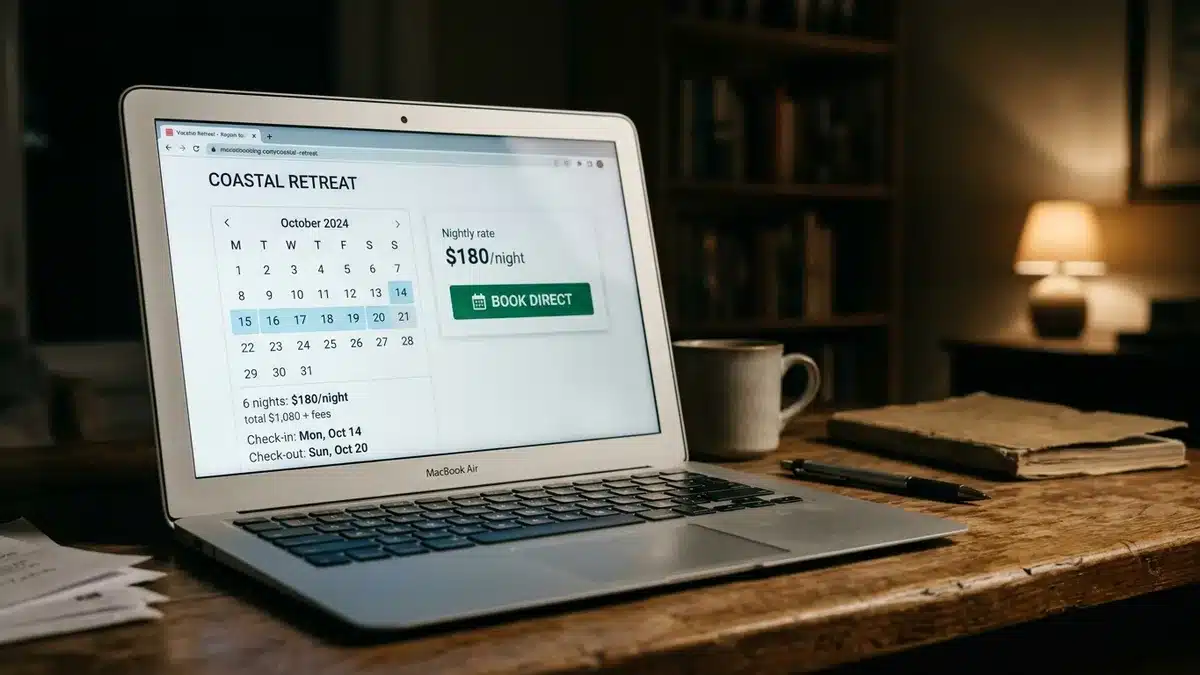
If you're ready to see what a conversion-focused direct booking site looks like against every platform covered in this guide, book a demo with Boostly and we'll walk through what your own direct booking numbers could look like within 12 months.