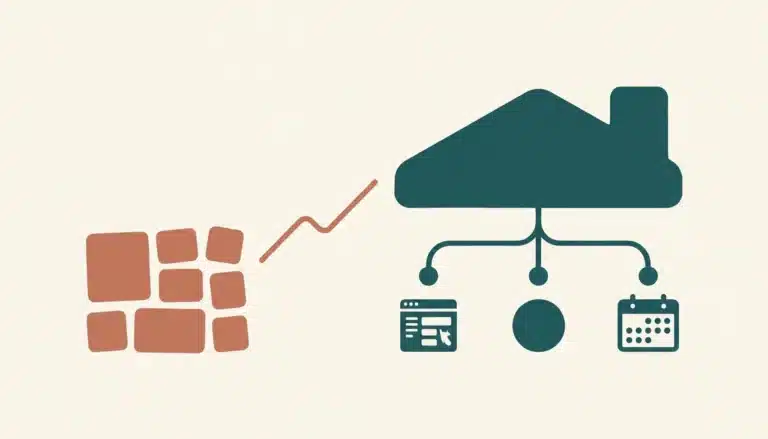
The best software for developing a strong direct booking presence online is a platform that combines a conversion-focused booking engine, a real-time synced property management system connection, and a built-in guest CRM, not a website builder alone. A direct booking site without a connected PMS and follow-up marketing system will generate traffic but rarely converts that traffic into repeat, commission-free revenue.
Key Takeaways
- A strong direct booking presence needs three connected layers: a booking engine, PMS/channel manager sync, and a guest CRM for follow-up marketing, not a standalone website.
- Direct bookings avoid the roughly 15.5% host-only fee Airbnb charges on a typical booking, which equals $310 on a $2,000 stay, according to Houfy's 2026 analysis.
- Direct bookings also run 45.2% longer on average than OTA-sourced stays, per the same Houfy data, which changes how you should design your booking calendar and minimum-stay rules.
- Repeat direct bookings cost far less in processing fees than OTA bookings; Houfy estimates around $58 in Stripe processing fees versus $310 in OTA commission on a $2,000 stay.
- Boostly builds the done-for-you website, connects to 27+ PMS platforms with real-time sync, and includes a CRM active within 24 hours, backed by a guarantee of 65% direct bookings within 12 months or your money back plus $1,000.
- You do not need to abandon Airbnb or Booking.com to run a direct booking strategy; the right software layers on top of your existing listings rather than replacing them.
If you're reading this in 2026, you've probably already noticed the gap between the traffic your listing gets on Airbnb and the trickle that actually lands on your own website. That gap is not usually a marketing problem. It's a software problem. Most hosts try to bolt a booking button onto a generic website template and wonder why nobody uses it.
At Boostly, we work with STR hosts and multi-property operators across the US, UK, and Europe who come to us after their first direct booking attempt stalled out. The pattern is almost always the same: a nice-looking site, no real booking engine, no PMS sync, and no system to follow up with guests after checkout. Building a direct booking presence that actually converts requires software that does three jobs at once, not one job done well in isolation.
This guide breaks down exactly what that software stack needs to include in 2026, what each layer does, where hosts typically waste money, and how to evaluate options by property type and portfolio size rather than chasing the vaguely “best” tool on a listicle.
How Do You Build a Direct Booking Website That Actually Converts?
Building a direct booking website that converts requires four connected components: a booking engine that processes payments and blocks dates in real time, a PMS integration that keeps availability accurate across every channel, mobile-optimized design, and trust signals that reassure guests paying outside Airbnb's ecosystem. Skipping any one of these means traffic without bookings.
Most hosts start by choosing a website look and worry about the booking mechanics later. That's backwards. A booking engine, as Hotel Tech Report defines it, is software that lets guests make a reservation directly on your own site rather than through a third-party marketplace. Without one, your “direct booking website” is really just a brochure with a contact form, and guests will not wait around for a callback when Airbnb lets them book in two taps.
Payment processing has to be seamless too. According to roommaster's description of booking-engine functionality, these systems securely process payments and instantly send reservation details back to the property system, which is exactly what prevents the double bookings that erode guest trust fastest. If your current site can't do that, you have a marketing page, not a sales channel.
This is the exact gap we built Boostly to close. Every site we build is live within 35 days, comes with an integrated booking engine and secure payment processing from day one, and requires no coding on the host's part. You're not stitching together a page builder and a separate payment plugin; the whole thing works as one system from the first guest visit to the confirmed reservation. For a deeper walkthrough of the build process, our guide on how to build a direct booking website covers the sequencing in more detail.
Which Direct Booking Platform Is Best for Your Property Type?
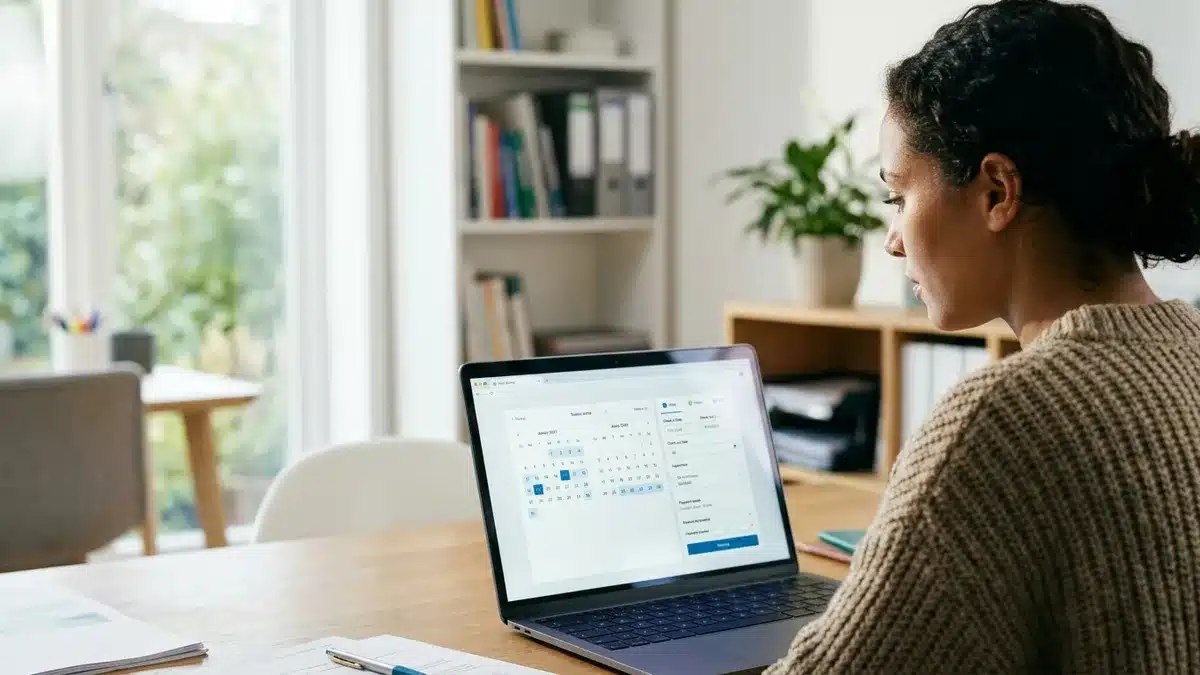
The right direct booking platform depends primarily on property count and operational complexity, not on a single universal “best” product. A single-unit host, a 20-property portfolio manager, and a boutique serviced-apartment operator each need different priorities from the same core software categories.
Independent hotels and B&Bs typically need a booking engine tightly wired to a front-desk PMS so room-level availability updates instantly; WifiTalents' comparative rankings note that products built for this workflow are judged specifically on how tightly the booking-to-front-desk link performs. Vacation rental operators, in contrast, care more about calendar sync across Airbnb, Vrbo, and their own site simultaneously, since a single missed sync creates a real double booking, not just a scheduling headache.
Multi-property operators running five to fifty units face a different problem entirely: keeping pricing and availability consistent across every unit without adding headcount. That's where a real-time PMS sync stops being a nice-to-have and becomes the thing that prevents costly errors. Boostly connects with 27 or more property management systems and syncs listings, availability, and pricing in real time, which means a portfolio operator can add or adjust a unit once and have it reflected everywhere instantly.
Boutique and design-led hosts have a third priority again: brand and guest experience. A generic template undersells a characterful property. For these hosts, the website itself needs to carry the same identity as the physical space, something a done-for-you build can reflect far more precisely than a drag-and-drop template ever will.
What Is the Best Online Booking Software for Short-Term Rentals in 2026?
The best online booking software for short-term rentals in 2026 combines a conversion-optimized booking engine with a connected PMS and an automated guest marketing layer, delivered as one system rather than three separate subscriptions. Piecing together a website builder, a channel manager, and an email tool separately creates sync gaps and leaves no one accountable when something breaks.
The global vacation rental market reached an estimated $106.5 billion in 2026, according to Grand View Research, and the property management software market supporting it is valued at roughly $3.8 billion this year, growing toward $5.9 billion by 2033. That growth is driven specifically by cloud-based tools, AI-assisted pricing, and contactless guest experiences, not by hosts adding more manual spreadsheets to their workflow.
StayFi's 2026 market data also lists Boostly among vacation-rental website builders that provide a customized site paired with a booking engine, distinct from general-purpose website platforms that require third-party plug-ins to handle reservations. That distinction matters: a purpose-built direct booking system handles payments, availability, and guest data capture natively, while a generic builder needs several bolted-on tools to do the same job, each with its own login and its own point of failure.
For hosts specifically worried about losing OTA volume by focusing on direct, the honest answer is that you don't have to choose. Boostly's model works alongside your existing Airbnb and Booking.com listings rather than replacing them, so the direct channel grows without your OTA calendar going quiet.
What Software Do Hotels and Vacation Rentals Use for Booking?
Hotels and vacation rentals both rely on booking-engine software, but the underlying systems differ by property type. Hotels typically pair a booking engine with a full PMS handling front-desk operations, housekeeping, and folio management, while vacation rental operators pair a booking engine with a channel manager and guest communication tools tuned to remote, unattended check-ins.
Industry comparisons from WifiTalents rank several PMS-linked booking tools on how well they centralize rate, availability, and commission control while automating distribution across channels. That centralization is the whole point: a host managing four listings across three OTAs and one direct site without synced software is manually updating calendars in four places every time a date books, which is exactly how double bookings happen.
For short-term rental operators specifically, the calculation is different from a hotel's. You're not managing a front desk; you're managing guest trust at a distance, remote check-in instructions, and a marketing funnel that has to work without a concierge desk pushing upsells in person. That's a software problem more than a hospitality-operations problem, and it's the specific gap Boostly's CRM and automated guest marketing tools were built to close, giving hosts CRM access within 24 hours of signing up rather than months into a manual build-out.
What Does a Complete Direct Booking Software Stack Actually Include?
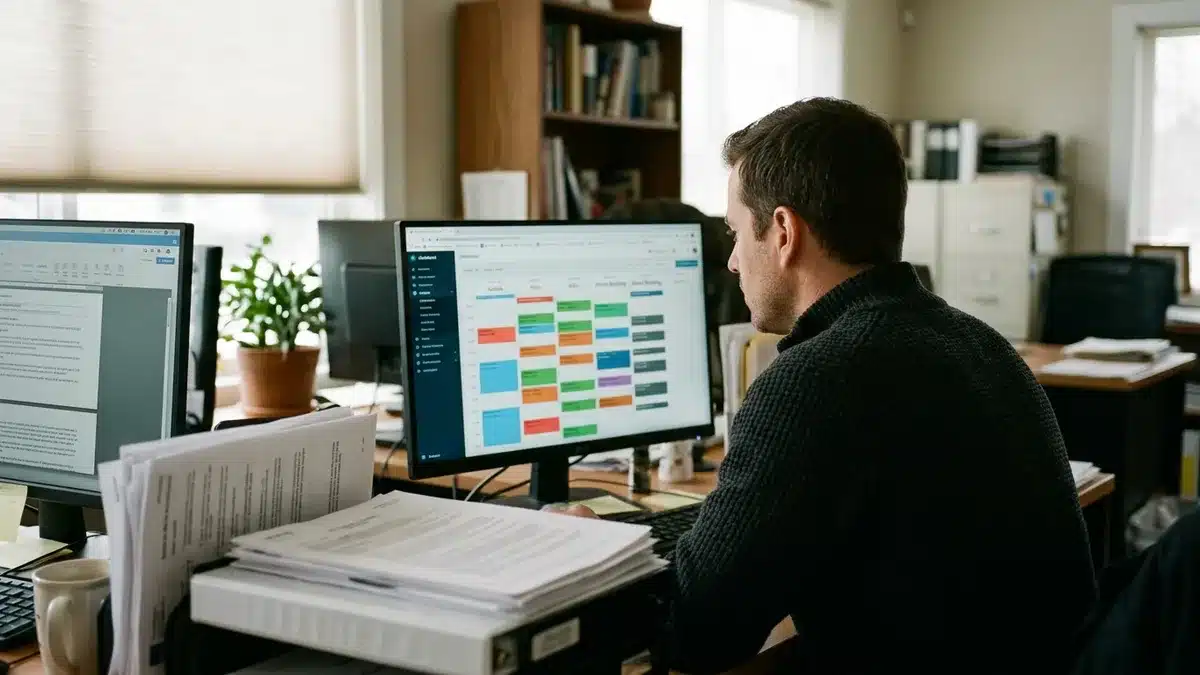
A complete direct booking software stack includes six functional layers: a booking engine, PMS or channel manager sync, secure payment processing, an SEO-ready website, a guest CRM for retention marketing, and analytics reporting on direct booking performance specifically. Most comparison articles online only evaluate the website layer and ignore the other five.
| Layer | What It Does | What Happens Without It |
|---|---|---|
| Booking Engine | Processes reservations and payments on your own site | Guests fill out a contact form and wait; most leave |
| PMS/Channel Sync | Keeps availability accurate across every listing channel | Manual calendar updates, double bookings, stale rates |
| Payment Processing | Secures card payments and confirms reservations instantly | Delayed confirmations, guest distrust, abandoned bookings |
| SEO-Ready Website | Makes the site findable for property and destination searches | Site exists but never appears when guests search for it |
| Guest CRM | Captures guest data and automates repeat-booking follow-up | Past guests never hear from you again after checkout |
| Direct Booking Analytics | Tracks what percentage of revenue is actually direct | No visibility into whether the strategy is working at all |
The most common gap we see, and one most comparison guides skip entirely, is the CRM and analytics layer. A host can have a beautiful booking engine and still have no idea what percentage of their revenue is coming direct versus through OTAs, because nobody built the reporting to track it. Boostly includes analytics specifically on direct booking performance, so you can measure progress toward a benchmark like the 65% direct booking target rather than guessing.
Repeat guests matter more here than most hosts realize. Hostaway's glossary defines a repeat guest as a returning customer who typically converts at a higher rate and carries zero new acquisition cost, and industry research puts repeat customers at roughly 25% of vacation rental bookings overall. Without a CRM capturing guest data at the point of booking, you have no mechanism to bring that 25% back.
What Is the Total Cost of Running a Direct Booking Strategy?
The total cost of a direct booking strategy includes software subscription fees, payment processing charges, and the OTA commission you avoid, and the math consistently favors direct once repeat bookings are factored in. A single repeat direct booking on a $2,000 stay saves a host between $310 and $640 compared to booking the same stay through an OTA, according to Houfy's 2026 breakdown.
Here's how that breaks down specifically. Airbnb's host-only fee runs around 15.5% on a typical booking, meaning a $2,000 reservation carries roughly $310 in commission. Route that same booking direct and process it through a standard 2.9% payment processor rate, and you're paying closer to $58 in processing fees instead. Scale that across ten repeat direct bookings a year, and Houfy estimates hosts recover between $2,520 and $5,820 that would otherwise have gone to OTA commission.
That gap compounds because direct bookings also run longer on average. Houfy's data shows direct bookings produce stays 45.2% longer than OTA-sourced reservations, which means each direct booking is worth more before you even factor in the commission savings.
The software cost side of this equation is the part most hosts underestimate before they start. Piecing together a website builder, a separate channel manager subscription, a separate email marketing tool, and a freelance developer to connect them all adds up fast in both dollars and hours. Boostly consolidates that into one system with a website build, PMS integrations, CRM, and weekly coaching included, backed by the guarantee that if you don't hit 65% direct bookings within 12 months, you get your money back plus $1,000.
How Do You Choose Between a Booking Engine and a Full Growth Stack?
A standalone booking engine only processes reservations on your website; it does not handle SEO, guest retargeting, abandoned-booking recovery, or repeat-guest marketing. Most hosts researching direct booking software focus entirely on the booking engine comparison and completely miss this distinction, which is exactly where campaigns quietly underperform.
Hotel Tech Report's own definition draws this line clearly: direct-booking tools sit on top of a website and booking engine specifically to influence guest behavior during the booking journey itself, things like exit-intent offers, rate comparisons against OTAs, and urgency messaging. A bare booking engine has none of that built in. It waits for a guest to already know they want to book and simply processes the transaction.
If your only goal is replacing a phone-and-email booking process with an online form, a standalone engine might be enough. But if your goal is actually shifting volume away from OTAs, you need the layer above it: SEO structure that gets found in the first place, email and SMS automation that recovers guests who almost booked, and a CRM that turns a one-time guest into a repeat one. That's the difference between a booking tool and a growth system, and it's the reason our platform bundles automated guest follow-up and marketing automation into the core build rather than selling it as an add-on. Our piece on using a book direct marketplace to drive direct bookings goes deeper into the retargeting side of this.
For hosts weighing lead-generation tactics that work entirely off-platform, resources like the Price of Business guide on growing a vacation rental business cover email marketing fundamentals worth understanding even before you pick software.
What Should You Prioritize When Evaluating Direct Booking Software?
Prioritizing direct booking software correctly means evaluating five factors in order: PMS compatibility with your current tools, implementation timeline, guest data ownership, mobile checkout performance, and ongoing support structure. Ranking these out of order, chasing design first and integration last, is the single most common mistake hosts make.
- PMS compatibility. Confirm the platform syncs in real time with whatever system you already use for calendars and pricing. A platform with 27 or more integrations, as Boostly maintains, reduces the odds you're stuck rebuilding your operations from scratch.
- Implementation timeline. Ask for a specific number of days, not a vague “quick setup” promise. Boostly commits to a live site within 35 days of signing up, which gives you a concrete date to plan around.
- Guest data ownership. Confirm you own the guest data captured through direct bookings, not just the platform vendor. This is what makes a CRM valuable rather than decorative.
- Mobile checkout performance. A significant share of direct traffic arrives on mobile devices; test the actual booking flow on a phone before committing, not just the homepage.
- Support and training structure. Software alone doesn't fix a weak direct booking strategy. Look for ongoing coaching, not just a help desk ticket system, since strategy questions come up long after launch.
Common mistakes worth naming directly: chasing five-star review counts while ignoring booking infrastructure is a costly distraction, since reviews don't matter if the booking button doesn't convert. Similarly, building a beautiful website with no PMS sync creates a false sense of progress while double bookings quietly pile up behind the scenes. And treating SEO as optional because “the website exists” ignores that a site nobody finds generates zero direct revenue regardless of how well it converts once someone lands on it.
Data & Evidence: What the 2026 Market Numbers Actually Show
Market data from 2026 confirms that short-term rental supply keeps expanding faster than demand, which raises the stakes for hosts relying entirely on OTA visibility. StayFi reports U.S. short-term-rental listings are projected to grow from 1.69 million in 2026 to 1.77 million in 2026, while demand growth is expected to moderate from 4.7% to 4.1% year over year.
That combination, more listings competing for slightly slower-growing demand, means standing out inside the OTA algorithm gets harder every year, not easier. AirDNA data cited by Hotel Tech Report shows U.S. vacation rental supply grew more than 15% every quarter since early 2022, a pace that outstrips almost any individual host's ability to out-rank the competition purely through OTA optimization.
Meanwhile, U.S. travelers spent an estimated 207 million nights in vacation rentals as of 2023 data reported by Hotel Tech Report, with roughly 62 million people staying in U.S. vacation rentals in 2026 alone. That's a large and growing pool of guests, but a shrinking share of them can realistically be reached through OTA search results alone as supply saturates.
This is precisely why a direct booking channel stops being optional and starts being a hedge against algorithm dependence. Hosts who diversify away from 100% OTA reliance are protecting themselves against a market where supply growth outpaces demand growth, a trend the 2026 data confirms is already underway.

How Do You Measure Whether Your Direct Booking Strategy Is Working?
Measuring direct booking success requires tracking one specific metric consistently: the percentage of total bookings, and total revenue, coming from your own site versus OTAs, tracked monthly rather than checked occasionally. Most hosts genuinely don't know this number because no one has built the reporting to calculate it automatically.
Without dedicated analytics, hosts default to a rough gut feeling, “direct bookings feel like they're picking up,” which isn't a strategy, it's a hope. A real reporting system should show direct booking rate, average direct booking value against OTA average, and month-over-month trend, ideally without you manually pulling numbers from three different platforms into a spreadsheet every week.
This is the reporting layer we built directly into Boostly, giving hosts a clear read on their progress against the platform's 65% direct booking benchmark rather than a vague sense that things are improving. When you can see the number moving, you can also see which specific marketing action, an email campaign, a seasonal offer, a Google-optimized page, actually moved it, which is impossible to isolate without the data in front of you.
What Trade-offs Should You Understand Before Committing to a Platform?
Direct booking software requires an honest trade-off: some upfront setup time and a shift in marketing mindset, in exchange for long-term commission savings and guest ownership. Platforms promising instant, effortless results without any host involvement are overselling what any software can realistically deliver.
Direct bookings won't replace your OTA volume overnight. Most hosts see the shift happen gradually over six to twelve months of consistent effort, not in the first thirty days after launch. That's not a flaw in any specific platform; it reflects how long it genuinely takes for a new booking channel to build organic search visibility and repeat-guest momentum.
You should also weigh how much ongoing marketing effort a platform expects from you versus how much it automates on your behalf. A pure booking engine leaves the marketing entirely in your hands. A fuller system, like the one Boostly builds, automates guest follow-up and repeat-booking campaigns so the marketing keeps running even during weeks you don't have time to think about it, which matters most for hosts who are also cleaning, managing guests, and running the rest of the business solo.
Frequently Asked Questions
Is there a platform for building an easy-to-use direct booking channel?
Yes. A direct booking platform built specifically for short-term rentals handles the website, booking engine, and payment processing as one connected system rather than requiring you to combine separate tools. Boostly builds this type of done-for-you site with no coding required, live within 35 days of signing up.
How do I establish a direct booking website for my rental properties?
Start by confirming which PMS or channel manager your properties currently use, since your website needs real-time sync with it to avoid double bookings. From there, prioritize a booking engine with secure payment processing, mobile optimization, and a guest CRM, rather than a template site with a contact form.
Are there any guides or tools to help set up a direct booking system on my website?
Yes, several resources cover the setup process, including HostPapa's overview of listing optimization and direct booking basics, and Boostly's own guide to building a direct booking website. The right tool combines a booking engine, PMS integration, and CRM rather than treating the website as a standalone project.
What's the best way to track direct booking performance?
Track your direct booking rate as a percentage of total bookings each month, alongside average booking value compared to your OTA channels. This requires dedicated analytics rather than manual spreadsheet tracking; Boostly's platform reports on direct booking performance specifically so hosts can see progress toward a benchmark over time.
How do I start a direct booking website?
You start by choosing a platform that includes a booking engine and PMS sync rather than a generic website builder, since those two components determine whether the site actually converts. Most done-for-you platforms, including Boostly, get hosts live within about 35 days without requiring any coding knowledge.
Do I have to stop listing on Airbnb to run a direct booking strategy?
No. A direct booking website works alongside your existing Airbnb and Booking.com listings rather than replacing them. Most hosts keep both channels active and simply route repeat and referred guests to their own site to avoid OTA commission on those specific bookings.
What happens if my direct booking strategy doesn't hit its target?
That depends on the platform and program terms. Boostly backs its service with a guarantee that hosts who don't reach 65% direct bookings within 12 months of active program participation receive their money back plus $1,000, reflecting confidence in the underlying system rather than a blanket promise for every scenario.
Do I need coding or technical skills to run a direct booking site?
No. Modern direct booking platforms, including Boostly, build the site for you with no coding required, handling the booking engine, PMS integration, and payment setup on your behalf. Your ongoing involvement is mostly guest marketing and strategy, supported by training rather than technical maintenance.
Conclusion: Choosing Software That Builds a Direct Booking Presence, Not Just a Website
The strongest direct booking presence in 2026 comes from software that connects a booking engine, PMS sync, and guest CRM into one system, not from picking the prettiest website template. As the market data confirms, supply is growing faster than demand across U.S. short-term rentals, which makes OTA-only visibility a riskier long-term bet every year.
Getting to a healthy direct booking share isn't about one big software purchase. It's real-time PMS sync, a booking engine that actually converts, and automated guest follow-up, run consistently over months, not days. Hosts who treat direct bookings as a real channel worth building, rather than a side project, are the ones who stop handing 15%+ of every booking to an OTA.
If OTA commissions are quietly eating your margin and your current website isn't converting traffic into bookings, Boostly is built specifically to close that gap: a done-for-you website live within 35 days, real-time sync across 27+ PMS platforms, CRM access within 24 hours, and weekly coaching backed by an actual guarantee. Book a demo to see what a fully connected direct booking system looks like against your own numbers.

Book a demo with Boostly and see exactly what a direct booking website built for conversion, not just appearance, looks like for your properties.