
The best PMS for vacation rentals with an integration to Booking.com is one that connects through a direct API rather than an iCal feed, syncing rates, availability, and guest messages in real time. Direct API connections eliminate the delay that causes double bookings, while iCal only updates calendar blocks on a lag. Which specific system fits your operation depends on your portfolio size and how much of the work you want automated versus done for you.
Key Takeaways
- A direct API integration with Booking.com syncs rates, availability, and messages in real time; an iCal feed only blocks calendar dates and often lags by minutes or hours.
- Booking.com's partner ecosystem includes tiered connectivity statuses, and the tier your PMS holds affects how reliably your listing content and pricing push through.
- Most PMS platforms bundle a channel manager, unified inbox, dynamic pricing, and reporting, but the depth of each feature varies significantly by provider.
- Migration risk and onboarding time matter as much as the integration itself; few buying guides cover total cost of ownership.
- The U.S. short-term rental supply is projected to reach 1.77 million listings in 2026, up from 1.69 million previously, meaning channel reliability matters more as competition for guests grows.
- Boostly connects with 27+ PMS platforms and syncs listings, availability, and pricing in real time, so hosts running a direct booking site alongside Booking.com never face a rate mismatch or a double-booked night.
If you manage even two properties on Booking.com, you already know the fear: a guest books a night your calendar hadn't blocked yet, and now you're refunding one of them and apologising for the other. That's not a hypothetical. It's the most common operational failure we hear about from short-term rental hosts before they fix their tech stack.
Choosing a property management system with a Booking.com integration determines whether your business runs itself or whether you're refreshing five tabs every morning to check for conflicts. In 2026, with short-term rental supply climbing and guest expectations for instant confirmation higher than ever, the quality of your PMS-to-OTA connection is a revenue decision, not just a convenience one.
This guide walks through what “integration to Booking.com” means at a technical level, what separates a good PMS from one that just claims connectivity, and how to think about total cost of ownership rather than just the sync itself. We'll also cover where a PMS ends and where a direct booking strategy needs to pick up the slack, because at Boostly, that's the exact gap we built our platform to close.
What Is the Best Software to Manage Vacation Rentals?
The best vacation rental software combines a channel manager, a booking calendar, guest messaging, and payment processing into one connected system, rather than requiring separate tools that don't talk to each other. The strongest systems in 2026 handle Booking.com, Airbnb, and Vrbo through direct API connections rather than delayed calendar-only feeds.
Most PMS platforms group their feature set into five categories: a channel manager to push rates and availability everywhere at once, a unified inbox for guest messages across platforms, dynamic pricing tools, a direct booking engine, and reporting dashboards. The gap between providers isn't usually whether they have these features. It's how deep each one goes.
A channel manager that only supports Airbnb and Vrbo but treats Booking.com as an afterthought will cost you visibility on one of the largest OTAs globally. Booking.com recorded 319 million total nights with 7% year-over-year growth in Q1, so treating that channel as secondary is a real revenue risk.
When we talk to multi-property operators about their tech stack, the question isn't “does it have a Booking.com integration” but “how does the data move.” That distinction is the entire subject of the next section, and it's the one most buying guides skip entirely.
What's the Difference Between Direct API and iCal Sync for Booking.com?
Direct API integration pushes rate, availability, content, and message data between your PMS and Booking.com in real time, the moment something changes on either side. iCal sync only shares calendar block dates and typically updates on a delay, depending on the platforms involved.
This distinction matters more than almost anything else on a PMS feature list. If your system relies on iCal, a booking made on Booking.com at 2:14pm might not block your Airbnb calendar until the next scheduled sync cycle. During that window, a second guest can book the same night on a different channel. That's a double booking, and it's one of the fastest ways to damage your guest reviews.
With a direct API connection, the moment a reservation comes in on any connected channel, availability updates everywhere else instantly. Rates, content changes, and guest messages flow both directions without a lag. This is why you should prioritise PMS providers that hold direct API status with Booking.com over ones that only support calendar-only feeds.
Ask any PMS provider directly: “Is your Booking.com connection API-based or iCal-based?” If they hesitate or answer vaguely, that's your answer. And if you're running a direct booking site alongside your OTA channels, this same real-time logic needs to extend there too, which is exactly why Boostly syncs listings, availability, and pricing across 27+ PMS platforms in real time rather than relying on delayed calendar feeds.
How Do Booking.com Partner Tiers Affect Your PMS Choice?
Booking.com operates a tiered partner certification system for connectivity providers, and the tier your PMS holds directly affects how reliably your content, rates, and availability sync through. Higher tiers generally indicate a more mature, tested integration with fewer sync failures and faster support response when something breaks.
In practical terms, a provider with a lower-tier or basic connection may push availability correctly but struggle with content updates like photos or promotional pricing. A higher-tier partner typically supports a fuller range of Booking.com's API capabilities, including instant booking confirmations and more granular rate plan management.
Here's the operational catch nobody tells new hosts: you can't verify partner tier by reading a PMS's homepage. Marketing pages tend to lead with badges and certification language without explaining what functionally changes between tiers. If a PMS provider claims a specific Booking.com partner status, ask them directly what that tier enables that a lower tier doesn't, specifically around rate plan flexibility and instant confirmation support.
This is a genuine content gap in the industry. Most comparison articles mention “Booking.com integration” as a checkbox rather than explaining what partner tier buys you operationally. Treat tier status as one input among several, not the single deciding factor: a mid-tier partner with excellent support can outperform a top-tier partner with a backlog of unresolved tickets.

What Is the 80/20 Rule for Airbnb Hosts?
The 80/20 rule, as commonly discussed among short-term rental hosts, refers to the idea that roughly 80% of your booking revenue tends to come from around 20% of your effort or listings, typically your best-performing property or your most effective channel. It's a general business heuristic borrowed from other industries, not an official Airbnb policy or algorithm rule.
In an STR context, hosts often apply this thinking to figure out where their PMS and marketing effort should concentrate. If one property or one channel consistently outperforms the rest, doubling down on what makes that listing work , photos, pricing strategy, response time , tends to produce better returns than spreading effort evenly across every property and platform.
This is where PMS reporting becomes useful rather than decorative. A system with solid analytics will show you which channel, including Booking.com, is actually converting best for each property, so you're not guessing where to focus. Weak reporting dashboards hide this information behind vanity metrics like total page views instead of booking conversion by source.
If you're not sure which of your properties or channels fits that top 20%, that's usually a sign your current PMS reporting isn't specific enough. It's a diagnostic worth running before you invest more marketing budget anywhere.
What Is the Best PMS for Airbnb and Multi-Channel Hosts?
There is no single “best” PMS for every Airbnb host, because the right choice depends heavily on portfolio size and whether you self-manage or run a team. What matters more than any single feature is whether the system's channel manager treats Airbnb, Booking.com, and Vrbo with equal reliability, rather than favouring one over the others.
For solo hosts with one or two units, a simpler system with a straightforward unified inbox and basic channel sync is often enough. Multi-property operators managing five or more units typically need deeper automation, including templated guest messaging and task assignment for cleaning teams.
Most PMS comparison content stops at “which system has the most channels” without asking which use case each system actually serves well. A system built for a 200-unit management company will overwhelm a solo host with unnecessary complexity, while a lightweight tool built for solo hosts will buckle under the accounting and staffing needs of a larger portfolio.
The smarter question isn't “what is the best PMS” but “what is the best PMS for a host with my specific property count, team size, and channel mix.” Answer that first, and the list of viable options narrows fast.
How Should You Compare PMS Options by Total Cost of Ownership?
Total cost of ownership for a vacation rental PMS includes more than the advertised subscription price. It typically covers per-listing fees, add-on charges for extra channel connections, onboarding or setup costs, and the ongoing time investment required to keep every system connected and accurate.
Most buying guides compare PMS options purely on feature checklists , channel count, unified inbox, dynamic pricing , without ever mentioning that many providers charge per-listing fees that scale with your portfolio. A system that looks affordable at two properties can become expensive fast once you cross into double digits.
Here's a framework for evaluating cost honestly:
| Cost Factor | What to Ask | Why It Matters |
|---|---|---|
| Per-listing pricing | Does the fee scale per unit, per bedroom, or flat? | Determines whether cost grows faster than revenue as you scale |
| Add-on channel fees | Is Booking.com connectivity included or an extra charge? | Some providers bundle OTAs, others charge separately per channel |
| Onboarding time and cost | How long until you're fully live and synced? | Lengthy onboarding delays revenue and increases manual double-entry risk |
| Support responsiveness | What's the actual response time for sync failures? | A broken sync during peak season costs bookings, not just annoyance |
| Data portability | Can you export your booking history and guest data if you switch? | Vendor lock-in is a real risk few hosts consider upfront |
Very few articles on this topic address migration risk directly. If you're switching PMS providers, ask specifically how reservation history and guest contact data transfer, and test the new sync on one property before moving your whole portfolio.
What Features Should a Vacation Rental PMS Include Beyond Channel Sync?
A complete vacation rental PMS goes beyond channel syncing to include a unified inbox for guest messages, automated task workflows for cleaning and maintenance, dynamic pricing tools, and financial reporting by property and channel. Channel sync solves the double-booking problem, but it doesn't solve guest communication or operational coordination on its own.
A unified inbox pulls messages from Booking.com, Airbnb, and Vrbo into one place, so you're not logging into three separate apps to answer the same question three different ways. This saves meaningful time for hosts running more than a couple of units.
Automated workflows matter just as much. When a booking comes in, does your PMS notify your cleaning team, generate a checklist, and update the calendar once turnover is confirmed? Systems without this level of automation leave that coordination to text messages and memory, which fails at scale.
Dynamic pricing tools adjust nightly rates based on demand signals, and high-frequency dynamic pricing is associated with meaningfully higher occupancy than static rate-setting. If your PMS doesn't offer this natively, you'll likely need a separate pricing tool layered on top, which reintroduces the exact integration fragmentation you were trying to avoid.
How Does a Direct Booking Website Fit Alongside Booking.com Integration?
A direct booking website works alongside your Booking.com and Airbnb listings rather than replacing them, capturing a portion of your reservations without OTA commission fees while your PMS keeps every channel's calendar in sync. Direct booking website builders that integrate with your PMS are one of the fastest-growing categories in this space because operators want to reduce OTA commission dependency without losing OTA visibility.
Here's the pain point most hosts feel eventually: OTA commissions eat into margin on every booking, and there's no way around that fee structure while you're fully reliant on those channels. Building a direct booking site doesn't mean abandoning Booking.com. It means adding a channel that doesn't take a cut.
The catch is that a direct booking website only works if it's connected to your PMS in real time. A standalone website with a generic “contact us” form functions as a brochure, not a booking engine. Guests today expect instant availability and instant confirmation, the same experience Booking.com already trained them to expect.
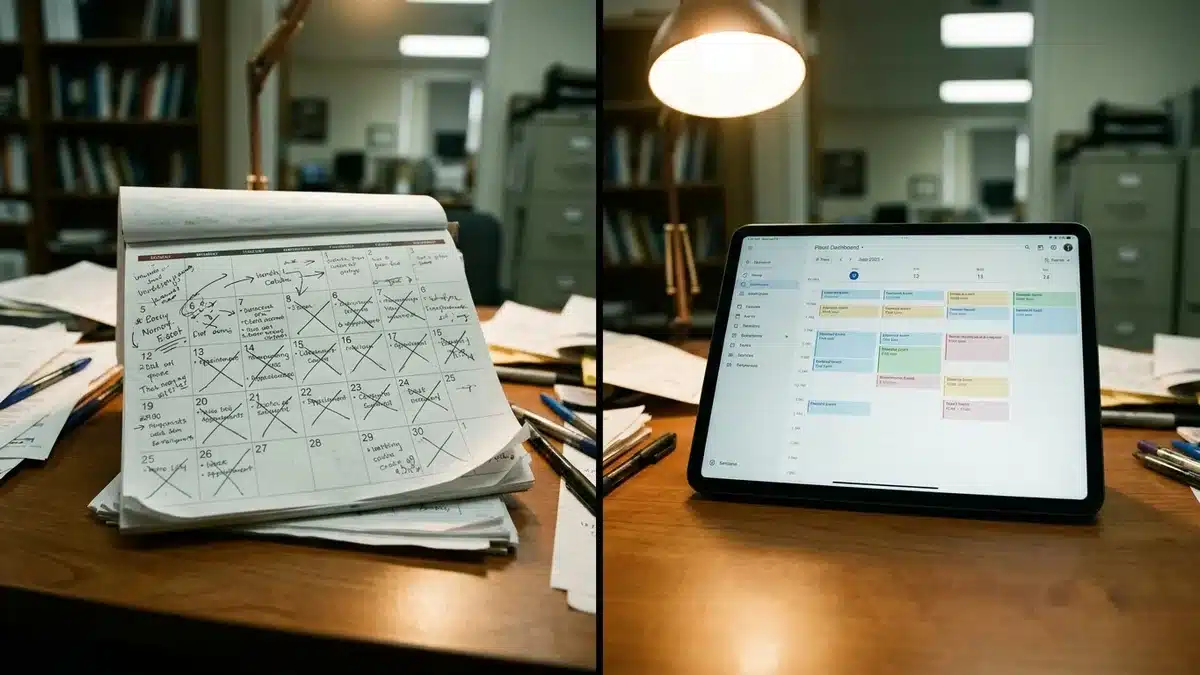
Boostly was built to close this gap. We build fully optimised direct booking websites, live within 35 days with no coding required, connected to your existing PMS through real-time sync across 27+ systems. Hosts keep their Booking.com and Airbnb listings exactly as they are; the direct site becomes an additional channel that keeps more of every booking. Boostly backs this with a guarantee: hosts who don't reach 65% direct bookings within 12 months get their money back plus $1,000. That's a specific commitment, not a marketing line. For hosts weighing whether a direct channel is worth building, our guide on how to build a direct booking website walks through the practical steps.
What Marketing and Listing Tools Help Vacation Rentals Get Found?
Marketing tools for vacation rentals typically fall into three categories: metasearch and OTA listing optimisation, direct booking website SEO, and repeat guest email marketing. Most hosts need at least two of the three working together.
For OTA visibility, listing optimisation on Booking.com and Airbnb still matters. Organic search accounts for a significant share of vacation rental website traffic overall, which is why a well-built direct booking site needs its own SEO foundation rather than relying purely on paid ads.
For repeat guests specifically, a modest email list can produce meaningful commission-free bookings each year. A 200-guest email list with a 15% annual repeat rate generates 30 commission-free bookings a year: revenue with no OTA commission attached, assuming you have a system capturing guest contact details in the first place.
This is where a built-in CRM changes the equation. Boostly members get CRM access within 24 hours of signing up, along with AI tools and access to over 80 hours of training covering direct booking marketing strategy. If you're wondering what platform can help with marketing a new vacation rental, the answer is one that captures guest data at the point of booking and automates the follow-up, not one that just lists your property somewhere else. Our piece on fine-tuning your STR marketing concepts goes deeper on this.
What's the Best Way to Track Direct Booking Performance?
Tracking direct booking performance requires reporting that separates channel-by-channel revenue, not a single blended occupancy number. You want to see how many bookings and how much revenue came from Booking.com, Airbnb, and your own direct site, tracked against your progress toward reducing OTA dependency over time.
Most PMS dashboards show occupancy and revenue in aggregate, which hides the exact information you need to make decisions. If your Booking.com bookings quietly dropped 10% while your direct site grew, an aggregate dashboard won't show you that shift clearly.
A stronger approach tracks conversion rate by traffic source on your direct website, alongside how that percentage trends month over month against your OTA volume. Boostly's reporting shows exactly how your direct channel is performing against a 65% direct booking target, so you're not relying on OTA dashboards that only show you their side of the picture.
If you manage a growing portfolio, this kind of channel-level visibility becomes the tool that tells you where to invest marketing effort next, rather than guessing based on gut feeling.
How Do You Migrate to a New PMS Without Losing Bookings?
Migrating PMS providers safely means testing the new system's sync reliability on a single property before moving your full portfolio, and confirming that reservation history and guest data transfer correctly before cutting over. Rushing a full-portfolio migration without testing is the single biggest cause of mid-migration double bookings.
Follow this sequence:
- Choose one lower-occupancy property as your test case, not your top performer.
- Confirm the new PMS's Booking.com connection is live and pulling correct availability before disconnecting the old system.
- Run both systems in parallel for a short window, manually checking that rates and availability match across both.
- Export and verify guest contact data, reservation history, and any pending bookings transferred correctly.
- Once the test property runs clean for a full booking cycle, migrate the remaining properties in small batches, not all at once.
This process feels slow, but a botched migration that causes even one double booking during peak season costs far more in guest trust than the extra week of caution. Few PMS buying guides walk through this step by step, which is exactly the kind of gap worth closing before you commit.
How Do You Choose the Right PMS for Your Portfolio Size?
Choosing the right PMS starts with an honest count of your properties and team structure, not a feature checklist. A solo host managing one or two units has fundamentally different needs than a property manager overseeing thirty units across multiple owners.
Common mistakes hosts make when choosing a PMS include:
- Picking based on channel count alone without testing sync reliability first.
- Ignoring per-listing fees that scale unfavourably as the portfolio grows.
- Overlooking whether the system supports a real-time API connection to Booking.com versus a delayed iCal feed.
- Assuming a direct booking website is included, when most PMS platforms treat it as a separate product or don't offer one at all.
Trade-offs worth understanding: a system with deep automation often has a steeper learning curve, while a simple, user-friendly system built for new hosts may lack advanced reporting once you scale past a handful of units. It's about matching the tool to where your business actually is in 2026, not where you hope it will be in three years.
For hosts specifically weighing PMS integration against building an owned direct channel, our article on using a property management consultant to grow your STR business covers how outside expertise fits into this decision.
Frequently Asked Questions
What marketing listing sites are good for vacation rentals?
Booking.com, Airbnb, and Vrbo remain the primary listing channels most hosts start with, and a PMS with a direct API connection to each keeps your calendar accurate across all three. Beyond OTAs, a direct booking website functions as an additional listing channel you fully own, without per-booking commission fees.
What's the best way to track direct booking performance?
Track revenue and bookings by channel separately, not as a blended total, so you can see exactly how your direct site is performing against Booking.com and Airbnb over time. Dashboards that break out conversion rate by traffic source give you the clearest picture of whether your direct channel is growing.
Can I use a platform to help me with marketing my new vacation rental?
Yes. Platforms that combine a direct booking website with a built-in CRM handle guest capture and follow-up automatically, rather than requiring you to manage email marketing manually. Boostly, for example, provides CRM access within 24 hours of signup along with templates and training built specifically for direct booking marketing.
How can I advertise my vacation rentals to boost direct bookings?
Start by building a direct booking website with a real-time PMS-connected booking engine, since a website without live availability doesn't convert. From there, capture guest emails at booking to build a repeat guest list, and optimise the site itself for organic search, since organic traffic represents a significant share of vacation rental website visits industry-wide.
What's the most user-friendly PMS for new vacation rental hosts?
The most user-friendly option for new hosts is typically a system with a simple unified inbox and straightforward channel sync, rather than an enterprise system built for large portfolios. Testing the Booking.com sync on a real reservation before fully committing is the best way to judge ease of use firsthand.
Do I have to stop listing on Booking.com to build a direct booking website?
No. A direct booking website works alongside your existing Booking.com and Airbnb listings; it doesn't require you to remove either. The goal is adding a commission-free channel, not replacing the OTA visibility you already have.
Which property management systems integrate with direct booking platforms?
Direct booking platforms vary in which PMS systems they connect to, so it's worth confirming your specific PMS is supported before committing. Boostly integrates with 27 or more PMS platforms, syncing listings, availability, and pricing in real time to prevent conflicts between your direct site and your OTA channels.
Conclusion
The best PMS for vacation rentals with an integration to Booking.com comes down to one non-negotiable requirement: a direct API connection, not a delayed iCal feed, backed by reporting that shows channel performance separately rather than blended together. Beyond that, portfolio size, total cost of ownership, and migration risk should shape your final decision far more than a feature checklist alone.
As 2026 brings more supply into the short-term rental market, the operators who protect their margin will be the ones running OTA channels synced in real time alongside a direct booking channel that doesn't hand a percentage of every stay to a third party. Getting your PMS integration right is step one. Building the direct channel on top of it is where the real margin protection happens.
If you've got Booking.com and Airbnb dialled in but no real direct booking strategy yet, that's the exact position Boostly was built for. We build the website, connect it to your PMS in real time, and back the whole thing with a guarantee: 65% direct bookings within 12 months, or your money back plus $1,000.

If double bookings and OTA commissions are the two problems keeping you up at night, book a demo with Boostly and see how real-time PMS sync and a done-for-you direct booking site work together for your specific portfolio.