Airbnb like websites are booking platforms that list short-term rentals the way Airbnb does, but with different fee structures, audiences, or property niches, ranging from whole-home specialists to luxury curators to glamping and RV marketplaces. For hosts, the real question isn't which OTA to add next; it's how many commission-charging platforms you can afford to depend on before your margin disappears.
Key Takeaways
- Airbnb like websites fall into distinct categories: whole-home marketplaces, luxury curators, niche platforms (glamping, RVs), and metasearch aggregators, each with its own audience and fee model.
- Airbnb's host-only fee runs around 15.5% on a typical booking, meaning a $2,000 stay can cost a host roughly $310 in commission (Houfy, 2026).
- Adding more OTAs multiplies commission exposure rather than solving it. It just spreads the same 15 to 20% fee problem across more channels.
- Guests who book directly return to book again 28.3% of the time, versus 8.9% for guests who book through Airbnb (hostAI Report via gethostai.com, 2026).
- The vacation rental management software market was valued at approximately $2.13 billion in 2026 and is projected to grow at a 10.6% CAGR through the rest of the decade (StayFi, 2026), a sign that professionalized, tech-enabled booking systems are becoming the norm, not the exception.
- Boostly builds a direct booking website that sits alongside every OTA you already use, giving you a commission-free channel instead of another platform to pay for.
If you've searched for “airbnb like websites,” you're probably one of two hosts: either you're trying to expand your reach across more OTAs to fill your calendar, or you're realizing that every new platform you add comes with its own commission bill. Both paths lead to the same math problem eventually.
In 2026, the short-term rental landscape includes far more than Airbnb. Whole-home marketplaces, luxury curators, and niche platforms for glamping and RVs have all carved out real market share. Professional managers now control a meaningful share of active listings across major OTAs, a sign that the “list on one platform and hope” era is over.
We work with hosts across this exact landscape every day at Boostly. The pattern we see repeatedly: hosts who chase more OTA listings often see booking volume rise while profit per booking falls. This guide walks through the real categories of Airbnb like websites, what each one costs, and where a direct booking channel fits into the picture instead of competing with it.
What Is the Best Alternative to Airbnb for Hosts?
The best alternative to Airbnb for hosts isn't a single platform swap; it's building a direct booking channel that runs independently of any OTA's commission structure. Whole-home marketplaces like Vrbo function as a genuine Airbnb-style alternative for discovery, but they still take a cut of every booking.
Vrbo, part of Expedia Group, lists around 2 million properties across 190 countries and focuses specifically on entire-home rentals rather than shared rooms, making it a strong fit for family and group travelers. That's a real strength if you manage a whole-home property and want a different guest demographic than Airbnb typically attracts.
But here's the catch: adding Vrbo to your channel mix doesn't reduce what you're paying Airbnb. It adds a second commission line on top of the first. As of 2026, the hosts we see genuinely improving their margins aren't picking a “better” OTA; they're building a direct site that converts repeat and referral guests without any commission at all. That's precisely the gap Boostly's direct booking website build is designed to close, live within 35 days, with no coding required on your end.
What Site Should Hosts Use Instead of Airbnb?
No single site fully replaces Airbnb for a host who wants continued visibility, but several platforms serve as strong complements depending on your property type and target guest. Luxury curators, niche marketplaces, and metasearch aggregators each fill a different gap in your distribution strategy.
If you manage a high-end property, a curated luxury platform with a strict vetting bar can put you in front of a premium traveler willing to pay more per night. If you run a glamping site, a dedicated glamping marketplace lists everything from bell tents to cabins and shepherd's huts, drawing an audience specifically searching for that experience rather than a standard rental.
Regional and thematic platforms matter too. UK hosts with unusual properties, boats, castles, converted windmills, have a market of travelers specifically seeking unconventional stays. Last-minute specialists exist for hosts with open-calendar gaps needing quick fills. Each of these is a genuine Airbnb-style alternative in its niche.
The trade-off is consistent across all of them: every one of these platforms charges a commission, typically in the mid-single to low-double-digit percentage range of booking value, and none of them give you the guest's contact information the way a direct booking does. That's the structural limit of relying on any third-party marketplace, no matter how well it fits your niche. This is exactly why we built the CRM inside Boostly to capture guest data from every direct booking automatically, so you own that relationship instead of renting it from a platform.
What Is Airbnb's Biggest Competitor?
Vrbo is widely regarded as Airbnb's biggest direct competitor in the whole-home rental space, with roughly 2 million global listings and a specific focus on family and group travel rather than shared accommodations. Booking.com competes differently, operating as a hybrid platform that blends hotels and vacation rentals under one search experience.
For hosts, the distinction matters more than the ranking. Vrbo guests tend to book longer stays and skew toward families, which can mean fewer turnovers and more predictable calendars. Booking.com guests often come from a hotel-booking mindset, expecting instant confirmation and standardized cancellation policies.
Neither platform solves the commission problem, though. Whichever “biggest competitor” you list on, you're still handing over a percentage of every booking, and you're still not building a guest database you can market to directly. Airbnb reported 143.1 million nights booked in Q1 2026, representing 8% year-over-year growth (Guesty, June 18, 2026), which tells you the OTA channel overall is still growing. But growth in OTA volume doesn't translate to growth in your net margin if commissions keep eating the top line.
In our experience working with multi-property operators inside Boostly's host community, the operators who actually improve profitability aren't the ones adding the “biggest” competing platform. They're the ones who pair their existing OTA listings with a direct site and a repeat-guest strategy that doesn't cost a commission fee at all.
Where Can Hosts Find Budget-Conscious or Extended-Stay Guests?
Budget-conscious and extended-stay guests are increasingly found through mid-stay apartment platforms and direct booking channels rather than traditional short-term OTA listings. Urban and suburban mid-stay apartments have shown strong year-on-year growth in both listing count and reservation value through 2026 and 2026 across aggregated rental data.
This shift matters if your property suits longer stays: digital nomads, relocating professionals, or extended family visits. These guests often search differently than a typical weekend-getaway Airbnb guest, prioritizing monthly or weekly rates, kitchen access, and workspace over amenities like pools or entertainment.
Specifically, this guest type is also more likely to book direct if you make it easy. A guest planning a month-long stay has time to research, compare, and trust a well-built independent site, unlike a same-week booker who defaults to a familiar OTA app out of urgency. That's a meaningful opening for hosts with a strong direct booking presence, and it's part of why the training inside Boostly's library covers positioning your site for exactly this kind of higher-intent, longer-stay guest.
Data and Evidence: Comparing Airbnb Like Websites by Category
Airbnb like websites split into four broad categories: whole-home marketplaces, luxury curators, niche and thematic platforms, and metasearch aggregators. Each category serves a different guest intent and carries a different commission structure, and understanding the differences helps you decide where your limited marketing time is best spent.
| Category | Example Type | Best For | Commission Model |
|---|---|---|---|
| Whole-home marketplace | Vrbo-style entire-home listings | Families and groups seeking privacy | Percentage of booking value |
| Luxury curator | Vetted, premium-only inventory | High-end travelers, higher ADR | Percentage of booking value, often higher |
| Niche/thematic | Glamping, RVs, unusual stays | Guests seeking a specific experience | Percentage of booking value |
| Metasearch aggregator | Search engines comparing multiple OTAs | Price-comparison shoppers | Referral fee or click-based cost |
| Direct booking website | Host-owned site | Repeat guests, referrals, direct traffic | No commission per booking |
Notice the last row. Every category above shares one thing in common: a fee taken from your revenue on every single transaction. As of 2026, with the global vacation rental market projected to reach approximately $109.4 billion this year according to Mordor Intelligence, the volume moving through these commission-based channels is enormous, and so is the aggregate amount hosts are paying to access it.
That's why we built Boostly around a different model entirely. Instead of adding another platform that takes a cut, Boostly gives you a direct booking website, real-time sync with 27 or more property management systems, and a CRM that captures every guest's details the moment they book, so the second, third, and fourth stay don't cost you anything in commission at all.
Where Can You Live for $500 a Month in the USA?
Finding a $500-a-month stay in the USA through short-term rental platforms is rare and typically limited to extended-stay negotiated rates, shared accommodations, or off-peak rural listings rather than standard nightly bookings. Most short-term platforms price by the night, and even discounted monthly rates on rural or off-season properties in lower cost-of-living regions rarely dip that low once fees and taxes are included.
For hosts, this search term matters less as a traveler question and more as a signal: guests are actively hunting for value, and many are willing to negotiate directly with a host for a long-term stay if it means avoiding platform markup. A guest who emails you directly asking about a monthly rate is a guest you can convert without ever touching an OTA's fee structure.
This is where having a professional, trustworthy direct site pays off. A guest comparing your listing price against a direct inquiry needs to see a legitimate booking engine, clear pricing, and secure payment options before they'll commit off-platform. That trust-building groundwork is exactly what a conversion-focused direct booking site is built to do, and it's the difference between losing a budget-conscious guest to a cheaper competitor and converting them into a long-term direct booker.

Deep Dive: Why Adding More OTAs Rarely Solves the Commission Problem
Adding more Airbnb like websites to your distribution mix increases your exposure to platform fees rather than reducing it, because each additional OTA charges its own commission independently of the others. This is the part most “alternatives to Airbnb” articles skip entirely: more channels means more total commission paid, not less.
Here's the maths in practice. Airbnb's host-only fee sits around 15.5% on a typical booking, so a $2,000 reservation costs roughly $310 in commission (Houfy, 2026). If you list that same property on a second whole-home marketplace and a third luxury curator, you haven't reduced your Airbnb fee exposure; you've simply created two more commission lines on whatever bookings flow through those channels instead.
Multi-property operators feel this most acutely. Professional managers now control a significant share of the roughly 7 million active listings across major OTAs as of early 2026, and every one of those managers is paying commission on every channel they operate. Scale doesn't dilute the fee; it multiplies it across more units.
The structural fix isn't finding a lower-fee OTA, it's building a channel where the fee doesn't exist at all. Guests who book directly return to book again 28.3% of the time, compared to just 8.9% of guests who book through Airbnb (hostAI Report via gethostai.com, 2026). That repeat-booking gap alone represents recurring revenue with zero acquisition cost, provided you have a system to capture and follow up with those guests.
This is the exact problem we designed Boostly to solve. Once a host signs up, CRM access lands within 24 hours, and automated post-stay email sequences start converting one-time OTA guests into repeat direct bookers without any manual follow-up required. Combined with weekly coaching calls and more than 80 hours of training on listing optimization and direct booking strategy, hosts get the system, not just the software. It's also why Boostly backs the approach with a guarantee: hosts who don't reach 65% direct bookings within 12 months get their money back, plus $1,000.
If you want a fuller breakdown of what that growth path looks like operationally, our guide to growing your vacation rental business beyond OTAs walks through the sequencing in more detail, and the Price of Business guide on growing a vacation rental business covers complementary lead-generation tactics worth layering in.
Practical Guidance: How to Choose the Right Mix of Booking Channels
Choosing the right mix of Airbnb like websites and direct booking channels comes down to matching each platform's audience to your property type, then building the direct channel as your long-term profit center rather than an afterthought. Here's the process we recommend to hosts inside the Boostly community.
- Audit your current channel mix. List every platform you're on and calculate the actual commission paid over the last 12 months per channel, not just the percentage rate.
- Match platform to property type. Whole-home properties suited to families should prioritize Vrbo-style marketplaces; unique or niche properties (glamping, unusual architecture) benefit more from thematic platforms.
- Avoid platform sprawl. Every additional OTA adds administrative overhead (calendar management, guest messaging, pricing updates) without reducing your existing commission exposure. Real-time PMS sync across whatever channels you keep prevents double bookings as you manage this.
- Build your direct channel in parallel, not after. Don't wait until you're “established” on OTAs to start a direct site. Every month without one is a month of repeat-guest revenue left on the table.
- Automate guest follow-up from day one. A direct site without a CRM and email sequence captures the booking but misses the repeat-guest opportunity entirely.
- Track direct booking percentage monthly. Know exactly what share of revenue comes commission-free versus what still flows through OTA fees.
Common mistakes we see: hosts adding a fourth or fifth OTA hoping for volume, when the real fix is converting existing guests into direct repeat bookers. Another frequent error is building a basic website without a booking engine or payment processing, which looks professional but converts nobody. A direct site needs the same trust signals, calendar visibility, and secure checkout that guests expect from any OTA, otherwise it just becomes a digital business card. If you want a deeper look at building genuine guest loyalty once your direct channel is live, the loyalty program example from Houfy is a useful reference point for structuring tiers and repeat-guest incentives.
Frequently Asked Questions
Are there Airbnb like websites that don't charge host commissions?
Most third-party booking marketplaces, whether whole-home, luxury, or niche platforms, charge some form of host commission because that's their core revenue model. The only way to eliminate per-booking commission entirely is to build a direct booking website that processes payments through your own booking engine rather than a marketplace's checkout.
What other sites are worth checking out besides Airbnb?
Worthwhile alternatives depend on your property type: whole-home marketplaces suit family-oriented properties, luxury curators suit premium listings, and niche platforms suit glamping, RV, or unusual stays. Each comes with its own commission structure, so the goal should be picking channels that genuinely reach your target guest, not simply maximizing the number of platforms you're listed on.
Do I have to leave Airbnb to build a direct booking site?
No. A direct booking website works alongside your existing Airbnb and Booking.com listings rather than replacing them. Most hosts use OTAs as top-of-funnel discovery while routing repeat and direct-intent guests, including past guests and referrals, through their own site to avoid paying commission on those specific bookings.
How long does it take to get a direct booking website live?
With a done-for-you platform, a direct booking website can go live within 35 days of signing up, covering the full build, PMS integration, and booking engine setup without requiring any coding from the host. DIY builds typically take considerably longer since the host has to handle design, payment integration, and PMS sync manually.
What is the real cost of relying on Airbnb like websites for all my bookings?
Airbnb's host-only fee is roughly 15.5% on a typical booking, meaning a $2,000 reservation costs about $310 in commission (Houfy, 2026). Multiply that across a full year of bookings, and across a multi-property portfolio, and the commission spend becomes one of the largest line items in the business, larger than most hosts realize until they calculate it directly.
Do guests trust booking directly instead of through Airbnb like websites?
Guests generally trust direct booking when the site includes clear pricing, a secure payment processor, a real cancellation policy, and professional design, the same trust signals they expect from any established OTA. Past guests who already had a good experience with a host are especially likely to book direct on a repeat stay if the option is presented clearly.
What is Boostly's 65% direct booking guarantee?
Boostly guarantees that hosts who don't reach 65% direct bookings within 12 months of launching their site receive a full refund of their investment, plus an additional $1,000. It's a contractual commitment tied to Boostly's done-for-you website build, CRM, PMS integrations, and coaching program, not a general marketing claim.
Conclusion
Airbnb like websites will keep multiplying in 2026, from whole-home marketplaces to luxury curators to niche platforms for glamping and RVs, and each one will keep taking its cut. The hosts who come out ahead aren't the ones chasing the next platform. They're the ones building a direct booking channel that runs commission-free alongside whatever OTAs they keep using.
If you're ready to stop paying commission on repeat guests you already earned, Boostly builds your direct booking website in 35 days, with real-time PMS sync, a built-in CRM, and automated guest follow-up from day one. Backed by the 65% direct booking guarantee, it's a system, not just software. Book a demo with Boostly and see exactly what the first 35 days look like for your property.
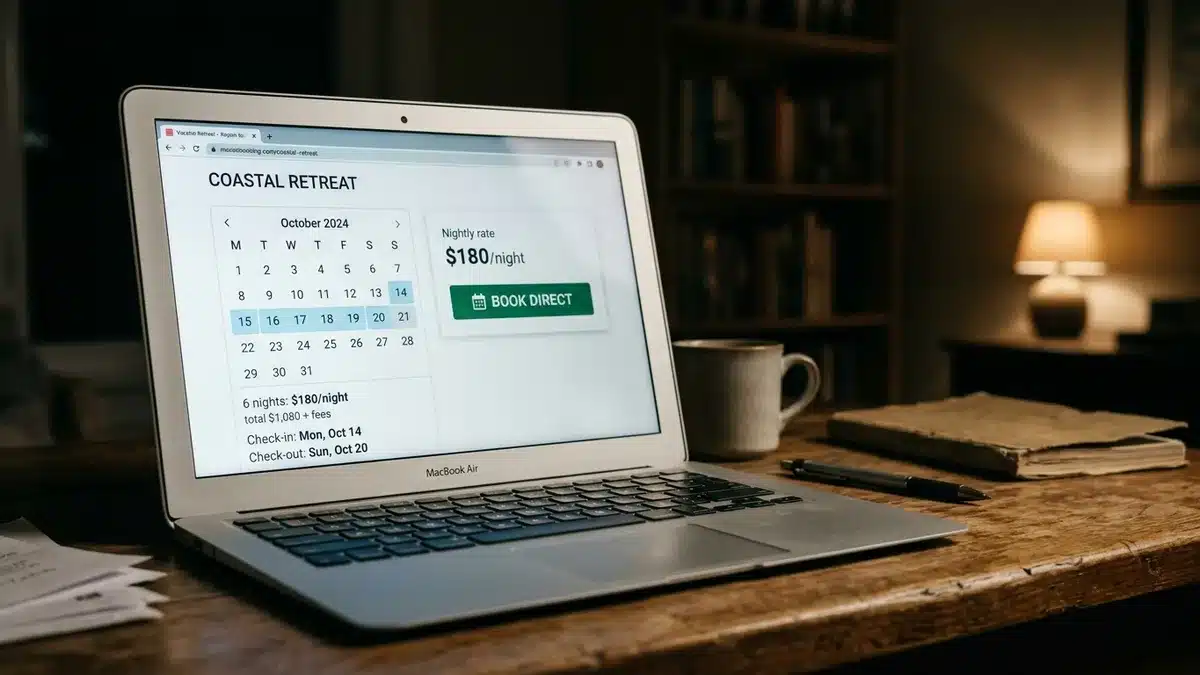
If you're comparing airbnb like websites and wondering whether a direct channel is worth the setup, this is the clean vacation rental booking page format we build for hosts, calendar, nightly rate, and secure checkout all in one place. See how it works for your property.