
The Airbnb host fee is a service charge Airbnb deducts from a host's payout on every booking, typically 15.5% of the booking subtotal under the host-only fee model that most hosts are now on as of 2026. That subtotal includes the nightly rate, cleaning fee, and any extra guest or pet fees you set, so a $1,000 booking nets a host roughly $845 before taxes and payment processing.
Key Takeaways
- Most Airbnb hosts now pay a 15.5% host-only service fee, deducted from your payout before you receive funds, covering platform access, payments, and support.
- Hosts in Brazil and Mexico pay 16% instead of 15.5%, and EU-based hosts face an effective 18 to 19% once VAT is layered on top.
- A smaller group of hosts still on the older split-fee model pay roughly 3%, while their guests separately pay a service fee at checkout, but this model has been phased out for PMS-connected hosts.
- Airbnb finalized the shift to host-only fees for property management system (PMS) users on October 27, 2026, with remaining split-fee hosts moved over by April 13, 2026.
- Airbnb Experiences carry a separate 20% host fee, and Airbnb Services carry roughly 15% with a small minimum charge.
- Boostly gives hosts a way to route a growing share of bookings around this fee entirely, saving 15% per booking that moves from Airbnb to a direct booking website, without requiring you to delist from Airbnb.
If you've hosted on Airbnb for more than a booking cycle, you've probably stared at a payout number that looked lower than expected and wondered exactly where the difference went. The airbnb host fee is the answer, and in 2026 it's more standardized than it's ever been, but also higher for a chunk of hosts who used to pay a lot less.
At Boostly, we talk to hosts every week who are only now realizing how much of their annual revenue disappears into OTA commissions before it ever reaches their bank account. This guide breaks down exactly how the current fee structure works, who pays what, and where the real gaps are that most fee explainers skip entirely, including how local taxes stack on top and what long-stay bookings actually cost you.
We'll also cover the practical side: how to calculate your true net income after fees, what changed with the 2026 to 2026 rollout of the host-only model, and where a direct booking strategy fits into the math. None of this requires you to quit Airbnb. It just requires understanding the numbers well enough to stop leaving margin on the table.
What Is the Airbnb Host Fee?
The Airbnb host fee is the commission Airbnb deducts from a host's payout for using the platform's booking, payment, and support infrastructure. As of 2026, most hosts pay a single host-only fee of 15.5% of the booking subtotal, calculated after the guest pays but before the host receives funds.
This fee covers platform access, secure payment processing, 24/7 customer support, guest identity verification, booking fraud prevention, and AirCover host protection. A smaller subset of hosts, mostly those who haven't connected a property management system, may still see the older split-fee model, where the host pays around 3% and the guest pays a separate service fee at checkout.
The distinction matters because the two models produce very different math for the same booking. Under the host-only model, the price the guest sees is exactly what you set, with no added guest-side fee complicating the sale. Under the split model, guests see your nightly rate plus a visible service fee stacked on top, which some hosts believe suppresses conversion on higher-priced listings.
Why Is My Host Service Fee 15%?
Your host service fee sits around 15.5% because Airbnb consolidated its fee structure in 2026 and 2026, moving most hosts off the old 3% split-fee model and onto a single host-only fee. Airbnb describes the 15.5% figure as roughly equivalent to the global average of what was previously split between hosts and guests combined.
Specifically, Airbnb began automatically placing newly created accounts connected to a property management system on the host-only model starting August 25, 2026. That became mandatory for all PMS-connected hosts by October 27, 2026. Most remaining non-PMS hosts on simplified pricing were moved to the standardized 15.5% rate starting December 1, 2026, and any hosts still managing prices through channel management software on a split fee were switched over by April 13, 2026.
As a result, if your fee jumped from around 3% to 15.5% sometime in this window, you were caught in one of these transition dates rather than experiencing an isolated pricing error. Notably, the fee is not negotiable per listing and applies uniformly across most markets, with country-specific variations for Brazil, Mexico, and the EU covered below.
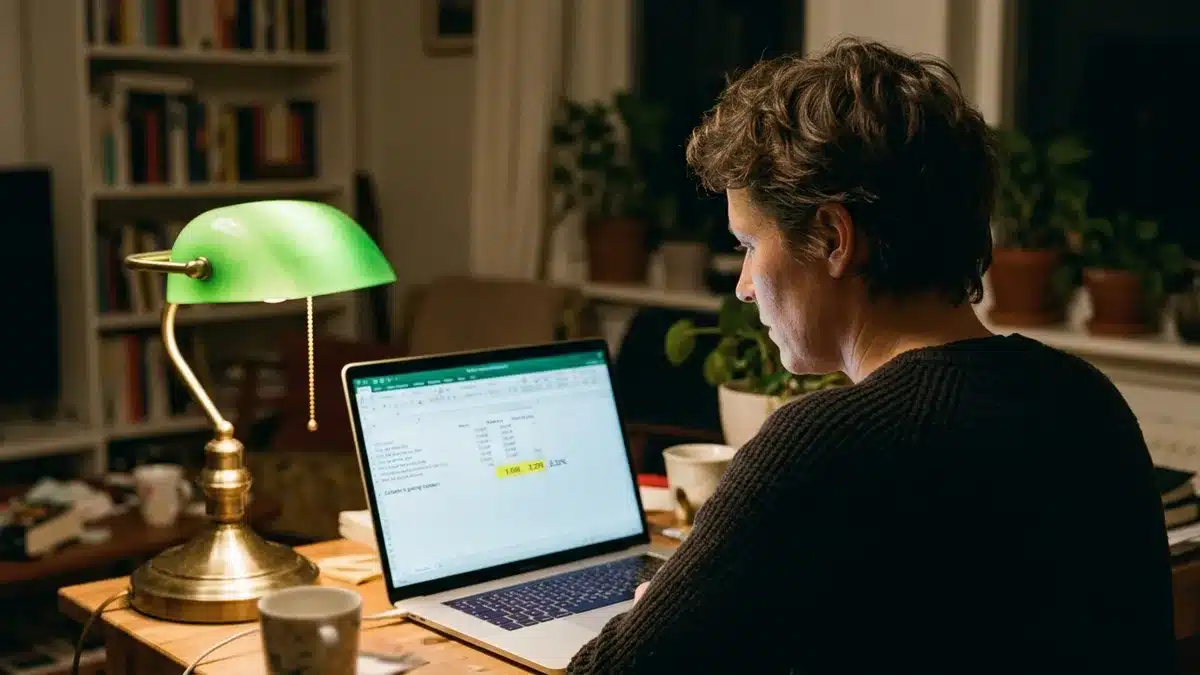
What Is the 15% Host Fee on Airbnb, Exactly?
The 15% figure people search for typically refers to the rounded version of Airbnb's 15.5% host-only service fee, applied to the booking subtotal on a stay. It is not a flat 15% in most cases; the precise figure is 15.5% for the majority of hosts globally, with adjustments for specific countries and cancellation policies.
For example, a Super Strict cancellation policy can add roughly 2 percentage points to your effective fee, while bookings of 28 nights or longer sometimes carry a reduced rate. Additionally, the fee only applies to the subtotal, meaning your nightly rate, cleaning fee, extra guest charges, and pet fees, but not to taxes, Airbnb's own charges, or refundable security deposits.
This distinction is easy to miss when you're pricing a listing. If you set a $150 nightly rate with a $75 cleaning fee, your subtotal is what gets the 15.5% deduction applied, not the total the guest pays once local occupancy tax is added at checkout.
How to Avoid Paying the Airbnb Service Fee
You cannot avoid the Airbnb host service fee entirely while booking through Airbnb; it's baked into the platform's business model and applies to every reservation. What you can do is reduce how many bookings are subject to it by building an alternative booking channel that doesn't carry the same commission structure.
This is precisely the gap Boostly was built to close. Rather than trying to negotiate a fee that Airbnb doesn't negotiate, we help hosts build a fully optimized direct booking website that captures bookings Airbnb would otherwise take 15.5% from. You don't need to remove your Airbnb listing to do this; most Boostly hosts run both channels simultaneously, using Airbnb for discovery and a direct site for repeat guests and referrals.
Practically speaking, there are three levers hosts pull to reduce total fee exposure without leaving Airbnb:
- Build a direct booking channel. A branded website with its own booking engine lets repeat guests and word-of-mouth referrals book without touching Airbnb's fee structure at all.
- Price with the fee baked in from the start. Rather than treating 15.5% as a surprise deduction, factor it into your base rate calculation so your net income target is protected regardless of channel.
- Reduce reliance on long, unbroken OTA dependence. Hosts who diversify their booking mix across Airbnb, a direct site, and occasionally other channels reduce the percentage of total revenue exposed to any single platform's commission.
None of these levers require you to abandon Airbnb's discovery traffic. They just require a system for capturing the guests who are already willing to book you directly, which is where most self-managed hosts fall short simply because they've never built the infrastructure for it.
What Is the 3% Host Fee on Airbnb?
The 3% host fee refers to Airbnb's older split-fee model, where the host pays approximately 3% of the booking subtotal (4% in Brazil and Mexico) and the guest separately pays a visible service fee at checkout, typically in the 14.1% to 16.5% range. As of 2026, this model is being phased out for most professional hosts.
Specifically, any host connected to a property management system was required to move to the host-only 15.5% model by October 27, 2026. Hosts managing listings manually without a PMS may have retained the 3% split-fee model longer, but the April 13, 2026 deadline closed that gap for anyone using channel management software on a split fee.
If you're still seeing a 3% deduction on your payouts in 2026, you're likely one of the few remaining manual, non-PMS hosts. That won't last long as Airbnb continues consolidating toward a single global fee structure, and multi-property operators using a PMS for real-time calendar sync have already made the switch.
Airbnb Host Fee by Country: What Changes Where?
Airbnb's host fee is not identical worldwide; specific countries carry adjusted rates that change your net payout calculation. As of 2026, most hosts globally pay 15.5%, but Brazil and Mexico sit at 16%, and EU hosts face an effective rate closer to 18 to 19% once value-added tax is added.
For EU-based hosts specifically, the 15.5% service fee is subject to VAT under most national tax regimes, which typically pushes the real cost of hosting on Airbnb several percentage points higher than the headline rate suggests. Hosts operating across the UK, Ireland, France, Spain, and Germany should budget for this VAT layer separately from the platform fee itself when forecasting annual revenue.
| Region | Host-Only Fee | Notes |
|---|---|---|
| United States, UK, most global markets | 15.5% | Standard rate under the 2026 host-only model |
| Brazil | 16% | Applies under both split-fee and host-only models |
| Mexico | 16% | Applies under both split-fee and host-only models |
| European Union | 15.5% plus VAT | Effective rate typically 18 to 19% once VAT applies |
| Legacy split-fee hosts (non-PMS) | 3% (4% in Brazil/Mexico) | Phased out for PMS-connected hosts as of October 27, 2026 |
For multi-property operators managing units across several countries, this variance matters when you're forecasting portfolio-wide revenue. A 12-unit portfolio split between US and EU markets, for example, needs separate fee assumptions for each region rather than a single blended estimate, since the VAT layer in EU markets meaningfully changes your net take per booking.
How Do Local Taxes and Other Costs Stack on Top of the Host Fee?
Local occupancy taxes, HOA restrictions, and municipal short-term rental fees are separate from Airbnb's host service fee and are not reduced or offset by it. The 15.5% host fee applies only to your booking subtotal; taxes and Airbnb's own guest-facing charges sit outside that calculation entirely.
This means your true net cost of hosting is the combination of the host fee plus whatever your jurisdiction requires separately: state or local occupancy tax, a municipal STR license fee, or homeowners association dues if you're renting a unit within a managed community. These vary widely by city and country and are enforced locally, not by Airbnb, so you'll need to confirm current requirements with your city or county's licensing office rather than relying on platform guidance alone.
For example, a host in a jurisdiction with a meaningful local lodging tax on top of the 15.5% platform fee is effectively losing a combined chunk of gross booking revenue before ever accounting for cleaning costs, supplies, or mortgage payments. This is exactly why hosts who run the full math often discover that a nightly rate that looked profitable on paper barely breaks even once every layer is accounted for.
How Does the Host Fee Affect Long-Term and Super Strict Bookings?
Long-term stays and Super Strict cancellation policies both interact with Airbnb's standard host fee in ways that catch hosts off guard. Bookings of 28 nights or longer sometimes carry a different effective rate than short stays, while listings on a Super Strict cancellation policy can see roughly 2 percentage points added to their fee.
For hosts who specialize in extended stays, such as those hosting relocating professionals or seasonal workers, this distinction changes how you should model monthly revenue compared to a typical weekend-stay listing. A host running mostly 30-plus night bookings needs a different fee assumption in their pricing spreadsheet than one running a typical 3-night average length of stay.
Similarly, if you've opted into a Super Strict cancellation policy to protect against last-minute cancellations, you're paying for that protection through a slightly higher host fee, not just through guest booking friction. Weigh that trade-off carefully. It might make sense for a high-demand vacation market with peak-season bookings prone to cancellation, but it's a real cost, not a free upgrade.

What Do Airbnb Experiences and Services Host Fees Look Like?
Airbnb Experiences carry a 20% host fee on the experience price, separate from the fee structure applied to home listings. Airbnb Services, a newer category covering things like private chefs or photography add-ons, typically carry a 15% host fee with a small minimum charge per booking.
If you're a host who also runs Experiences or Services alongside your listings, don't assume the 15.5% home-listing rate applies uniformly across your entire Airbnb business. Each category has its own fee schedule, and Experiences hosts in particular should budget for a meaningfully higher cut going to the platform compared to standard stays.
This matters increasingly as more hosts bundle Experiences into their guest offering to boost per-guest revenue. A $200 cooking class experience nets you $160 before other costs, a different math problem entirely than pricing a nightly stay.
Airbnb Host Fee: The Full Data and Evidence Breakdown
Comparing the practical outcome of each fee model side by side makes the financial impact concrete. Below is how a $2,000 booking plays out under the current 15.5% host-only model versus the legacy 3% split-fee model still used by a shrinking number of non-PMS hosts.
| Scenario | Fee Rate | Fee Amount on $2,000 Booking | Host Payout Before Tax |
|---|---|---|---|
| Host-only model (most hosts, 2026) | 15.5% | $310 | $1,690 |
| Brazil/Mexico host-only model | 16% | $320 | $1,680 |
| Legacy split-fee model (non-PMS) | 3% | $60 | $1,940 |
| EU host-only model (with VAT) | 18 to 19% effective | $360 to $380 | $1,620 to $1,640 |
This table shows why the shift to host-only pricing has been controversial among professional hosts and property managers. A portfolio operator running 20 units at an average $2,000 monthly booking value per unit is looking at a substantial swing in annual commission cost between the 3% and 15.5% models, purely from a fee structure change they didn't choose.
Notably, the global vacation rental management software market was valued at approximately $2.13 billion in 2026, reflecting how much infrastructure has been built specifically to help hosts manage exactly this kind of fee complexity across multiple channels and PMS integrations. Boostly's own approach connects with 27 or more of these systems to keep pricing and availability synced in real time, so hosts running both OTA and direct channels never face the double-booking risk that comes with juggling two disconnected calendars.
What's the Real Cost Comparison: Direct Bookings vs Airbnb Fees?
Every booking that moves from Airbnb to a direct channel saves the host the full host fee percentage that would otherwise be deducted, typically 15.5% of that booking's subtotal. Over a full year of bookings, this compounds into a meaningful revenue difference for hosts running any real volume.
In our experience working with hosts across single-property and multi-unit portfolios, the hosts who make the fastest progress toward reducing OTA dependence are the ones who treat direct bookings as a real, tracked channel rather than an occasional side effort. That's the entire premise behind Boostly's 65% direct bookings guarantee: hosts who don't hit that direct booking share within 12 months of building their site with us get their money back, plus $1,000.
Consider a host running $10,000 in monthly bookings entirely through Airbnb. At 15.5%, that's $1,550 in monthly host fees, or roughly $18,600 annually. Shifting even half of that volume to a direct channel would save close to $9,300 per year in commission, money that stays with the host instead of the platform.
Practical Guidance: How to Reduce Your Effective Airbnb Host Fee Exposure
Reducing your effective exposure to Airbnb's host fee is a matter of pricing strategy and channel diversification, not fee negotiation. Airbnb doesn't offer per-host discounts on the 15.5% rate, so your leverage comes entirely from how you structure your business around it.
- Recalculate your break-even nightly rate. Build the 15.5% fee (or 16% or 18 to 19% depending on your market) into your pricing model from day one, rather than discovering the gap after payout.
- Audit your cancellation policy. If you're on Super Strict, confirm whether the added fee percentage is worth the cancellation protection for your specific market and season.
- Separate your Experiences and Services pricing math. Don't assume your standard host fee applies; budget the 20% and 15% rates separately if you offer these add-ons.
- Start building a direct booking channel now. Every month you delay is another month of full 15.5% exposure on bookings that could have gone direct. A done-for-you site, like the ones Boostly builds and gets live within 35 days, removes the technical barrier that stops most hosts from starting.
- Track your direct-to-OTA booking ratio monthly. Hosts who don't measure this number rarely improve it. Boostly's reporting gives hosts a clear read on direct booking share so progress toward a target like 65% is visible, not guessed at.
Common mistakes to avoid: treating the host fee as a fixed cost you can't influence at all, ignoring local tax stacking when calculating true net revenue, and waiting until OTA dependence feels painful before starting a direct booking strategy. Hosts who wait typically spend a full booking season paying full commission before making any changes.
For hosts thinking about this at a strategic level rather than just a per-booking level, our piece on how to grow your vacation rental business beyond OTAs covers the broader framework for diversifying revenue channels. It's also worth reviewing how a book direct marketplace can drive direct bookings if you're weighing multiple tactics at once, and multi-property operators specifically may find value in our notes on the mindset behind growing a large STR company.
Frequently Asked Questions
How do you become an Airbnb host?
You become an Airbnb host by creating a listing through Airbnb's platform, setting your pricing and availability, and completing identity verification. Once live, you'll be subject to Airbnb's current host fee structure, typically the 15.5% host-only fee as of 2026, deducted automatically from each payout.
How do I become an Airbnb host if I want to minimize fees from the start?
You can list on Airbnb as normal while simultaneously planning a direct booking channel from day one, rather than waiting until OTA fees start to hurt. Many new hosts build both channels in parallel using a done-for-you direct booking website, which avoids months of full 15.5% exposure before diversifying.
What is the current Airbnb host service fee?
As of 2026, most hosts pay a host-only service fee of 15.5% of the booking subtotal, which includes nightly rate, cleaning fee, and extra guest or pet fees. Hosts in Brazil and Mexico pay 16%, and EU hosts face an effective rate of 18 to 19% once VAT is applied.
Why did my Airbnb host fee change from 3% to 15.5%?
Your fee likely changed because Airbnb moved PMS-connected hosts to the host-only model by October 27, 2026, with remaining split-fee hosts transitioned by April 13, 2026. This consolidation replaced the older split-fee structure, where hosts paid roughly 3% and guests paid a separate service fee.
Does the host fee apply to taxes and security deposits?
No. The 15.5% host fee applies only to the booking subtotal, meaning nightly rate, cleaning fee, and extra charges you set. It does not apply to occupancy taxes, Airbnb's own guest-facing fees, or refundable security deposits.
Is it possible to negotiate a lower Airbnb host fee?
No, Airbnb does not offer per-host negotiation on the standard 15.5% (or regional equivalent) fee. The only way to reduce your total commission exposure is to shift a portion of your bookings to a direct channel that doesn't carry Airbnb's fee at all.
What percentage of bookings should be direct versus through Airbnb?
There's no universal number, but hosts serious about reducing OTA dependence typically aim for a meaningful direct booking share within their first year of building a dedicated site. Boostly's program is built around a 65% direct booking benchmark within 12 months, backed by a guarantee if that target isn't hit.
Conclusion: What the Airbnb Host Fee Means for Your 2026 Strategy
The airbnb host fee in 2026 comes down to one number for most hosts: 15.5% of your booking subtotal, deducted before payout, with regional variations for Brazil, Mexico, and the EU. That fee isn't negotiable, but how much revenue you expose to it is entirely within your control.
Hosts who understand the full math, including local taxes, cancellation policy adjustments, and long-stay nuances, price more accurately and stop being surprised by their payouts. Hosts who go a step further and build a direct booking channel alongside their Airbnb listing keep a growing share of their revenue out of the commission calculation entirely.
That shift doesn't happen by accident. It happens through a deliberate system: a website built to convert, a CRM that captures guest data, and a clear target you're actually tracking toward. Whether you're a single-property host tired of watching 15.5% disappear from every payout, or a portfolio operator managing pricing across dozens of units, the fundamentals of reducing OTA dependence are the same in 2026 as they'll be beyond it.
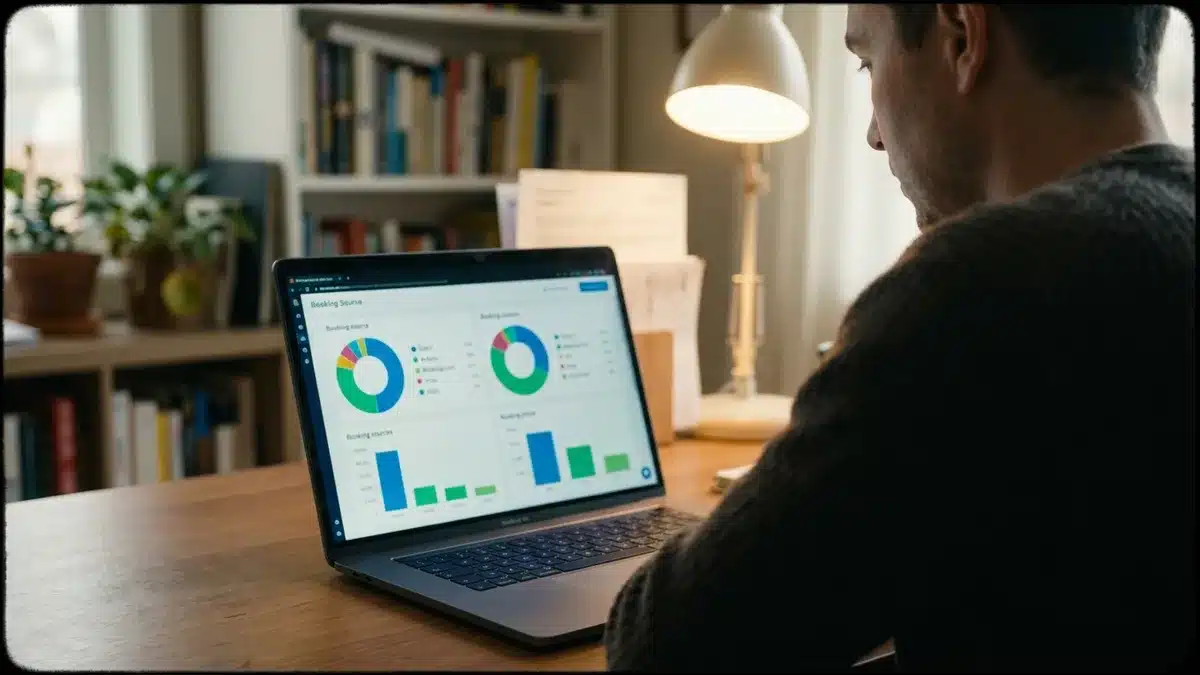
If the airbnb host fee is quietly eating into your margin every month, book a demo with Boostly and see what a direct booking website, built specifically to convert and backed by our 65% direct booking guarantee, could mean for your bottom line this year.