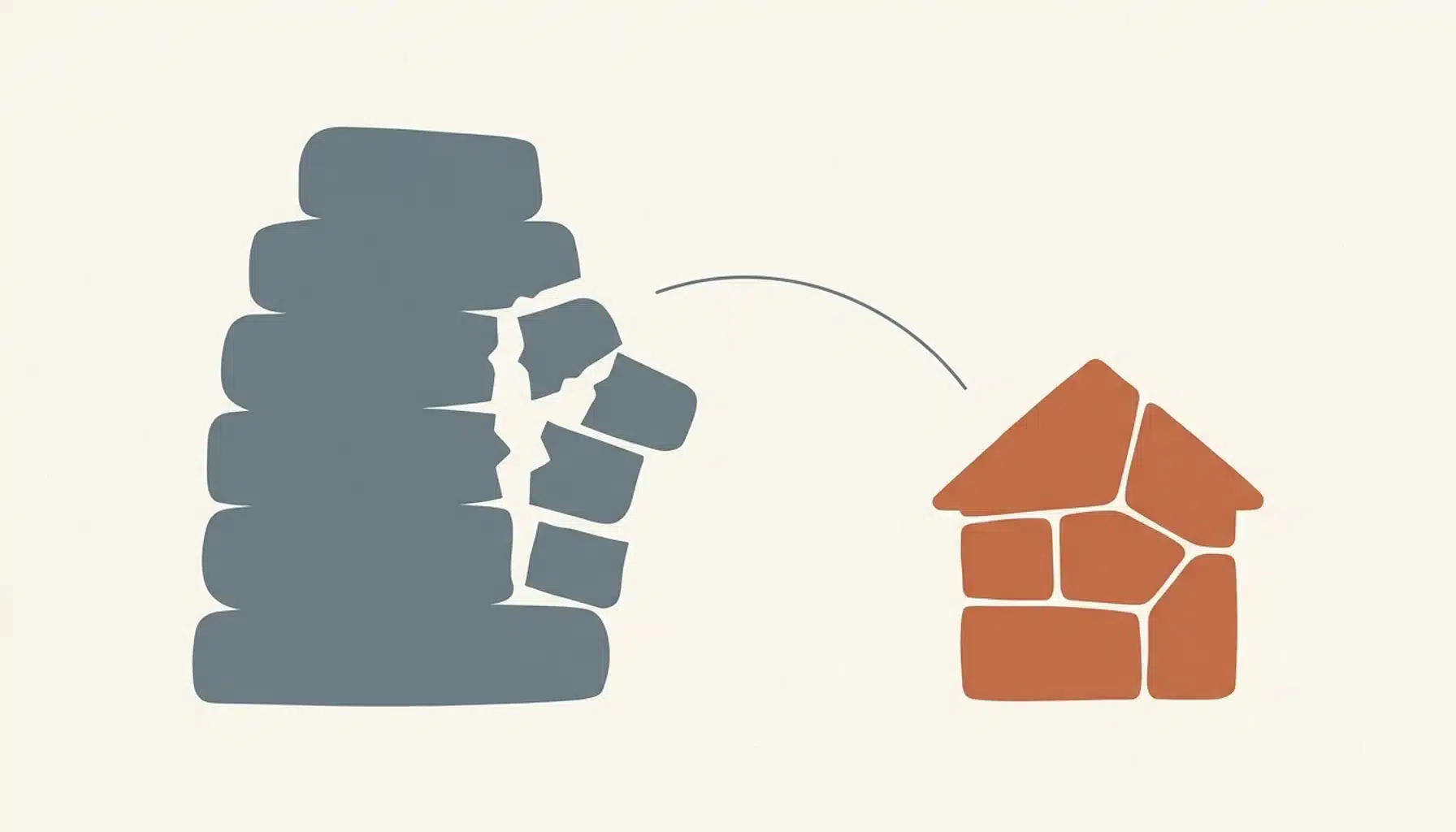
Airbnb cost for a host is the sum of the platform's service fee, cleaning and turnover expenses, payment handling and the running costs of the property. Under the host-only fee model, Airbnb takes 15.5% of a booking, which is $310 on a $2,000 stay, according to Houfy's 2026 figures. Direct bookings can recover most of that margin.
Key Takeaways
- A guest's Airbnb total is built from the nightly rate, a host-set cleaning fee, Airbnb's service fee and any applicable taxes; the exact mix depends on the fee model on your listing.
- Under the host-only fee model, Airbnb's commission is 15.5%, or $310 on a $2,000 booking (Houfy, 2026).
- Direct bookings are not free: card processing at Stripe's 2.9% rate costs about $58 on the same $2,000 booking (Houfy, 2026).
- Guests who book directly return 28.3% of the time, compared with 8.9% through Airbnb (hostAI Report via gethostai.com, 2026).
- Cleaning fees, minimum stays and start-up spending change your real margin as much as the commission does.
- Boostly builds a done-for-you direct booking website that helps you keep the 15% typically lost to OTA commissions, while your Airbnb listing stays live.
Why Does Your Airbnb Cost Matter More in 2026?
You open your payout statement, see the deductions, and the number that lands in your account is smaller than the one you quoted yourself in your head. That gap is the Airbnb cost most hosts underestimate: a stack of fees rather than a single one.
Competition adds pressure. More listings mean more price pressure, and thinner margins make every percentage point of commission count.
At Boostly, we speak to hosts every day who have strong occupancy and weak take-home. This guide walks through eight charges in a deliberate order: first what guests see, then what you pay, then the operating costs around the booking, and finally the cheaper channel that sits alongside Airbnb.
1. How Much Does Airbnb Usually Cost, and What Fees Make Up the Total?
An Airbnb booking total is the amount a guest pays at checkout: the nightly rate multiplied by the number of nights, a host-set cleaning fee, Airbnb's guest service fee where it applies, and local taxes where they are collected. Guests compare that total, not the headline nightly price.
That matters for you because guests scan search results by total price. A property with a modest nightly rate and a heavy cleaning fee can look more expensive than a rival with the opposite structure. The guest service fee percentage and the average nightly price both vary by city, season and fee model, so check Airbnb's current fee page and your own market data rather than relying on a headline average.
One caveat: a split-fee setup lowers your deduction but raises what the guest sees, which can cost you conversions on a competitive date. On a direct site you decide how the total is displayed. Boostly builds the booking engine so your rate, cleaning fee and taxes appear in one clear breakdown, live within 35 days of signing up.
2. How Much Does Airbnb Charge Hosts Per Booking?
Airbnb's host charge is the service fee deducted from your payout before the money reaches you. Under the host-only model it is 15.5%, which equals $310 on a $2,000 booking (Houfy, 2026). Airbnb also offers a split-fee arrangement with a much smaller host share, so confirm which model your listing uses.
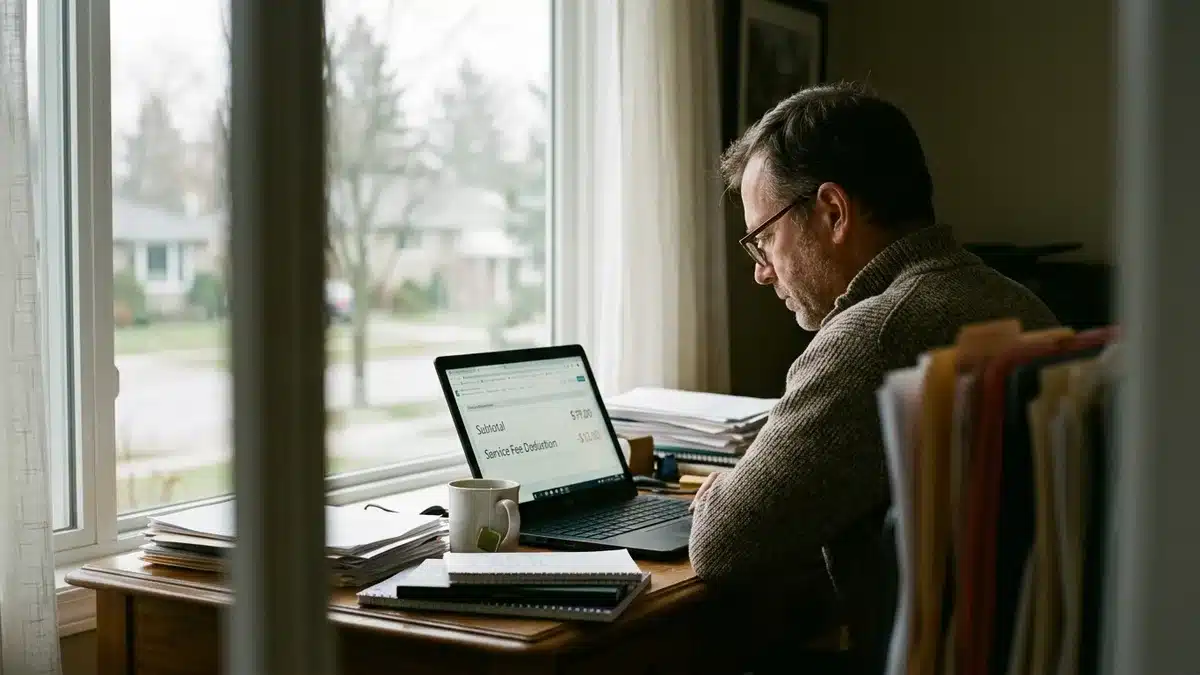
The sharp edge is volume. A single $310 deduction feels tolerable. Across a busy summer with twenty or thirty stays it becomes the largest line in your expense sheet, often larger than utilities or insurance.
The honest trade-off: the fee buys you Airbnb's traffic and guest trust, and that is worth paying on a first-time booking. It is much harder to justify on a guest who has already stayed with you. We built Boostly so that repeat and referred guests move to your own site, which is where the 15% saving per booking comes from, without you removing a single OTA listing.
3. What Is Airbnb's Average Cleaning Fee Per Stay?
A cleaning fee is a one-off charge a host sets to cover turnover costs: laundering linens, restocking consumables and paying a cleaner for the window between checkout and the next check-in. Airbnb does not publish a single average that holds up across markets, because the fee tracks property size, bedroom count and local labour rates.
Think about what the fee actually pays for. A cleaner spends the gap between checkout and check-in stripping beds, washing towels and wiping surfaces, then replacing coffee pods and loo roll. A three-bedroom house costs materially more to turn than a studio, and your fee should reflect that.
Two cautions. First, in most fee setups the platform's percentage applies to a subtotal that includes the cleaning fee, so confirm on your payout statement how it is treated. Second, if you set the fee too high, guests compare totals and walk away. Boostly's PMS integrations sync with your property management system in real time, so your cleaning fee, availability and pricing stay identical on your website and your OTA listings.
4. What Does Payment Processing Cost on a Direct Booking?
Payment processing is the fee a card processor charges to move a guest's money into your account. On a direct booking at Stripe's 2.9% rate, that is about $58 on a $2,000 booking (Houfy, 2026), compared with $310 in commission for the same stay under Airbnb's host-only model.
So direct is not free, and anyone who tells you otherwise is skipping the card fee line. The honest comparison is $58 against $310, a difference that grows with every booking you move off the platform.
The harder cost is trust. Guests who have never heard of you hesitate before typing card details into an unfamiliar site, and a generic template with no reviews or clear policies loses them. Our guide to building a direct booking website covers the trust signals to include. Boostly builds those into the site from day one, so payment safety and credibility are part of the design from the start.
5. Is Airbnb a 2-Night Minimum, and How Does Stay Length Change Your Costs?
Minimum stay is a setting each host chooses, not a fixed Airbnb rule, so a 2-night minimum applies only where the host has configured it. Hosts set minimums mainly because every stay carries a turnover cost, and short stays spread that cost across fewer nights.
Picture a one-night booking: a full clean, a full change of linens, a lock code reset and a guest message thread, all for one night's revenue. Two-night and longer stays dilute that cost, so holding firm on minimums protects your margin.
The caveat is gap-filling. Raising your minimum protects margin but leaves orphan nights empty, so many hosts relax the rule for short windows. If you run several units, that logic needs to be consistent everywhere. Boostly's real-time sync across 27+ PMS platforms carries your minimum-stay rules and rates to your site and your OTA listings together, which prevents the mismatch that leads to awkward bookings.
6. What Does the 80/20 Rule Mean for Airbnb Hosts?
The 80/20 idea is an informal reference to the Pareto principle, the observation that a minority of inputs often produces most of the output. Airbnb has no official 80/20 rule, so treat it as guidance only. It points to a pattern: a small share of your guests, dates or channels usually produces most of your profit.
Applied to cost, it asks which bookings are expensive and which are cheap to earn. A first-time guest from search costs you the full commission. A past guest who returns costs you far less to win back, if you have a way to contact them.
The data supports that instinct: guests who book directly return 28.3% of the time, against 8.9% through Airbnb (hostAI Report via gethostai.com, 2026). The difference is ownership of the relationship. Boostly's built-in CRM gives you access within 24 hours of signing up, captures guest data at booking and automates email and SMS follow-up so past guests hear from you, not only from the platform.
7. What Does It Cost to Become an Airbnb Host?
Becoming an Airbnb host means preparing a property, listing it and setting up the costs that sit behind every stay. Start-up spend is mostly one-off (furnishing, bedding, supplies, photography and compliance), plus recurring costs like utilities, insurance and cleaning.
If you are asking how to become an Airbnb host, the cost-related steps look like this:
- Check your local short-term rental licensing and permit requirements before you spend anything; rules vary by city, county and lease.
- Budget for furnishings, linens, towels and kitchen basics to a standard guests rate highly.
- Price insurance that covers short-term letting, since a standard home policy may not.
- Arrange cleaning and laundry cover so turnovers do not depend on you being nearby; our notes on managing your properties remotely help here.
- Create the listing, set your fees, then plan your direct channel from the start rather than a year in.
The caveat is that licensing and tax rules differ everywhere, so confirm each with the relevant local authority. Boostly members get weekly coaching calls and a library of 80+ hours of courses, so you can plan the direct booking side while you are still setting up.
8. What Is a Cheaper Alternative to Airbnb?
A direct booking website is the cheaper alternative to Airbnb for any guest you can reach yourself. It replaces a percentage commission with a card processing fee, and you keep the guest's contact details for repeat stays.
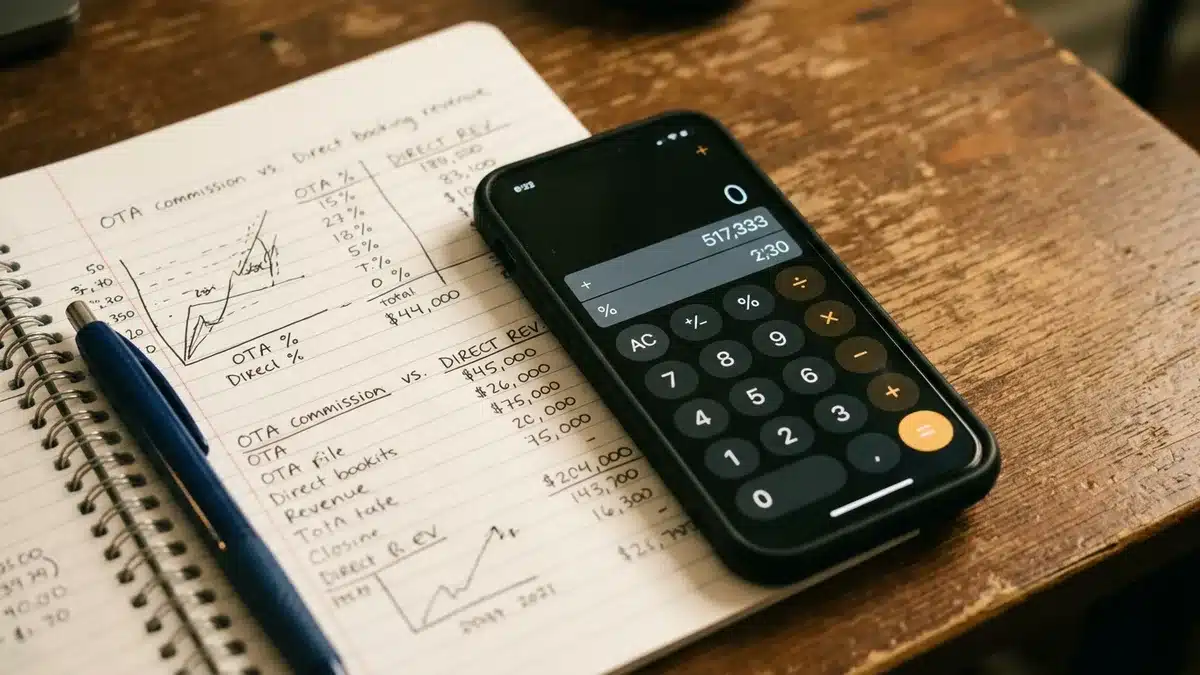
You do not have to leave Airbnb to use it. Most hosts keep their listing live for discovery and steer repeat guests and referrals to their own site. A book direct marketplace can add reach, though the site you own is what protects margin.
This is the problem we designed Boostly to solve. We build the site for you, with no coding required, and our hosts average 65% to 80% direct bookings within 12 months. The 65% direct bookings guarantee backs it: miss it within 12 months and you receive your money back plus $1,000. A self-service builder suits some small hosts, but most struggle to match that trust and conversion on their own.
What Does the Airbnb Cost Look Like on a $2,000 Booking?
On a $2,000 booking, the Airbnb host-only fee costs $310 while card processing on a direct booking costs about $58, leaving roughly $1,690 against $1,942 before cleaning and other expenses. Those figures come from Houfy's 2026 example and simple subtraction.
| Line item | Airbnb (host-only fee) | Direct booking |
|---|---|---|
| Booking value | $2,000 | $2,000 |
| Platform commission | $310 (15.5%) | None |
| Card processing | Handled within the platform payout | About $58 (2.9% at Stripe's rate) |
| Left before cleaning and operating costs | About $1,690 | About $1,942 |
| Guest data ownership | Held mainly by the platform | Held by you |
| Guest discovery | Built-in traffic | You must drive it |
The table shows the trade-off clearly. Airbnb brings discovery you do not pay for upfront, and a direct site brings margin and guest data. Taxes, cleaning and your own marketing effort sit on top of both, so model your own figures with the steps further down.
Why Do Airbnb Costs Hurt More as Competition Grows?
Airbnb costs hurt more in a crowded market because commission is a fixed percentage of revenue while competition pushes nightly rates down. When rates fall, the same percentage still comes off the top, and your operating costs stay put.
Think about where growth comes from. OTA dashboards show only OTA-side data, so you rarely see which channel is actually profitable. Without guest emails, every new season starts from zero, with every booking earned again at full commission.
Capturing contact details lawfully is the first fix. A guest WiFi capture tool such as StayFi is one example, and this guide on growing a vacation rental business covers email tactics that work off-platform. We built Boostly's CRM and reporting so you see conversion rates, traffic sources and progress towards your 65% target in one place.
How Do You Work Out Your Own Airbnb Cost Per Stay?
Your Airbnb cost per stay is everything you spend to earn one booking, divided by the number of bookings. The method takes an afternoon and shows you which channel earns its fee.
- Pull twelve months of payout statements and note the service fee on each booking.
- Split bookings by source: Airbnb, other OTAs and direct.
- Add turnover costs per stay: cleaning, laundry and consumables.
- Subtract those costs and the fee from the booking value to get net revenue per stay.
- Model what happens if a set share of those stays came direct, using card processing at 2.9% instead of the commission.
- Set a target direct share and a date to hit it.
Common mistakes include comparing nightly rates instead of net payouts, ignoring the cleaning fee in the fee base, and treating a direct site as a replacement rather than a second channel. We built Boostly to model that last point with you; these STR insights pair well with it when you set your target.
Frequently Asked Questions
How do I become an Airbnb host?
Check your local licensing and permit rules, prepare and furnish the property, take good photos and create a listing with your nightly rate, cleaning fee and minimum stay. Arrange insurance and cleaning cover before your first guest arrives. Then plan a direct booking channel alongside it so repeat guests do not pay commission every time.
How much does Airbnb charge hosts per booking?
Under the host-only fee model, Airbnb charges 15.5%, which is $310 on a $2,000 booking (Houfy, 2026). A split-fee model lowers the host's share and adds a fee for the guest. Check your listing settings and Airbnb's current fee page for the model that applies to you.
What percentage does Airbnb charge guests in service fees?
The guest service fee varies by booking and by fee model, and Airbnb shows it at checkout before payment. We do not quote a fixed percentage because it changes. The reliable way to check is to run a sample booking on your own listing and read the breakdown.
What is Airbnb's average cleaning fee per stay?
There is no single reliable average, because cleaning fees depend on property size, number of bedrooms and local labour costs. Hosts set the fee themselves. Compare similar listings in your area and base yours on what a turnover really costs you.
What is the average Airbnb nightly price by city?
Nightly prices differ widely by city, neighbourhood, season and property type, so one national figure is not useful. For your market, check recent comparable listings and compare your net payout rather than only the headline rate.
Do I have to stop listing on Airbnb to use a direct booking website?
No. You can keep your Airbnb and other OTA listings live while a direct site builds a second channel. Boostly works alongside your existing listings, and 27+ PMS integrations keep availability and pricing in sync so you avoid double bookings.
What Should You Take Away About Airbnb Cost?
Airbnb cost comes down to a 15.5% commission under the host-only model, a cleaning fee that has to cover real turnover work, and the operating costs behind every stay. Direct bookings cut the commission to a card fee of about $58 on a $2,000 stay, and they give you the guest data that makes repeat bookings possible.
Start by running the per-stay calculation above, then decide how much of your volume you want to move direct in 2026. If you want a direct channel without building it yourself, Book a demo with Boostly and we will show you what a direct booking system looks like for your properties, including the 65% guarantee and the 15% commission saving on each booking that comes through your own site.